Employee recognition software has changed a lot in the last few years. What used to be a handful of generic tools has grown into a crowded market with platforms built for very different needs.
Today, there are recognition tools designed specifically for startups that need fast adoption, mid-sized companies that want flexibility without complexity, and distributed teams that rely on seamless Slack or Microsoft Teams integrations.
Some platforms focus on everyday peer recognition. Others are built for formal rewards, service anniversaries, or enterprise-scale programs. Many look similar on the surface, but behave very differently once they are rolled out.
This evolution has made choosing the right employee recognition software harder, not easier. The challenge is no longer finding a tool. It is understanding which platform actually fits how your team works, scales with growth, and drives consistent participation without adding operational overhead.
Best Employee Recognition Software of 2026 by Use Case
Best Overall:Assembly - Complete recognition ecosystem with peer appreciation, automated milestones, rewards in one intuitive platform that integrates seamlessly with Slack/Teams and scales from startups to enterprises.
Best Free Recognition Platform: Guusto (up to 5 users) - Simple gift card recognition with no setup complexity, perfect for testing recognition programs. Assembly also lets teams send rewards with free plan, making it another strong option for getting started without upfront spend.
Best for Small Business: Assembly or Nectar - Assembly starts at $2/user/month with comprehensive features; Nectar at $2.75/user/month offers budget-friendly peer recognition.
Best for Enterprises:Workhuman or Awardco- Enterprise-grade platform with advanced analytics, global capabilities, and culture transformation focus. Assembly goes beyond recognition analytics by equipping enterprise managers with AI-powered insights that translate culture data into daily leadership actions.
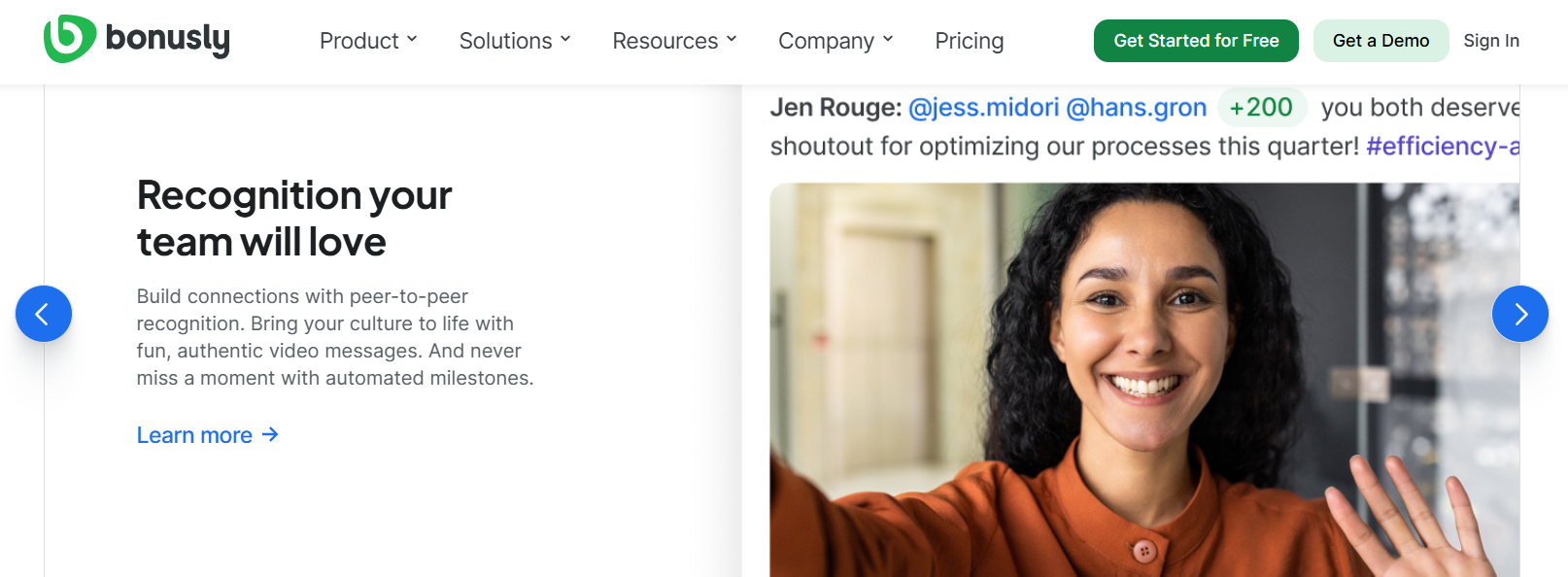
Best for Remote/Hybrid Teams:Assembly or Bonusly - Assembly's native Slack/Teams integration keeps remote workers visible; Bonusly makes peer recognition effortless with one-click appreciation.
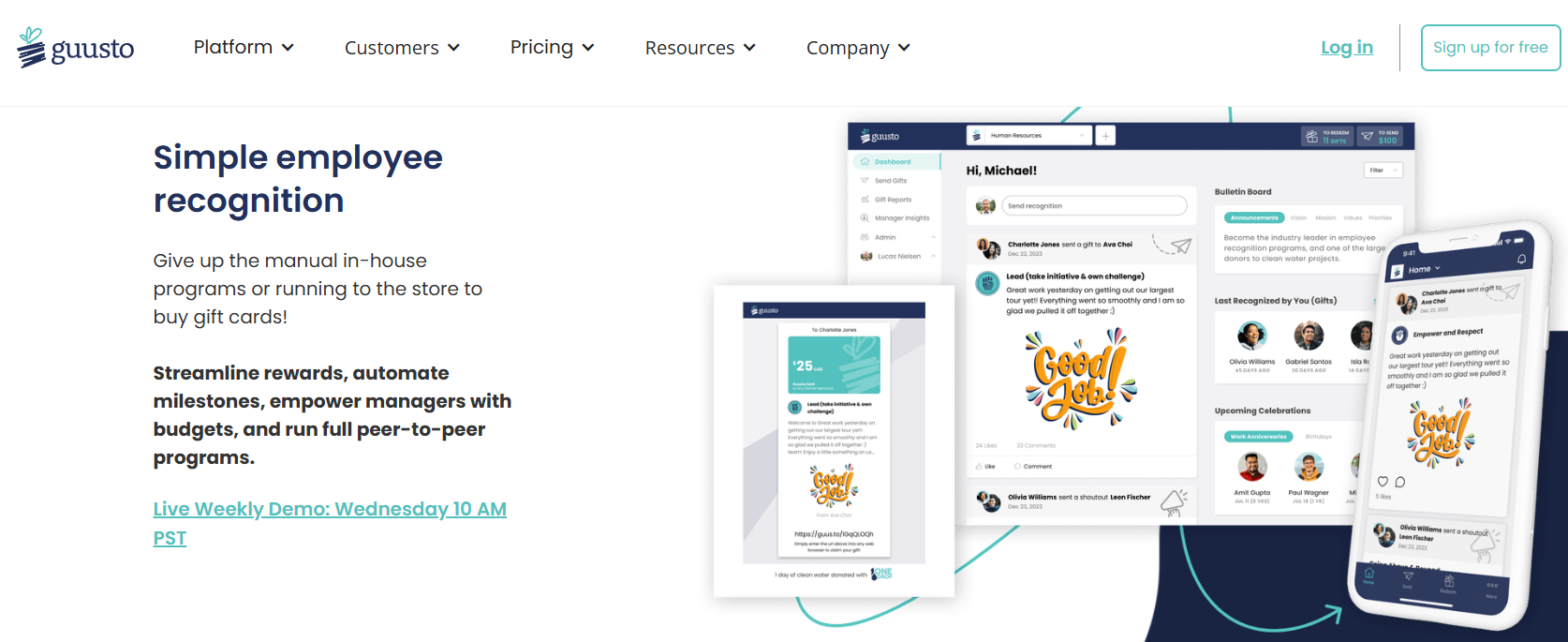
Best for Frontline Workers: Assembly or Guusto - SMS and QR code delivery options work for deskless teams without email access.
In this blog, we break down the 10 best employee recognition software of 2026, comparing platforms across work model and recognition approach.
How to Choose the Right Employee Recognition Software
First, you need to understand how your team actually works and what you need recognition to accomplish while choosing the right employee recognition platform. Not all platforms are built for the same use case.
1. Work Model Fit
Remote and hybrid teams need recognition that lives in Slack or Microsoft Teams, where work already happens. Frontline and deskless workers need SMS delivery, QR codes, or offline options since they rarely check email. In-office teams aren't limited by delivery method, but platforms that integrate with existing workflows consistently see better participation.
2. Recognition Frequency vs. Formal Programs
Some platforms are built for everyday peer-to-peer appreciation, quick shout-outs, constant visibility, and gamification. Others focus on structured programs like quarterly awards, service milestones, and formal nominations. Decide whether you need frequent lightweight recognition or planned, formal appreciation (or both).
3. Rewards-First vs. Culture-First Tools
Rewards-first platforms emphasize gift cards, employee incentives, and redemption catalogs. Culture-first tools prioritize values alignment, meaningful messages, and social connection. If your goal is motivating behavior through tangible rewards, go rewards-first. If you want to reinforce culture and build community, prioritize platforms that emphasize storytelling and company values.
4. Admin Effort and Scalability
Some platforms require heavy setup, ongoing admin work, and manual milestone tracking. Others automate celebrations, sync with your HRIS, and run with minimal oversight. AI is making this even more powerful, see how AI is reshaping employee recognition to understand what to look for when evaluating automation features.
The right platform fits how your team works today and grows with you tomorrow. For companies in the 200–500 employee range where recognition is starting to break down as the team scales, our guide to scaling employee recognition at mid-size companies covers the specific structural fixes that make it sustainable.
What is Employee Recognition Software?
Employee recognition software helps organizations recognise, celebrate, and reward employee contributions in a structured and scalable way.
At its core, it solves a simple problem: how do you make appreciation consistent when you have hundreds or thousands of employees spread across teams, departments, or locations?
These platforms let employees and managers:
Recognize colleagues publicly for their work and contributions
Send peer-to-peer appreciation in real-time
Celebrate milestones like birthdays, work anniversaries, and achievements
Reward employees with points, gift cards, or other incentives
Track recognition patterns to understand engagement levels
Key Features You Should Look For
Here are the essential features to evaluate when choosing recognition software:
Peer-to-Peer Recognition - Employees should be able to recognize one another easily. Look for platforms that let anyone send recognition with just a few clicks, making appreciation a team-wide habit rather than a top-down initiative.
Manager-to-Employee Recognition - Managers need simple tools to acknowledge employees’work consistently. The platform should make it easy for leaders to recognize contributions publicly or privately, depending on the situation.
Rewards and Incentives - Recognition paired with tangible rewards feels more meaningful. Look for platforms that offer gift cards, company swag, charitable donations, or custom rewards that employees actually want.
Milestone Celebrations - Birthdays, work anniversaries, and project completions shouldn't slip through the cracks. Automated milestone recognition ensures no one gets overlooked, even when managers are busy.
Integration with Existing Tools - The platform should work with tools like Slack, Microsoft Teams, Google Workspace, or your HRIS that your team already uses. If recognition requires going to a separate platform, adoption will suffer.
Customization and Branding - The software should reflect your company culture. Look for options to customize recognition messages, awards, and branding so it feels like an extension of your organization, not a generic tool.
Ease of Use - If the platform is complicated, people won't use it. The best recognition software is intuitive from day one, requiring minimal training and no complicated setup.
When evaluating platforms, prioritize the features that matter most for your specific needs. A small business might value affordability and simplicity, while an enterprise might need advanced analytics and multi-region support.
Types of Employee Recognition Software
Employee recognition platforms fall into distinct categories based on their primary function and organizational focus. Understanding these categories helps you identify which type aligns with your needs.
1. All-in-One Recognition Platforms - These platforms combine peer recognition, manager tools, milestone automation, rewards, and analytics in one system. They handle everything from daily shout-outs to formal awards and work well for organizations wanting a single solution.
2. Rewards-First Platforms - Focus heavily on incentives, gift cards, and redemption catalogs. Recognition exists, but rewards drive the experience. Best for organizations where tangible incentives matter more than social recognition or values alignment.
3. Peer-to-Peer Recognition Tools - Built for frequent, lightweight appreciation between colleagues. These emphasize social feeds, points systems, and public visibility to encourage constant recognition.
4. Enterprise Recognition Platforms - Designed for large, global organizations with complex needs: advanced analytics, multi-region support, formal program structures, and integration with enterprise HR systems.
5. Milestone and Group Celebration Tools - Built for specific moments like birthdays celebration, work anniversaries, retirements, and farewells. They create collaborative boards or automated celebrations.
Each category serves different goals. Match the type to what matters most for your organization.
Best Employee Recognition Platforms: Comparison Chart
Key Differences
Platform
Best For
Starting Price
G2 Rating
Key Strength
Assembly
All-size organizations
$2/user/month (Free tier available)
4.8/5
Complete recognition ecosystem with seamless Slack/Teams integration and automation
HeyTaco
Small Slack-first teams
$3/user/month
4.8/5
Lightweight, fun recognition that lives entirely in Slack and Teams
Mo
Small remote teams
$2.25/user/month
4.7/5
Habit-building recognition with manager prompts and global rewards
Nectar
Small to mid-sized businesses
$2.75/user/month
4.7/5
Budget-friendly peer recognition with transparent pricing
Kudos
Values-driven mid-sized companies
Custom pricing
4.8/5
Values-based recognition tied directly to cultural behaviors
Workhuman
Global enterprises
Custom pricing
4.7/5
Enterprise-scale analytics connecting recognition to business outcomes
Achievers
Large enterprises
Custom pricing
4.7/5
Science-backed recognition with documented retention impact
Awardco
Enterprises needing reward variety
Custom pricing
4.9/5
Amazon Business integration with millions of zero-markup rewards
Bonusly
Remote/hybrid mid-sized teams
$3/user/month (Free up to 8 users)
4.7/5
Social gamification driving frequent peer recognition
Guusto
Frontline and deskless workers
Free (up to 5 users
4.9/5
SMS and QR-based rewards for workers without email access
Top 10 Employee Recognition Software of 2026
1. Assembly
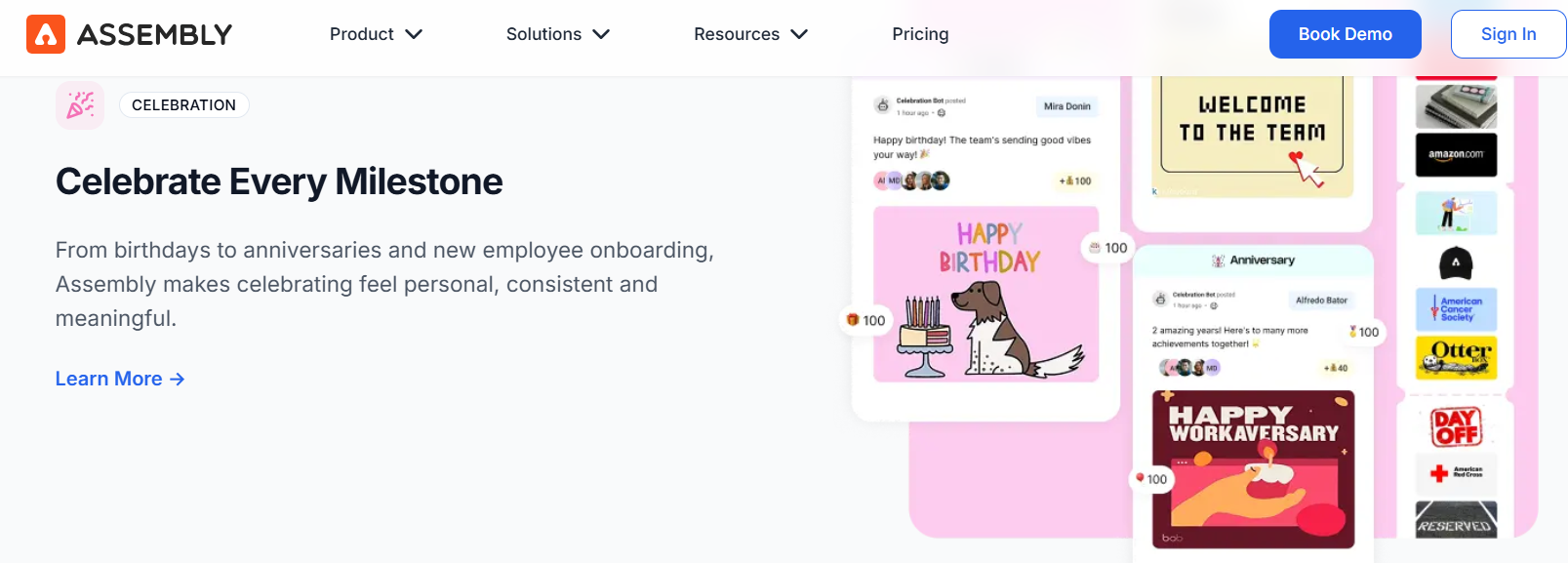
Best For - Assembly is best for small to mid-scale businesses (50-500 employees) needing an all-in-one recognition tool that's easy to set up and affordable without sacrificing features.
Why It Stands Out
Assembly delivers enterprise-level features at small business pricing. Starting at $2/user/month, you get the complete recognition infrastructure, like peer appreciation, automated milestones, rewards, analytics, and seamless Slack/Teams integration.
Strengths
Complete recognition solution at startup-friendly pricing ($2/user/month)
Intuitive interface requires zero training, so teams can start using it immediately
Scales seamlessly as you grow from 50 to 500+ employees.
Limitations
Free tier limited to holiday gifting only
May have more features than companies for companies having fewer than 20 employees
A strong long-term choice for small & mid-level teams that want recognition to stick as they grow.
2. HeyTaco
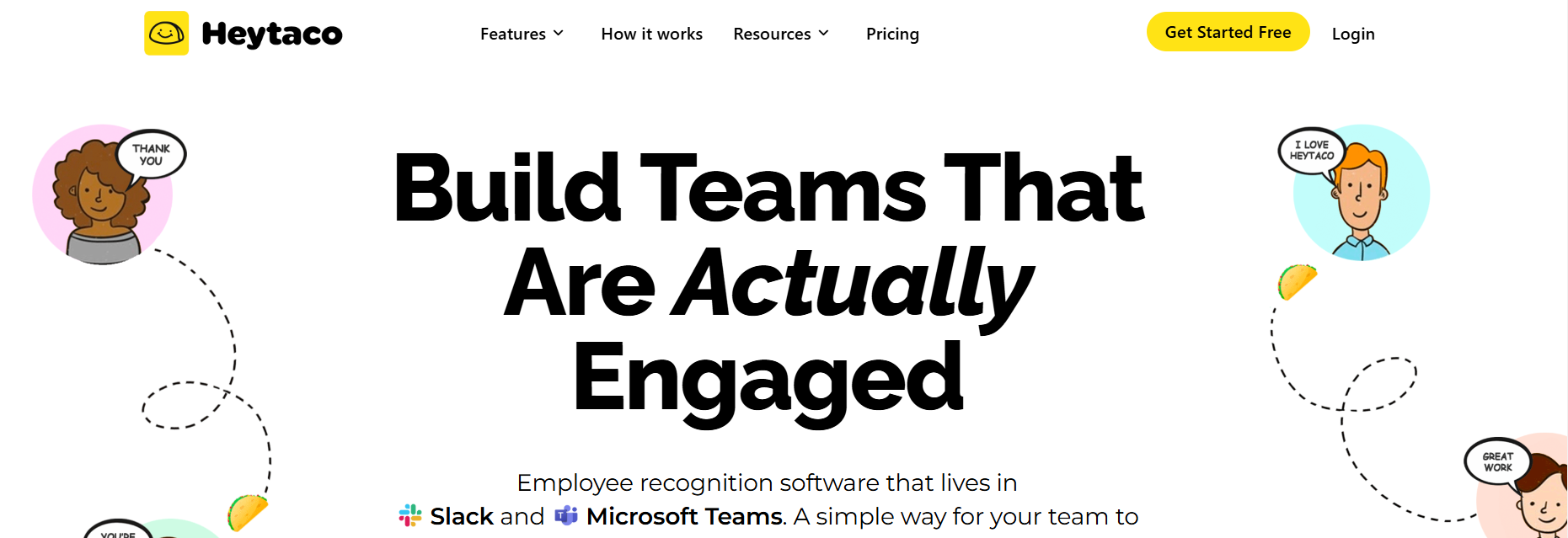
HeyTaco is best for small teams (3-100 employees) wanting lightweight Slack/Teams recognition without administrative overhead.
Why It Stands Out
HeyTaco strips recognition down to its essence: employees give each other tacos (points) directly in Slack or Teams conversations. No separate platform to learn, no complex setup, no admin burden. It's gamified appreciation that takes a few minutes to deploy.
Strengths
Lives entirely in Slack/Teams, zero friction for adoption
Starts at $3/user pricing
Extremely quick setup
Limitations
Very basic features, with limited customization for reward catalogs
While it works well with Slack and Microsoft Teams, it lacks broader HRIS integrations.
HeyTaco works perfectly for small teams wanting simple, fun recognition without managing a different recognition platform.
3. Mo
Best for small teams (25-200 employees) that want to build a habit of everyday recognition and strengthen belonging across the organization.
Why It Stands Out
Mo focuses on making recognition habitual and inclusive, not transactional or reserved for top performers. By embedding peer-to-peer appreciation into daily workflows and guiding managers with smart prompts, it helps recognition become part of the team’s natural rhythm.
Strengths
Strong peer-to-peer recognition with “Moments” tied to company values
Global-ready rewards from major brands, available across 26 countries and 12 languages
Manager Assistant, Boosts, and automated workflows that support consistent recognition
Limitations
Recognition depth may exceed the needs of very small teams
Analytics are solid but not as advanced as enterprise-first platforms
Mo is a people-centric recognition platform designed to help teams make appreciation a daily habit and build a culture where everyone feels seen and valued.
Assembly vs HeyTaco vs Mo
Assembly, HeyTaco, and Mo all support everyday recognition, but they serve different levels of structure and maturity.
Assembly is the right choice when recognition needs to scale with the business, combining automation, milestones, and in-workflow adoption without ongoing HR effort.
HeyTaco works best for very small, Slack-first teams that want something informal and playful with minimal setup.
Mo sits in between, making sense for teams focused on building a habit of appreciation and belonging through guided, peer-driven recognition.
Choose Assembly for scalable, long-term programs. Choose HeyTaco for lightweight fun. Choose Mo for habit-forming, culture-led recognition.
4. Nectar
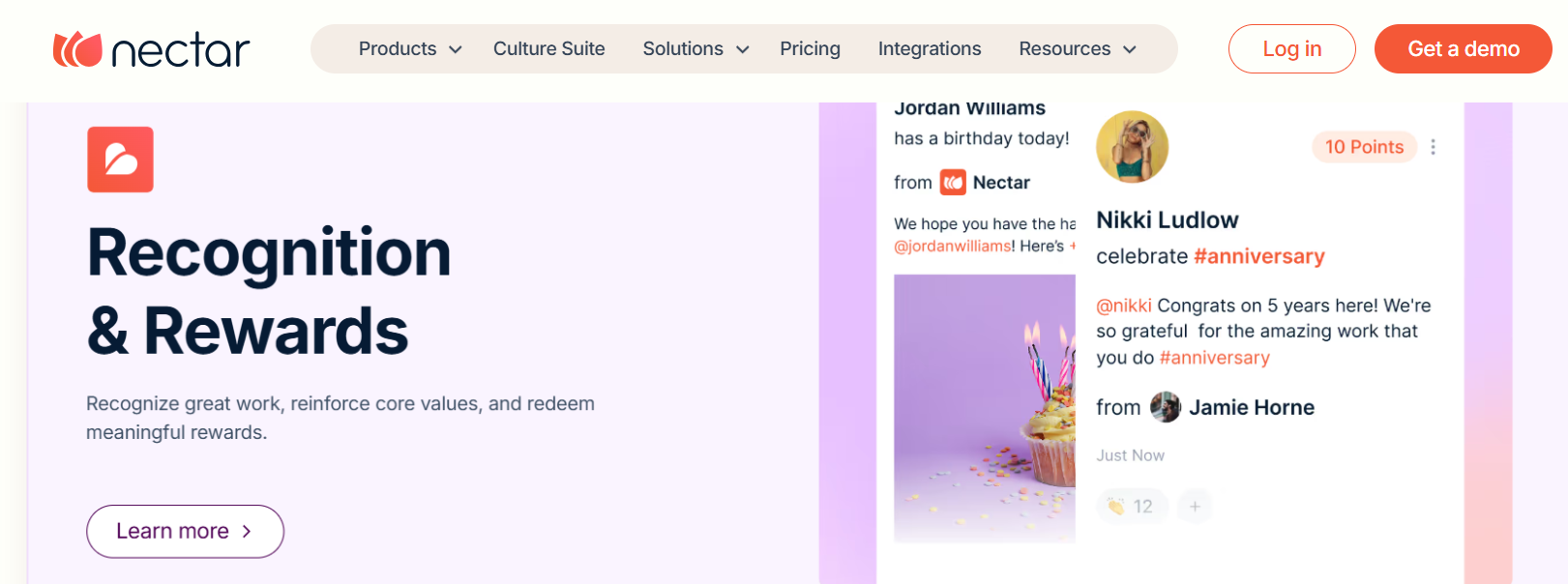
Best For - Nectar is best for small to mid-sized businesses looking for affordable, easy-to-launch employee recognition with rewards.
Why it stands out
Nector focuses on engagement through rewards, perks, and everyday recognition. It combines peer recognition with rewards, contests, and employee discounts, making recognition feel interactive rather than formal.
Strengths
Straightforward peer-to-peer recognition with points and public shout-outs
Budget-friendly pricing starts at $2.75/user/mo that works well for growing teams
Rewards catalog that includes gift cards and popular brand options
Limitations
Limited flexibility for advanced or highly customized programs
Reporting and analytics are relatively basic
NectarHR is a practical, cost-effective option for teams that want to introduce recognition quickly without enterprise-level complexity.
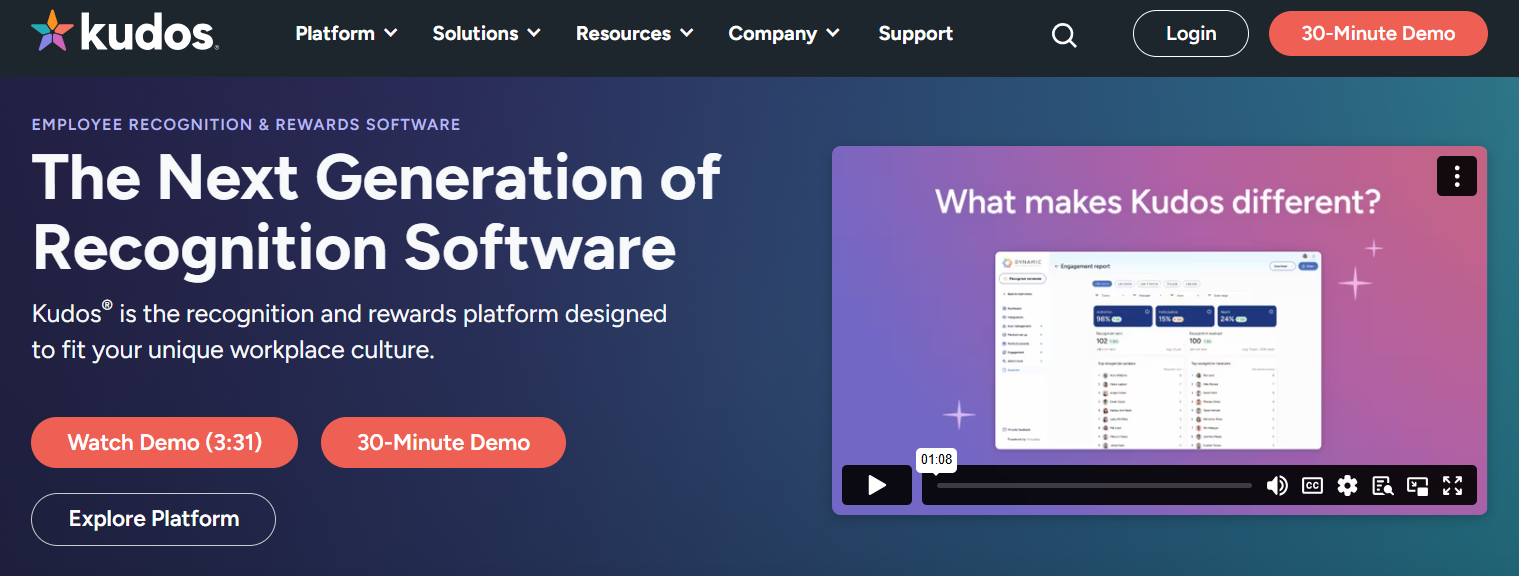
5. Kudos
Best For - Kudos is best for values-driven organizations (200-2,000 employees) where recognition needs to reinforce specific cultural behaviors rather than reward-heavy incentives.
Why It Stands Out
Kudos ties every recognition moment to company values, creating visible connections between daily actions and what the organization stands for. Over time, this shapes culture more effectively than value statements ever could. Employees see exactly what "collaboration" or "customer focus" looks like in practice.
Strengths
Values-based recognition creates cultural clarity beyond generic praise
Recognition feels personal and story-driven, not transactional
Clear visibility into how values show up across the organization
Limitations
Point caps can limit recognition frequency during high-activity periods
Leaderboards may create competition rather than collaboration in some cultures
Kudos transforms vague value statements into concrete behavioral examples through strategic recognition.
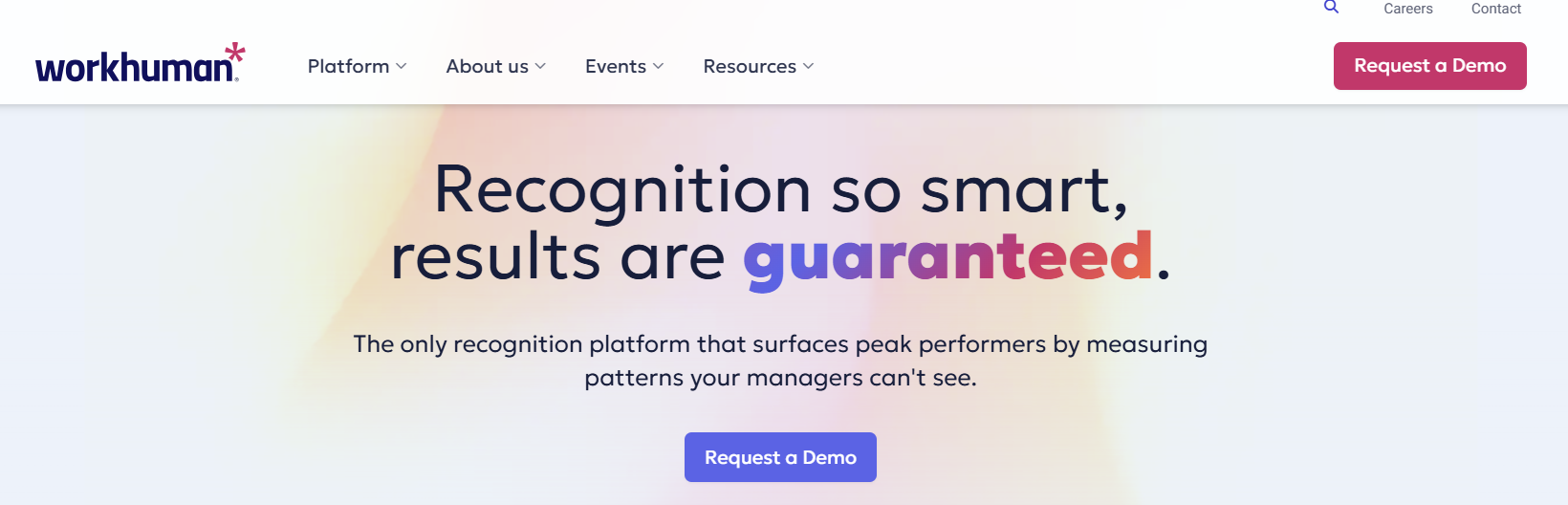
6. Workhuman
Best For: Worknhuman is ideal for Global enterprises (2,000+ employees) that want a research-backed recognition strategy tied to culture, inclusion, and long-term business outcomes.
Why It Stands Out
Workhuman connects recognition directly to business outcomes through workforce analytics. It's not just tracking who got recognized but shows how recognition correlates with retention, performance, and engagement across departments, regions, and demographics. This data helps executives understand culture as a measurable business asset.
If Workhuman feels too complex or enterprise-heavy, these Workhuman alternatives offer different approaches to recognition at scale.
Strengths
20+ years of enterprise recognition expertise
Analytics connect appreciation to retention, performance, and business outcomes
Supports 34 languages and 180+ countries for truly global workforces
Limitations
3+ month implementation timelines for complex global rollouts
High cost relative to SMB-focused platforms
Workhuman delivers strategic, data-driven culture transformation for enterprises where recognition is a measured business investment.
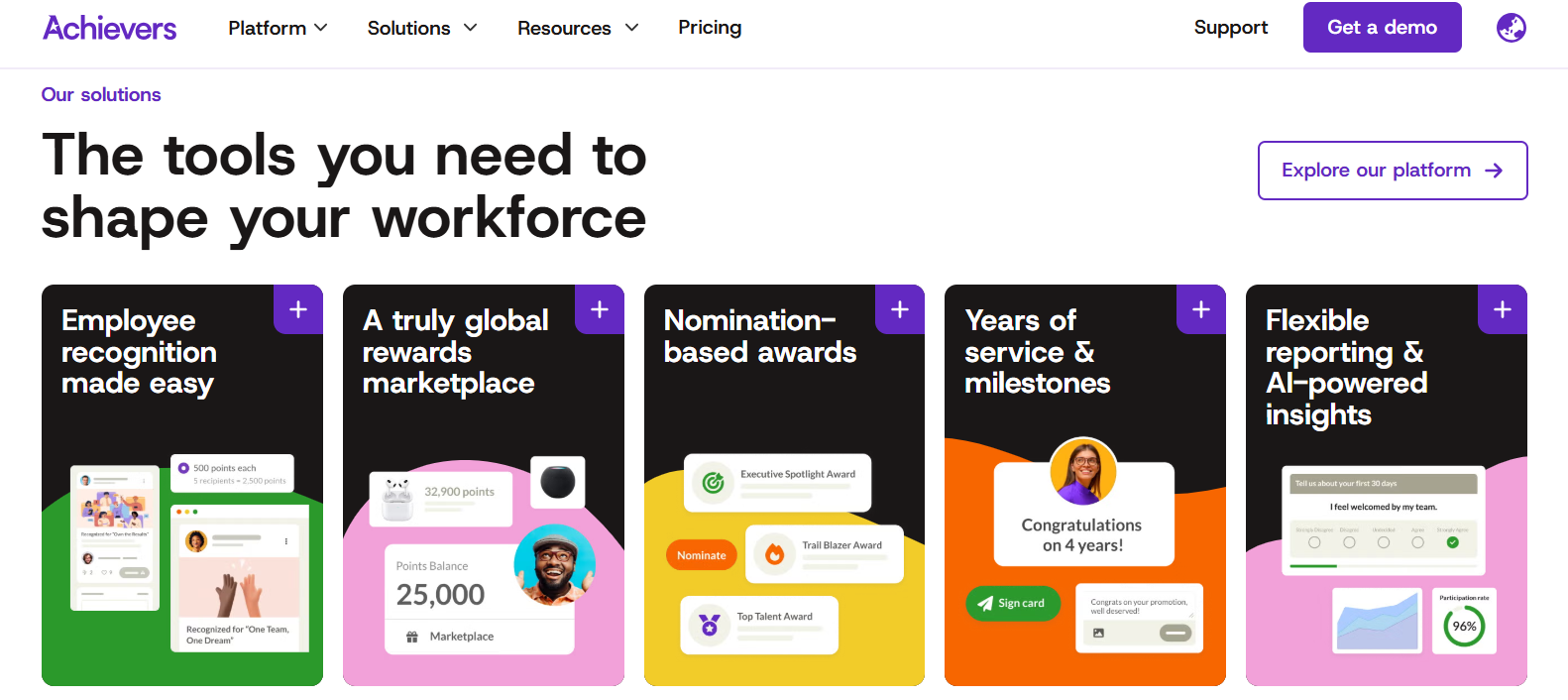
7. Achievers
Best For: Achievers is best for Enterprises (1,000+ employees) needing science-backed recognition with proven productivity and retention impact.
Why It Stands Out
Achievers combines recognition with continuous listening and performance insights, helping organizations reinforce behaviors that directly support company objectives. Recognition is frequent, visible, and connected to measurable outcomes.
Strengths
Strong alignment between recognition, values, and performance goals
Robust global rewards marketplace with extensive choice
Enterprise-ready analytics and employee listening capabilities
Limitations
More complex than recognition-first or SMB-focused tools
Higher cost compared to simpler peer-recognition platforms
Achievers works for enterprises where recognition is a performance strategy backed by data, not just an engagement perk.
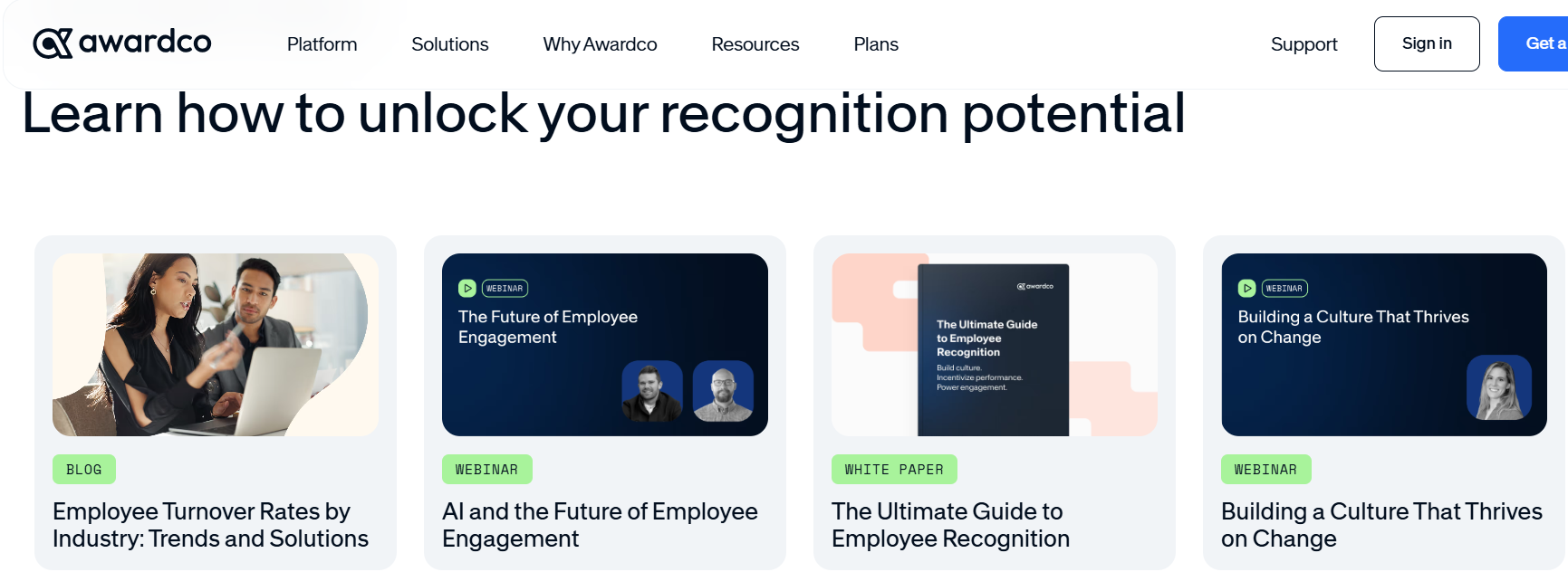
8. Awardco
Best For Large enterprises where reward variety and budget control matter more than social recognition features.
Why It Stands Out
Awardco's Amazon Business partnership delivers millions of reward options at zero markup. For global enterprises managing diverse preferences across regions, this solves the perpetual "nobody wants the rewards in our catalog" problem. Employees get full value, and HR eliminates vendor management headaches.
Strengths
Unmatched reward selection through Amazon integration at face value
Strong budget controls and spending visibility across departments and regions
Supports multiple program types (spot recognition, milestones, custom incentives) in one platform
Limitations
Less emphasis on everyday peer-to-peer recognition
Reward delivery depends on Amazon's logistics.
Awardco prioritizes reward flexibility and budget efficiency over social recognition features. Ideal for enterprises where choice and cost matter most.
9. Bonusly
Best For: Bonusly is best for growing remote and hybrid teams that want to make peer-to-peer recognition frequent, lightweight, and visible.
Why It Stands Out
Bonusly is designed for distributed work. Monthly point allowances and a public recognition feed keep appreciation flowing even when teams rarely meet in person. Its one-click Slack and Microsoft Teams integrations ensure recognition happens naturally inside daily conversations, not in a separate system that employees forget to use.
Strengths
Peer-to-peer recognition that keeps remote appreciation frequent and consistent
Strong Slack and Microsoft Teams integrations that drive participation across locations
Flexible rewards, including gift cards, donations, and cash payouts
Limitations
Limited customization of rewards and branding
Limited flexibility for highly structured or enterprise-level recognition programs
Bonusly excels at making recognition habitual for rather than occasional through social engagement and frictionless participation.
If Bonusly doesn’t fully meet your needs, this guide to Bonusly alternatives breaks down other recognition platforms worth considering.
Bonusly vs Assembly
Bonusly works well for teams that want lightweight, peer-driven appreciation through micro-bonuses and a social feed, especially in remote or hybrid environments.
Assembly is designed for organizations that want recognition embedded into daily workflows with automation, milestones, and long-term program structure.
Go with Assembly when recognition needs to scale consistently without adding HR or manager overhead. Choose Bonusly when simplicity and frequent peer recognition are the priority.
10. Guusto
Best For: Guusto is best for Organizations with frontline workers (healthcare, retail, hospitality, warehouses) who lack regular email or computer access.
Why It Stands Out
Guusto delivers recognition through SMS, QR codes, and printed cards that actually reach deskless workers. A warehouse employee can scan a QR code on a break room poster, receive instant gift card credit, and redeem it on their phone. No app download, no login, no desktop required.
Strengths
SMS and QR delivery reach employees without email access
Only pay for claimed rewards. Unclaimed gifts will be credited back to your account
Free tier (up to 5 users) lets you test with small pilot groups
Limitations
No social recognition feed or peer appreciation features
Limited to gift card delivery, not a full culture platform
Guusto is ideal for organizations that want fast, accessible rewards for frontline teams without the complexity of traditional recognition systems.
Top Employee Recognition Software Compared: Quick Takeaways
Below is the summary to help you quickly decide when each platform makes sense.
Assembly - Works best for teams that want recognition to feel effortless and part of everyday work. Its strength lies in high adoption, driven by seamless Slack and Microsoft Teams integration and automation that removes ongoing HR overhead.
HeyTaco - HeyTaco brings a lighthearted, informal approach to recognition, especially for Slack-first teams. It’s often used to encourage frequent peer appreciation without adding structure or process.
Mo - Focuses on making appreciation a daily habit rather than a formal program. Its peer-driven Moments and manager prompts help teams build a consistent culture of belonging and recognition.
Nectar - A budget-friendly recognition platform that’s easy to roll out for small or growing teams.
Kudos - Emphasizes thoughtful, values-led recognition over incentives. It’s commonly used by organizations that want to reinforce behaviors and culture through meaningful appreciation.
Workhuman - Built for large organizations, treating recognition as a long-term culture strategy. Its research-backed approach and deep analytics support enterprise-wide programs at a global scale.
Achievers - connects recognition closely with performance and engagement data. It’s typically used where recognition needs to support broader business and people outcomes.
Awardco - Amazon Business–powered marketplace simplifies global rewards while keeping budgets predictable.
Bonusly - frequent & visible peer recognition, making it popular with remote and hybrid teams. Its social feed and micro-recognition model keep appreciation consistent across locations.
Guusto - Designed for frontline and deskless teams where access and speed matter most.
How to Implement Employee Recognition Programs
Once you have selected the right employee recognition platform, the next step is to thoughtfully rolled the recognition program. A strong implementation plan ensures adoption, trust, and long-term impact rather than a short-lived launch.
Here is a practical approach that works for real HR teams.
1. Build a Clear Implementation Plan and Timeline
Start by defining the purpose and scope of the rollout. Clarify why the platform is being introduced, who owns the implementation, which teams are involved, and what success looks like in the first 30, 60, and 90 days. A simple timeline helps align HR, managers, IT, and leadership so expectations are clear and the rollout does not feel rushed or reactive.
2. Gather Input From Managers and Employees Early
Before configuring the platform, collect feedback from managers on their current challenges with recognition and from employees on morale, motivation, and visibility. This input helps you design a program that addresses real pain points instead of assumptions. Involving users early also increases buy-in, because people are more likely to adopt a system they helped shape.
3. Form a Cross-Functional Implementation Team
Create a small working group that includes HR, managers, employees, and IT where needed. This team helps validate workflows, flag technical concerns, and act as internal champions during launch. Cross-functional ownership reduces friction and speeds up adoption.
4. Prepare and Integrate Your Employee Data
Review your existing employee data and decide what needs to be migrated into the new platform. At a minimum, employee start dates and key milestones should be accurate so recognition events trigger correctly. If you are migrating historical data or integrating with your HR system, work closely with the software provider to handle this cleanly during onboarding.
5. Test the Platform Before Launch
Run realistic test scenarios to understand how recognition flows, rewards work, and automations behave. Test milestones, peer recognition, manager recognition, and integrations with tools like Slack or Microsoft Teams. Thorough testing ensures the platform supports your real-world use cases before employees rely on it.
6. Train Users and Support Adoption
Training should be role-specific. Managers need guidance on how and when to recognize effectively, while employees need clarity on how to give and receive recognition. Creating a simple internal guide or FAQ hub helps reduce confusion and ongoing admin questions. When people feel confident using the platform, adoption follows naturally.
7. Launch With Visibility and Momentum
Introduce the platform publicly, explain the benefits, and celebrate the rollout. Highlight early recognition examples to model behavior and build excitement. A positive launch experience creates strong first impressions and encourages employees to associate recognition with something meaningful, not mandatory.
How Easy It Is to Get Started With Assembly
After defining your recognition strategy, the next challenge is execution. This is where many programs slow down. Assembly removes that friction by making it simple to go from idea to action without heavy setup or long onboarding cycles.
With Assembly, you can launch a recognition program in days, not months. HR teams can quickly set up recognition tied to company values, enable peer-to-peer recognition, and configure rewards and milestones without technical complexity. There is no need to redesign workflows or train employees on a complicated new system.
Assembly integrates directly into tools like Slack and Microsoft Teams, and employees can start recognizing each other immediately. Recognition happens where work already happens, which drives faster adoption and more consistent participation from day one.
Most importantly, Assembly is built to scale with you. As your team grows, the platform continues to support automated milestones, AI-powered insights, and visibility without adding admin overhead. This allows HR teams to focus on strengthening culture while Assembly quietly handles the mechanics behind the scenes.
Which Employee Recognition Software Should You Choose?
The right platform depends on how your team works and what you need recognition to accomplish. Use these decision rules:
Prioritize adoption over features - Choose platforms that integrate with tools your team already uses daily (Slack, Teams, email). Recognition that requires logging into a separate system will fail regardless of how robust the features are.
Match the platform to your workflow - Remote teams need native chat integrations. Frontline workers need SMS and QR delivery. In-office teams have more flexibility but still benefit from minimal friction in workflows.
Choose a platform that scales with your organization - Select software that grows from 50 to 500+ employees without requiring migration or major reconfiguration.
Test with real workflows before committing. Run pilot scenarios that reflect how your team actually operates. Verify that recognition flows naturally and that employees understand how to participate without training.
How We Evaluated These Employee Recognition Platforms
We assessed these platforms based on what actually drives success:
Adoption & Ease of Use: Integration with Slack/Teams, intuitive interfaces, and natural workflow fit that employees actually use.
Recognition Frequency: Support for daily peer appreciation or formal programs, and how effectively it drives consistent participation.
Rewards Flexibility: Global reward options, zero-markup pricing, and catalog depth that matches workforce diversity.
Team/Work Model Support: Effectiveness across remote, frontline, hybrid, and in-office environments with appropriate delivery methods.
Scalability & Admin Effort: Growth from 50 to 5,000+ employees without increasing administrative burden through automation and seamless scaling.
Assembly helps you build recognition programs that teams actually use, HR can manage without overhead, and scale effortlessly as you grow.
Want to see how it works for your team?Book a demo with Assembly and explore how easy recognition becomes when it fits naturally into your workflow.
FAQs
Can employee recognition platforms integrate with HR or communication tools?
Yes. Most modern employee recognition platforms integrate with HRIS tools to sync employee data and milestones, and with communication tools like Slack or Microsoft Teams so recognition happens in the flow of work. These integrations reduce manual admin work and significantly improve adoption across teams.
How do recognition software support remote or hybrid teams?
Recognition software gives remote and hybrid employees visibility they often miss in distributed environments. Public recognition feeds, peer-to-peer appreciation, and automated milestones help ensure contributions are seen regardless of location. This creates connection, consistency, and a shared culture even when teams are not in the same office.
Can employee recognition platforms help with employee retention?
Yes. Consistent recognition is strongly linked to higher retention. When employees feel valued and appreciated for their contributions, they are more likely to stay engaged and loyal. Recognition platforms help make appreciation frequent and fair, which reduces disengagement and prevents top performers from feeling overlooked.
Do employee recognition programs actually work?
They do, when implemented thoughtfully. Programs tied to clear behaviors, supported by leadership, and reinforced regularly lead to higher engagement, stronger culture, and better retention. Recognition programs fail only when they are inconsistent, overly manual, or treated as one-time initiatives instead of ongoing practices.
class SampleComponent extends React.Component {
  // using the experimental public class field syntax below. We can also attach
  // the contextType to the current class
  static contextType = ColorContext;
  render() {
    return <Button color={this.color} />
  }
}
Employee recognition software has changed a lot in the last few years. What used to be a handful of generic tools has grown into a crowded market with platforms built for very different needs.
Today, there are recognition tools designed specifically for startups that need fast adoption, mid-sized companies that want flexibility without complexity, and distributed teams that rely on seamless Slack or Microsoft Teams integrations.
Some platforms focus on everyday peer recognition. Others are built for formal rewards, service anniversaries, or enterprise-scale programs. Many look similar on the surface, but behave very differently once they are rolled out.
This evolution has made choosing the right employee recognition software harder, not easier. The challenge is no longer finding a tool. It is understanding which platform actually fits how your team works, scales with growth, and drives consistent participation without adding operational overhead.
Best Employee Recognition Software of 2026 by Use Case
Best Overall:Assembly - Complete recognition ecosystem with peer appreciation, automated milestones, rewards in one intuitive platform that integrates seamlessly with Slack/Teams and scales from startups to enterprises.
Best Free Recognition Platform: Guusto (up to 5 users) - Simple gift card recognition with no setup complexity, perfect for testing recognition programs. Assembly also lets teams send rewards with free plan, making it another strong option for getting started without upfront spend.
Best for Small Business: Assembly or Nectar - Assembly starts at $2/user/month with comprehensive features; Nectar at $2.75/user/month offers budget-friendly peer recognition.
Best for Enterprises:Workhuman or Awardco- Enterprise-grade platform with advanced analytics, global capabilities, and culture transformation focus. Assembly goes beyond recognition analytics by equipping enterprise managers with AI-powered insights that translate culture data into daily leadership actions.
Best for Remote/Hybrid Teams:Assembly or Bonusly - Assembly's native Slack/Teams integration keeps remote workers visible; Bonusly makes peer recognition effortless with one-click appreciation.
Best for Frontline Workers: Assembly or Guusto - SMS and QR code delivery options work for deskless teams without email access.
In this blog, we break down the 10 best employee recognition software of 2026, comparing platforms across work model and recognition approach.
How to Choose the Right Employee Recognition Software
First, you need to understand how your team actually works and what you need recognition to accomplish while choosing the right employee recognition platform. Not all platforms are built for the same use case.
1. Work Model Fit
Remote and hybrid teams need recognition that lives in Slack or Microsoft Teams, where work already happens. Frontline and deskless workers need SMS delivery, QR codes, or offline options since they rarely check email. In-office teams aren't limited by delivery method, but platforms that integrate with existing workflows consistently see better participation.
2. Recognition Frequency vs. Formal Programs
Some platforms are built for everyday peer-to-peer appreciation, quick shout-outs, constant visibility, and gamification. Others focus on structured programs like quarterly awards, service milestones, and formal nominations. Decide whether you need frequent lightweight recognition or planned, formal appreciation (or both).
3. Rewards-First vs. Culture-First Tools
Rewards-first platforms emphasize gift cards, employee incentives, and redemption catalogs. Culture-first tools prioritize values alignment, meaningful messages, and social connection. If your goal is motivating behavior through tangible rewards, go rewards-first. If you want to reinforce culture and build community, prioritize platforms that emphasize storytelling and company values.
4. Admin Effort and Scalability
Some platforms require heavy setup, ongoing admin work, and manual milestone tracking. Others automate celebrations, sync with your HRIS, and run with minimal oversight. AI is making this even more powerful, see how AI is reshaping employee recognition to understand what to look for when evaluating automation features.
The right platform fits how your team works today and grows with you tomorrow. For companies in the 200–500 employee range where recognition is starting to break down as the team scales, our guide to scaling employee recognition at mid-size companies covers the specific structural fixes that make it sustainable.
What is Employee Recognition Software?
Employee recognition software helps organizations recognise, celebrate, and reward employee contributions in a structured and scalable way.
At its core, it solves a simple problem: how do you make appreciation consistent when you have hundreds or thousands of employees spread across teams, departments, or locations?
These platforms let employees and managers:
Recognize colleagues publicly for their work and contributions
Send peer-to-peer appreciation in real-time
Celebrate milestones like birthdays, work anniversaries, and achievements
Reward employees with points, gift cards, or other incentives
Track recognition patterns to understand engagement levels
Key Features You Should Look For
Here are the essential features to evaluate when choosing recognition software:
Peer-to-Peer Recognition - Employees should be able to recognize one another easily. Look for platforms that let anyone send recognition with just a few clicks, making appreciation a team-wide habit rather than a top-down initiative.
Manager-to-Employee Recognition - Managers need simple tools to acknowledge employees’work consistently. The platform should make it easy for leaders to recognize contributions publicly or privately, depending on the situation.
Rewards and Incentives - Recognition paired with tangible rewards feels more meaningful. Look for platforms that offer gift cards, company swag, charitable donations, or custom rewards that employees actually want.
Milestone Celebrations - Birthdays, work anniversaries, and project completions shouldn't slip through the cracks. Automated milestone recognition ensures no one gets overlooked, even when managers are busy.
Integration with Existing Tools - The platform should work with tools like Slack, Microsoft Teams, Google Workspace, or your HRIS that your team already uses. If recognition requires going to a separate platform, adoption will suffer.
Customization and Branding - The software should reflect your company culture. Look for options to customize recognition messages, awards, and branding so it feels like an extension of your organization, not a generic tool.
Ease of Use - If the platform is complicated, people won't use it. The best recognition software is intuitive from day one, requiring minimal training and no complicated setup.
When evaluating platforms, prioritize the features that matter most for your specific needs. A small business might value affordability and simplicity, while an enterprise might need advanced analytics and multi-region support.
Types of Employee Recognition Software
Employee recognition platforms fall into distinct categories based on their primary function and organizational focus. Understanding these categories helps you identify which type aligns with your needs.
1. All-in-One Recognition Platforms - These platforms combine peer recognition, manager tools, milestone automation, rewards, and analytics in one system. They handle everything from daily shout-outs to formal awards and work well for organizations wanting a single solution.
2. Rewards-First Platforms - Focus heavily on incentives, gift cards, and redemption catalogs. Recognition exists, but rewards drive the experience. Best for organizations where tangible incentives matter more than social recognition or values alignment.
3. Peer-to-Peer Recognition Tools - Built for frequent, lightweight appreciation between colleagues. These emphasize social feeds, points systems, and public visibility to encourage constant recognition.
4. Enterprise Recognition Platforms - Designed for large, global organizations with complex needs: advanced analytics, multi-region support, formal program structures, and integration with enterprise HR systems.
5. Milestone and Group Celebration Tools - Built for specific moments like birthdays celebration, work anniversaries, retirements, and farewells. They create collaborative boards or automated celebrations.
Each category serves different goals. Match the type to what matters most for your organization.
Best Employee Recognition Platforms: Comparison Chart
Key Differences
Platform
Best For
Starting Price
G2 Rating
Key Strength
Assembly
All-size organizations
$2/user/month (Free tier available)
4.8/5
Complete recognition ecosystem with seamless Slack/Teams integration and automation
HeyTaco
Small Slack-first teams
$3/user/month
4.8/5
Lightweight, fun recognition that lives entirely in Slack and Teams
Mo
Small remote teams
$2.25/user/month
4.7/5
Habit-building recognition with manager prompts and global rewards
Nectar
Small to mid-sized businesses
$2.75/user/month
4.7/5
Budget-friendly peer recognition with transparent pricing
Kudos
Values-driven mid-sized companies
Custom pricing
4.8/5
Values-based recognition tied directly to cultural behaviors
Workhuman
Global enterprises
Custom pricing
4.7/5
Enterprise-scale analytics connecting recognition to business outcomes
Achievers
Large enterprises
Custom pricing
4.7/5
Science-backed recognition with documented retention impact
Awardco
Enterprises needing reward variety
Custom pricing
4.9/5
Amazon Business integration with millions of zero-markup rewards
Bonusly
Remote/hybrid mid-sized teams
$3/user/month (Free up to 8 users)
4.7/5
Social gamification driving frequent peer recognition
Guusto
Frontline and deskless workers
Free (up to 5 users
4.9/5
SMS and QR-based rewards for workers without email access
Top 10 Employee Recognition Software of 2026
1. Assembly
Best For - Assembly is best for small to mid-scale businesses (50-500 employees) needing an all-in-one recognition tool that's easy to set up and affordable without sacrificing features.
Why It Stands Out
Assembly delivers enterprise-level features at small business pricing. Starting at $2/user/month, you get the complete recognition infrastructure, like peer appreciation, automated milestones, rewards, analytics, and seamless Slack/Teams integration.
Strengths
Complete recognition solution at startup-friendly pricing ($2/user/month)
Intuitive interface requires zero training, so teams can start using it immediately
Scales seamlessly as you grow from 50 to 500+ employees.
Limitations
Free tier limited to holiday gifting only
May have more features than companies for companies having fewer than 20 employees
A strong long-term choice for small & mid-level teams that want recognition to stick as they grow.
2. HeyTaco
HeyTaco is best for small teams (3-100 employees) wanting lightweight Slack/Teams recognition without administrative overhead.
Why It Stands Out
HeyTaco strips recognition down to its essence: employees give each other tacos (points) directly in Slack or Teams conversations. No separate platform to learn, no complex setup, no admin burden. It's gamified appreciation that takes a few minutes to deploy.
Strengths
Lives entirely in Slack/Teams, zero friction for adoption
Starts at $3/user pricing
Extremely quick setup
Limitations
Very basic features, with limited customization for reward catalogs
While it works well with Slack and Microsoft Teams, it lacks broader HRIS integrations.
HeyTaco works perfectly for small teams wanting simple, fun recognition without managing a different recognition platform.
3. Mo
Best for small teams (25-200 employees) that want to build a habit of everyday recognition and strengthen belonging across the organization.
Why It Stands Out
Mo focuses on making recognition habitual and inclusive, not transactional or reserved for top performers. By embedding peer-to-peer appreciation into daily workflows and guiding managers with smart prompts, it helps recognition become part of the team’s natural rhythm.
Strengths
Strong peer-to-peer recognition with “Moments” tied to company values
Global-ready rewards from major brands, available across 26 countries and 12 languages
Manager Assistant, Boosts, and automated workflows that support consistent recognition
Limitations
Recognition depth may exceed the needs of very small teams
Analytics are solid but not as advanced as enterprise-first platforms
Mo is a people-centric recognition platform designed to help teams make appreciation a daily habit and build a culture where everyone feels seen and valued.
Assembly vs HeyTaco vs Mo
Assembly, HeyTaco, and Mo all support everyday recognition, but they serve different levels of structure and maturity.
Assembly is the right choice when recognition needs to scale with the business, combining automation, milestones, and in-workflow adoption without ongoing HR effort.
HeyTaco works best for very small, Slack-first teams that want something informal and playful with minimal setup.
Mo sits in between, making sense for teams focused on building a habit of appreciation and belonging through guided, peer-driven recognition.
Choose Assembly for scalable, long-term programs. Choose HeyTaco for lightweight fun. Choose Mo for habit-forming, culture-led recognition.
4. Nectar
Best For - Nectar is best for small to mid-sized businesses looking for affordable, easy-to-launch employee recognition with rewards.
Why it stands out
Nector focuses on engagement through rewards, perks, and everyday recognition. It combines peer recognition with rewards, contests, and employee discounts, making recognition feel interactive rather than formal.
Strengths
Straightforward peer-to-peer recognition with points and public shout-outs
Budget-friendly pricing starts at $2.75/user/mo that works well for growing teams
Rewards catalog that includes gift cards and popular brand options
Limitations
Limited flexibility for advanced or highly customized programs
Reporting and analytics are relatively basic
NectarHR is a practical, cost-effective option for teams that want to introduce recognition quickly without enterprise-level complexity.
5. Kudos
Best For - Kudos is best for values-driven organizations (200-2,000 employees) where recognition needs to reinforce specific cultural behaviors rather than reward-heavy incentives.
Why It Stands Out
Kudos ties every recognition moment to company values, creating visible connections between daily actions and what the organization stands for. Over time, this shapes culture more effectively than value statements ever could. Employees see exactly what "collaboration" or "customer focus" looks like in practice.
Strengths
Values-based recognition creates cultural clarity beyond generic praise
Recognition feels personal and story-driven, not transactional
Clear visibility into how values show up across the organization
Limitations
Point caps can limit recognition frequency during high-activity periods
Leaderboards may create competition rather than collaboration in some cultures
Kudos transforms vague value statements into concrete behavioral examples through strategic recognition.
6. Workhuman
Best For: Worknhuman is ideal for Global enterprises (2,000+ employees) that want a research-backed recognition strategy tied to culture, inclusion, and long-term business outcomes.
Why It Stands Out
Workhuman connects recognition directly to business outcomes through workforce analytics. It's not just tracking who got recognized but shows how recognition correlates with retention, performance, and engagement across departments, regions, and demographics. This data helps executives understand culture as a measurable business asset.
If Workhuman feels too complex or enterprise-heavy, these Workhuman alternatives offer different approaches to recognition at scale.
Strengths
20+ years of enterprise recognition expertise
Analytics connect appreciation to retention, performance, and business outcomes
Supports 34 languages and 180+ countries for truly global workforces
Limitations
3+ month implementation timelines for complex global rollouts
High cost relative to SMB-focused platforms
Workhuman delivers strategic, data-driven culture transformation for enterprises where recognition is a measured business investment.
7. Achievers
Best For: Achievers is best for Enterprises (1,000+ employees) needing science-backed recognition with proven productivity and retention impact.
Why It Stands Out
Achievers combines recognition with continuous listening and performance insights, helping organizations reinforce behaviors that directly support company objectives. Recognition is frequent, visible, and connected to measurable outcomes.
Strengths
Strong alignment between recognition, values, and performance goals
Robust global rewards marketplace with extensive choice
Enterprise-ready analytics and employee listening capabilities
Limitations
More complex than recognition-first or SMB-focused tools
Higher cost compared to simpler peer-recognition platforms
Achievers works for enterprises where recognition is a performance strategy backed by data, not just an engagement perk.
8. Awardco
Best For Large enterprises where reward variety and budget control matter more than social recognition features.
Why It Stands Out
Awardco's Amazon Business partnership delivers millions of reward options at zero markup. For global enterprises managing diverse preferences across regions, this solves the perpetual "nobody wants the rewards in our catalog" problem. Employees get full value, and HR eliminates vendor management headaches.
Strengths
Unmatched reward selection through Amazon integration at face value
Strong budget controls and spending visibility across departments and regions
Supports multiple program types (spot recognition, milestones, custom incentives) in one platform
Limitations
Less emphasis on everyday peer-to-peer recognition
Reward delivery depends on Amazon's logistics.
Awardco prioritizes reward flexibility and budget efficiency over social recognition features. Ideal for enterprises where choice and cost matter most.
9. Bonusly
Best For: Bonusly is best for growing remote and hybrid teams that want to make peer-to-peer recognition frequent, lightweight, and visible.
Why It Stands Out
Bonusly is designed for distributed work. Monthly point allowances and a public recognition feed keep appreciation flowing even when teams rarely meet in person. Its one-click Slack and Microsoft Teams integrations ensure recognition happens naturally inside daily conversations, not in a separate system that employees forget to use.
Strengths
Peer-to-peer recognition that keeps remote appreciation frequent and consistent
Strong Slack and Microsoft Teams integrations that drive participation across locations
Flexible rewards, including gift cards, donations, and cash payouts
Limitations
Limited customization of rewards and branding
Limited flexibility for highly structured or enterprise-level recognition programs
Bonusly excels at making recognition habitual for rather than occasional through social engagement and frictionless participation.
If Bonusly doesn’t fully meet your needs, this guide to Bonusly alternatives breaks down other recognition platforms worth considering.
Bonusly vs Assembly
Bonusly works well for teams that want lightweight, peer-driven appreciation through micro-bonuses and a social feed, especially in remote or hybrid environments.
Assembly is designed for organizations that want recognition embedded into daily workflows with automation, milestones, and long-term program structure.
Go with Assembly when recognition needs to scale consistently without adding HR or manager overhead. Choose Bonusly when simplicity and frequent peer recognition are the priority.
10. Guusto
Best For: Guusto is best for Organizations with frontline workers (healthcare, retail, hospitality, warehouses) who lack regular email or computer access.
Why It Stands Out
Guusto delivers recognition through SMS, QR codes, and printed cards that actually reach deskless workers. A warehouse employee can scan a QR code on a break room poster, receive instant gift card credit, and redeem it on their phone. No app download, no login, no desktop required.
Strengths
SMS and QR delivery reach employees without email access
Only pay for claimed rewards. Unclaimed gifts will be credited back to your account
Free tier (up to 5 users) lets you test with small pilot groups
Limitations
No social recognition feed or peer appreciation features
Limited to gift card delivery, not a full culture platform
Guusto is ideal for organizations that want fast, accessible rewards for frontline teams without the complexity of traditional recognition systems.
Top Employee Recognition Software Compared: Quick Takeaways
Below is the summary to help you quickly decide when each platform makes sense.
Assembly - Works best for teams that want recognition to feel effortless and part of everyday work. Its strength lies in high adoption, driven by seamless Slack and Microsoft Teams integration and automation that removes ongoing HR overhead.
HeyTaco - HeyTaco brings a lighthearted, informal approach to recognition, especially for Slack-first teams. It’s often used to encourage frequent peer appreciation without adding structure or process.
Mo - Focuses on making appreciation a daily habit rather than a formal program. Its peer-driven Moments and manager prompts help teams build a consistent culture of belonging and recognition.
Nectar - A budget-friendly recognition platform that’s easy to roll out for small or growing teams.
Kudos - Emphasizes thoughtful, values-led recognition over incentives. It’s commonly used by organizations that want to reinforce behaviors and culture through meaningful appreciation.
Workhuman - Built for large organizations, treating recognition as a long-term culture strategy. Its research-backed approach and deep analytics support enterprise-wide programs at a global scale.
Achievers - connects recognition closely with performance and engagement data. It’s typically used where recognition needs to support broader business and people outcomes.
Awardco - Amazon Business–powered marketplace simplifies global rewards while keeping budgets predictable.
Bonusly - frequent & visible peer recognition, making it popular with remote and hybrid teams. Its social feed and micro-recognition model keep appreciation consistent across locations.
Guusto - Designed for frontline and deskless teams where access and speed matter most.
How to Implement Employee Recognition Programs
Once you have selected the right employee recognition platform, the next step is to thoughtfully rolled the recognition program. A strong implementation plan ensures adoption, trust, and long-term impact rather than a short-lived launch.
Here is a practical approach that works for real HR teams.
1. Build a Clear Implementation Plan and Timeline
Start by defining the purpose and scope of the rollout. Clarify why the platform is being introduced, who owns the implementation, which teams are involved, and what success looks like in the first 30, 60, and 90 days. A simple timeline helps align HR, managers, IT, and leadership so expectations are clear and the rollout does not feel rushed or reactive.
2. Gather Input From Managers and Employees Early
Before configuring the platform, collect feedback from managers on their current challenges with recognition and from employees on morale, motivation, and visibility. This input helps you design a program that addresses real pain points instead of assumptions. Involving users early also increases buy-in, because people are more likely to adopt a system they helped shape.
3. Form a Cross-Functional Implementation Team
Create a small working group that includes HR, managers, employees, and IT where needed. This team helps validate workflows, flag technical concerns, and act as internal champions during launch. Cross-functional ownership reduces friction and speeds up adoption.
4. Prepare and Integrate Your Employee Data
Review your existing employee data and decide what needs to be migrated into the new platform. At a minimum, employee start dates and key milestones should be accurate so recognition events trigger correctly. If you are migrating historical data or integrating with your HR system, work closely with the software provider to handle this cleanly during onboarding.
5. Test the Platform Before Launch
Run realistic test scenarios to understand how recognition flows, rewards work, and automations behave. Test milestones, peer recognition, manager recognition, and integrations with tools like Slack or Microsoft Teams. Thorough testing ensures the platform supports your real-world use cases before employees rely on it.
6. Train Users and Support Adoption
Training should be role-specific. Managers need guidance on how and when to recognize effectively, while employees need clarity on how to give and receive recognition. Creating a simple internal guide or FAQ hub helps reduce confusion and ongoing admin questions. When people feel confident using the platform, adoption follows naturally.
7. Launch With Visibility and Momentum
Introduce the platform publicly, explain the benefits, and celebrate the rollout. Highlight early recognition examples to model behavior and build excitement. A positive launch experience creates strong first impressions and encourages employees to associate recognition with something meaningful, not mandatory.
How Easy It Is to Get Started With Assembly
After defining your recognition strategy, the next challenge is execution. This is where many programs slow down. Assembly removes that friction by making it simple to go from idea to action without heavy setup or long onboarding cycles.
With Assembly, you can launch a recognition program in days, not months. HR teams can quickly set up recognition tied to company values, enable peer-to-peer recognition, and configure rewards and milestones without technical complexity. There is no need to redesign workflows or train employees on a complicated new system.
Assembly integrates directly into tools like Slack and Microsoft Teams, and employees can start recognizing each other immediately. Recognition happens where work already happens, which drives faster adoption and more consistent participation from day one.
Most importantly, Assembly is built to scale with you. As your team grows, the platform continues to support automated milestones, AI-powered insights, and visibility without adding admin overhead. This allows HR teams to focus on strengthening culture while Assembly quietly handles the mechanics behind the scenes.
Which Employee Recognition Software Should You Choose?
The right platform depends on how your team works and what you need recognition to accomplish. Use these decision rules:
Prioritize adoption over features - Choose platforms that integrate with tools your team already uses daily (Slack, Teams, email). Recognition that requires logging into a separate system will fail regardless of how robust the features are.
Match the platform to your workflow - Remote teams need native chat integrations. Frontline workers need SMS and QR delivery. In-office teams have more flexibility but still benefit from minimal friction in workflows.
Choose a platform that scales with your organization - Select software that grows from 50 to 500+ employees without requiring migration or major reconfiguration.
Test with real workflows before committing. Run pilot scenarios that reflect how your team actually operates. Verify that recognition flows naturally and that employees understand how to participate without training.
How We Evaluated These Employee Recognition Platforms
We assessed these platforms based on what actually drives success:
Adoption & Ease of Use: Integration with Slack/Teams, intuitive interfaces, and natural workflow fit that employees actually use.
Recognition Frequency: Support for daily peer appreciation or formal programs, and how effectively it drives consistent participation.
Rewards Flexibility: Global reward options, zero-markup pricing, and catalog depth that matches workforce diversity.
Team/Work Model Support: Effectiveness across remote, frontline, hybrid, and in-office environments with appropriate delivery methods.
Scalability & Admin Effort: Growth from 50 to 5,000+ employees without increasing administrative burden through automation and seamless scaling.
Assembly helps you build recognition programs that teams actually use, HR can manage without overhead, and scale effortlessly as you grow.
Want to see how it works for your team?Book a demo with Assembly and explore how easy recognition becomes when it fits naturally into your workflow.
FAQs
Can employee recognition platforms integrate with HR or communication tools?
Yes. Most modern employee recognition platforms integrate with HRIS tools to sync employee data and milestones, and with communication tools like Slack or Microsoft Teams so recognition happens in the flow of work. These integrations reduce manual admin work and significantly improve adoption across teams.
How do recognition software support remote or hybrid teams?
Recognition software gives remote and hybrid employees visibility they often miss in distributed environments. Public recognition feeds, peer-to-peer appreciation, and automated milestones help ensure contributions are seen regardless of location. This creates connection, consistency, and a shared culture even when teams are not in the same office.
Can employee recognition platforms help with employee retention?
Yes. Consistent recognition is strongly linked to higher retention. When employees feel valued and appreciated for their contributions, they are more likely to stay engaged and loyal. Recognition platforms help make appreciation frequent and fair, which reduces disengagement and prevents top performers from feeling overlooked.
Do employee recognition programs actually work?
They do, when implemented thoughtfully. Programs tied to clear behaviors, supported by leadership, and reinforced regularly lead to higher engagement, stronger culture, and better retention. Recognition programs fail only when they are inconsistent, overly manual, or treated as one-time initiatives instead of ongoing practices.
Browse our Free Employee Recognition Guide
Get the foundational knowledge on creating an employee recognition program that boosts employee engagement and helps them feel valued.