Organizations today are more committed than ever to building diverse leadership teams. Women make up nearly half of entry-level roles, and many companies are investing in engagement, recognition, and development initiatives to create equitable growth paths.
Yet when you map representation from entry level to the C-suite, the numbers tell a clear story: progress is happening, but not fast enough.
For every 100 men promoted to manager, 81 women receive the same promotion. For women of color, that number drops to 74. That early promotion gap compounds over time, resulting in women holding 29% of C-suite roles, a figure that has remained relatively stable since 2024, according to the McKinsey & LeanIn.Org 2025 Women in the Workplace report.
The encouraging part? We know what works.
Companies that consistently invest in structured sponsorship, transparent evaluations, stretch opportunities, and visible recognition see measurable gains in women’s leadership representation. When women receive equal access to career support, the so-called ambition gap disappears.
This International Women’s Day 2026, celebrated on March 8 under the theme “Give To Gain,”organizations have an opportunity to move from awareness to action. Giving visibility, sponsorship, stretch assignments, and recognition does not just benefit women. It strengthens leadership pipelines, improves retention, and drives performance across the business.
In this guide, we break down the structural barriers women still face, why they impact your bottom line, and how to build systems that turn intention into everyday action.
Where Do Women Stand In Leadership Today?
1. How Representation Drops At Every Level
Let’s look at the representation of women on each level.
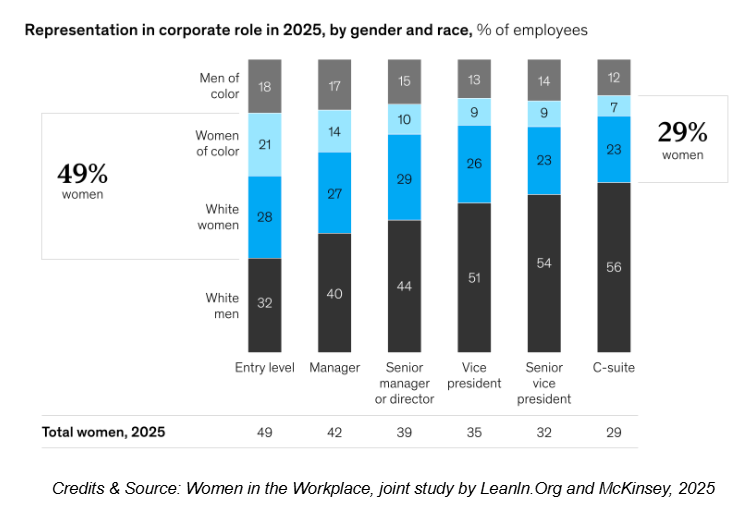
At the entry level, women hold about 49% of the positions. This looks close to being balanced. But as we go up the ladder, see what happens:
• Manager level: 42%
• Senior manager/director: 39%
• Vice president: 35%
• C-suite: 29%
• C-suite (women of color): just 7%
While globally women make up 43.4% of the total workforce, only 30.6% of women hold leadership positions. Only 52 out of the Fortune 500 companies have a female CEO at just 10.4%. If you are not tracking your own pipeline at entry level, the leaks stay invisible and give a flawed picture.
2. Which Industries Lose Women The Fastest?
The gap is also not uniform across industries. Women are best represented in healthcare, education, and consumer services. In energy, infrastructure, and tech, representation drops sharply.
Let’s look at some stats:
• In healthcare, 62% of the workforce is women, but less than 15% of Fortune 500 healthcare CEOs are women.
• Renewable energy has only 32% of jobs held by women.
• Climate tech leadership has just 10% women in total.
Women enter these industries at high rates but exit or stall at predictable points like the first promotion to manager, the jump to director, or, say, the move to VP. If your entry-level diversity looks strong but your leadership does not, the pipeline is leaking and it is worth investigating.
3. Where Is Progress Slowing Down And Why?
Companies that actively invest in women's advancement have seen a seven-percentage-point increase in women's leadership since 2021. So the playbook clearly works. But the problem is that fewer and fewer organizations are actually running it.
If you look around, you might also notice some of these warning signs: sponsorship programs that were launched with high energy but quietly lost executive attention, flexible work policies that got tightened without measuring the impact on women, or career development budgets that shrank in the last budget.
These are not random cuts. These are the decisions that stall momentum, and most HR teams see the damage months later when retention numbers start slipping and your strongest women start looking elsewhere.
What Are Some Real Barriers Faced By Women In Leadership?
The barriers are not about ambition or ability. They are structural. Here are the five biggest obstacles that you need to address.
1. Women's Contributions Stay Invisible
You have probably seen this play out more than once. Women consistently do more of the work that keeps teams running, mentoring new hires, coordinating across functions, stepping in during crises, but this work is invisible in most performance and monitoring systems.
When contributions go unrecognized, they do not count toward promotions. Women end up doing more with less visibility. Over time, the visibility gap becomes a credibility gap. Decision-makers often promote people that they see are making an impact, and if women's impact stays invisible, the promotions go elsewhere, further widening the gap.
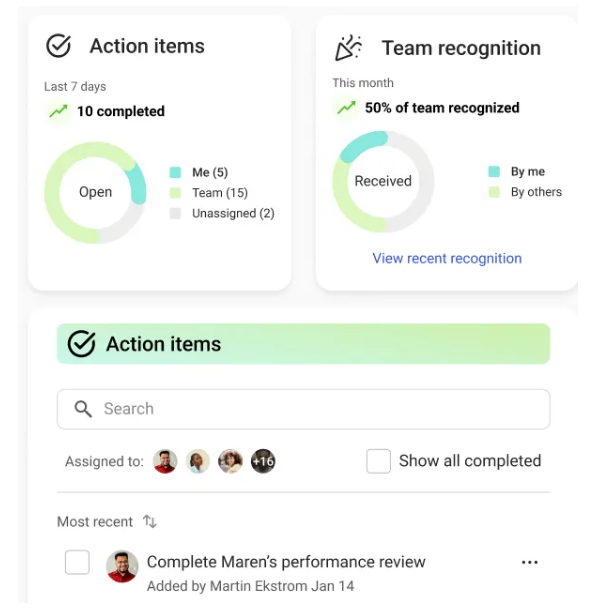
This is where Assembly's peer-to-peer recognition makes a measurable difference. Recognition flows in real time through Slack, Teams, or your HRIS, so contributions do not stay buried in private messages. Teammates, managers, and leaders can all see who is driving results and give proper credit where it's due.
Women are 22% more likely to receive personality-based feedback than men. Often women get called ‘abrasive’ for the same behaviours that earn men the ‘strategic” label.
This bias in promotion contributes to 30-50% of the gender promotion gap. If you are not auditing your review process, the system is working against your women employees even with the best intentions.
Assembly's survey tools can help you to collect consistent, measurable feedback. The interactive workflows work for every need and can gather insights and ideas from across your organization.
3. Women Have Mentors But Not Sponsors
If you have invested in mentorship programs and are wondering why more women are not advancing, here’s the truth: women are not short on mentors.
They are short on sponsors. The difference matters.
A mentor gives you advice and guidance. A sponsor uses their influence to advocate for your promotion, assign you projects that give you visibility across the levels and champions your name when decisions happen.
Women are 54% less likely than men to have a sponsor, yet women with sponsors are 20% more likely to be promoted. According to the Mckinsey study, 4 out of 10 entry-level women have not received a promotion, stretch assignment or leadership in the last 2 years.
Assembly's recognition platform makes sponsorship visible for everyone and identifies leaders who are actually championing women’s careers across the organisation.
4. Women Do Not Get Access To Career-Building Projects
Men are most likely to be assigned these projects.
Women often disproportionately absorb ‘office housework’ like note-taking, event planning and other tasks that never show up or make a case during promotions. Does this ring a bell?
When women cannot access the projects that build credibility, the promotion gap widens and becomes self-reinforcing.
5. Pay Gaps Signal That Women's Work Is Undervalued
Despite the enormous growth in hiring women at workplaces, the disparity of pay still exists and the gap remains stark.
Women overall earn 84 cents for every dollar earned by men.
This number drops down to 66 cents for black women and 59 cents for latina women. On an average women CEOs earn 76 cents per dollar earned by male CEOs.
When compensation is not transparent, women cannot negotiate from an informed position and bias goes unchecked.
Recognition and performance data captured through Assembly’s data-driven predictive analytics can support more transparent compensation conversations by grounding decisions in documented contributions.
Why Do These Barriers Cost Your Organization Money?
Every barrier above has a direct line to your budget, your bench strength, and your bottom line.
If you lose your best people, replacing them is expensive. Women leaders are switching jobs at the highest rate ever recorded. When you lose a senior woman, replacing her is expensive. Factor in recruiting, onboarding, ramp-up time, and the productivity gap while the role sits empty, and you are looking at 100-200% of their annual salary.
When women are filtered out at the manager level, the pipeline to VP and C-suite thins out fast. That means fewer internal candidates for leadership roles, more expensive external hires, and longer time-to-fill for critical positions. External leadership hires often cost 20-30% more than internal promotions and fail at higher rates.
Employees notice who gets promoted and who gets overlooked. When advancement feels unfair, engagement falls across the board, not just among women. Disengaged employees cost organizations 18% of their annual salary in lost productivity. Multiply that across a team, and the number gets quite big.
Companies in the top quartile for gender diversity are 9% more likely to outperform financially. Teams led by women see employee satisfaction scores jump from 61% to 72%. Every year you delay building diverse leadership is a year you leave measurable performance gains on the table.
Investing in employee engagement and appreciation helps you spot warning signs before they become resignations. And when your company values include equity and recognition, your teams trust that leadership means what it says.
How Can You Remove These Barriers To Women In Leadership?
Awareness is the easy part, which everyone thinks and does. Here are five structural changes that you can start implementing this week.
1. Make Women's Contributions Visible Through Recognition
If contributions stay invisible, they will not count toward advancement. Assembly's peer-to-peer recognition flows in real time through Slack, Teams, or your HRIS. When a woman leads a project or solves a cross-team challenge, the contribution shows up where everyone can see it, creating a documented track record for promotion conversations.
2. Standardize How You Evaluate And Promote People
Bias thrives in ambiguity. To reduce it:
Define clear, measurable criteria for every role across the organisation.
Interlink performance feedback to business outcomes and not personality traits.
For every promotion decision, make documenting evidence of impact mandatory.
Use Assembly's manager 1-on-1 tools to keep feedback structured and consistent so nothing important slips through the cracks.
3. Build Formal Sponsorship Into Leadership Expectations
Make sponsoring women an explicit expectation for senior leaders. Include sponsorship in their own performance evaluations. Track who is being sponsored and whether distribution is equitable. Pair sponsorship with Assembly's awards feature so sponsors can publicly celebrate their protege's milestones across the organisation boosting visibility.
4. Track And Redistribute High-Impact Work
Audit who gets high-visibility projects and who absorbs office housework. Review the distribution quarterly. When imbalances show up, course-correct immediately before it becomes worse.
5. Make Compensation Transparent
Publish pay ranges for every role. Run annual pay equity audits. Share results with employees. Transparency removes the guesswork that allows bias to persist and builds trust across the company.
How Can You Actively Empower Women At Work?
Removing barriers is the foundation. Actively empowering women is how you build momentum.
1. Amplify Women's Contributions And Ideas
You have probably been in a meeting where a woman's idea gets ignored, then repeated by a man to applause. Train managers to actively amplify underrepresented voices. Assembly's recognition feed makes amplification easy, because anyone can call out a contribution in real time.
2. Expand Access To Stretch Assignments
Proactively offer women high-impact projects. Do not wait for them to raise their hands and request for it. Women are less likely to self-nominate, not from lack of confidence, but because self-promotion triggers backlash for women in ways it does not for men.
Managers should actively identify and recommend women for visible roles. Track whether stretch assignment distribution is equitable, and hold leaders accountable when the imbalance persists.
3. Build Strong Women's Networks And Communities
Invest in Employee Resource Groups (ERGs) for women with real budgets and leadership access. Strong networks create a sense of belonging and increase retention, especially for women who feel isolated in male-dominated departments. Assembly's community spaces give women's networks a dedicated place to connect, share wins, and support each other as a valued part of your culture.
4. Recognize Sponsorship As A Leadership Behavior
When leaders sponsor women, celebrate the behavior publicly. Include sponsorship in leadership evaluations. When a leader recognizes someone through Assembly, the signal is clear: advocacy is valued here. This builds a culture where recognition drives leadership.
5. Celebrate Women's Leadership Success Stories
Highlight women leaders inside your organization. Share their journeys and what the organization did to support their growth. When women see other women succeeding in leadership at your company, it builds confidence and path feels achievable. Feature these stories in your monthly recognition ideas or during Employee Appreciation Day.
How Assembly Helps You Close The Women In Leadership Gap?
You can commit to every strategy in this guide and still fall short without the right infrastructure. Assembly directly addresses the visibility gap, one of the most persistent and most fixable barriers to women's leadership, by making recognition consistent, visible, and actionable at scale.
Recognition Data That Reveals Patterns
Assembly's insights show you who is being recognized, how often, and by whom. HR teams can spot whether women's contributions are being under-acknowledged and take corrective action before the gap widens. Think of recognition data as an early warning system for your engagement strategy.
Peer Recognition That Builds Promotion Evidence
With peer-to-peer recognition, women's contributions become part of the organizational record, visible to the decision-makers who influence promotions. When promotion conversations happen, leaders have documented evidence instead of unreliable memory. This is especially powerful for women, whose contributions are more likely to go unnoticed in legacy evaluation systems.
Awards And Rewards That Reinforce The Right Behaviors
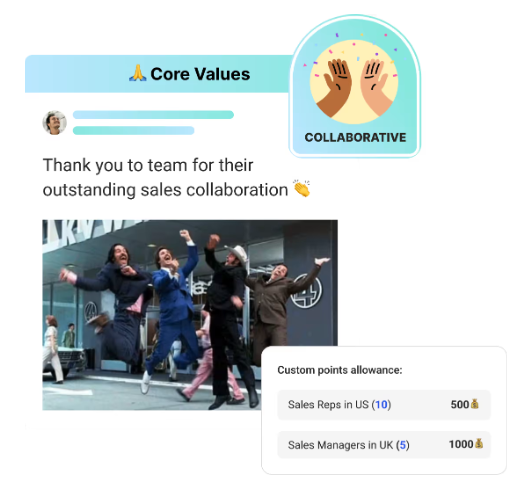
Pair recognition with meaningful rewards and custom awards like "Champion of Women's Leadership" or "Sponsorship Impact Award" to reinforce the behaviors your organization values most.
Ready to make women's contributions visible and build a leadership pipeline that works? Book a demo with Assembly and see how recognition drives equity, engagement, and retention.
From Commitment To Everyday Action
Women face real, structural barriers to leadership: biased evaluations, invisible contributions, missing sponsors, unequal access to career-building work, and pay gaps that signal undervaluation. What separates the organizations that make progress from the ones that keep stalling is whether they move beyond awareness into everyday actionable systems.
This International Women's Day, do not just post on social media like every other company. Give something real: give visibility through recognition, give access through sponsorship, give fairness through standardized evaluations. Use tools like Assembly to turn the "Give To Gain" spirit into consistent, everyday action.
Women do not need more advice on how to lead.
Organizations need better systems for letting them.
How Do I Get More Women Into Senior Leadership Roles?
Start by fixing the broken step at the manager level. Standardize promotion criteria, formalize sponsorship for women, audit who gets stretch assignments, and make contributions visible through recognition systems. You cannot fix the top without fixing the pipeline feeding it.
Why Are Women Not Getting Promoted Even When They Perform Well?
Performance review bias is a major factor. Women are 1.4 times more likely to receive subjective, personality-based feedback instead of actionable guidance. Standardized criteria and structured feedback tools reduce this bias and create fairer promotion paths.
What Is the Difference Between Mentorship and Sponsorship for Women?
Mentors advise. Sponsors advocate. A sponsor uses their position to put women forward for promotions and visible projects. Women with sponsors are 20% more likely to be promoted, but women are 54% less likely than men to have one. Formalizing sponsorship closes this gap.
How Do I Know If My Organization Has a Recognition Problem With Women?
Check whether women's contributions are visible beyond their direct team. If promotions rely on anecdotal memory, if women are doing critical work that no one outside their manager knows about, you have a recognition gap. Assembly's peer recognition makes contributions visible at scale.
How Can I Reduce Gender Bias in Performance Reviews?
Tie feedback to measurable business outcomes, not personality. Use structured review formats with consistent criteria. Collect input from multiple sources. Assembly's survey and feedback tools help standardize the process so bias has less room to operate.
How Does Employee Recognition Help Close the Gender Gap?
Recognition makes invisible work visible, creates documented evidence for promotions, and signals organizational values. When recognition is consistent and public through Assembly, women's contributions become part of the record, directly supporting advancement and retention.
class SampleComponent extends React.Component {
  // using the experimental public class field syntax below. We can also attach
  // the contextType to the current class
  static contextType = ColorContext;
  render() {
    return <Button color={this.color} />
  }
}
Organizations today are more committed than ever to building diverse leadership teams. Women make up nearly half of entry-level roles, and many companies are investing in engagement, recognition, and development initiatives to create equitable growth paths.
Yet when you map representation from entry level to the C-suite, the numbers tell a clear story: progress is happening, but not fast enough.
For every 100 men promoted to manager, 81 women receive the same promotion. For women of color, that number drops to 74. That early promotion gap compounds over time, resulting in women holding 29% of C-suite roles, a figure that has remained relatively stable since 2024, according to the McKinsey & LeanIn.Org 2025 Women in the Workplace report.
The encouraging part? We know what works.
Companies that consistently invest in structured sponsorship, transparent evaluations, stretch opportunities, and visible recognition see measurable gains in women’s leadership representation. When women receive equal access to career support, the so-called ambition gap disappears.
This International Women’s Day 2026, celebrated on March 8 under the theme “Give To Gain,”organizations have an opportunity to move from awareness to action. Giving visibility, sponsorship, stretch assignments, and recognition does not just benefit women. It strengthens leadership pipelines, improves retention, and drives performance across the business.
In this guide, we break down the structural barriers women still face, why they impact your bottom line, and how to build systems that turn intention into everyday action.
Where Do Women Stand In Leadership Today?
1. How Representation Drops At Every Level
Let’s look at the representation of women on each level.
At the entry level, women hold about 49% of the positions. This looks close to being balanced. But as we go up the ladder, see what happens:
• Manager level: 42%
• Senior manager/director: 39%
• Vice president: 35%
• C-suite: 29%
• C-suite (women of color): just 7%
While globally women make up 43.4% of the total workforce, only 30.6% of women hold leadership positions. Only 52 out of the Fortune 500 companies have a female CEO at just 10.4%. If you are not tracking your own pipeline at entry level, the leaks stay invisible and give a flawed picture.
2. Which Industries Lose Women The Fastest?
The gap is also not uniform across industries. Women are best represented in healthcare, education, and consumer services. In energy, infrastructure, and tech, representation drops sharply.
Let’s look at some stats:
• In healthcare, 62% of the workforce is women, but less than 15% of Fortune 500 healthcare CEOs are women.
• Renewable energy has only 32% of jobs held by women.
• Climate tech leadership has just 10% women in total.
Women enter these industries at high rates but exit or stall at predictable points like the first promotion to manager, the jump to director, or, say, the move to VP. If your entry-level diversity looks strong but your leadership does not, the pipeline is leaking and it is worth investigating.
3. Where Is Progress Slowing Down And Why?
Companies that actively invest in women's advancement have seen a seven-percentage-point increase in women's leadership since 2021. So the playbook clearly works. But the problem is that fewer and fewer organizations are actually running it.
If you look around, you might also notice some of these warning signs: sponsorship programs that were launched with high energy but quietly lost executive attention, flexible work policies that got tightened without measuring the impact on women, or career development budgets that shrank in the last budget.
These are not random cuts. These are the decisions that stall momentum, and most HR teams see the damage months later when retention numbers start slipping and your strongest women start looking elsewhere.
What Are Some Real Barriers Faced By Women In Leadership?
The barriers are not about ambition or ability. They are structural. Here are the five biggest obstacles that you need to address.
1. Women's Contributions Stay Invisible
You have probably seen this play out more than once. Women consistently do more of the work that keeps teams running, mentoring new hires, coordinating across functions, stepping in during crises, but this work is invisible in most performance and monitoring systems.
When contributions go unrecognized, they do not count toward promotions. Women end up doing more with less visibility. Over time, the visibility gap becomes a credibility gap. Decision-makers often promote people that they see are making an impact, and if women's impact stays invisible, the promotions go elsewhere, further widening the gap.
This is where Assembly's peer-to-peer recognition makes a measurable difference. Recognition flows in real time through Slack, Teams, or your HRIS, so contributions do not stay buried in private messages. Teammates, managers, and leaders can all see who is driving results and give proper credit where it's due.
Women are 22% more likely to receive personality-based feedback than men. Often women get called ‘abrasive’ for the same behaviours that earn men the ‘strategic” label.
This bias in promotion contributes to 30-50% of the gender promotion gap. If you are not auditing your review process, the system is working against your women employees even with the best intentions.
Assembly's survey tools can help you to collect consistent, measurable feedback. The interactive workflows work for every need and can gather insights and ideas from across your organization.
3. Women Have Mentors But Not Sponsors
If you have invested in mentorship programs and are wondering why more women are not advancing, here’s the truth: women are not short on mentors.
They are short on sponsors. The difference matters.
A mentor gives you advice and guidance. A sponsor uses their influence to advocate for your promotion, assign you projects that give you visibility across the levels and champions your name when decisions happen.
Women are 54% less likely than men to have a sponsor, yet women with sponsors are 20% more likely to be promoted. According to the Mckinsey study, 4 out of 10 entry-level women have not received a promotion, stretch assignment or leadership in the last 2 years.
Assembly's recognition platform makes sponsorship visible for everyone and identifies leaders who are actually championing women’s careers across the organisation.
4. Women Do Not Get Access To Career-Building Projects
Men are most likely to be assigned these projects.
Women often disproportionately absorb ‘office housework’ like note-taking, event planning and other tasks that never show up or make a case during promotions. Does this ring a bell?
When women cannot access the projects that build credibility, the promotion gap widens and becomes self-reinforcing.
5. Pay Gaps Signal That Women's Work Is Undervalued
Despite the enormous growth in hiring women at workplaces, the disparity of pay still exists and the gap remains stark.
Women overall earn 84 cents for every dollar earned by men.
This number drops down to 66 cents for black women and 59 cents for latina women. On an average women CEOs earn 76 cents per dollar earned by male CEOs.
When compensation is not transparent, women cannot negotiate from an informed position and bias goes unchecked.
Recognition and performance data captured through Assembly’s data-driven predictive analytics can support more transparent compensation conversations by grounding decisions in documented contributions.
Why Do These Barriers Cost Your Organization Money?
Every barrier above has a direct line to your budget, your bench strength, and your bottom line.
If you lose your best people, replacing them is expensive. Women leaders are switching jobs at the highest rate ever recorded. When you lose a senior woman, replacing her is expensive. Factor in recruiting, onboarding, ramp-up time, and the productivity gap while the role sits empty, and you are looking at 100-200% of their annual salary.
When women are filtered out at the manager level, the pipeline to VP and C-suite thins out fast. That means fewer internal candidates for leadership roles, more expensive external hires, and longer time-to-fill for critical positions. External leadership hires often cost 20-30% more than internal promotions and fail at higher rates.
Employees notice who gets promoted and who gets overlooked. When advancement feels unfair, engagement falls across the board, not just among women. Disengaged employees cost organizations 18% of their annual salary in lost productivity. Multiply that across a team, and the number gets quite big.
Companies in the top quartile for gender diversity are 9% more likely to outperform financially. Teams led by women see employee satisfaction scores jump from 61% to 72%. Every year you delay building diverse leadership is a year you leave measurable performance gains on the table.
Investing in employee engagement and appreciation helps you spot warning signs before they become resignations. And when your company values include equity and recognition, your teams trust that leadership means what it says.
How Can You Remove These Barriers To Women In Leadership?
Awareness is the easy part, which everyone thinks and does. Here are five structural changes that you can start implementing this week.
1. Make Women's Contributions Visible Through Recognition
If contributions stay invisible, they will not count toward advancement. Assembly's peer-to-peer recognition flows in real time through Slack, Teams, or your HRIS. When a woman leads a project or solves a cross-team challenge, the contribution shows up where everyone can see it, creating a documented track record for promotion conversations.
2. Standardize How You Evaluate And Promote People
Bias thrives in ambiguity. To reduce it:
Define clear, measurable criteria for every role across the organisation.
Interlink performance feedback to business outcomes and not personality traits.
For every promotion decision, make documenting evidence of impact mandatory.
Use Assembly's manager 1-on-1 tools to keep feedback structured and consistent so nothing important slips through the cracks.
3. Build Formal Sponsorship Into Leadership Expectations
Make sponsoring women an explicit expectation for senior leaders. Include sponsorship in their own performance evaluations. Track who is being sponsored and whether distribution is equitable. Pair sponsorship with Assembly's awards feature so sponsors can publicly celebrate their protege's milestones across the organisation boosting visibility.
4. Track And Redistribute High-Impact Work
Audit who gets high-visibility projects and who absorbs office housework. Review the distribution quarterly. When imbalances show up, course-correct immediately before it becomes worse.
5. Make Compensation Transparent
Publish pay ranges for every role. Run annual pay equity audits. Share results with employees. Transparency removes the guesswork that allows bias to persist and builds trust across the company.
How Can You Actively Empower Women At Work?
Removing barriers is the foundation. Actively empowering women is how you build momentum.
1. Amplify Women's Contributions And Ideas
You have probably been in a meeting where a woman's idea gets ignored, then repeated by a man to applause. Train managers to actively amplify underrepresented voices. Assembly's recognition feed makes amplification easy, because anyone can call out a contribution in real time.
2. Expand Access To Stretch Assignments
Proactively offer women high-impact projects. Do not wait for them to raise their hands and request for it. Women are less likely to self-nominate, not from lack of confidence, but because self-promotion triggers backlash for women in ways it does not for men.
Managers should actively identify and recommend women for visible roles. Track whether stretch assignment distribution is equitable, and hold leaders accountable when the imbalance persists.
3. Build Strong Women's Networks And Communities
Invest in Employee Resource Groups (ERGs) for women with real budgets and leadership access. Strong networks create a sense of belonging and increase retention, especially for women who feel isolated in male-dominated departments. Assembly's community spaces give women's networks a dedicated place to connect, share wins, and support each other as a valued part of your culture.
4. Recognize Sponsorship As A Leadership Behavior
When leaders sponsor women, celebrate the behavior publicly. Include sponsorship in leadership evaluations. When a leader recognizes someone through Assembly, the signal is clear: advocacy is valued here. This builds a culture where recognition drives leadership.
5. Celebrate Women's Leadership Success Stories
Highlight women leaders inside your organization. Share their journeys and what the organization did to support their growth. When women see other women succeeding in leadership at your company, it builds confidence and path feels achievable. Feature these stories in your monthly recognition ideas or during Employee Appreciation Day.
How Assembly Helps You Close The Women In Leadership Gap?
You can commit to every strategy in this guide and still fall short without the right infrastructure. Assembly directly addresses the visibility gap, one of the most persistent and most fixable barriers to women's leadership, by making recognition consistent, visible, and actionable at scale.
Recognition Data That Reveals Patterns
Assembly's insights show you who is being recognized, how often, and by whom. HR teams can spot whether women's contributions are being under-acknowledged and take corrective action before the gap widens. Think of recognition data as an early warning system for your engagement strategy.
Peer Recognition That Builds Promotion Evidence
With peer-to-peer recognition, women's contributions become part of the organizational record, visible to the decision-makers who influence promotions. When promotion conversations happen, leaders have documented evidence instead of unreliable memory. This is especially powerful for women, whose contributions are more likely to go unnoticed in legacy evaluation systems.
Awards And Rewards That Reinforce The Right Behaviors
Pair recognition with meaningful rewards and custom awards like "Champion of Women's Leadership" or "Sponsorship Impact Award" to reinforce the behaviors your organization values most.
Ready to make women's contributions visible and build a leadership pipeline that works? Book a demo with Assembly and see how recognition drives equity, engagement, and retention.
From Commitment To Everyday Action
Women face real, structural barriers to leadership: biased evaluations, invisible contributions, missing sponsors, unequal access to career-building work, and pay gaps that signal undervaluation. What separates the organizations that make progress from the ones that keep stalling is whether they move beyond awareness into everyday actionable systems.
This International Women's Day, do not just post on social media like every other company. Give something real: give visibility through recognition, give access through sponsorship, give fairness through standardized evaluations. Use tools like Assembly to turn the "Give To Gain" spirit into consistent, everyday action.
Women do not need more advice on how to lead.
Organizations need better systems for letting them.
How Do I Get More Women Into Senior Leadership Roles?
Start by fixing the broken step at the manager level. Standardize promotion criteria, formalize sponsorship for women, audit who gets stretch assignments, and make contributions visible through recognition systems. You cannot fix the top without fixing the pipeline feeding it.
Why Are Women Not Getting Promoted Even When They Perform Well?
Performance review bias is a major factor. Women are 1.4 times more likely to receive subjective, personality-based feedback instead of actionable guidance. Standardized criteria and structured feedback tools reduce this bias and create fairer promotion paths.
What Is the Difference Between Mentorship and Sponsorship for Women?
Mentors advise. Sponsors advocate. A sponsor uses their position to put women forward for promotions and visible projects. Women with sponsors are 20% more likely to be promoted, but women are 54% less likely than men to have one. Formalizing sponsorship closes this gap.
How Do I Know If My Organization Has a Recognition Problem With Women?
Check whether women's contributions are visible beyond their direct team. If promotions rely on anecdotal memory, if women are doing critical work that no one outside their manager knows about, you have a recognition gap. Assembly's peer recognition makes contributions visible at scale.
How Can I Reduce Gender Bias in Performance Reviews?
Tie feedback to measurable business outcomes, not personality. Use structured review formats with consistent criteria. Collect input from multiple sources. Assembly's survey and feedback tools help standardize the process so bias has less room to operate.
How Does Employee Recognition Help Close the Gender Gap?
Recognition makes invisible work visible, creates documented evidence for promotions, and signals organizational values. When recognition is consistent and public through Assembly, women's contributions become part of the record, directly supporting advancement and retention.
Browse our Free Employee Recognition Guide
Get the foundational knowledge on creating an employee recognition program that boosts employee engagement and helps them feel valued.








.png)