Remote work has fundamentally changed how organizations build and maintain employee engagement.
Earlier spontaneous recognition, team building & connection, and cultural practices happen naturally in offices, but now require intentional systems and tools due to the remote and hybrid work culture.
Today, there are engagement platforms designed specifically for remote-first companies, hybrid workforces managing split teams, and distributed organizations spanning multiple time zones and regions.
Some platforms focus on pulse surveys and feedback collection. Others emphasize recognition, connection, and culture-building. Many employee engagement software look similar on the surface, but behave very differently once deployed across a distributed workforce.
Now the challenge is no longer finding the best engagement platform for remote employees. But it's understanding which platform actually fits how your remote team works, maintains engagement without constant oversight, and drives participation across locations and time zones.
Quick Summary: Best Remote Employee Engagement Software by Use Case
Best Overall: Assembly or Quantum Workplace - Complete engagement ecosystem with recognition, surveys, communication tools, and automated workflows that integrate seamlessly with Slack/Teams for distributed teams.
Best for Pulse Surveys & Feedback: Quantum Workplace - Real-time sentiment tracking with actionable analytics and driver analysis for remote workforce insights.
Best for Small Remote Teams: Assembly or Bonusly - Assembly starts at $2/user/month with comprehensive features; Bonusly offers lightweight peer recognition starting at $3/user/month.
Best for AI-Powered Global Teams: ThriveSparrow - AI-driven sentiment analysis with 100+ language support, ideal for internationally distributed workforces.
Best for Remote Team Celebrations: Kudoboard - Collaborative digital boards perfect for birthdays, work anniversaries, and farewells when teams can't gather in person.
Best for Recognition-First Engagement: Assembly or Motivosity - Native recognition tied to company values with visibility across distributed teams.
In this blog, we break down the 9 best remote employee engagement software platforms of 2026, comparing tools across engagement approach, team size, and distributed work model.
How to Choose the Right Remote Employee Engagement Software
Employee engagement software only works if it fits how your team actually operates. The best platform is not the one with the longest feature list. It’s the one your employees consistently use across time zones, locations, and work styles.
Here’s how to evaluate your options without overcomplicating the decision.
1. Distributed Work Model Fit
Before comparing tools, get clear on how your team works today and where it’s headed.
Fully remote teams need engagement that lives where they work, like Slack, Teams, or email. Hybrid teams need flexibility. Engagement software must support both in-office and remote employees without favoring one group over the other. Global teams need platforms supporting multiple languages, time zones, and cultural contexts without favoring headquarters locations.
2. Engagement Focus: Listening vs. Action
Some platforms focus heavily on listening, using pulse surveys, engagement scores, and sentiment tracking. These tools help you understand how employees feel, but they often stop there.
Others focus on action, like recognition, rewards, and team connection. These platforms help reinforce positive behaviors and culture in real time.
The strongest remote employee engagement software connects listening to action. Feedback should lead directly to visible changes, recognition, or follow-up, not sit in a dashboard that only HR sees.
3. Integration With Remote Work Stack
Engagement software should fit naturally into the tools your team already uses, especially Slack, Microsoft Teams, and your HRIS. When recognition, feedback, or updates happen where people already work, engagement feels effortless instead of forced.
4. Async-First vs. Real-Time Engagement
Remote teams rarely share the same working hours. Engagement software should respect that.
Async-friendly features let employees participate on their own schedule while still feeling included. Recognition, announcements, and feedback should remain visible and meaningful even if someone logs in hours later.
Avoid tools that rely too heavily on live events or real-time participation. Those tend to favor a small portion of the workforce and quietly exclude everyone else.
5. Admin Effort and Scalability Across Locations
Evaluate how much manual effort the platform requires from HR and managers. The best tools automate recurring tasks like reminders, recognition budgets, and reporting so engagement scales without adding headcount.
Also consider how easily the platform supports new locations, teams, and managers. Engagement should grow with your company, not become harder to manage every quarter.
Key Features You Should Look For in Employee Engagement Software
The right features help you listen, act, and sustain engagement without creating more work for HR or managers.
Here are the core capabilities that matter most.
Pulse Surveys & Continuous Listening - Regular, brief check-ins that capture sentiment without survey fatigue. Look for platforms with smart scheduling, anonymous feedback options, and real-time analytics.
Recognition & Appreciation Tools - Peer-to-peer and manager recognition that creates visibility for remote workers who might otherwise go unnoticed. Recognition should be tied to company values and visible across the organization. For structured recognition throughout the year, consider using an employee engagement calendar with monthly recognition ideas and prompts to maintain consistent appreciation.
Communication & Connection Features - Tools that facilitate informal connection through virtual coffee chats, random team pairings, social channels, and interest-based groups that replicate spontaneous office interactions.
Analytics & Insights - Dashboards showing engagement trends by team, location, tenure, or department. Look for actionable insights, not just data dumps.
Async-Friendly Design - Features that work across time zones without requiring everyone to be online simultaneously. Surveys that stay open, recognition that's visible 24/7, and communication tools that don't penalize late responders.
Integration With Remote Work Tools - Native Slack, Teams, Zoom, and HRIS integration so engagement happens where work already occurs.
When evaluating platforms, prioritize features that address your specific remote work challenges. A small fully-remote startup needs different tools than a global enterprise managing hybrid teams across regions.
Types of Remote Employee Engagement Software
Remote employee engagement platforms fall into distinct categories based on their primary function. Understanding these categories helps you identify which type addresses your distributed workforce needs.
1. All-in-One Remote Engagement Platforms - Combine surveys, recognition, communication, and analytics in one system. Handle everything from pulse checks to peer appreciation and work well for organizations wanting a single remote engagement solution.
2. Pulse Survey & Listening Platforms - Focus on continuous feedback collection, sentiment analysis, and engagement measurement. Best for organizations prioritizing data-driven insights into remote workforce sentiment.
3. Recognition & Appreciation Tools - Built for peer-to-peer and manager recognition across distributed teams. Emphasize visibility, values alignment, and cultural reinforcement for remote employees.
4. Connection & Team-Building Platforms - Facilitate informal social connection, virtual events, random coffee chats, and interest-based groups that recreate spontaneous office culture remotely.
5. Manager Effectiveness Tools - Designed to help remote managers stay connected through manager 1-on-1 prompts, check-in frameworks, and team health insights. Managers who also need to run structured reviews and track goals alongside engagement will find performance management software covers that layer more completely.
6. Enterprise Engagement Suites - Comprehensive platforms for large, global organizations with advanced analytics, multi-region support, and integration with enterprise HR systems.
Each category serves different remote engagement goals. Match the type to what matters most for your distributed workforce.
Best Remote Employee Engagement Platforms: Comparison Chart
Key Differences
Platform
Best For
Starting Price
G2 Rating
Key Strength
Assembly
Remote teams of all sizes
$2/user/month
4.8/5
Complete engagement ecosystem with Slack and Teams integration
Quantum Workplace
Mid to enterprise organizations
Custom pricing
4.3/5
Engagement surveys with driver analysis and action planning
Nectar
Small remote businesses
$2.75/user/month
4.7/5
Budget-friendly peer recognition
Bonusly
Remote teams seeking social recognition
$3/user/month
4.7/5
Gamified peer-to-peer appreciation
Mo
Small distributed teams
Custom pricing
4.6/5
Habit-building recognition for remote culture
Leapsome
Growing remote companies
Custom pricing
4.8/5
Integrated performance and engagement tools
Kudoboard
Remote team celebrations
$25/month
4.8/5
Collaborative celebration boards
ThriveSparrow
Global remote teams
Custom pricing
4.3/5
AI-powered, multilingual engagement
Motivosity
Culture-first remote companies
$2/user/month
4.7/5
Social connection combined with recognition
Top 9 Remote Employee Engagement Software Platforms of 2026
1. Assembly
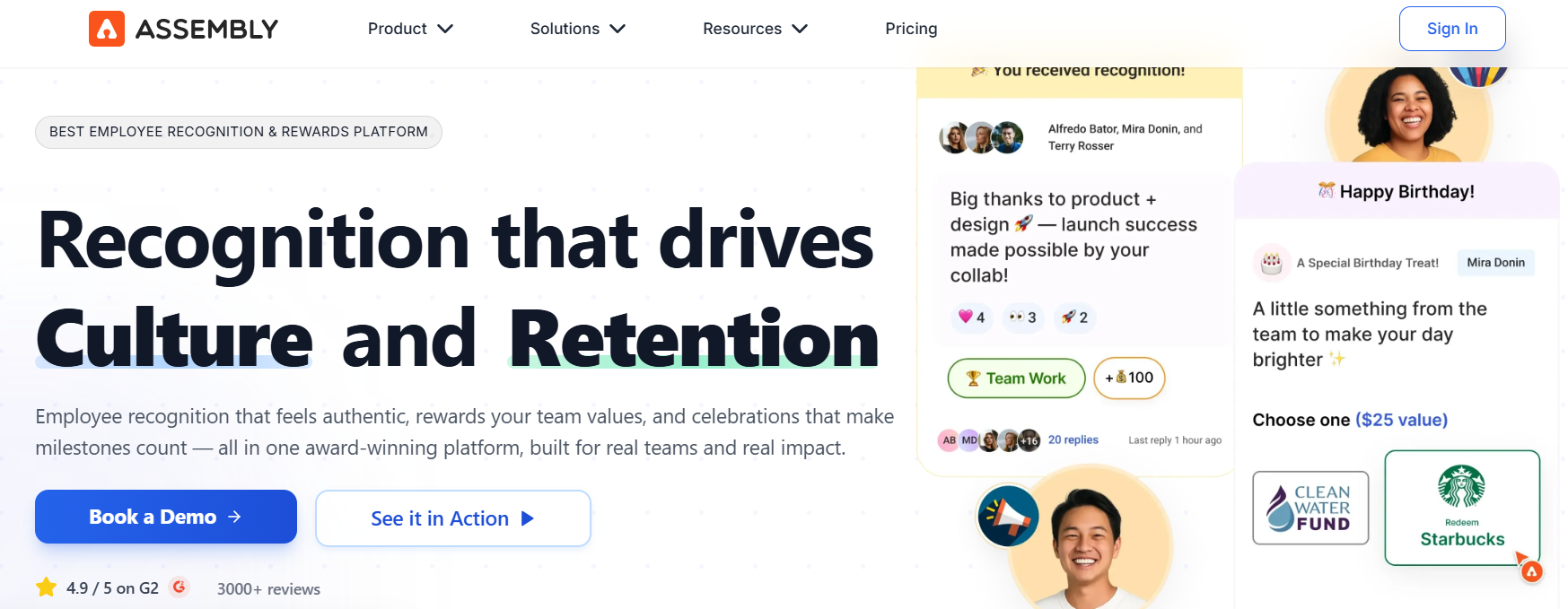
Best For: Remote and hybrid teams of all sizes (10-5,000+ employees) looking for an all-in-one engagement platform with recognition, surveys, and community features in one platform.
Why It Stands Out
Assembly offers a complete remote engagement infrastructure through recognition, pulse surveys, milestone automation, and team connection in one platform with native Slack/Teams integration. Starting at $2/user/month, remote teams get enterprise-level features without enterprise pricing or complexity.
Strengths
Automated milestones and workflows reduce admin overhead for remote HR teams.
Scales from 50 to 5,000+ employees across remote, hybrid, and global teams without requiring migration.
Async-friendly design works across time zones without requiring simultaneous participation.
May offer more features than very small remote teams (under 20) need initially
Assembly is ideal if you want engagement that leads to visible action. It’s especially strong for remote teams that need recognition, connection, and consistency without adding HR overhead.
2. Quantum Workplace
Best For: Mid to large remote organizations (500-10,000+ employees) prioritizing comprehensive engagement measurement, performance management, and action planning.
Why It Stands Out
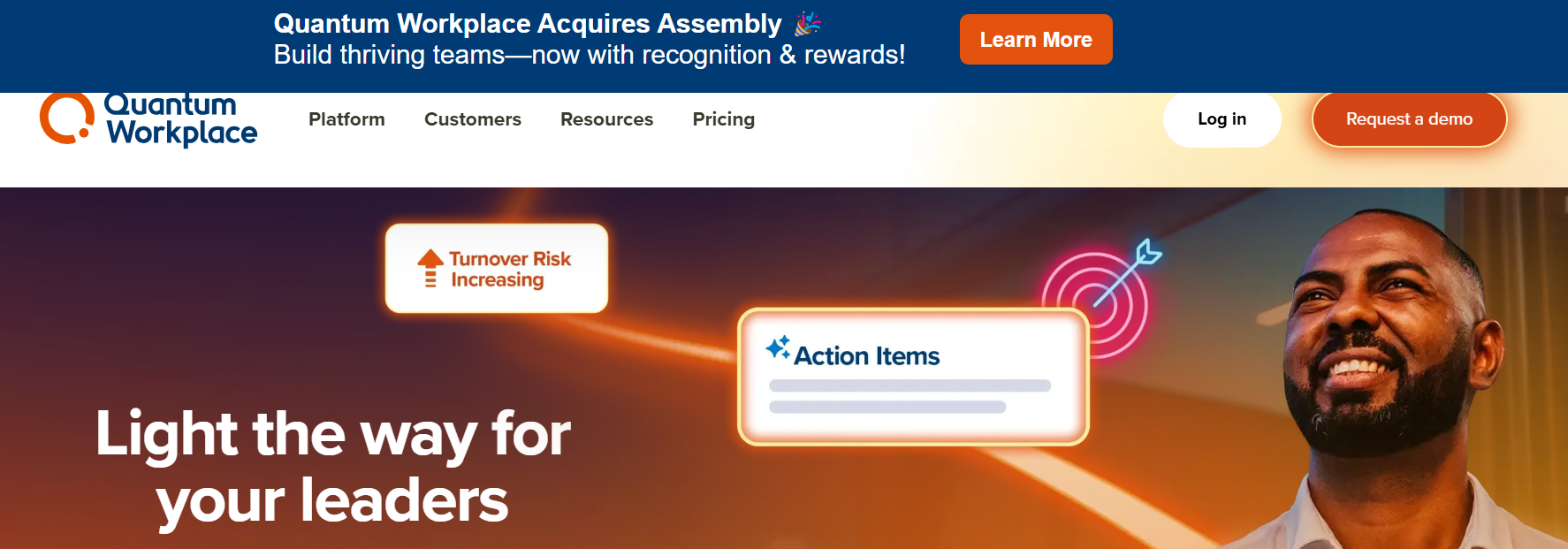
Quantum Workplace brings engagement surveys, performance reviews, goal setting, and manager development into one unified platform. For distributed teams, it connects pulse surveys and lifecycle feedback with recognition and development conversations, giving HR leaders a clear view of what drives engagement and performance across the remote workforce.
Strengths
Robust engagement and pulse surveys designed for distributed teams
Built-in action planning tied to survey results
Strong manager tools for feedback and accountability
Limitations
Better suited for organizations that need depth rather than lightweight engagement.
Quantum Workplace works best for mid-market to enterprise remote organizations treating engagement as a strategic initiative requiring comprehensive measurement, action planning, and integration with performance management.
3. Nectar
Best For: Small to mid-sized remote teams looking for an affordable, recognition-first engagement solution.
Why It Stands Out
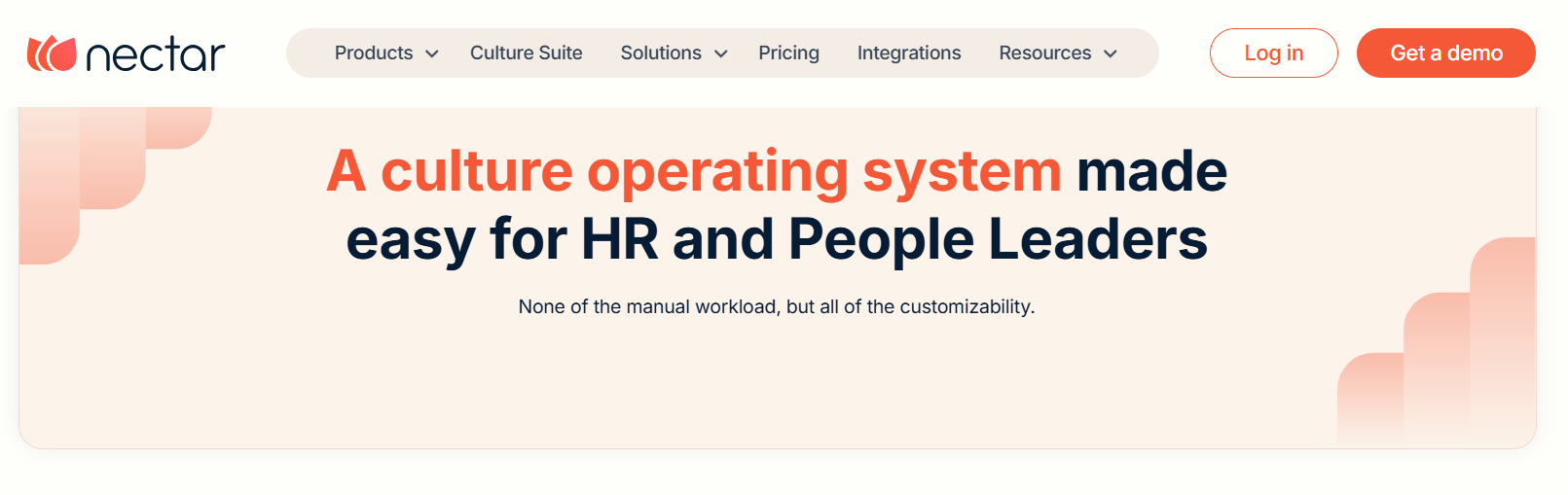
Nectar provides remote team recognition at $2.75/user/month with Slack integration, automated milestones, and an Amazon rewards catalog. The platform helps distributed teams stay engaged through visible appreciation, automated milestone celebrations, and team challenges that encourage participation across locations.
Strengths
Budget-friendly pricing for growing companies
Slack integration enables engagement participation without platform switching
Only pay for rewards actually claimed by employees
Limitations
Limited survey and feedback capabilities
Basic analytics compared to enterprise engagement platforms
Nectar is a solid option if recognition is your primary engagement lever. It works well for smaller remote teams that want to boost morale quickly without investing in a full engagement suite.
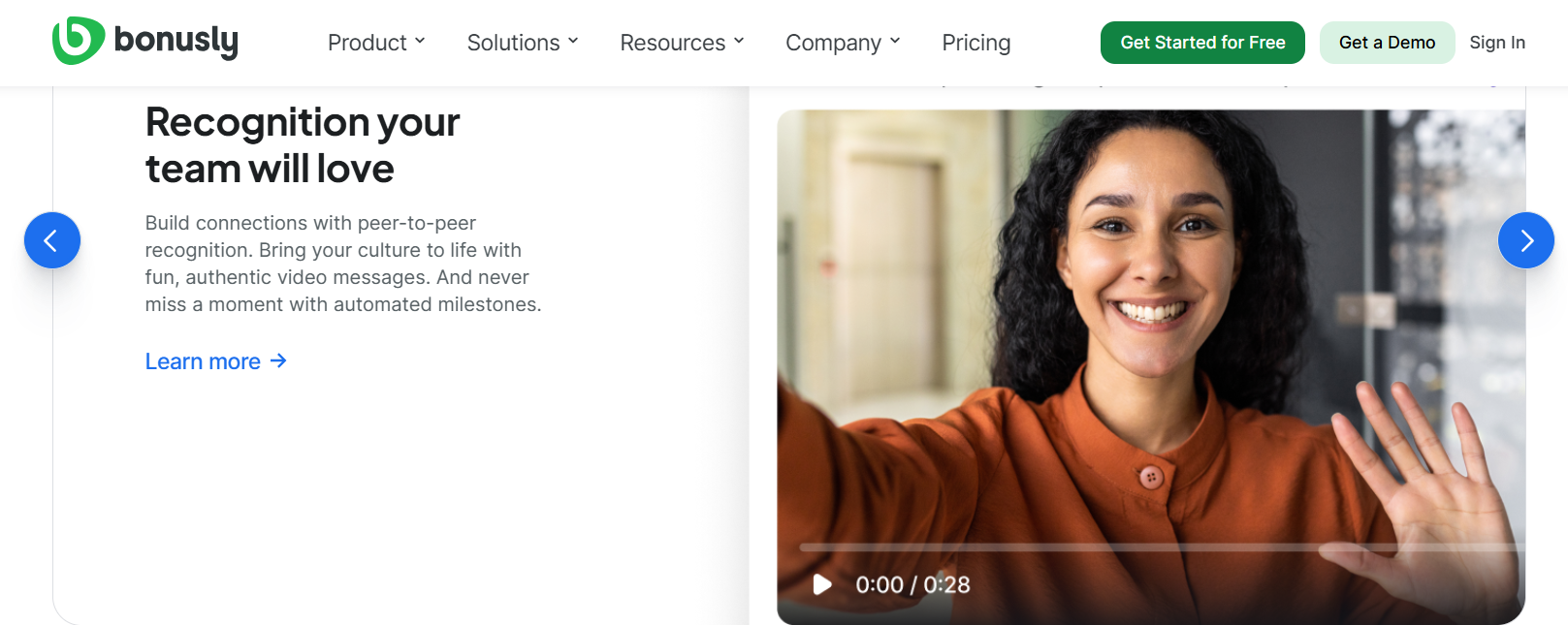
4. Bonusly
Best For - Remote and hybrid mid-sized teams (100-2,000 employees) wanting to drive engagement through social peer appreciation and team connection.
Why It Stands Out
Bonusly creates engagement through visible peer appreciation that keeps remote culture alive. The social feed and gamified approach encourage frequent interaction and team connection, helping replace spontaneous office engagement that disappears in distributed work.
Strengths
Social engagement feed creates visibility and connection across distributed teams
Gamification elements drive consistent participation across time zones
Strong Slack/Microsoft Teams integration for frictionless async participation
Limitations
Limited engagement survey and sentiment measurement capabilities
Can feel recognition-heavy without broader engagement tools
Bonusly works well for teams that want to energize culture through recognition. It’s best used when appreciation is the primary engagement driver, rather than feedback or action planning.
If Bonusly doesn’t fully meet your needs, you can check the guide to Bonusly alternatives breaks down other employee engagement platforms.
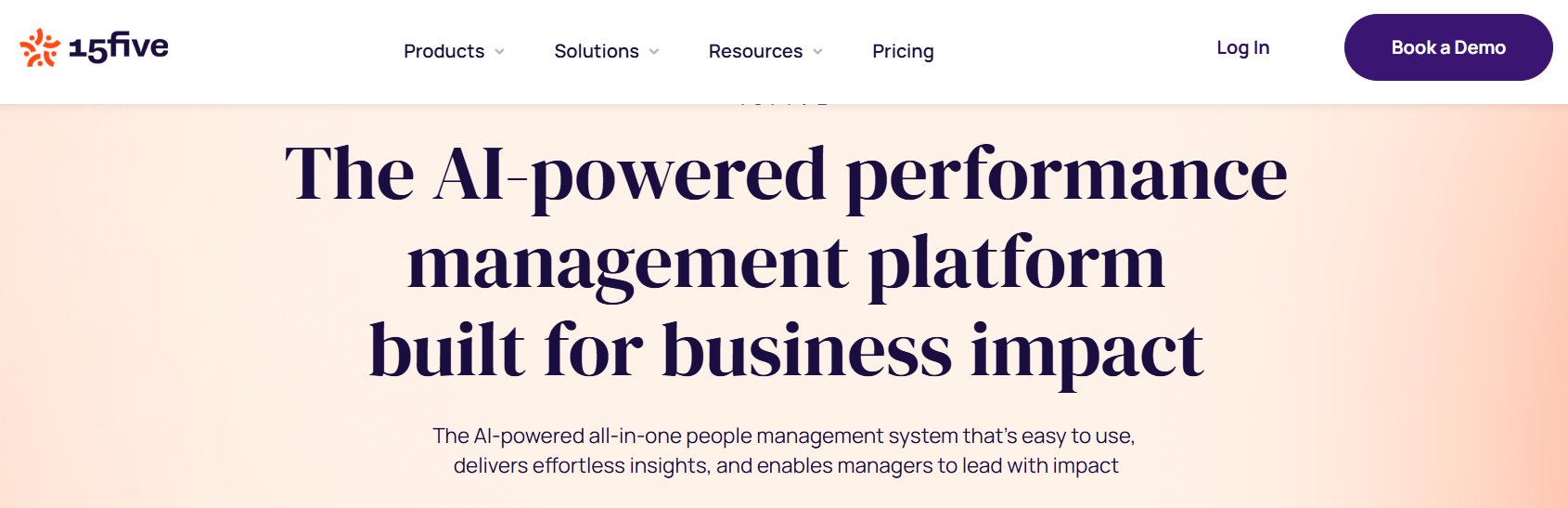
5. 15Five
Best For - Manager-led engagement for remote and hybrid teams that want structured check-ins and continuous feedback.
Why It Stands Out
15Five focuses on engagement through regular manager-employee conversations. Its weekly check-ins and pulse feedback help remote managers stay connected to team sentiment and address issues before they escalate.
Strengths
Weekly check-ins designed for async participation
Strong focus on manager effectiveness and follow-up
Pulse feedback tied to ongoing conversations
Limitations
Less emphasis on peer recognition and social engagement
Adoption depends heavily on manager consistency
15Five works best for remote organizations where engagement flows through strong manager relationships and structured conversations rather than peer-driven social interaction.
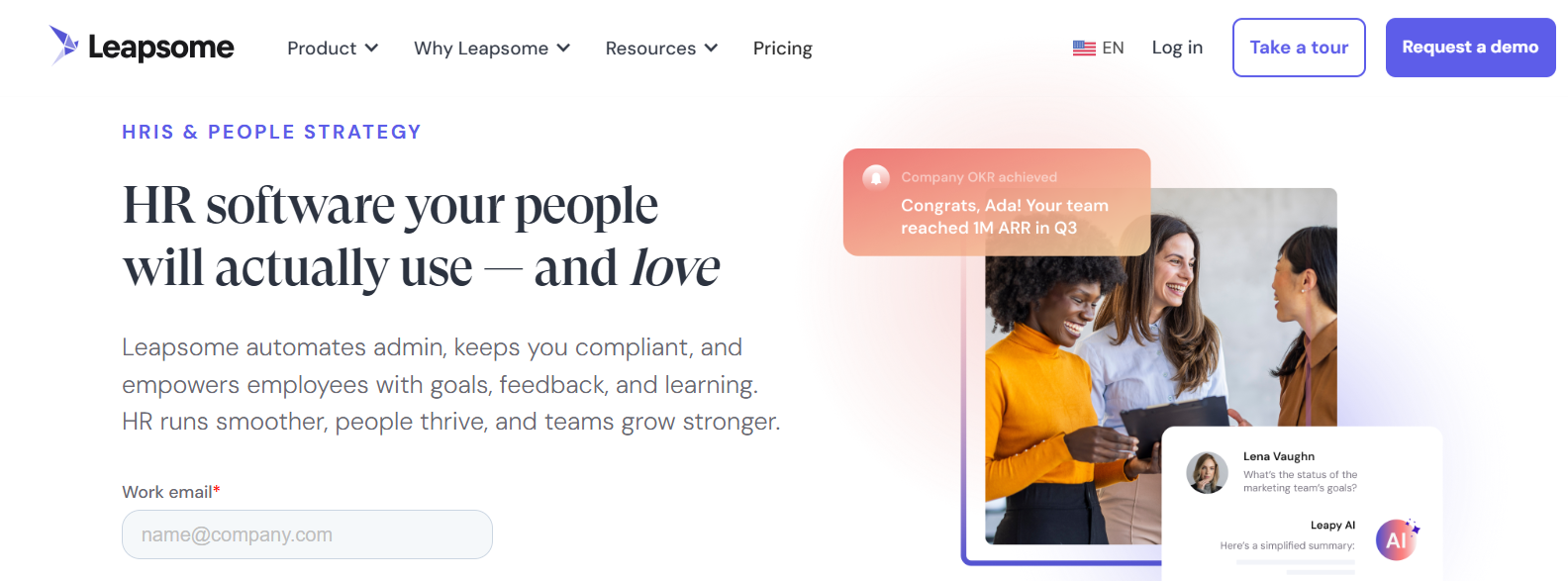
6. Leapsome
Best For - Fast-growing remote companies wanting integrated engagement surveys, performance management, and employee development in one platform.
Why It Stands Out
Leapsome connects engagement measurement directly to performance conversations, goals, and learning for distributed teams. It brings feedback into manager conversations, goals, and development, which is especially important for remote teams.
Strengths
Engagement surveys connected to performance workflows
Supports goals, reviews, and learning alongside engagement
Scales well for growing, distributed organizations
Limitations
More complex setup compared to lightweight engagement tools
Higher price point than standalone engagement tools
Leapsome is a good fit for organizations that want engagement embedded into broader people operations. It works best for teams ready to manage engagement alongside performance and development.
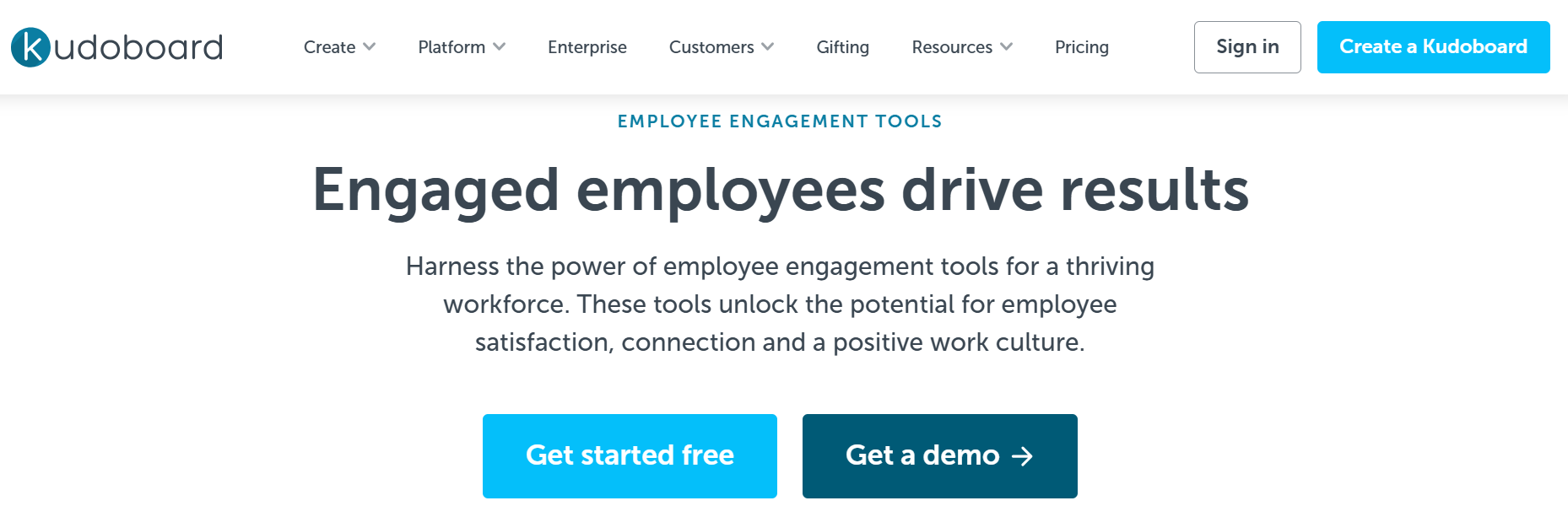
7. Kudoboard
Best For - Remote teams that want a simple way to celebrate milestones, farewells, and special moments together.
Why It Stands Out
Kudoboard maintains engagement through shared celebrations rather than surveys or continuous programs. Distributed teams create collaborative digital boards where colleagues add messages, photos, and videos for birthdays, work anniversaries, retirements, or farewells.
Strengths
Easy-to-create collaborative celebration boards
Works well for birthdays, work anniversaries, and farewells
Low learning curve for remote teams
Limitations
Not a full employee engagement platform
No surveys, analytics, or ongoing engagement workflows
Kudoboard is best viewed as a complementary tool for remote celebrations. It works well alongside broader engagement platforms but is not designed to manage engagement end-to-end.
For teams needing more comprehensive engagement features beyond celebrations, explore Kudoboard alternatives that combine milestone recognition with ongoing engagement tools.
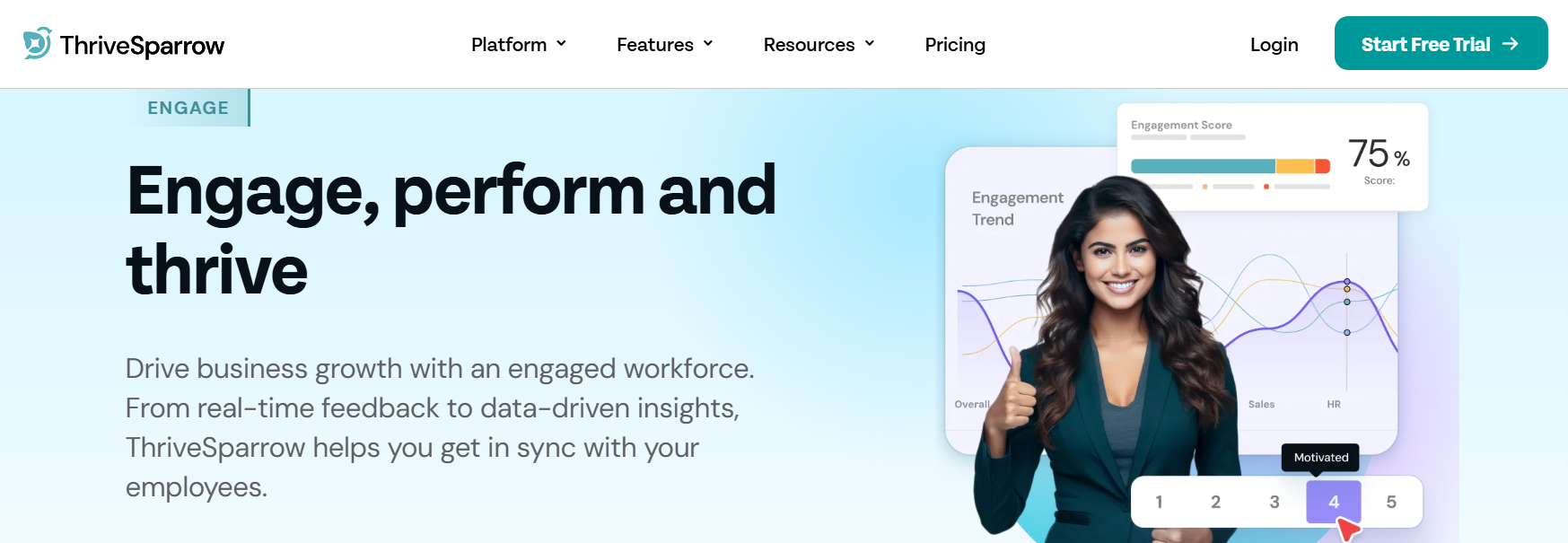
8. ThriveSparrow
Best For - Global remote teams that need multilingual, survey-driven engagement with AI-powered sentiment analysis and insights.
Why It Stands Out
ThriveSparrow specializes in engagement measurement for internationally distributed teams through AI-driven sentiment analysis across 100+ languages. The platform helps you understand engagement patterns, identify disengagement risks, and surface themes from employee feedback automatically.
Strengths
Pulse surveys and engagement analytics for distributed teams
Multilingual support for global workforces
Designed with remote and international teams in mind
Limitations
Less emphasis on day-to-day recognition and social engagement
Action and follow-up depend on external workflows
ThriveSparrow is a good choice for organizations focused on understanding engagement at scale. It works best when paired with tools that help turn insights into visible action.
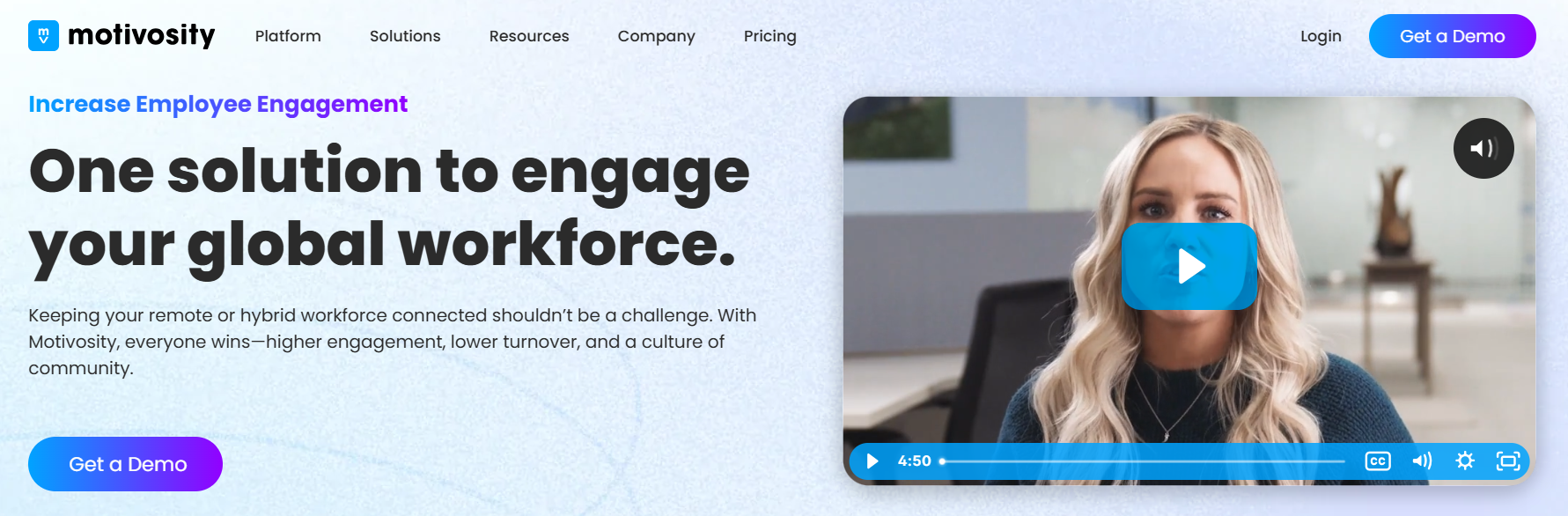
9. Motivosity
Best For - Culture-first remote and hybrid companies that want to strengthen connection through recognition and social interaction.
Why It Stands Out
Motivosity blends recognition with community features, giving remote teams a space to connect, share wins, and build culture. Its focus on social engagement helps replace informal office interactions in distributed environments.
Strengths
Peer recognition combined with social community features
Supports connection and visibility across remote teams
Encourages consistent participation through social interaction
Limitations
Limited survey depth compared to analytics-first platforms
Less focused on enterprise-level reporting
Motivosity is a solid option for teams that see engagement as a social experience. It’s best suited for organizations that prioritize connection and recognition over formal survey-driven engagement.
How to Implement Remote Employee Engagement Programs
Once you've selected the right platform, thoughtful implementation determines whether your remote engagement program drives lasting impact or becomes another underutilized tool.
1. Build a Clear Implementation Timeline for Distributed Teams
Remote teams need clarity from day one.
Create a simple rollout plan that outlines what’s launching, when it starts, and how success will be measured. Spread key moments across weeks instead of launching everything at once. This gives employees time to engage without feeling overwhelmed.
2. Involve Remote Employees in Program Design
Collect input from employees across locations, roles, and tenures on current engagement challenges.
Use quick polls, short surveys, or focus groups to ask what types of recognition, feedback, or connection matter most to remote employees. This input increases buy-in and reduces the risk of launching programs people ignore.
When employees see their ideas reflected, participation rises naturally.
3. Create Location-Agnostic Launch Strategy
Your engagement program should feel fair and inclusive, no matter where someone works.
Ensure launch communication, training, and early examples work equally well for all locations and time zones. Recognition, rewards, and communication should be equally accessible to remote, hybrid, and in-office employees.
Avoid headquarters-centric rollouts that make remote employees feel like afterthoughts.
4. Integrate With Remote Work Tools
Connect your engagement platform with tools like Slack, Microsoft Teams, and your HRIS so participation feels natural. When recognition, reminders, and updates show up in daily workflows, employees don’t need to remember another system.
5. Train Remote Managers Specifically
Remote managers need different guidance than office-based leaders.
Train managers on how to recognize wins publicly, encourage participation asynchronously, identify disengagement signals and follow up on feedback with remote teams. Give them clear expectations and examples they can use immediately.
6. Launch With Async-Friendly Momentum
Design your launch so employees can participate whenever they log in. recorded announcements, asynchronous Q&A, recognition campaigns spanning days, not hours. Ensure early participation feels inclusive regardless of location or schedule.
Track engagement by office, region, remote vs. hybrid status, and team to identify adoption gaps early. Address location-specific barriers before they become systemic participation problems.
The right choice depends less on feature lists and more on how your team actually works. Remote engagement succeeds when the platform fits your structure, culture, and capacity to act.
Prioritize native integration over features - Choose platforms living in Slack/Teams where remote work happens. Engagement requiring separate logins fails regardless of capabilities.
Match platform to your remote engagement priority - If measuring sentiment is primary, choose listening-first tools. If building connections matters most, choose recognition and social platforms. If you need both, choose all-in-one solutions.
Choose platforms designed for async work - Distributed teams across time zones need engagement that doesn't penalize late responders or require simultaneous participation.
Select platforms scaling across locations without admin multiplication - Remote engagement should work for 50 employees in one region or 5,000 across ten countries with similar admin effort through automation and smart defaults.
Test with distributed pilot groups before full rollout - Validate that engagement works equally well across time zones, locations, and remote vs. hybrid populations before organization-wide deployment.
How Easy It Is to Get Started With Assembly
After choosing the right remote employee engagement strategy, execution is where many teams lose momentum. Programs stall during setup, onboarding drags on, and engagement fades before it starts. Assembly removes that friction by making it easy to move from planning to participation without heavy configuration or long rollout cycles.
With Assembly, HR teams can launch engagement initiatives in days, not months. You can quickly enable peer recognition, configure engagement workflows, track milestones, and support feedback-driven action without rebuilding existing processes. There’s no need to introduce complex systems or train employees on a new platform from scratch.
Assembly integrates directly into tools like Slack and Microsoft Teams, so engagement happens where work already happens. Employees can start recognizing wins, participating asynchronously, and staying connected immediately. This drives faster adoption and more consistent engagement from day one, especially for remote and hybrid teams.
As your organization grows, Assembly grows with you. Automated milestones, engagement insights, and scalable workflows ensure consistency across teams and locations without increasing HR workload. This allows People Ops teams to focus on strengthening culture and connection while Assembly handles the operational details behind the scenes.
How We Evaluated These Remote Employee Engagement Platforms
We assessed these platforms based on what drives remote engagement success:
Remote Work Integration: Native Slack/Teams integration, async design, and time zone support enabling participation across distributed teams.
Engagement Approach: Balance between listening (surveys, feedback) and action (recognition, connection) appropriate for remote workforce needs.
Visibility & Inclusion: Features ensuring remote workers feel seen, appreciated, and connected regardless of location or schedule.
Manager Support: Tools, insights, and prompts helping distributed leaders maintain team connection without physical proximity.
Scalability Across Locations: Growth from single-location remote teams to global distributed workforces without requiring regional customization or admin multiplication.
Assembly helps you build remote engagement programs that distributed teams actually use, remote managers can facilitate without overhead, and scale effortlessly as you add locations and time zones.
Want to see how it works for your remote team? Book a demo with Assembly and explore how engagement becomes natural when embedded into distributed workflows.
FAQs
How do you measure remote employee engagement?
Remote employee engagement can be measured through pulse surveys, participation rates in recognition or connection programs, sentiment analysis, and leading indicators like survey response rates and voluntary tool usage. Effective measurement combines quantitative metrics (survey scores, participation data) with qualitative feedback (open-ended responses, manager observations).
What's the difference between remote employee engagement software and communication tools?
Communication tools (Slack, Teams, Zoom) facilitate work conversations and meetings. Remote employee engagement software builds connection, measures sentiment, and strengthens culture beyond work tasks. The best engagement platforms integrate with communication tools rather than replacing them.
Can employee engagement platforms work for hybrid teams?
Yes, but platforms must create equity between remote and office-based employees. Look for features ensuring remote workers receive equal visibility, recognition, and connection opportunities as in-office colleagues to prevent two-tier engagement cultures.
Do remote engagement programs increase retention?
Yes, when implemented consistently. Remote employees who feel connected, recognized, and heard are significantly more likely to stay engaged and loyal. Engagement platforms help make remote work sustainable long-term by preventing isolation and maintaining cultural connections.
class SampleComponent extends React.Component {
  // using the experimental public class field syntax below. We can also attach
  // the contextType to the current class
  static contextType = ColorContext;
  render() {
    return <Button color={this.color} />
  }
}
Remote work has fundamentally changed how organizations build and maintain employee engagement.
Earlier spontaneous recognition, team building & connection, and cultural practices happen naturally in offices, but now require intentional systems and tools due to the remote and hybrid work culture.
Today, there are engagement platforms designed specifically for remote-first companies, hybrid workforces managing split teams, and distributed organizations spanning multiple time zones and regions.
Some platforms focus on pulse surveys and feedback collection. Others emphasize recognition, connection, and culture-building. Many employee engagement software look similar on the surface, but behave very differently once deployed across a distributed workforce.
Now the challenge is no longer finding the best engagement platform for remote employees. But it's understanding which platform actually fits how your remote team works, maintains engagement without constant oversight, and drives participation across locations and time zones.
Quick Summary: Best Remote Employee Engagement Software by Use Case
Best Overall: Assembly or Quantum Workplace - Complete engagement ecosystem with recognition, surveys, communication tools, and automated workflows that integrate seamlessly with Slack/Teams for distributed teams.
Best for Pulse Surveys & Feedback: Quantum Workplace - Real-time sentiment tracking with actionable analytics and driver analysis for remote workforce insights.
Best for Small Remote Teams: Assembly or Bonusly - Assembly starts at $2/user/month with comprehensive features; Bonusly offers lightweight peer recognition starting at $3/user/month.
Best for AI-Powered Global Teams: ThriveSparrow - AI-driven sentiment analysis with 100+ language support, ideal for internationally distributed workforces.
Best for Remote Team Celebrations: Kudoboard - Collaborative digital boards perfect for birthdays, work anniversaries, and farewells when teams can't gather in person.
Best for Recognition-First Engagement: Assembly or Motivosity - Native recognition tied to company values with visibility across distributed teams.
In this blog, we break down the 9 best remote employee engagement software platforms of 2026, comparing tools across engagement approach, team size, and distributed work model.
How to Choose the Right Remote Employee Engagement Software
Employee engagement software only works if it fits how your team actually operates. The best platform is not the one with the longest feature list. It’s the one your employees consistently use across time zones, locations, and work styles.
Here’s how to evaluate your options without overcomplicating the decision.
1. Distributed Work Model Fit
Before comparing tools, get clear on how your team works today and where it’s headed.
Fully remote teams need engagement that lives where they work, like Slack, Teams, or email. Hybrid teams need flexibility. Engagement software must support both in-office and remote employees without favoring one group over the other. Global teams need platforms supporting multiple languages, time zones, and cultural contexts without favoring headquarters locations.
2. Engagement Focus: Listening vs. Action
Some platforms focus heavily on listening, using pulse surveys, engagement scores, and sentiment tracking. These tools help you understand how employees feel, but they often stop there.
Others focus on action, like recognition, rewards, and team connection. These platforms help reinforce positive behaviors and culture in real time.
The strongest remote employee engagement software connects listening to action. Feedback should lead directly to visible changes, recognition, or follow-up, not sit in a dashboard that only HR sees.
3. Integration With Remote Work Stack
Engagement software should fit naturally into the tools your team already uses, especially Slack, Microsoft Teams, and your HRIS. When recognition, feedback, or updates happen where people already work, engagement feels effortless instead of forced.
4. Async-First vs. Real-Time Engagement
Remote teams rarely share the same working hours. Engagement software should respect that.
Async-friendly features let employees participate on their own schedule while still feeling included. Recognition, announcements, and feedback should remain visible and meaningful even if someone logs in hours later.
Avoid tools that rely too heavily on live events or real-time participation. Those tend to favor a small portion of the workforce and quietly exclude everyone else.
5. Admin Effort and Scalability Across Locations
Evaluate how much manual effort the platform requires from HR and managers. The best tools automate recurring tasks like reminders, recognition budgets, and reporting so engagement scales without adding headcount.
Also consider how easily the platform supports new locations, teams, and managers. Engagement should grow with your company, not become harder to manage every quarter.
Key Features You Should Look For in Employee Engagement Software
The right features help you listen, act, and sustain engagement without creating more work for HR or managers.
Here are the core capabilities that matter most.
Pulse Surveys & Continuous Listening - Regular, brief check-ins that capture sentiment without survey fatigue. Look for platforms with smart scheduling, anonymous feedback options, and real-time analytics.
Recognition & Appreciation Tools - Peer-to-peer and manager recognition that creates visibility for remote workers who might otherwise go unnoticed. Recognition should be tied to company values and visible across the organization. For structured recognition throughout the year, consider using an employee engagement calendar with monthly recognition ideas and prompts to maintain consistent appreciation.
Communication & Connection Features - Tools that facilitate informal connection through virtual coffee chats, random team pairings, social channels, and interest-based groups that replicate spontaneous office interactions.
Analytics & Insights - Dashboards showing engagement trends by team, location, tenure, or department. Look for actionable insights, not just data dumps.
Async-Friendly Design - Features that work across time zones without requiring everyone to be online simultaneously. Surveys that stay open, recognition that's visible 24/7, and communication tools that don't penalize late responders.
Integration With Remote Work Tools - Native Slack, Teams, Zoom, and HRIS integration so engagement happens where work already occurs.
When evaluating platforms, prioritize features that address your specific remote work challenges. A small fully-remote startup needs different tools than a global enterprise managing hybrid teams across regions.
Types of Remote Employee Engagement Software
Remote employee engagement platforms fall into distinct categories based on their primary function. Understanding these categories helps you identify which type addresses your distributed workforce needs.
1. All-in-One Remote Engagement Platforms - Combine surveys, recognition, communication, and analytics in one system. Handle everything from pulse checks to peer appreciation and work well for organizations wanting a single remote engagement solution.
2. Pulse Survey & Listening Platforms - Focus on continuous feedback collection, sentiment analysis, and engagement measurement. Best for organizations prioritizing data-driven insights into remote workforce sentiment.
3. Recognition & Appreciation Tools - Built for peer-to-peer and manager recognition across distributed teams. Emphasize visibility, values alignment, and cultural reinforcement for remote employees.
4. Connection & Team-Building Platforms - Facilitate informal social connection, virtual events, random coffee chats, and interest-based groups that recreate spontaneous office culture remotely.
5. Manager Effectiveness Tools - Designed to help remote managers stay connected through manager 1-on-1 prompts, check-in frameworks, and team health insights. Managers who also need to run structured reviews and track goals alongside engagement will find performance management software covers that layer more completely.
6. Enterprise Engagement Suites - Comprehensive platforms for large, global organizations with advanced analytics, multi-region support, and integration with enterprise HR systems.
Each category serves different remote engagement goals. Match the type to what matters most for your distributed workforce.
Best Remote Employee Engagement Platforms: Comparison Chart
Key Differences
Platform
Best For
Starting Price
G2 Rating
Key Strength
Assembly
Remote teams of all sizes
$2/user/month
4.8/5
Complete engagement ecosystem with Slack and Teams integration
Quantum Workplace
Mid to enterprise organizations
Custom pricing
4.3/5
Engagement surveys with driver analysis and action planning
Nectar
Small remote businesses
$2.75/user/month
4.7/5
Budget-friendly peer recognition
Bonusly
Remote teams seeking social recognition
$3/user/month
4.7/5
Gamified peer-to-peer appreciation
Mo
Small distributed teams
Custom pricing
4.6/5
Habit-building recognition for remote culture
Leapsome
Growing remote companies
Custom pricing
4.8/5
Integrated performance and engagement tools
Kudoboard
Remote team celebrations
$25/month
4.8/5
Collaborative celebration boards
ThriveSparrow
Global remote teams
Custom pricing
4.3/5
AI-powered, multilingual engagement
Motivosity
Culture-first remote companies
$2/user/month
4.7/5
Social connection combined with recognition
Top 9 Remote Employee Engagement Software Platforms of 2026
1. Assembly
Best For: Remote and hybrid teams of all sizes (10-5,000+ employees) looking for an all-in-one engagement platform with recognition, surveys, and community features in one platform.
Why It Stands Out
Assembly offers a complete remote engagement infrastructure through recognition, pulse surveys, milestone automation, and team connection in one platform with native Slack/Teams integration. Starting at $2/user/month, remote teams get enterprise-level features without enterprise pricing or complexity.
Strengths
Automated milestones and workflows reduce admin overhead for remote HR teams.
Scales from 50 to 5,000+ employees across remote, hybrid, and global teams without requiring migration.
Async-friendly design works across time zones without requiring simultaneous participation.
May offer more features than very small remote teams (under 20) need initially
Assembly is ideal if you want engagement that leads to visible action. It’s especially strong for remote teams that need recognition, connection, and consistency without adding HR overhead.
2. Quantum Workplace
Best For: Mid to large remote organizations (500-10,000+ employees) prioritizing comprehensive engagement measurement, performance management, and action planning.
Why It Stands Out
Quantum Workplace brings engagement surveys, performance reviews, goal setting, and manager development into one unified platform. For distributed teams, it connects pulse surveys and lifecycle feedback with recognition and development conversations, giving HR leaders a clear view of what drives engagement and performance across the remote workforce.
Strengths
Robust engagement and pulse surveys designed for distributed teams
Built-in action planning tied to survey results
Strong manager tools for feedback and accountability
Limitations
Better suited for organizations that need depth rather than lightweight engagement.
Quantum Workplace works best for mid-market to enterprise remote organizations treating engagement as a strategic initiative requiring comprehensive measurement, action planning, and integration with performance management.
3. Nectar
Best For: Small to mid-sized remote teams looking for an affordable, recognition-first engagement solution.
Why It Stands Out
Nectar provides remote team recognition at $2.75/user/month with Slack integration, automated milestones, and an Amazon rewards catalog. The platform helps distributed teams stay engaged through visible appreciation, automated milestone celebrations, and team challenges that encourage participation across locations.
Strengths
Budget-friendly pricing for growing companies
Slack integration enables engagement participation without platform switching
Only pay for rewards actually claimed by employees
Limitations
Limited survey and feedback capabilities
Basic analytics compared to enterprise engagement platforms
Nectar is a solid option if recognition is your primary engagement lever. It works well for smaller remote teams that want to boost morale quickly without investing in a full engagement suite.
4. Bonusly
Best For - Remote and hybrid mid-sized teams (100-2,000 employees) wanting to drive engagement through social peer appreciation and team connection.
Why It Stands Out
Bonusly creates engagement through visible peer appreciation that keeps remote culture alive. The social feed and gamified approach encourage frequent interaction and team connection, helping replace spontaneous office engagement that disappears in distributed work.
Strengths
Social engagement feed creates visibility and connection across distributed teams
Gamification elements drive consistent participation across time zones
Strong Slack/Microsoft Teams integration for frictionless async participation
Limitations
Limited engagement survey and sentiment measurement capabilities
Can feel recognition-heavy without broader engagement tools
Bonusly works well for teams that want to energize culture through recognition. It’s best used when appreciation is the primary engagement driver, rather than feedback or action planning.
If Bonusly doesn’t fully meet your needs, you can check the guide to Bonusly alternatives breaks down other employee engagement platforms.
5. 15Five
Best For - Manager-led engagement for remote and hybrid teams that want structured check-ins and continuous feedback.
Why It Stands Out
15Five focuses on engagement through regular manager-employee conversations. Its weekly check-ins and pulse feedback help remote managers stay connected to team sentiment and address issues before they escalate.
Strengths
Weekly check-ins designed for async participation
Strong focus on manager effectiveness and follow-up
Pulse feedback tied to ongoing conversations
Limitations
Less emphasis on peer recognition and social engagement
Adoption depends heavily on manager consistency
15Five works best for remote organizations where engagement flows through strong manager relationships and structured conversations rather than peer-driven social interaction.
6. Leapsome
Best For - Fast-growing remote companies wanting integrated engagement surveys, performance management, and employee development in one platform.
Why It Stands Out
Leapsome connects engagement measurement directly to performance conversations, goals, and learning for distributed teams. It brings feedback into manager conversations, goals, and development, which is especially important for remote teams.
Strengths
Engagement surveys connected to performance workflows
Supports goals, reviews, and learning alongside engagement
Scales well for growing, distributed organizations
Limitations
More complex setup compared to lightweight engagement tools
Higher price point than standalone engagement tools
Leapsome is a good fit for organizations that want engagement embedded into broader people operations. It works best for teams ready to manage engagement alongside performance and development.
7. Kudoboard
Best For - Remote teams that want a simple way to celebrate milestones, farewells, and special moments together.
Why It Stands Out
Kudoboard maintains engagement through shared celebrations rather than surveys or continuous programs. Distributed teams create collaborative digital boards where colleagues add messages, photos, and videos for birthdays, work anniversaries, retirements, or farewells.
Strengths
Easy-to-create collaborative celebration boards
Works well for birthdays, work anniversaries, and farewells
Low learning curve for remote teams
Limitations
Not a full employee engagement platform
No surveys, analytics, or ongoing engagement workflows
Kudoboard is best viewed as a complementary tool for remote celebrations. It works well alongside broader engagement platforms but is not designed to manage engagement end-to-end.
For teams needing more comprehensive engagement features beyond celebrations, explore Kudoboard alternatives that combine milestone recognition with ongoing engagement tools.
8. ThriveSparrow
Best For - Global remote teams that need multilingual, survey-driven engagement with AI-powered sentiment analysis and insights.
Why It Stands Out
ThriveSparrow specializes in engagement measurement for internationally distributed teams through AI-driven sentiment analysis across 100+ languages. The platform helps you understand engagement patterns, identify disengagement risks, and surface themes from employee feedback automatically.
Strengths
Pulse surveys and engagement analytics for distributed teams
Multilingual support for global workforces
Designed with remote and international teams in mind
Limitations
Less emphasis on day-to-day recognition and social engagement
Action and follow-up depend on external workflows
ThriveSparrow is a good choice for organizations focused on understanding engagement at scale. It works best when paired with tools that help turn insights into visible action.
9. Motivosity
Best For - Culture-first remote and hybrid companies that want to strengthen connection through recognition and social interaction.
Why It Stands Out
Motivosity blends recognition with community features, giving remote teams a space to connect, share wins, and build culture. Its focus on social engagement helps replace informal office interactions in distributed environments.
Strengths
Peer recognition combined with social community features
Supports connection and visibility across remote teams
Encourages consistent participation through social interaction
Limitations
Limited survey depth compared to analytics-first platforms
Less focused on enterprise-level reporting
Motivosity is a solid option for teams that see engagement as a social experience. It’s best suited for organizations that prioritize connection and recognition over formal survey-driven engagement.
How to Implement Remote Employee Engagement Programs
Once you've selected the right platform, thoughtful implementation determines whether your remote engagement program drives lasting impact or becomes another underutilized tool.
1. Build a Clear Implementation Timeline for Distributed Teams
Remote teams need clarity from day one.
Create a simple rollout plan that outlines what’s launching, when it starts, and how success will be measured. Spread key moments across weeks instead of launching everything at once. This gives employees time to engage without feeling overwhelmed.
2. Involve Remote Employees in Program Design
Collect input from employees across locations, roles, and tenures on current engagement challenges.
Use quick polls, short surveys, or focus groups to ask what types of recognition, feedback, or connection matter most to remote employees. This input increases buy-in and reduces the risk of launching programs people ignore.
When employees see their ideas reflected, participation rises naturally.
3. Create Location-Agnostic Launch Strategy
Your engagement program should feel fair and inclusive, no matter where someone works.
Ensure launch communication, training, and early examples work equally well for all locations and time zones. Recognition, rewards, and communication should be equally accessible to remote, hybrid, and in-office employees.
Avoid headquarters-centric rollouts that make remote employees feel like afterthoughts.
4. Integrate With Remote Work Tools
Connect your engagement platform with tools like Slack, Microsoft Teams, and your HRIS so participation feels natural. When recognition, reminders, and updates show up in daily workflows, employees don’t need to remember another system.
5. Train Remote Managers Specifically
Remote managers need different guidance than office-based leaders.
Train managers on how to recognize wins publicly, encourage participation asynchronously, identify disengagement signals and follow up on feedback with remote teams. Give them clear expectations and examples they can use immediately.
6. Launch With Async-Friendly Momentum
Design your launch so employees can participate whenever they log in. recorded announcements, asynchronous Q&A, recognition campaigns spanning days, not hours. Ensure early participation feels inclusive regardless of location or schedule.
Track engagement by office, region, remote vs. hybrid status, and team to identify adoption gaps early. Address location-specific barriers before they become systemic participation problems.
The right choice depends less on feature lists and more on how your team actually works. Remote engagement succeeds when the platform fits your structure, culture, and capacity to act.
Prioritize native integration over features - Choose platforms living in Slack/Teams where remote work happens. Engagement requiring separate logins fails regardless of capabilities.
Match platform to your remote engagement priority - If measuring sentiment is primary, choose listening-first tools. If building connections matters most, choose recognition and social platforms. If you need both, choose all-in-one solutions.
Choose platforms designed for async work - Distributed teams across time zones need engagement that doesn't penalize late responders or require simultaneous participation.
Select platforms scaling across locations without admin multiplication - Remote engagement should work for 50 employees in one region or 5,000 across ten countries with similar admin effort through automation and smart defaults.
Test with distributed pilot groups before full rollout - Validate that engagement works equally well across time zones, locations, and remote vs. hybrid populations before organization-wide deployment.
How Easy It Is to Get Started With Assembly
After choosing the right remote employee engagement strategy, execution is where many teams lose momentum. Programs stall during setup, onboarding drags on, and engagement fades before it starts. Assembly removes that friction by making it easy to move from planning to participation without heavy configuration or long rollout cycles.
With Assembly, HR teams can launch engagement initiatives in days, not months. You can quickly enable peer recognition, configure engagement workflows, track milestones, and support feedback-driven action without rebuilding existing processes. There’s no need to introduce complex systems or train employees on a new platform from scratch.
Assembly integrates directly into tools like Slack and Microsoft Teams, so engagement happens where work already happens. Employees can start recognizing wins, participating asynchronously, and staying connected immediately. This drives faster adoption and more consistent engagement from day one, especially for remote and hybrid teams.
As your organization grows, Assembly grows with you. Automated milestones, engagement insights, and scalable workflows ensure consistency across teams and locations without increasing HR workload. This allows People Ops teams to focus on strengthening culture and connection while Assembly handles the operational details behind the scenes.
How We Evaluated These Remote Employee Engagement Platforms
We assessed these platforms based on what drives remote engagement success:
Remote Work Integration: Native Slack/Teams integration, async design, and time zone support enabling participation across distributed teams.
Engagement Approach: Balance between listening (surveys, feedback) and action (recognition, connection) appropriate for remote workforce needs.
Visibility & Inclusion: Features ensuring remote workers feel seen, appreciated, and connected regardless of location or schedule.
Manager Support: Tools, insights, and prompts helping distributed leaders maintain team connection without physical proximity.
Scalability Across Locations: Growth from single-location remote teams to global distributed workforces without requiring regional customization or admin multiplication.
Assembly helps you build remote engagement programs that distributed teams actually use, remote managers can facilitate without overhead, and scale effortlessly as you add locations and time zones.
Want to see how it works for your remote team? Book a demo with Assembly and explore how engagement becomes natural when embedded into distributed workflows.
FAQs
How do you measure remote employee engagement?
Remote employee engagement can be measured through pulse surveys, participation rates in recognition or connection programs, sentiment analysis, and leading indicators like survey response rates and voluntary tool usage. Effective measurement combines quantitative metrics (survey scores, participation data) with qualitative feedback (open-ended responses, manager observations).
What's the difference between remote employee engagement software and communication tools?
Communication tools (Slack, Teams, Zoom) facilitate work conversations and meetings. Remote employee engagement software builds connection, measures sentiment, and strengthens culture beyond work tasks. The best engagement platforms integrate with communication tools rather than replacing them.
Can employee engagement platforms work for hybrid teams?
Yes, but platforms must create equity between remote and office-based employees. Look for features ensuring remote workers receive equal visibility, recognition, and connection opportunities as in-office colleagues to prevent two-tier engagement cultures.
Do remote engagement programs increase retention?
Yes, when implemented consistently. Remote employees who feel connected, recognized, and heard are significantly more likely to stay engaged and loyal. Engagement platforms help make remote work sustainable long-term by preventing isolation and maintaining cultural connections.
Browse our Free Employee Recognition Guide
Get the foundational knowledge on creating an employee recognition program that boosts employee engagement and helps them feel valued.






.png)