Every organization wants its people to feel appreciated. And most are genuinely trying. Birthdays get a message. Anniversaries get a post. Strong quarters get a mention at the all-hands. On the surface, recognition is happening. But if you’ve spent time in HR, you’ve probably noticed a pattern.
A lot of these moments feel repetitive. Anniversary posts look the same year after year. Recognition messages sound generic. Peer shout-outs get lost in busy feeds. Employees respond politely, but the impact isn’t always there.
This is not a problem of effort. Most managers genuinely care about their people. The issue is how recognition programs have traditionally been designed. They focus on consistency, making sure no one is missed, rather than personalization, making sure the recognition actually feels meaningful.
And the gap shows up in the data. The 2025 State of Recognition report found that 53% of employees are recognized only a few times a year or less, and just 23% feel meaningfully recognized at work. Yet 91% say they would put in more effort if their contributions were valued.
Recognition exists, but meaningful employee recognition often does not. And this gap existed long before AI.
What’s changing now is that AI is helping close it. Not by replacing the human side of recognition, but by making it easier for managers to be specific, timely, and consistent without adding more work.
In this post, we’ll look at how AI is being used in employee recognition today, the trends shaping 2026, and how HR leaders can prepare for what comes next.
The Personalization Problem in Employee Recognition Predates AI
Before we talk about what AI is changing, it helps to understand why personalization was missing in the first place.
Most employee recognition programs were built to solve a logistics problem: make sure people get acknowledged. Automate birthday messages. Trigger anniversary posts. Run quarterly awards. That consistency matters. But it is not the same as personalization.
Personalization means the recognition reflects who the person is, what they actually did, and why it mattered. It should feel like it was written for them, not sent to everyone. That has always been difficult to scale. Managers are busy and juggling multiple priorities. HR teams are running several programs at once. And the tools available made it easy to send recognition, but not to make it meaningful and more personal.
The data backs this gap. According to Deloitte, organizations with recognition programs see 31% lower voluntary turnover than those without. Yet research shows that 1 in 2 employees still want more recognition from their manager and coworkers. The programs exist. The personalization usually does not.
The intent has always been there. The capacity has not. That is exactly where AI starts to make a difference.
What AI Is Actually Doing in Employee Recognition
When people hear “AI in HR,” especially in recognition, they often imagine automated messages that feel cold or generic. In practice, the opposite is happening. The better tools are making recognition more specific, more timely, and more tied to what people actually do. Here’s what that looks like.
Helping People Write Better, Faster Recognition
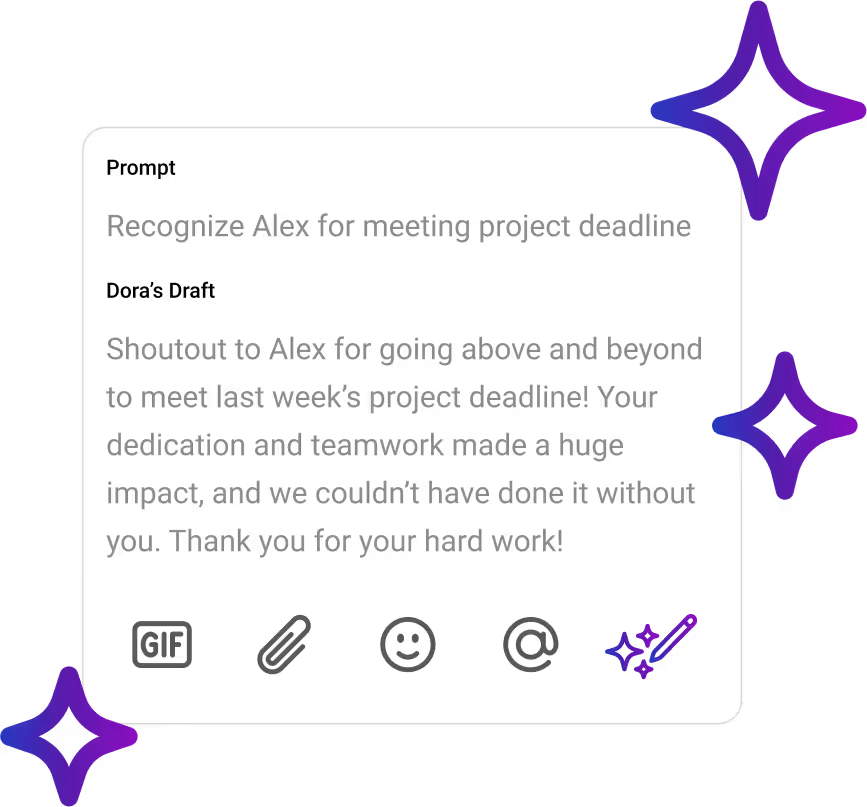
The biggest barrier to recognition is not intent, it is effort. Managers know they should recognize someone, but writing something thoughtful usually takes time. AI helps by turning a quick note or context into a structured draft that already sounds specific. The manager still reviews and edits it, but they are no longer starting from scratch. The message feels more personal because it is based on real input, not a standard template copy pasted from the internet.
Surfacing Who Is Being Overlooked
Most recognition programs show who is getting recognized. They rarely show who is not. AI can analyze patterns across teams and highlight employees who consistently contribute but rarely get mentioned. These are often the people doing steady, reliable work in the background. Without visibility, they get missed until it shows up in disengagement or attrition
Making Recognition Timely
Timing matters more than most teams realize. Recognition that comes weeks later loses context and impact. AI helps close that gap by prompting managers at the right moment, after a project is completed, when a milestone is hit, or when someone has gone too long without recognition.
Personalizing Rewards catered to the Individual
Not everyone values recognition in the same way. Some prefer public acknowledgment, others prefer something more private or tangible. AI can learn from past behavior and preferences to suggest rewards that actually fit the person. This moves recognition away from a one-size-fits-all approach to something more relevant.
Turning Recognition Data Into Actionable Insight
Recognition data has always existed, but it has not always been useful. It often sits in dashboards that are rarely reviewed. AI changes this by surfacing patterns in real time. Instead of digging through reports, HR leaders now can ask questions like, “Which teams have not received recognition in the last 30 days?” and get an answer instantly. That kind of visibility shifts HR from reactive to proactive.
AI Trends Reshaping Employee Recognition in 2026
The latest trends in employee recognition go far beyond small changes. They are changing how organizations think about appreciation. Here are the key trends shaping this shift:
Recognition Is Moving to Real Time
For years, recognition was tied to review cycles and quarterly events. The problem is that most meaningful work happens between those moments, and appreciation often comes too late or not at all. In 2026, stronger programs are built around real-time recognition. Someone steps up on a project, and they are recognized the same day. AI reduces the effort enough to make this consistent.
Peer Recognition Is Outperforming Top-Down Programs
One of the clearest trends is the rise of peer-to-peer recognition. Peers see work that managers often miss. Who helped a new hire get settled, who took on extra work during a crunch, who kept things together when a project went off track. AI-powered tools make it easier for recognition to flow across teams, not just from managers.
Recognition Is Becoming a Retention Strategy
Recognition is no longer just about culture. It is closely tied to whether people stay or leave. Teams using the right employee engagement software are starting to ask a simple question: are the people most likely to leave also the ones getting the least recognition? AI helps spot these gaps early, so teams can act before someone decides to leave.
AI Is Bridging the Language Gap in Global Teams
In global teams, language can affect how recognition is received. A message written in one language does not always carry the same tone or context when read by someone else. AI-powered translation helps teams send recognition that feels natural in the recipient’s language, while keeping the original intent intact. This small shift can make a big difference in how inclusive people feel.
Recognition Data Is Feeding Into Performance Decisions
When recognition is captured consistently, it becomes a useful record of contributions over time. This can support performance reviews, promotion discussions, and talent planning. Instead of relying on memory or a single review cycle, leaders now can see a broader picture of how someone has contributed. AI helps surface this data in a way that is easier to use and act on.
The Future of AI in Employee Recognition
The current generation of employee recognition software is already making recognition faster and more personal. The next shift is in how recognition fits into everyday decisions.
One clear direction is prediction. Today, AI shows who has been overlooked. Next, it will start flagging who might be at risk of disengaging or leaving based on recognition patterns combined with things like workload and engagement. When recognition data feeds into these models, it becomes an early signal of how connected someone feels to their team. Recognition moves from being something you track to something you act on early.
AI is also moving from insight to action. Instead of dashboards that need to be checked, it will show up in the flow of work. Managers will get simple prompts at the right time, reminders to recognize someone, or nudges when recognition across a team starts to look uneven.
There is also a growing link between recognition and skill development. Over time, recognition data can show what people are consistently being recognized for, which gives a clearer view of their strengths and how they are growing. This makes recognition useful beyond appreciation and starts to support development and internal mobility.
And finally, AI makes it easier to audit recognition for equity at scale. Patterns that would take months to spot manually, like certain teams or individuals being consistently under-recognized, can now be surfaced automatically and addressed early, before they quietly affect morale or trust.
How Should HR Leaders Prepare for the Future of Recognition?
If the trends above are any indication, AI in HR and employee recognition is only going to accelerate in the near future. The question is less about adopting tools and more about how you use them effectively.
Build the culture first: AI amplifies what already exists. If recognition is not taken seriously today, AI will just scale generic behavior. Set clear expectations for managers, then use AI to support it. If you need a starting point, our guide on 36 employee recognition ideas can help.
Treat recognition data as a strategic asset: Recognition data shows who is contributing and who might be getting overlooked. The value comes from acting on that data, not just collecting it. Assembly's people analytics tools make it easier to turn recognition patterns into clear action plans — so HR leaders can move from observation to decision.
Audit recognition for equity: Use AI to check whether recognition is distributed fairly across departments, demographics, and manager relationships. Gaps in recognition often reflect gaps in visibility.
Integrate recognition into existing workflows: Recognition that happens inside Slack, Teams, or your HRIS will always outperform recognition that requires a separate app. Choose the right employee recognition software that meets people where they already work.
Keep humans at the center. AI should make it easier for people to recognize each other, not replace the act itself. The goal is more human moments, delivered more consistently, with less friction. When done well, this also helps prevent employee burnout by making sure your hardest-working people do not go unseen.
How Assembly and Quantum Workplace Keep Recognition Human Using AI
Both Assembly and Quantum Workplace are building AI into recognition and engagement in a way that supports the process without taking away the human part of it.
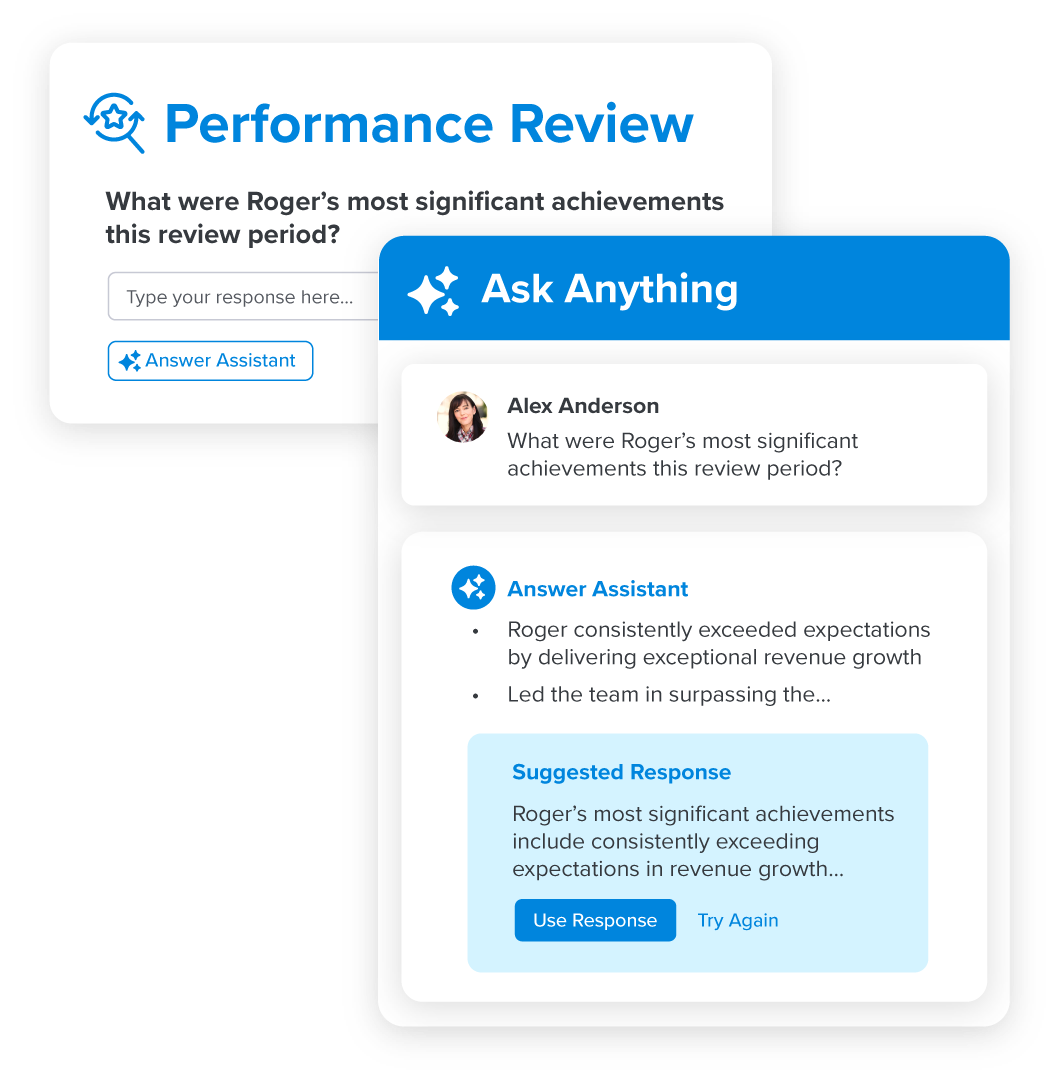
On the recognition side, Assembly uses AI mainly to reduce friction. Writing recognition often gets delayed or skipped because it takes time to think through and write something meaningful. The AI assistant helps turn a quick input into a more complete message, so managers are not starting from scratch every time. The intent still comes from the person, but the effort required is lower.
Beyond writing, Assembly’s Dora AI gives admins and managers a way to ask plain-language questions about recognition data and get instant visual answers. Instead of exporting spreadsheets, you can ask “Which teams have not received recognition this month?” and see the answer immediately. Manager dashboards also surface real-time alerts on participation gaps and engagement patterns, so problems get caught early instead of showing up later.
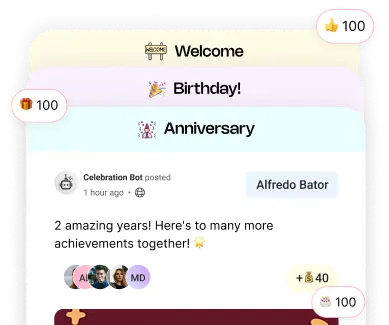
Assembly also automates milestone celebrations and offers a flexible rewards catalog. These make sure key moments are not missed and that rewards feel relevant to the individual, without adding extra work for managers.
On the performance and engagement side, Quantum Workplace brings AI into everyday workflows. Smart Summary helps HR leaders make sense of survey data quickly. The Goal Assistant helps employees set clear, outcome-based goals in a few clicks. And Ask AI gives managers on-demand context when preparing for reviews, following up after a survey, or navigating a difficult 1:1.
Since Quantum Workplace acquired Assembly, the two platforms are connected. Recognition activity feeds into performance conversations. What teammates celebrate throughout the year becomes documented evidence during reviews. Engagement survey results highlight where recognition is filling a gap and where it is missing. The result is a system where recognition is not a standalone program but a signal running through how your team works, grows, and stays connected.
Final Words
AI is not making employee recognition less human. It is making it easier to do it consistently. Most teams already value recognition. The problem is that it is uneven. A few people get recognized often, others get missed, and good work slips through without being acknowledged.
What AI changes is visibility. You can see who has not been recognized recently, where recognition is concentrated, and where it is missing. That makes it easier to fix the problem early, instead of realizing it later through disengagement or attrition.
If you are thinking about where to start, look at your own data- Who has not been recognized in the last month? Which teams are active, and which are not? Those answers usually point to where the gaps are.
AI helps surface those answers faster. What you do with them is what actually improves recognition.
If you want to see how this works in practice, book a demo with Assembly and take a look at your own recognition patterns.
FAQ
Does AI make employee recognition less personal?
No. AI removes the friction that causes recognition to be delayed, skipped, or generic. When the barrier is lower, recognition happens more often and in a more specific, timely way. The intent still comes from the person giving the recognition. AI just helps them express it more clearly and consistently.
How is AI used in employee recognition programs?
AI helps managers write recognition faster, surfaces employees who are being overlooked, prompts recognition at the right moment, personalizes rewards, and turns recognition data into real-time insights HR leaders can act on. The best implementations work inside the tools teams already use like Slack or Microsoft Teams, so recognition becomes part of daily work rather than a separate system.
What is Assembly's Dora AI and how does it help with recognition?
Dora AI is Assembly's built-in reporting tool that lets admins and managers ask plain-language questions about recognition data and get instant answers, charts, and reports without manual exports. It covers recognition activity, reward redemptions, and milestone data, giving HR leaders real-time visibility without needing to dig through spreadsheets.
How do you make employee recognition more personal?
Be specific. Call out what the person did and why it mattered. Tie recognition to company values. Use peer-to-peer recognition to capture contributions in real time rather than waiting for formal review moments. And use AI insights to spot who might be getting overlooked, because personal recognition starts with noticing the right people at the right time.
What are the biggest trends in employee recognition for 2026?
The five key trends reshaping recognition in 2026 are: real-time recognition replacing scheduled events, peer recognition outperforming top-down programs, recognition being tied more closely to retention strategy, AI bridging language gaps in global teams, and recognition data feeding directly into performance and talent decisions.
Can recognition help reduce employee turnover?
Yes. Employees who feel consistently and meaningfully recognized are more likely to stay. Recognition is one of the most practical ways to improve retention. According to the SHRM Globoforce Employee Recognition Survey, organizations with formal recognition programs see 31% lower voluntary turnover than those without.
What should I look for in AI-powered employee recognition software?
Look for tools that fit into your existing workflows like Slack, Teams, or your HRIS. Prioritize features like AI-assisted writing, plain-language analytics, automated milestones, and the ability to connect recognition data to engagement and performance. If you are just getting started, free employee recognition software is a low-risk way to test what drives adoption before committing to a full platform.
class SampleComponent extends React.Component {
  // using the experimental public class field syntax below. We can also attach
  // the contextType to the current class
  static contextType = ColorContext;
  render() {
    return <Button color={this.color} />
  }
}
Every organization wants its people to feel appreciated. And most are genuinely trying. Birthdays get a message. Anniversaries get a post. Strong quarters get a mention at the all-hands. On the surface, recognition is happening. But if you’ve spent time in HR, you’ve probably noticed a pattern.
A lot of these moments feel repetitive. Anniversary posts look the same year after year. Recognition messages sound generic. Peer shout-outs get lost in busy feeds. Employees respond politely, but the impact isn’t always there.
This is not a problem of effort. Most managers genuinely care about their people. The issue is how recognition programs have traditionally been designed. They focus on consistency, making sure no one is missed, rather than personalization, making sure the recognition actually feels meaningful.
And the gap shows up in the data. The 2025 State of Recognition report found that 53% of employees are recognized only a few times a year or less, and just 23% feel meaningfully recognized at work. Yet 91% say they would put in more effort if their contributions were valued.
Recognition exists, but meaningful employee recognition often does not. And this gap existed long before AI.
What’s changing now is that AI is helping close it. Not by replacing the human side of recognition, but by making it easier for managers to be specific, timely, and consistent without adding more work.
In this post, we’ll look at how AI is being used in employee recognition today, the trends shaping 2026, and how HR leaders can prepare for what comes next.
The Personalization Problem in Employee Recognition Predates AI
Before we talk about what AI is changing, it helps to understand why personalization was missing in the first place.
Most employee recognition programs were built to solve a logistics problem: make sure people get acknowledged. Automate birthday messages. Trigger anniversary posts. Run quarterly awards. That consistency matters. But it is not the same as personalization.
Personalization means the recognition reflects who the person is, what they actually did, and why it mattered. It should feel like it was written for them, not sent to everyone. That has always been difficult to scale. Managers are busy and juggling multiple priorities. HR teams are running several programs at once. And the tools available made it easy to send recognition, but not to make it meaningful and more personal.
The data backs this gap. According to Deloitte, organizations with recognition programs see 31% lower voluntary turnover than those without. Yet research shows that 1 in 2 employees still want more recognition from their manager and coworkers. The programs exist. The personalization usually does not.
The intent has always been there. The capacity has not. That is exactly where AI starts to make a difference.
What AI Is Actually Doing in Employee Recognition
When people hear “AI in HR,” especially in recognition, they often imagine automated messages that feel cold or generic. In practice, the opposite is happening. The better tools are making recognition more specific, more timely, and more tied to what people actually do. Here’s what that looks like.
Helping People Write Better, Faster Recognition
The biggest barrier to recognition is not intent, it is effort. Managers know they should recognize someone, but writing something thoughtful usually takes time. AI helps by turning a quick note or context into a structured draft that already sounds specific. The manager still reviews and edits it, but they are no longer starting from scratch. The message feels more personal because it is based on real input, not a standard template copy pasted from the internet.
Surfacing Who Is Being Overlooked
Most recognition programs show who is getting recognized. They rarely show who is not. AI can analyze patterns across teams and highlight employees who consistently contribute but rarely get mentioned. These are often the people doing steady, reliable work in the background. Without visibility, they get missed until it shows up in disengagement or attrition
Making Recognition Timely
Timing matters more than most teams realize. Recognition that comes weeks later loses context and impact. AI helps close that gap by prompting managers at the right moment, after a project is completed, when a milestone is hit, or when someone has gone too long without recognition.
Personalizing Rewards catered to the Individual
Not everyone values recognition in the same way. Some prefer public acknowledgment, others prefer something more private or tangible. AI can learn from past behavior and preferences to suggest rewards that actually fit the person. This moves recognition away from a one-size-fits-all approach to something more relevant.
Turning Recognition Data Into Actionable Insight
Recognition data has always existed, but it has not always been useful. It often sits in dashboards that are rarely reviewed. AI changes this by surfacing patterns in real time. Instead of digging through reports, HR leaders now can ask questions like, “Which teams have not received recognition in the last 30 days?” and get an answer instantly. That kind of visibility shifts HR from reactive to proactive.
AI Trends Reshaping Employee Recognition in 2026
The latest trends in employee recognition go far beyond small changes. They are changing how organizations think about appreciation. Here are the key trends shaping this shift:
Recognition Is Moving to Real Time
For years, recognition was tied to review cycles and quarterly events. The problem is that most meaningful work happens between those moments, and appreciation often comes too late or not at all. In 2026, stronger programs are built around real-time recognition. Someone steps up on a project, and they are recognized the same day. AI reduces the effort enough to make this consistent.
Peer Recognition Is Outperforming Top-Down Programs
One of the clearest trends is the rise of peer-to-peer recognition. Peers see work that managers often miss. Who helped a new hire get settled, who took on extra work during a crunch, who kept things together when a project went off track. AI-powered tools make it easier for recognition to flow across teams, not just from managers.
Recognition Is Becoming a Retention Strategy
Recognition is no longer just about culture. It is closely tied to whether people stay or leave. Teams using the right employee engagement software are starting to ask a simple question: are the people most likely to leave also the ones getting the least recognition? AI helps spot these gaps early, so teams can act before someone decides to leave.
AI Is Bridging the Language Gap in Global Teams
In global teams, language can affect how recognition is received. A message written in one language does not always carry the same tone or context when read by someone else. AI-powered translation helps teams send recognition that feels natural in the recipient’s language, while keeping the original intent intact. This small shift can make a big difference in how inclusive people feel.
Recognition Data Is Feeding Into Performance Decisions
When recognition is captured consistently, it becomes a useful record of contributions over time. This can support performance reviews, promotion discussions, and talent planning. Instead of relying on memory or a single review cycle, leaders now can see a broader picture of how someone has contributed. AI helps surface this data in a way that is easier to use and act on.
The Future of AI in Employee Recognition
The current generation of employee recognition software is already making recognition faster and more personal. The next shift is in how recognition fits into everyday decisions.
One clear direction is prediction. Today, AI shows who has been overlooked. Next, it will start flagging who might be at risk of disengaging or leaving based on recognition patterns combined with things like workload and engagement. When recognition data feeds into these models, it becomes an early signal of how connected someone feels to their team. Recognition moves from being something you track to something you act on early.
AI is also moving from insight to action. Instead of dashboards that need to be checked, it will show up in the flow of work. Managers will get simple prompts at the right time, reminders to recognize someone, or nudges when recognition across a team starts to look uneven.
There is also a growing link between recognition and skill development. Over time, recognition data can show what people are consistently being recognized for, which gives a clearer view of their strengths and how they are growing. This makes recognition useful beyond appreciation and starts to support development and internal mobility.
And finally, AI makes it easier to audit recognition for equity at scale. Patterns that would take months to spot manually, like certain teams or individuals being consistently under-recognized, can now be surfaced automatically and addressed early, before they quietly affect morale or trust.
How Should HR Leaders Prepare for the Future of Recognition?
If the trends above are any indication, AI in HR and employee recognition is only going to accelerate in the near future. The question is less about adopting tools and more about how you use them effectively.
Build the culture first: AI amplifies what already exists. If recognition is not taken seriously today, AI will just scale generic behavior. Set clear expectations for managers, then use AI to support it. If you need a starting point, our guide on 36 employee recognition ideas can help.
Treat recognition data as a strategic asset: Recognition data shows who is contributing and who might be getting overlooked. The value comes from acting on that data, not just collecting it. Assembly's people analytics tools make it easier to turn recognition patterns into clear action plans — so HR leaders can move from observation to decision.
Audit recognition for equity: Use AI to check whether recognition is distributed fairly across departments, demographics, and manager relationships. Gaps in recognition often reflect gaps in visibility.
Integrate recognition into existing workflows: Recognition that happens inside Slack, Teams, or your HRIS will always outperform recognition that requires a separate app. Choose the right employee recognition software that meets people where they already work.
Keep humans at the center. AI should make it easier for people to recognize each other, not replace the act itself. The goal is more human moments, delivered more consistently, with less friction. When done well, this also helps prevent employee burnout by making sure your hardest-working people do not go unseen.
How Assembly and Quantum Workplace Keep Recognition Human Using AI
Both Assembly and Quantum Workplace are building AI into recognition and engagement in a way that supports the process without taking away the human part of it.
On the recognition side, Assembly uses AI mainly to reduce friction. Writing recognition often gets delayed or skipped because it takes time to think through and write something meaningful. The AI assistant helps turn a quick input into a more complete message, so managers are not starting from scratch every time. The intent still comes from the person, but the effort required is lower.
Beyond writing, Assembly’s Dora AI gives admins and managers a way to ask plain-language questions about recognition data and get instant visual answers. Instead of exporting spreadsheets, you can ask “Which teams have not received recognition this month?” and see the answer immediately. Manager dashboards also surface real-time alerts on participation gaps and engagement patterns, so problems get caught early instead of showing up later.
Assembly also automates milestone celebrations and offers a flexible rewards catalog. These make sure key moments are not missed and that rewards feel relevant to the individual, without adding extra work for managers.
On the performance and engagement side, Quantum Workplace brings AI into everyday workflows. Smart Summary helps HR leaders make sense of survey data quickly. The Goal Assistant helps employees set clear, outcome-based goals in a few clicks. And Ask AI gives managers on-demand context when preparing for reviews, following up after a survey, or navigating a difficult 1:1.
Since Quantum Workplace acquired Assembly, the two platforms are connected. Recognition activity feeds into performance conversations. What teammates celebrate throughout the year becomes documented evidence during reviews. Engagement survey results highlight where recognition is filling a gap and where it is missing. The result is a system where recognition is not a standalone program but a signal running through how your team works, grows, and stays connected.
Final Words
AI is not making employee recognition less human. It is making it easier to do it consistently. Most teams already value recognition. The problem is that it is uneven. A few people get recognized often, others get missed, and good work slips through without being acknowledged.
What AI changes is visibility. You can see who has not been recognized recently, where recognition is concentrated, and where it is missing. That makes it easier to fix the problem early, instead of realizing it later through disengagement or attrition.
If you are thinking about where to start, look at your own data- Who has not been recognized in the last month? Which teams are active, and which are not? Those answers usually point to where the gaps are.
AI helps surface those answers faster. What you do with them is what actually improves recognition.
If you want to see how this works in practice, book a demo with Assembly and take a look at your own recognition patterns.
FAQ
Does AI make employee recognition less personal?
No. AI removes the friction that causes recognition to be delayed, skipped, or generic. When the barrier is lower, recognition happens more often and in a more specific, timely way. The intent still comes from the person giving the recognition. AI just helps them express it more clearly and consistently.
How is AI used in employee recognition programs?
AI helps managers write recognition faster, surfaces employees who are being overlooked, prompts recognition at the right moment, personalizes rewards, and turns recognition data into real-time insights HR leaders can act on. The best implementations work inside the tools teams already use like Slack or Microsoft Teams, so recognition becomes part of daily work rather than a separate system.
What is Assembly's Dora AI and how does it help with recognition?
Dora AI is Assembly's built-in reporting tool that lets admins and managers ask plain-language questions about recognition data and get instant answers, charts, and reports without manual exports. It covers recognition activity, reward redemptions, and milestone data, giving HR leaders real-time visibility without needing to dig through spreadsheets.
How do you make employee recognition more personal?
Be specific. Call out what the person did and why it mattered. Tie recognition to company values. Use peer-to-peer recognition to capture contributions in real time rather than waiting for formal review moments. And use AI insights to spot who might be getting overlooked, because personal recognition starts with noticing the right people at the right time.
What are the biggest trends in employee recognition for 2026?
The five key trends reshaping recognition in 2026 are: real-time recognition replacing scheduled events, peer recognition outperforming top-down programs, recognition being tied more closely to retention strategy, AI bridging language gaps in global teams, and recognition data feeding directly into performance and talent decisions.
Can recognition help reduce employee turnover?
Yes. Employees who feel consistently and meaningfully recognized are more likely to stay. Recognition is one of the most practical ways to improve retention. According to the SHRM Globoforce Employee Recognition Survey, organizations with formal recognition programs see 31% lower voluntary turnover than those without.
What should I look for in AI-powered employee recognition software?
Look for tools that fit into your existing workflows like Slack, Teams, or your HRIS. Prioritize features like AI-assisted writing, plain-language analytics, automated milestones, and the ability to connect recognition data to engagement and performance. If you are just getting started, free employee recognition software is a low-risk way to test what drives adoption before committing to a full platform.
Browse our Free Employee Recognition Guide
Get the foundational knowledge on creating an employee recognition program that boosts employee engagement and helps them feel valued.






.png)