Mid-year is coming up, and for most managers, that means it's time to sit down with your team and talk about how the first half of the year went.
If done right, these conversations can be really valuable. They're your chance to recognize what's going well, fix what’s wrong, and make sure everyone knows where they stand before the second half kicks in.
But in reality, most mid-year performance reviews don’t work that way. The feedback ends up being vague. Goals set earlier in the year don’t get revisited. And both sides walk away without a clear plan for what’s next.
A big reason for that is lack of preparation. When you know what to say and how to structure the conversation, everything changes. The discussion becomes clearer, more focused, and actually helpful. That’s exactly what this guide is here to help with.
In this guide, we’ve put together 50 mid-year performance review examples organized by performance level, a step-by-step framework for how to conduct a mid-year performance review, and ready-to-use templates you can adapt for your team. We'll also look at how adding employee recognition into these conversations can make them more productive and motivating.
Why Mid-Year Reviews Matter And Why Most Fall Short
When done right, a mid-year review is one of the most impactful conversations you can have with your team. It’s a chance to pause, reflect, and make sure everything is still on track. But most of the time, these reviews don’t really live up to that potential. Let’s look at why they matter and where things usually go wrong.
Annual reviews are too late to fix things
If the only structured real performance conversation happens at the end of the year, it’s already too late to fix a lot of things. You’re looking back on issues that could have been addressed months earlier.
A mid-year check-in gives you a natural point to step in, fix what’s off, and adjust while there’s still room to improve outcomes.
Late Feedback Doesn’t Help Much
Timing makes a big difference in reviews. If you’re bringing up something in December about something that happened in March, it isn’t very helpful. The context is gone and the moment has clearly passed.
Mid-year reviews bring feedback closer to the work itself, making it more specific, more relevant, and easier for your employee to actually act on.
Goals change during the Year
Business priorities often shift. Projects get added or dropped. A mid-year performance review gives you and your employees a chance to revisit goals and make sure they still reflect what actually matters right now.
Recognition Often Gets Left Out of Performance Conversations
This is one of the biggest missed opportunities. Many mid-year reviews focus entirely on gaps and areas for improvement, while the work someone has done well barely gets a mention. When people don’t hear recognition during the review itself, it can feel like their effort didn’t really matter.
Bringing peer-to-peer recognition into the conversation changes the tone completely. It makes the feedback feel more balanced and motivating.
No Structure, No Real Conversation
You've probably been in one of these. The manager asks how things are going. The employee says everything’s fine. And that’s about it. Without some structure, the conversation doesn’t go very deep.
Using a simple mid-year review template helps both sides come prepared, ask better questions, and walk away with a clear plan.
50 Mid-Year Performance Review Examples For Managers
Having the right words makes a big difference. These mid-year performance review samples are grouped by performance level so you can quickly find what fits your situation.
Examples For Employees Exceeding Expectations
These are for people who consistently go above what’s expected. The goal here isn’t just to say “great job,” but to clearly call out what they’re doing well and why it matters.
1. "You've consistently delivered above what was expected this half. The way you led the product launch showed real ownership and set a high bar for the team."
2. "Your work on the customer retention project didn't just meet the goal, it exceeded it. The extra analysis you brought gave leadership the confidence to expand the initiative."
3. "I've noticed how you step up in cross-functional meetings. Your ideas move conversations forward, and other teams enjoy working with you."
4. "You manage multiple priorities really well without dropping quality. You’ve taken on more and handled it consistently.."
5. "The mentoring you've done with newer team members has had a visible impact. Two of them specifically mentioned your support as a reason they feel more confident."
6. "You proactively identified an issue in our reporting process and built a solution before anyone had to ask. That kind of initiative is exactly what helps this team improve."
7. "Your client-facing work has been outstanding. The feedback we've received about your responsiveness has strengthened those relationships in a meaningful way."
8. "You consistently bring a solutions-oriented approach to challenges. Even during a tough quarter, you kept the team focused and motivated. That leadership is noticed."
9. "Your presentation at the quarterly review was one of the strongest I've seen. You translated complex data into clear takeaways that the leadership team could act on."
10. "You're not just meeting your goals, you're helping others meet theirs. That collaborative approach is a big part of why the team is performing well."
11. "The process improvements you introduced to our onboarding workflow have already saved the team hours each week. You saw the problem and solved it without waiting to be asked."
12. "Your attention to detail on the compliance audit was critical. You caught issues others missed, and the final report earned trust from the executive team."
13. "You've taken feedback from earlier in the year and applied it in a way that's clearly showing results. Your growth this half has been impressive."
14. "Your willingness to take on stretch projects outside your core role has expanded your impact significantly. I want to channel that energy into opportunities that support your long-term career goals."
15. "You've become someone the team turns to when things get complex. That kind of trust is earned, and your work this half has earned it."
Examples For Employees Meeting Expectations
These are employees doing solid, reliable work. The focus here is to recognize that consistency while also opening up growth opportunities, without making it feel like “just meeting expectations” isn’t enough.
16. "You're meeting expectations across the board, and your consistency is something the team relies on. As we head into the second half, I'd love to explore what other opportunities interest you."
17. "Your work has been steady and reliable this half. You hit your deadlines, support your teammates, and deliver quality work. Let's talk about where you'd like to grow from here."
18. "You've handled your core responsibilities well. One area I'd encourage you to explore is taking more of a lead role in team discussions, because your perspective is valuable and I want others to hear it."
19. "Your project work has been on track. The next step might be building more visibility for your contributions so the work you're doing gets the recognition it deserves."
20. "You've been dependable on every project this half. I want to make sure we're also investing in your development. What skills would feel like a meaningful next step?"
21. "Your day-to-day execution has been strong. I'd love to see you bring more of your ideas to planning sessions in the second half. You have a good perspective on what works."
22. "You've met every goal we set at the start of the year. Let's use this review to check whether those goals still reflect where you want to go, and adjust if needed."
23. "Your collaboration with the marketing team on the campaign rollout was exactly what was needed. You kept things on schedule and communicated clearly. Let's build on that."
24. "Your technical skills are solid and you deliver clean work. One growth area to consider is how you communicate your process to stakeholders. A little more visibility into your thinking could go a long way."
25. "You've been a reliable contributor this half. I want to make sure you feel supported and that the work ahead feels motivating, not just manageable."
26. "You're doing good work and meeting expectations consistently. Let's talk about what the next level looks like for you and what support you need to move in that direction."
27. "Your responsiveness to client requests has been solid. In the next half, I'd love to see you take a more proactive approach, identifying potential issues before clients raise them."
28. "You took on more work this quarter and handled it well. That consistency matters. Let’s keep it sustainable."
29. "Your work on the data migration was thorough and well-organized. You kept things moving even when the timeline shifted. That adaptability is worth highlighting."
30. "You're right where you need to be at this point in the year. The next conversation I want to have is about your career path and whether we're creating the right experiences for you."
31. "You've shown improvement in the areas we discussed at the start of the year. That growth is worth recognizing. Let's keep building on it."
32. "Your ability to manage your workload independently is a real strength. I'd love to see you share more of your process with the team so others can learn from your approach."
33. "You've been consistent and professional in every interaction this half. Let's make sure we're also giving you opportunities to grow, because consistency deserves to be rewarded with development."
34. "Your contributions to sprint planning have helped the team stay aligned. I'd encourage you to take more ownership of defining what success looks like for the features you work on."
35. "You're meeting expectations and showing real professionalism. The one area I'd encourage you to lean into is speaking up more when you see something that could be improved. Your judgment is solid, and the team would benefit from hearing it."
Examples For Employees Needing Improvement
These are the most important conversations to get right. Be direct about the gap, but also show that you believe they can improve. The goal is to leave the conversation with a clear plan, not discouragement. Our guide on employee feedback covers how to frame these conversations effectively.
36. “Your performance this half is below where it needs to be. Let’s understand what’s getting in the way and build a clear plan to get back on track.”
37. "There have been a few missed deadlines over the past few months that affected the team's workflow. Let's talk about what happened and how we can set you up differently."
38. "The quality of your recent deliverables hasn't been consistent with what I know you're capable of. I'm not here to criticize. I want to figure out what support you need to close that gap."
39. "I've noticed you've been less engaged in team discussions lately. That's not like you, and I want to check in on how you're feeling about the work right now."
40. "Your goal progress is behind where it should be at this point. I believe you can reach these targets. Let's meet more frequently to focus on what adjustments might help."
41. "There have been a few communication gaps that caused confusion for the team. Let's talk about how we can improve that going forward."
42. "Your technical work is solid, but the follow-through on action items from our last few one-on-ones has been inconsistent. I want to understand what's making that difficult."
43. "I've received feedback from a couple of teammates about responsiveness. I know you're managing a lot, but timely communication is something we need to work on together."
44. "Your attendance and availability have been inconsistent over the past few months. I want to have an honest conversation about what's going on and how we can support you."
45. "There are areas where your work has improved since our last review, and I want to acknowledge that. At the same time, we're not where we need to be yet. Let's build a plan."
46. "Your performance on the recent project didn't meet the expectations we discussed at the start. I want to understand your perspective and figure out what went wrong."
47. "Feedback from your peers suggests there's been some friction in how work gets handed off. Let's talk through what's happening and how we can make those interactions smoother."
48. "I've noticed you've been sticking to your core responsibilities but not stepping into broader problem-solving. Let’s talk about what’s holding you back."
49. "Your progress on the training we discussed has slowed down. This skill is important for your role. Let’s make it a priority."
50. "I want to be clear. There’s a gap between where you are and where you need to be, but it’s fixable. I’ll support you, and I need your commitment too."
Notice how many of these examples start with something specific the employee did well. That’s recognition in action. When you include it in the conversation, feedback lands better and people leave feeling motivated, not just evaluated.
How to Conduct a Mid-Year Performance Review
Having the right phrases helps, but how you run the conversation matters just as much. Here’s a simple step-by-step way to make your mid-year reviews actually useful.
Step 1: Prepare With Real Data
For effective 1-1 meetings, look at your notes from past meetings, goal progress, and any feedback or recognition the employee has received. Don’t just rely on memory. If your team uses a recognition platform, that data can be especially useful for surfacing contributions you might have missed.
Step 2: Share the Agenda in Advance
Send a quick outline of what you’ll cover at least a day before the meeting. Ask your direct report to come prepared with their own reflections and any goals they want to revisit. When both sides come prepared, the conversation is much better.
Step 3: Start With Recognition
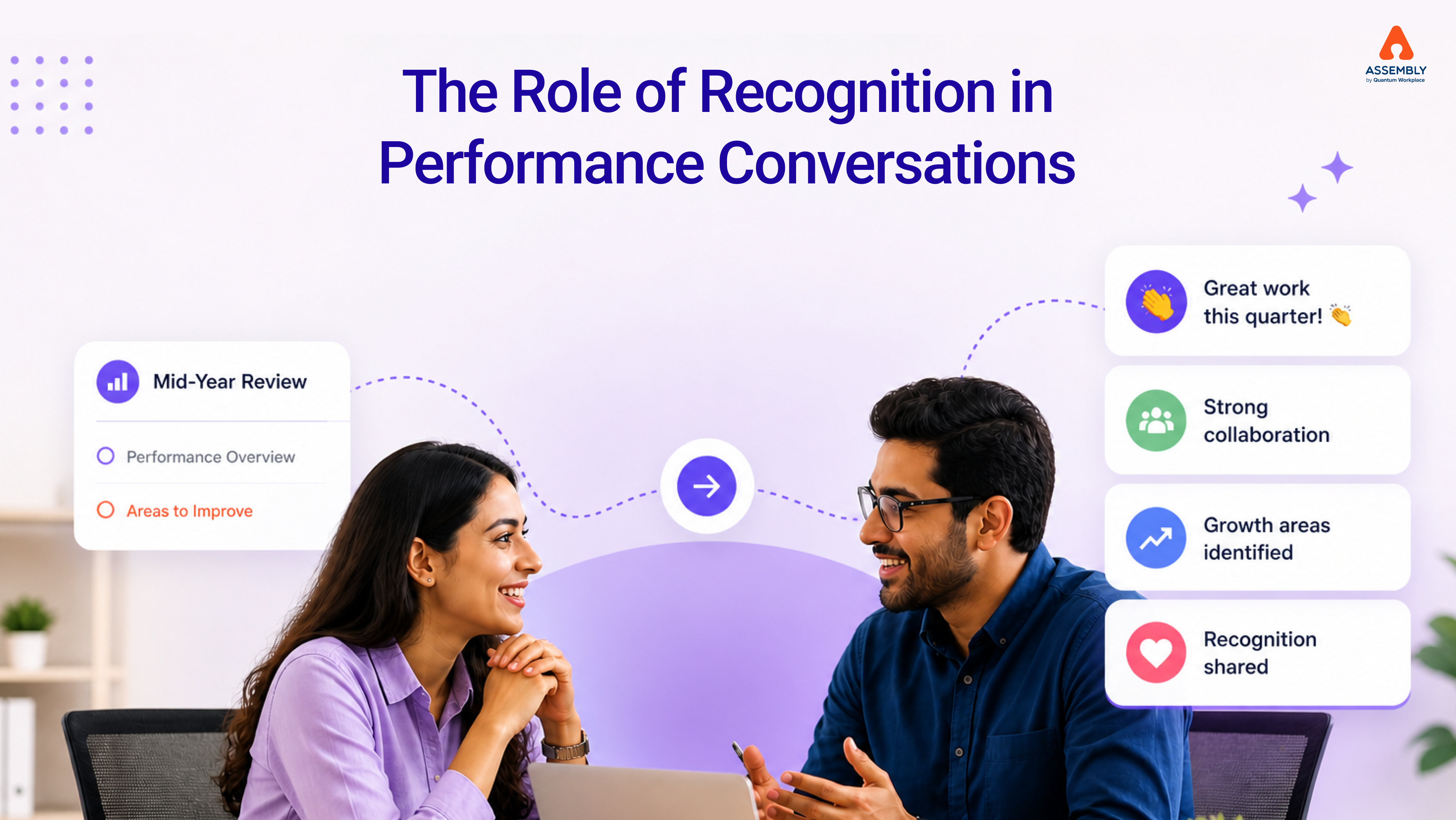
Start by calling out something specific they’ve done well. This isn’t about flattery. It’s about making sure they feel seen before you move into areas for improvement. When people feel recognized, they’re more open to feedback.
Step 4: Review and Adjust Goals
Go over the goals set at the start of the year.Do they still make sense? Have priorities changed? Update them together so the work still feels relevant and clear.
Step 5: Give Clear, Specific Feedback
Be clear about where the employee is meeting, exceeding, or falling below expectations. Use specific examples instead of general statements. The more concrete you are, the more useful the feedback becomes.
Step 6: Ask for Their Perspective
This shouldn’t be a one-way conversation. Ask how they evaluate their own performance and what support they need. Some of the best insights come from just giving them space to talk.
Step 7: Close With Clear Next Steps
End with specific commitments. What should they focus on next? How will you support them? Write it down and follow up in your regular one-on-ones. That’s where the real impact happens.
Use this when you want a more structured conversation that covers goals, feedback, and development in one go.
Opening (5 min): Start with recognition. Call out one or two specific things they did well and why it mattered.
Goal Review (10 min): Go through each goal. Discuss what's on track, what needs adjusting, and whether any goals should be added or removed.
Feedback Exchange (15 min): Share what’s going well and where they can improve. Then ask how they see their own performance.
Development Discussion (10 min): Talk about what skills or experiences the employee wants to develop. Identify one concrete opportunity you can support.
Next Steps (5 min): Agree on specific action items with clear timelines. Confirm when you'll follow up.
Use this if you want a lighter, more relaxed conversation. Works well if you already do regular one-on-ones.
Reflection (10 min): Ask what they're most proud of and what feels challenging. Listen first, then share your observations.
Alignment Check (10 min): Review current goals together. Adjust or set new goals where needed.
Looking Ahead (10 min): Talk about what they want to focus on next. What does a good second half look like? What support do they need?
For more language you can use across different performance levels, see our guide on performance review phrases.
How Assembly Supports Mid-Year Performance Reviews
Mid-year reviews work best when they're built on real data instead of memory. Assembly gives you and your managers the tools to make that happen naturally, without adding any extra steps.
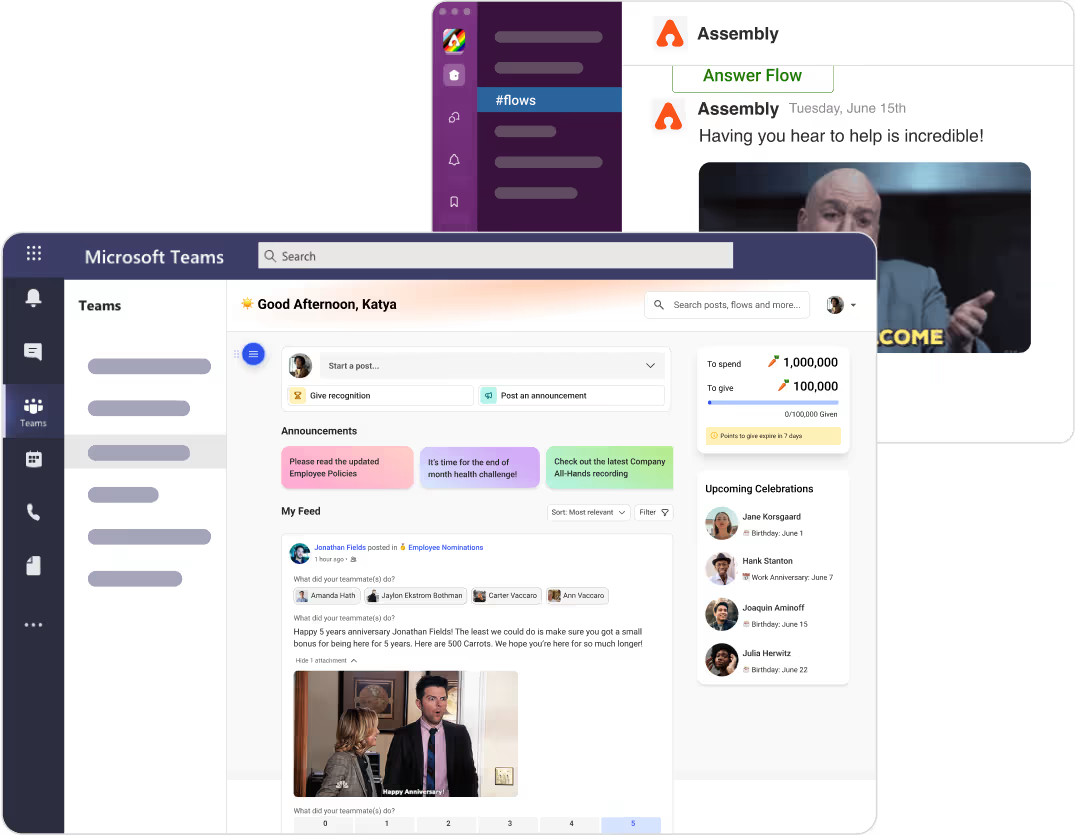
Recognition data that you can actually use: When peer-to-peer recognition flows through Slack, Microsoft Teams, or your HRIS throughout the year, it creates a running record of contributions. You can pull up what teammates have recognized before the review, so you're not relying on what you remember from the last few weeks. This also helps surface work from quieter team members who might not speak up as much.
1:1 tools that keep things on track: Assembly's 1:1 tool gives managers and employees a shared place for agendas, notes, and action items. What you discuss in the mid-year review doesn’t get lost. It carries into your regular one-on-ones, so there’s actual follow-through.
Milestones don’t get missed: . Mid-year is also a good moment to celebrate and recognise what your team has achieved. Assembly helps you celebrate birthdays, anniversaries, and project milestones, so important moments don’t get overlooked during busy review periods.
Quick Insights with Dora AI: Assembly's Dora AI lets you ask plain-language questions about recognition data and get instant answers. Questions like 'Which team members haven't been recognized in the last 30 days?' give you a clear picture before the review even starts.
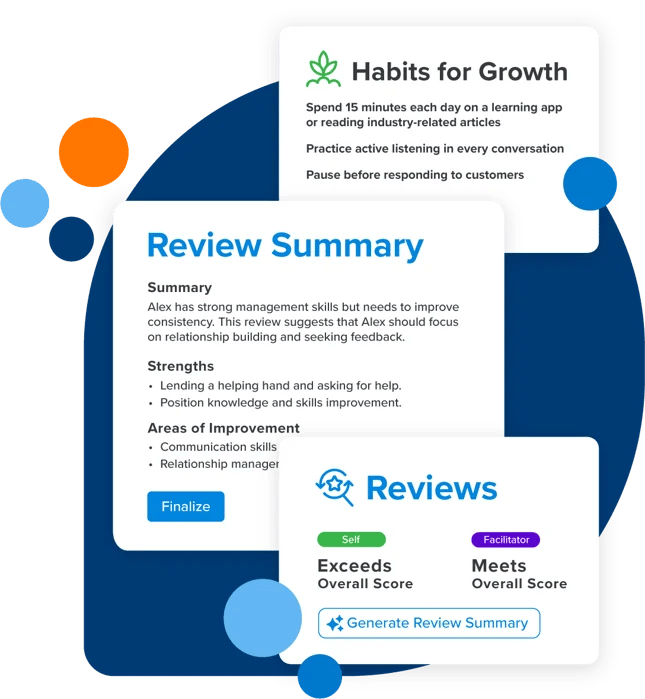
Works alongside performance tools: On the performance side, Quantum Workplace brings additional structure. Quantum Workplace's performance review software helps you customize review cycles, run self-assessments and 360 feedback, and keep goal tracking centralized. Together with Assembly, recognition data and performance conversations live in the same ecosystem, so nothing falls through the cracks.
Mid-year reviews are a great chance to pause, reset, and get everyone aligned again. But they only work if they’re more than just a box to check. The best conversations are the ones where people feel seen for what they’ve done, clear on where they stand, and supported in where they want to go. That comes down to being prepared, being specific, and making recognition part of the conversation.
Start with one honest conversation this week. Use the examples and templates in this guide to make it easier.
And if you want to make recognition and follow-through a consistent part of every review cycle, book a demo with Assembly and see how it all comes together.
FAQ
What is a mid-year performance review?
A mid-year performance review is a structured conversation between a manager and an employee around the middle of the year. It covers progress so far, feedback, and goal adjustments before the year ends. It is more formal than a regular check-in and usually addresses what is going well, what needs improvement, and where the employee wants to grow.
What are good mid-year performance review examples?
Good examples are clear, specific, and based on real work. Instead of saying "you are doing well," say something like "The way you handled the client escalation last month kept the project on track and showed real leadership." The more specific you are, the more useful the feedback becomes.
What is the difference between a mid-year review and a mid-year check-in?
A mid-year review is more structured. It covers goals, detailed feedback, and development plans. A mid-year check-in is shorter and more conversational — focused on how things are going and whether the employee needs support. Both are useful. Many teams use regular check-ins throughout the year alongside a more formal mid-year review.
How does recognition improve mid-year performance reviews?
When you include recognition, people feel their work is noticed. That makes them more open to feedback and easier to have honest conversations with. It also helps you be more specific — you can point to real contributions instead of relying on memory alone.
How often should mid-year reviews happen?
Once a year at the halfway mark works for most teams. But the mid-year review should not be the only performance conversation you have. Pair it with regular one-on-ones and informal check-ins so feedback stays timely and nothing catches anyone off guard at year end.
What should employees prepare for a mid-year review?
Employees should come ready to discuss accomplishments, challenges, and goals they want to adjust. It also helps to think about what support they need and where they want to grow in the second half. If you are a manager, knowing which qualities of a good employee to look for can help guide the conversation toward the behaviours that matter most. When both sides come prepared, the conversation is more productive for everyone.
What is the best way to structure a mid-year performance review?
Start with recognition — call out something specific the employee did well. Then review goal progress, share feedback with concrete examples, ask for their perspective, and close with clear next steps. Sending an agenda in advance and using a simple template helps both sides come prepared and makes the conversation more focused and useful.
class SampleComponent extends React.Component {
  // using the experimental public class field syntax below. We can also attach
  // the contextType to the current class
  static contextType = ColorContext;
  render() {
    return <Button color={this.color} />
  }
}
Mid-year is coming up, and for most managers, that means it's time to sit down with your team and talk about how the first half of the year went.
If done right, these conversations can be really valuable. They're your chance to recognize what's going well, fix what’s wrong, and make sure everyone knows where they stand before the second half kicks in.
But in reality, most mid-year performance reviews don’t work that way. The feedback ends up being vague. Goals set earlier in the year don’t get revisited. And both sides walk away without a clear plan for what’s next.
A big reason for that is lack of preparation. When you know what to say and how to structure the conversation, everything changes. The discussion becomes clearer, more focused, and actually helpful. That’s exactly what this guide is here to help with.
In this guide, we’ve put together 50 mid-year performance review examples organized by performance level, a step-by-step framework for how to conduct a mid-year performance review, and ready-to-use templates you can adapt for your team. We'll also look at how adding employee recognition into these conversations can make them more productive and motivating.
Why Mid-Year Reviews Matter And Why Most Fall Short
When done right, a mid-year review is one of the most impactful conversations you can have with your team. It’s a chance to pause, reflect, and make sure everything is still on track. But most of the time, these reviews don’t really live up to that potential. Let’s look at why they matter and where things usually go wrong.
Annual reviews are too late to fix things
If the only structured real performance conversation happens at the end of the year, it’s already too late to fix a lot of things. You’re looking back on issues that could have been addressed months earlier.
A mid-year check-in gives you a natural point to step in, fix what’s off, and adjust while there’s still room to improve outcomes.
Late Feedback Doesn’t Help Much
Timing makes a big difference in reviews. If you’re bringing up something in December about something that happened in March, it isn’t very helpful. The context is gone and the moment has clearly passed.
Mid-year reviews bring feedback closer to the work itself, making it more specific, more relevant, and easier for your employee to actually act on.
Goals change during the Year
Business priorities often shift. Projects get added or dropped. A mid-year performance review gives you and your employees a chance to revisit goals and make sure they still reflect what actually matters right now.
Recognition Often Gets Left Out of Performance Conversations
This is one of the biggest missed opportunities. Many mid-year reviews focus entirely on gaps and areas for improvement, while the work someone has done well barely gets a mention. When people don’t hear recognition during the review itself, it can feel like their effort didn’t really matter.
Bringing peer-to-peer recognition into the conversation changes the tone completely. It makes the feedback feel more balanced and motivating.
No Structure, No Real Conversation
You've probably been in one of these. The manager asks how things are going. The employee says everything’s fine. And that’s about it. Without some structure, the conversation doesn’t go very deep.
Using a simple mid-year review template helps both sides come prepared, ask better questions, and walk away with a clear plan.
50 Mid-Year Performance Review Examples For Managers
Having the right words makes a big difference. These mid-year performance review samples are grouped by performance level so you can quickly find what fits your situation.
Examples For Employees Exceeding Expectations
These are for people who consistently go above what’s expected. The goal here isn’t just to say “great job,” but to clearly call out what they’re doing well and why it matters.
1. "You've consistently delivered above what was expected this half. The way you led the product launch showed real ownership and set a high bar for the team."
2. "Your work on the customer retention project didn't just meet the goal, it exceeded it. The extra analysis you brought gave leadership the confidence to expand the initiative."
3. "I've noticed how you step up in cross-functional meetings. Your ideas move conversations forward, and other teams enjoy working with you."
4. "You manage multiple priorities really well without dropping quality. You’ve taken on more and handled it consistently.."
5. "The mentoring you've done with newer team members has had a visible impact. Two of them specifically mentioned your support as a reason they feel more confident."
6. "You proactively identified an issue in our reporting process and built a solution before anyone had to ask. That kind of initiative is exactly what helps this team improve."
7. "Your client-facing work has been outstanding. The feedback we've received about your responsiveness has strengthened those relationships in a meaningful way."
8. "You consistently bring a solutions-oriented approach to challenges. Even during a tough quarter, you kept the team focused and motivated. That leadership is noticed."
9. "Your presentation at the quarterly review was one of the strongest I've seen. You translated complex data into clear takeaways that the leadership team could act on."
10. "You're not just meeting your goals, you're helping others meet theirs. That collaborative approach is a big part of why the team is performing well."
11. "The process improvements you introduced to our onboarding workflow have already saved the team hours each week. You saw the problem and solved it without waiting to be asked."
12. "Your attention to detail on the compliance audit was critical. You caught issues others missed, and the final report earned trust from the executive team."
13. "You've taken feedback from earlier in the year and applied it in a way that's clearly showing results. Your growth this half has been impressive."
14. "Your willingness to take on stretch projects outside your core role has expanded your impact significantly. I want to channel that energy into opportunities that support your long-term career goals."
15. "You've become someone the team turns to when things get complex. That kind of trust is earned, and your work this half has earned it."
Examples For Employees Meeting Expectations
These are employees doing solid, reliable work. The focus here is to recognize that consistency while also opening up growth opportunities, without making it feel like “just meeting expectations” isn’t enough.
16. "You're meeting expectations across the board, and your consistency is something the team relies on. As we head into the second half, I'd love to explore what other opportunities interest you."
17. "Your work has been steady and reliable this half. You hit your deadlines, support your teammates, and deliver quality work. Let's talk about where you'd like to grow from here."
18. "You've handled your core responsibilities well. One area I'd encourage you to explore is taking more of a lead role in team discussions, because your perspective is valuable and I want others to hear it."
19. "Your project work has been on track. The next step might be building more visibility for your contributions so the work you're doing gets the recognition it deserves."
20. "You've been dependable on every project this half. I want to make sure we're also investing in your development. What skills would feel like a meaningful next step?"
21. "Your day-to-day execution has been strong. I'd love to see you bring more of your ideas to planning sessions in the second half. You have a good perspective on what works."
22. "You've met every goal we set at the start of the year. Let's use this review to check whether those goals still reflect where you want to go, and adjust if needed."
23. "Your collaboration with the marketing team on the campaign rollout was exactly what was needed. You kept things on schedule and communicated clearly. Let's build on that."
24. "Your technical skills are solid and you deliver clean work. One growth area to consider is how you communicate your process to stakeholders. A little more visibility into your thinking could go a long way."
25. "You've been a reliable contributor this half. I want to make sure you feel supported and that the work ahead feels motivating, not just manageable."
26. "You're doing good work and meeting expectations consistently. Let's talk about what the next level looks like for you and what support you need to move in that direction."
27. "Your responsiveness to client requests has been solid. In the next half, I'd love to see you take a more proactive approach, identifying potential issues before clients raise them."
28. "You took on more work this quarter and handled it well. That consistency matters. Let’s keep it sustainable."
29. "Your work on the data migration was thorough and well-organized. You kept things moving even when the timeline shifted. That adaptability is worth highlighting."
30. "You're right where you need to be at this point in the year. The next conversation I want to have is about your career path and whether we're creating the right experiences for you."
31. "You've shown improvement in the areas we discussed at the start of the year. That growth is worth recognizing. Let's keep building on it."
32. "Your ability to manage your workload independently is a real strength. I'd love to see you share more of your process with the team so others can learn from your approach."
33. "You've been consistent and professional in every interaction this half. Let's make sure we're also giving you opportunities to grow, because consistency deserves to be rewarded with development."
34. "Your contributions to sprint planning have helped the team stay aligned. I'd encourage you to take more ownership of defining what success looks like for the features you work on."
35. "You're meeting expectations and showing real professionalism. The one area I'd encourage you to lean into is speaking up more when you see something that could be improved. Your judgment is solid, and the team would benefit from hearing it."
Examples For Employees Needing Improvement
These are the most important conversations to get right. Be direct about the gap, but also show that you believe they can improve. The goal is to leave the conversation with a clear plan, not discouragement. Our guide on employee feedback covers how to frame these conversations effectively.
36. “Your performance this half is below where it needs to be. Let’s understand what’s getting in the way and build a clear plan to get back on track.”
37. "There have been a few missed deadlines over the past few months that affected the team's workflow. Let's talk about what happened and how we can set you up differently."
38. "The quality of your recent deliverables hasn't been consistent with what I know you're capable of. I'm not here to criticize. I want to figure out what support you need to close that gap."
39. "I've noticed you've been less engaged in team discussions lately. That's not like you, and I want to check in on how you're feeling about the work right now."
40. "Your goal progress is behind where it should be at this point. I believe you can reach these targets. Let's meet more frequently to focus on what adjustments might help."
41. "There have been a few communication gaps that caused confusion for the team. Let's talk about how we can improve that going forward."
42. "Your technical work is solid, but the follow-through on action items from our last few one-on-ones has been inconsistent. I want to understand what's making that difficult."
43. "I've received feedback from a couple of teammates about responsiveness. I know you're managing a lot, but timely communication is something we need to work on together."
44. "Your attendance and availability have been inconsistent over the past few months. I want to have an honest conversation about what's going on and how we can support you."
45. "There are areas where your work has improved since our last review, and I want to acknowledge that. At the same time, we're not where we need to be yet. Let's build a plan."
46. "Your performance on the recent project didn't meet the expectations we discussed at the start. I want to understand your perspective and figure out what went wrong."
47. "Feedback from your peers suggests there's been some friction in how work gets handed off. Let's talk through what's happening and how we can make those interactions smoother."
48. "I've noticed you've been sticking to your core responsibilities but not stepping into broader problem-solving. Let’s talk about what’s holding you back."
49. "Your progress on the training we discussed has slowed down. This skill is important for your role. Let’s make it a priority."
50. "I want to be clear. There’s a gap between where you are and where you need to be, but it’s fixable. I’ll support you, and I need your commitment too."
Notice how many of these examples start with something specific the employee did well. That’s recognition in action. When you include it in the conversation, feedback lands better and people leave feeling motivated, not just evaluated.
How to Conduct a Mid-Year Performance Review
Having the right phrases helps, but how you run the conversation matters just as much. Here’s a simple step-by-step way to make your mid-year reviews actually useful.
Step 1: Prepare With Real Data
For effective 1-1 meetings, look at your notes from past meetings, goal progress, and any feedback or recognition the employee has received. Don’t just rely on memory. If your team uses a recognition platform, that data can be especially useful for surfacing contributions you might have missed.
Step 2: Share the Agenda in Advance
Send a quick outline of what you’ll cover at least a day before the meeting. Ask your direct report to come prepared with their own reflections and any goals they want to revisit. When both sides come prepared, the conversation is much better.
Step 3: Start With Recognition
Start by calling out something specific they’ve done well. This isn’t about flattery. It’s about making sure they feel seen before you move into areas for improvement. When people feel recognized, they’re more open to feedback.
Step 4: Review and Adjust Goals
Go over the goals set at the start of the year.Do they still make sense? Have priorities changed? Update them together so the work still feels relevant and clear.
Step 5: Give Clear, Specific Feedback
Be clear about where the employee is meeting, exceeding, or falling below expectations. Use specific examples instead of general statements. The more concrete you are, the more useful the feedback becomes.
Step 6: Ask for Their Perspective
This shouldn’t be a one-way conversation. Ask how they evaluate their own performance and what support they need. Some of the best insights come from just giving them space to talk.
Step 7: Close With Clear Next Steps
End with specific commitments. What should they focus on next? How will you support them? Write it down and follow up in your regular one-on-ones. That’s where the real impact happens.
Use this when you want a more structured conversation that covers goals, feedback, and development in one go.
Opening (5 min): Start with recognition. Call out one or two specific things they did well and why it mattered.
Goal Review (10 min): Go through each goal. Discuss what's on track, what needs adjusting, and whether any goals should be added or removed.
Feedback Exchange (15 min): Share what’s going well and where they can improve. Then ask how they see their own performance.
Development Discussion (10 min): Talk about what skills or experiences the employee wants to develop. Identify one concrete opportunity you can support.
Next Steps (5 min): Agree on specific action items with clear timelines. Confirm when you'll follow up.
Use this if you want a lighter, more relaxed conversation. Works well if you already do regular one-on-ones.
Reflection (10 min): Ask what they're most proud of and what feels challenging. Listen first, then share your observations.
Alignment Check (10 min): Review current goals together. Adjust or set new goals where needed.
Looking Ahead (10 min): Talk about what they want to focus on next. What does a good second half look like? What support do they need?
For more language you can use across different performance levels, see our guide on performance review phrases.
How Assembly Supports Mid-Year Performance Reviews
Mid-year reviews work best when they're built on real data instead of memory. Assembly gives you and your managers the tools to make that happen naturally, without adding any extra steps.
Recognition data that you can actually use: When peer-to-peer recognition flows through Slack, Microsoft Teams, or your HRIS throughout the year, it creates a running record of contributions. You can pull up what teammates have recognized before the review, so you're not relying on what you remember from the last few weeks. This also helps surface work from quieter team members who might not speak up as much.
1:1 tools that keep things on track: Assembly's 1:1 tool gives managers and employees a shared place for agendas, notes, and action items. What you discuss in the mid-year review doesn’t get lost. It carries into your regular one-on-ones, so there’s actual follow-through.
Milestones don’t get missed: . Mid-year is also a good moment to celebrate and recognise what your team has achieved. Assembly helps you celebrate birthdays, anniversaries, and project milestones, so important moments don’t get overlooked during busy review periods.
Quick Insights with Dora AI: Assembly's Dora AI lets you ask plain-language questions about recognition data and get instant answers. Questions like 'Which team members haven't been recognized in the last 30 days?' give you a clear picture before the review even starts.
Works alongside performance tools: On the performance side, Quantum Workplace brings additional structure. Quantum Workplace's performance review software helps you customize review cycles, run self-assessments and 360 feedback, and keep goal tracking centralized. Together with Assembly, recognition data and performance conversations live in the same ecosystem, so nothing falls through the cracks.
Mid-year reviews are a great chance to pause, reset, and get everyone aligned again. But they only work if they’re more than just a box to check. The best conversations are the ones where people feel seen for what they’ve done, clear on where they stand, and supported in where they want to go. That comes down to being prepared, being specific, and making recognition part of the conversation.
Start with one honest conversation this week. Use the examples and templates in this guide to make it easier.
And if you want to make recognition and follow-through a consistent part of every review cycle, book a demo with Assembly and see how it all comes together.
FAQ
What is a mid-year performance review?
A mid-year performance review is a structured conversation between a manager and an employee around the middle of the year. It covers progress so far, feedback, and goal adjustments before the year ends. It is more formal than a regular check-in and usually addresses what is going well, what needs improvement, and where the employee wants to grow.
What are good mid-year performance review examples?
Good examples are clear, specific, and based on real work. Instead of saying "you are doing well," say something like "The way you handled the client escalation last month kept the project on track and showed real leadership." The more specific you are, the more useful the feedback becomes.
What is the difference between a mid-year review and a mid-year check-in?
A mid-year review is more structured. It covers goals, detailed feedback, and development plans. A mid-year check-in is shorter and more conversational — focused on how things are going and whether the employee needs support. Both are useful. Many teams use regular check-ins throughout the year alongside a more formal mid-year review.
How does recognition improve mid-year performance reviews?
When you include recognition, people feel their work is noticed. That makes them more open to feedback and easier to have honest conversations with. It also helps you be more specific — you can point to real contributions instead of relying on memory alone.
How often should mid-year reviews happen?
Once a year at the halfway mark works for most teams. But the mid-year review should not be the only performance conversation you have. Pair it with regular one-on-ones and informal check-ins so feedback stays timely and nothing catches anyone off guard at year end.
What should employees prepare for a mid-year review?
Employees should come ready to discuss accomplishments, challenges, and goals they want to adjust. It also helps to think about what support they need and where they want to grow in the second half. If you are a manager, knowing which qualities of a good employee to look for can help guide the conversation toward the behaviours that matter most. When both sides come prepared, the conversation is more productive for everyone.
What is the best way to structure a mid-year performance review?
Start with recognition — call out something specific the employee did well. Then review goal progress, share feedback with concrete examples, ask for their perspective, and close with clear next steps. Sending an agenda in advance and using a simple template helps both sides come prepared and makes the conversation more focused and useful.
Browse our Free Employee Recognition Guide
Get the foundational knowledge on creating an employee recognition program that boosts employee engagement and helps them feel valued.






.png)