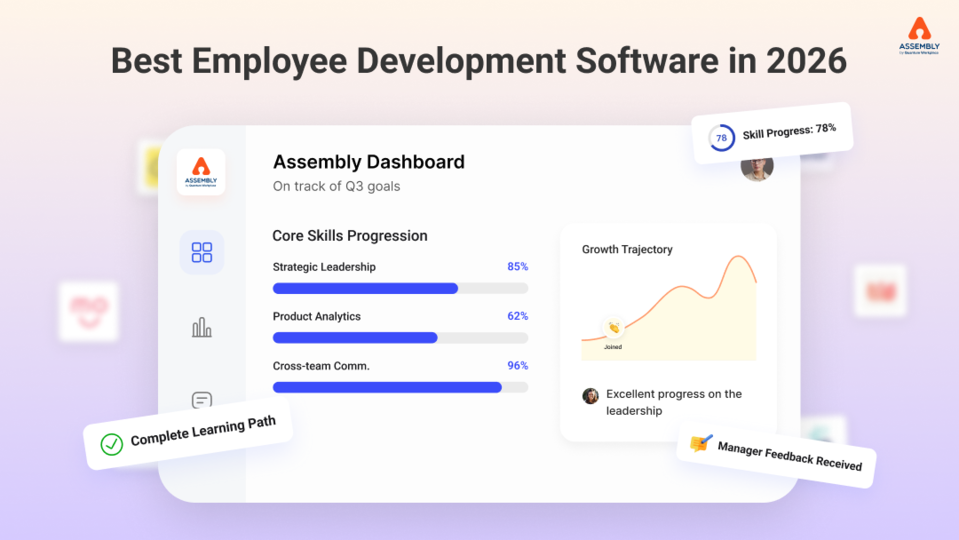
Every team has people who are ready to grow. They are curious, take on new challenges, and want clarity on where their career is heading. For leaders and HR teams, the goal is to make sure that growth happens within the organization, not at the next company.
The opportunity is clear. LinkedIn’s 2025 Workplace Learning Report found that 88% of organizations are concerned about employee retention, and learning opportunities are their top strategy to address it. From the employee perspective, 73% say that stronger learning and development programs would make them stay longer, according to the TalentLMS 2026 L&D Report.
And this is where employee development software becomes essential.
The right platform makes growth visible, structured, and part of everyday work. It enables organizations to build clear career paths, track skills, deliver relevant learning, and connect training and development efforts to real outcomes.
In this guide, we’ll cover the best employee development software tools for 2026, what to look for when evaluating them, and how to choose the right fit for your team.
What to Look for in Employee Development Software
Employee development software is a different category from performance management tools. Performance tools focus on how someone is performing today, while development tools focus on where they can grow next. When evaluating options, here are the key areas to prioritize:
Career Pathing and Personalized Growth Plans
Employees need clarity on where they can grow and what it takes to get there. The best career development tools for employees provide guided career pathing, personalized development plans with clear milestones, and visibility into internal roles along with required skills.
A strong employee development plan software solution ensures these plans are not static, but evolve as employees grow.
Skills Tracking and Competency Mapping
Good people development software should help you map competencies at the role level and spot skill gaps across teams. It should also make it easier to align learning with what your business actually needs. Many talent development platforms now use AI to speed this up, especially as your team grows.
Learning Content and Delivery
What matters most is helping employees access the right learning at the right time. This could be through built-in course libraries or integrations with platforms like LinkedIn Learning or Coursera. The best employee training and development software focuses on personalized recommendations, since these tend to drive higher completion rates than generic course assignments.
Manager Coaching and Enablement
Most development happens in conversations, not just courses. The right staff development software helps you support managers with simple tools like coaching prompts, development templates, and visibility into each person’s goals. When managers are properly enabled, you’re far more likely to see consistent adoption. For a practical framework on structuring these conversations, see our guide on how to run effective one-on-one meetings.
Connection to Performance and Engagement Data
Growth plans rarely get followed up on when they sit in a separate system. The best employee development plan software helps you connect development goals with performance reviews, 1:1s, and engagement data, so growth stays part of your everyday workflow.
You need a clear view of what’s working and what’s not. The right talent development software helps you track plan adoption, skill progression, and trends across teams. This makes it easier to see which teams are actively developing people, where gaps are growing, and what’s actually making a difference.
Comparison: Top Talent Development Platforms
Key Differences
Platform
Best For
Starting Price
G2 Rating
Development Strength
Quantum Workplace + Assembly
AI career pathing + recognition-driven growth
Custom pricing
4.3/5
AI Career Coach, growth plans, competency mapping, and recognition that reinforces development
Lattice
Integrated performance + L&D
From $11/seat/mo
4.7/5
Career frameworks, growth plans, and competency tracking tied to goals and reviews
TalentGuard
Structured career pathing + workforce intelligence
Custom pricing
4.6/5
AI career pathing, competency frameworks, talent marketplace, and mentor matching
Leapsome
Learning + performance in one stack
From ~$8/user/mo
4.8/5
Personalized learning paths, skill modules, and competency frameworks with 32-language support
Culture Amp
Science-backed habit building
Custom pricing
4.5/5
Skills Coach microlearning and behavioral science coaching tools
Cornerstone OnDemand
Enterprise learning at scale
Custom pricing
4.1/5
Full LMS/LXP with AI skills intelligence and content marketplace
GrowthSpace
Precision skill development
Custom pricing
4.8/5
AI expert matching across 1,100+ skills with structured development sprints
Degreed
Skills-first learning
Custom pricing
4.2/5
Content aggregation from thousands of sources with AI skills analytics
Fuel50
Career pathing + internal mobility
Custom pricing
4.5/5
AI career journeys, skills gap analysis, talent marketplace, and internal mobility
Learn Amp
Learning + development in one platform
From $4/user/mo
4.7/5
Personalized development journeys connecting learning, performance, and career growth
10 Best Employee Development Software Tools in 2026
Let’s take a closer look at each talent development platform, focusing on how they support growth and where they can add the most value for your team.
1. Quantum Workplace + Assembly
Best For: Organizations that want AI-powered career pathing and personalized growth plans, with recognition built in to reinforce development as it happens.
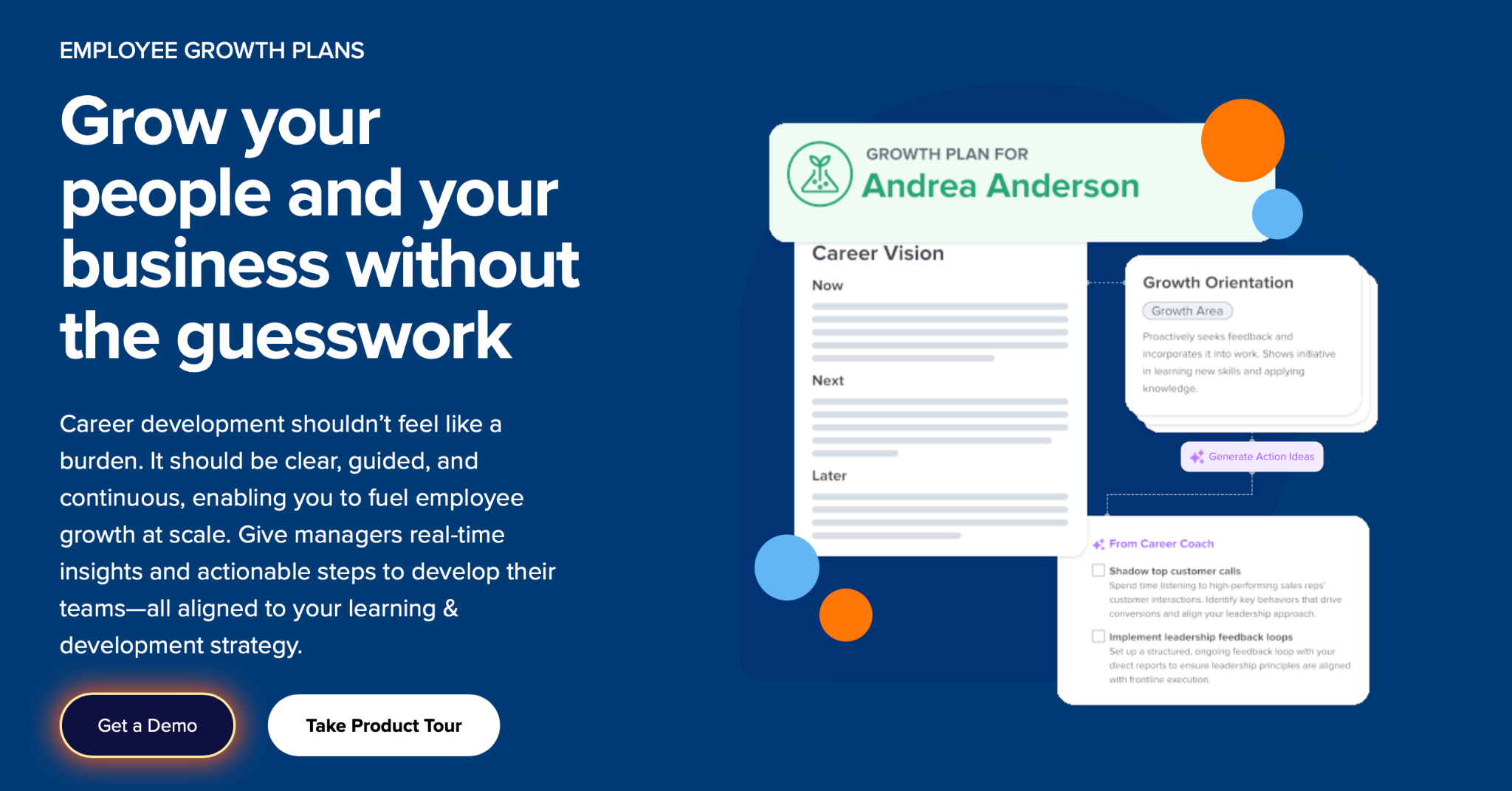
Why It Stands Out Quantum Workplace’s Growth product helps you guide employees through career visioning, build personalized growth plans, and explore internal opportunities through features like Job Explorer. Quantum Workplace's AI Career Coach provides tailored development recommendations, so employees don’t have to start from scratch. Managers also get access to Team Plans, with development insights that connect directly to 1:1s and performance reviews. Talent reviews connect individual development plans directly to leadership pipeline planning.
Assembly adds an important layer that many employee development tools miss. When someone applies a new skill or takes on a stretch project, peer recognition that aligns with career development captures it in tools like Slack, Microsoft Teams, or your HRIS. This creates a visible, ongoing record of development in action. Milestone celebrations acknowledge career moments. And manager 1:1 tools keep development accountability part of the weekly workflow.
Strengths
AI Career Coach and Career Vision for personalized development planning
Assembly's recognition creates a documented trail of growth for reviews and promotions
Limitations
Best suited for organizations ready to invest in structured development, not teams looking for a simple LMS
Learning content is linked within the tool, but deep external LMS automation depends on your existing tech stack
Pricing: Quantum Workplace uses custom pricing. Assembly starts at $2/employee/month with free onboarding.
2. Lattice
Best For: Mid-market to enterprise teams that want development closely connected to performance goals, reviews, and career frameworks.
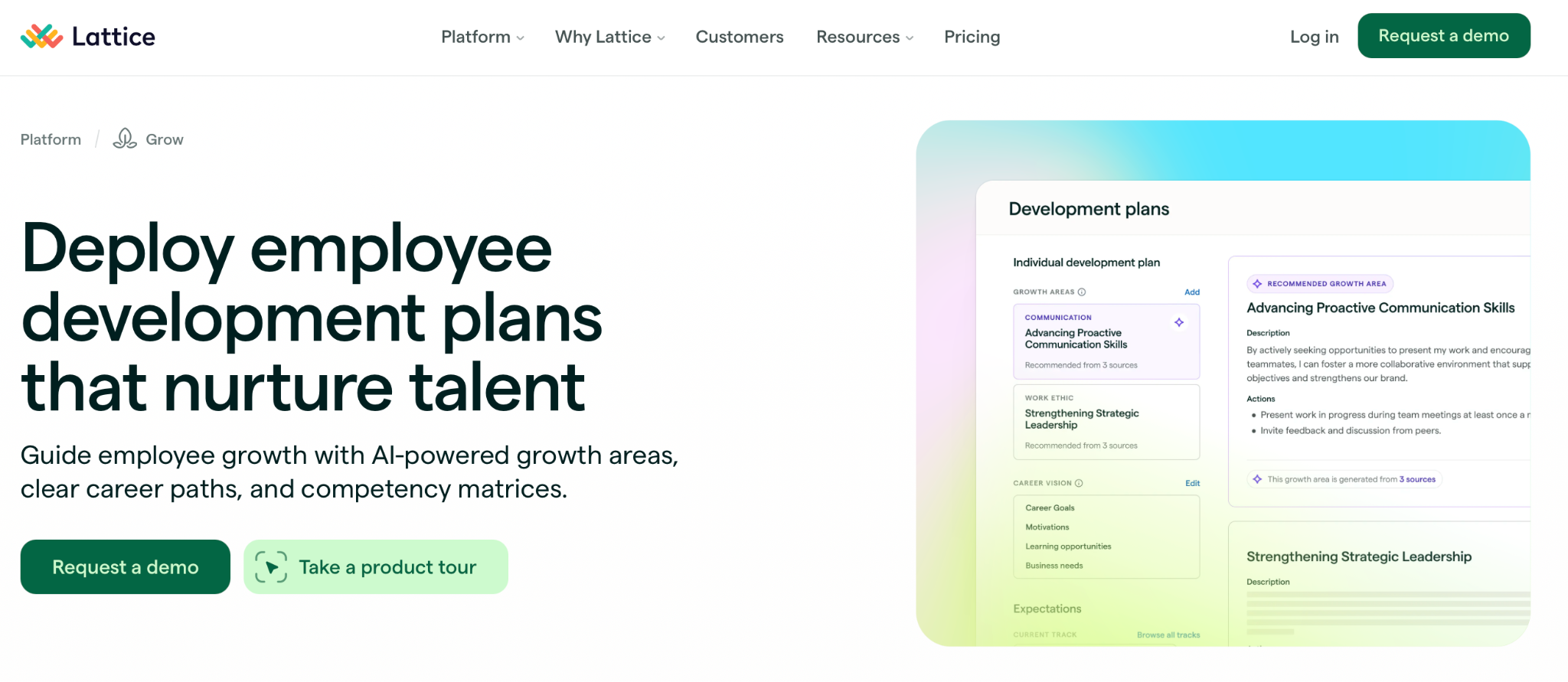
Why It Stands Out Lattice brings development into the same system you already use for performance management. It offers competency tracking, growth plans tied to role expectations, and internal career ladders employees can explore. Its L&D module lets you create and assign learning content, track progress, and connect learning back to performance conversations like reviews and 1:1s.
Strengths
L&D module with course creation, assignment, and progress tracking
Career frameworks and competency tracking aligned to role expectations
Growth plans integrated into reviews and 1:1s
Limitations
L&D features are still evolving compared to dedicated learning platforms
$4,000/year minimum, with costs increasing as you add modules
Pricing: Starts at $11 per seat per month, with a $4,000 annual minimum.
3. TalentGuard
Best For: Organizations that want structured career pathing with clear competency frameworks, skill gap tracking, and a built-in talent marketplace for internal mobility.
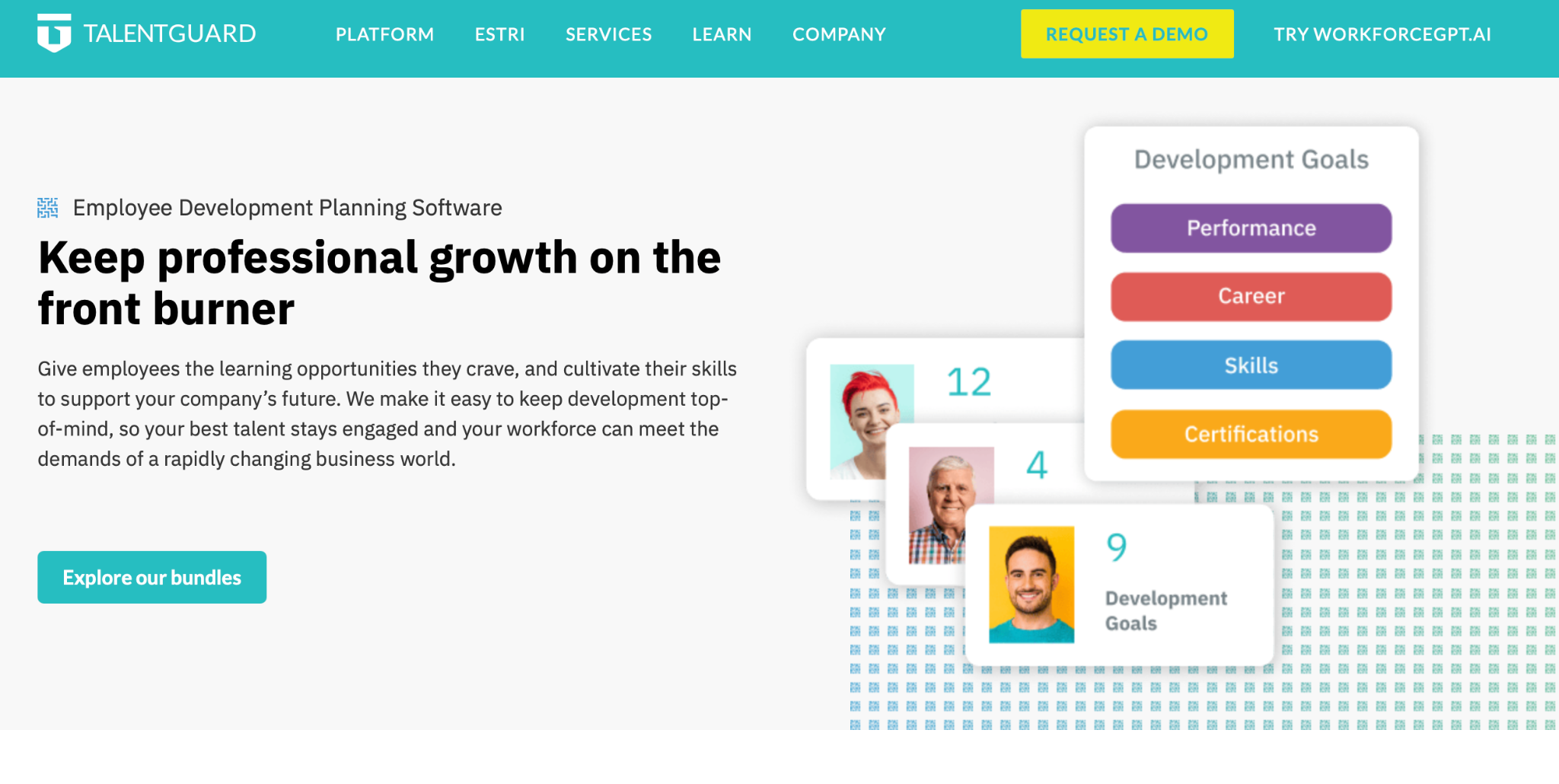
Why It Stands Out TalentGuard is designed specifically to help you build structured development programs. Its Career Pathways Builder helps employees map step-by-step plans toward future roles, while Career Canvas visualizes career trajectories and the competencies needed to get there. The platform also includes AI-powered career pathing, skill gap tracking, a talent marketplace for internal opportunities, and mentoring features that help employees connect with the right people to support their growth.
Strengths
AI-powered career pathing with clear role expectations and skill requirements
Talent marketplace that surfaces internal opportunities aligned with employee goals
Mentor matching to support development beyond manager conversations
Limitations
Initial setup can take time, especially in more complex organizations
Interface feels less modern compared to some newer platforms
Pricing: Custom pricing.
4. Leapsome
Best For: Growing companies that want personalized learning paths and skill development built directly into their performance and HR ecosystem.
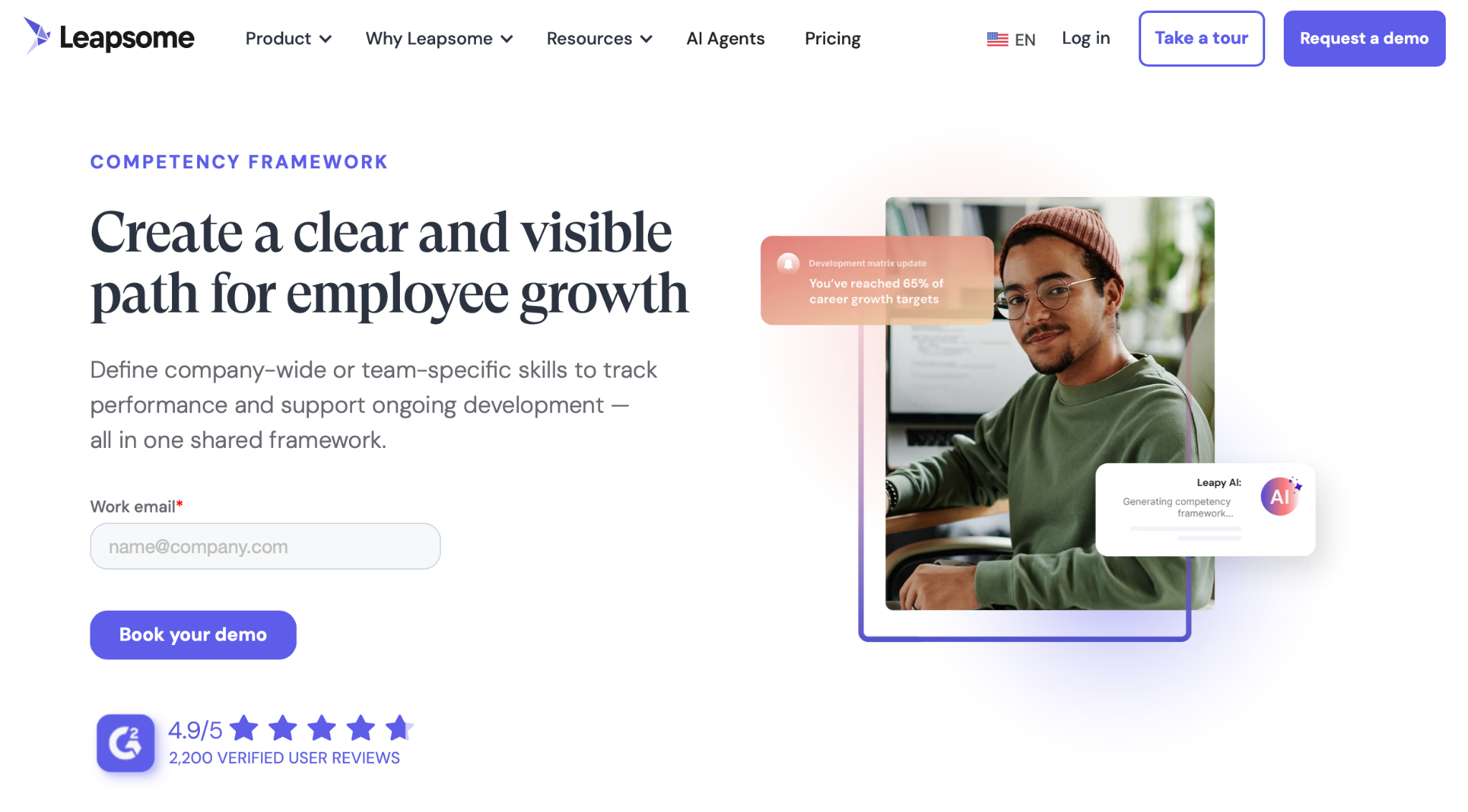
Why It Stands Out Leapsome treats learning and development as a core part of the platform, not an add-on. It helps you create personalized learning paths, build competency frameworks, and connect skill development directly to performance data. When someone completes a development module, that progress is reflected in their performance profile, their manager’s dashboard, and upcoming reviews. For global teams, its 32-language support makes rollout much easier.
Strengths
Dedicated learning modules with personalized paths and competency-based skill building
Development progress visible across reviews, 1:1s, and manager dashboards
32-language support for global teams
Limitations
Setup can take time due to the breadth of features
Costs increase as you add more modules
Pricing: Starts around $8 per user per month. Free trial available.
5. Culture Amp
Best For: Organizations that want a science-backed approach to development, focused on building daily growth habits through coaching and microlearning.
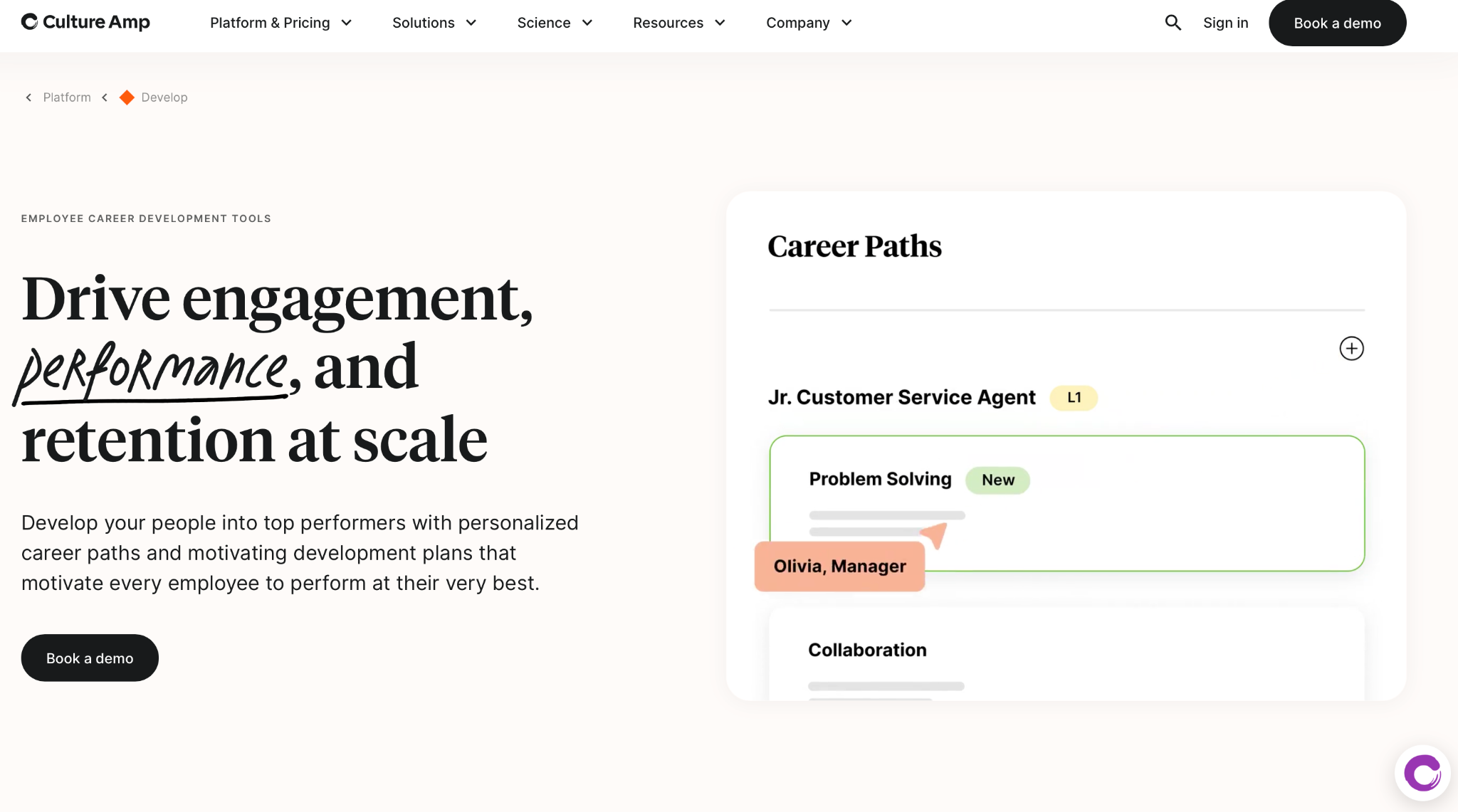
Why It Stands Out Culture Amp focuses more on building habits than completing courses. Its Skills Coach delivers bite-sized, research-backed learning designed to build new behaviors over time. It also helps you support managers with playbooks and development-focused 1:1 templates, while Life Labs provide deeper, facilitator-led learning for leadership development. If you’re looking for an evidence-based approach to growing your team, this is a strong option.
Strengths
Skills Coach microlearning helps build consistent development habits
Content grounded in behavioral science
Life Labs support leadership development at scale
Limitations
No built-in HRIS or full course authoring LMS
Implementation can take longer than simpler tools
Pricing: Custom pricing.
6. Cornerstone
Best For: Large enterprises that need a full-scale learning and talent development platform for training, upskilling, compliance, and career pathing across a global workforce.
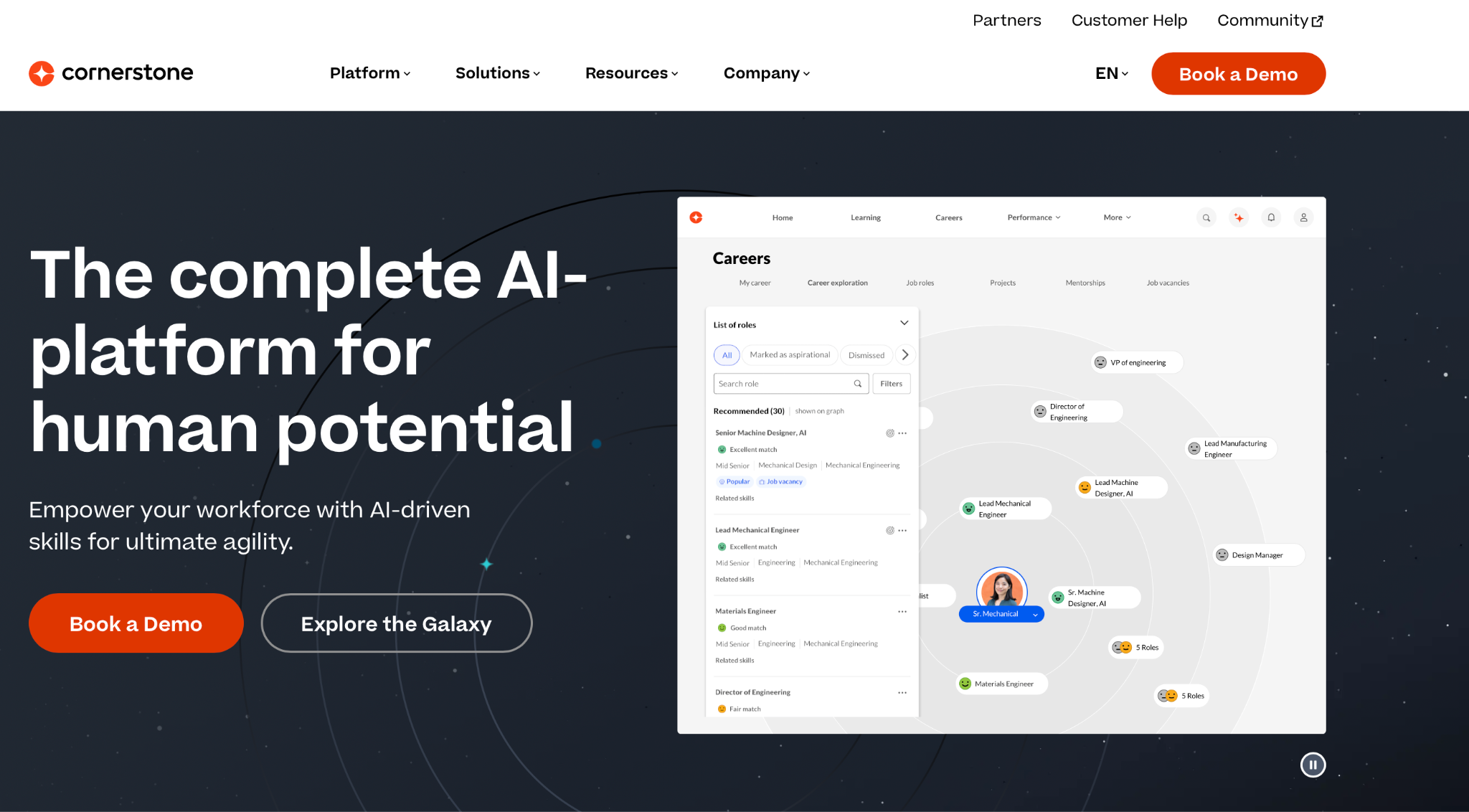
Why It Stands Out Cornerstone brings together an LMS, learning experience platform (LXP), AI-driven skills intelligence, and talent management in one ecosystem. It helps you map workforce skills, identify gaps, and recommend personalized development paths using AI. You also get access to a large content marketplace, along with the ability to create your own learning programs. With support for over 50 languages, it’s built to handle global employee training and development at scale.
Strengths
Enterprise-grade LMS and LXP with AI-driven skills intelligence
Extensive content marketplace across industries
Strong compliance tracking and multilingual support
Limitations
Setup can be complex, especially for smaller teams
Enterprise pricing is not publicly available
Pricing: Custom enterprise pricing.
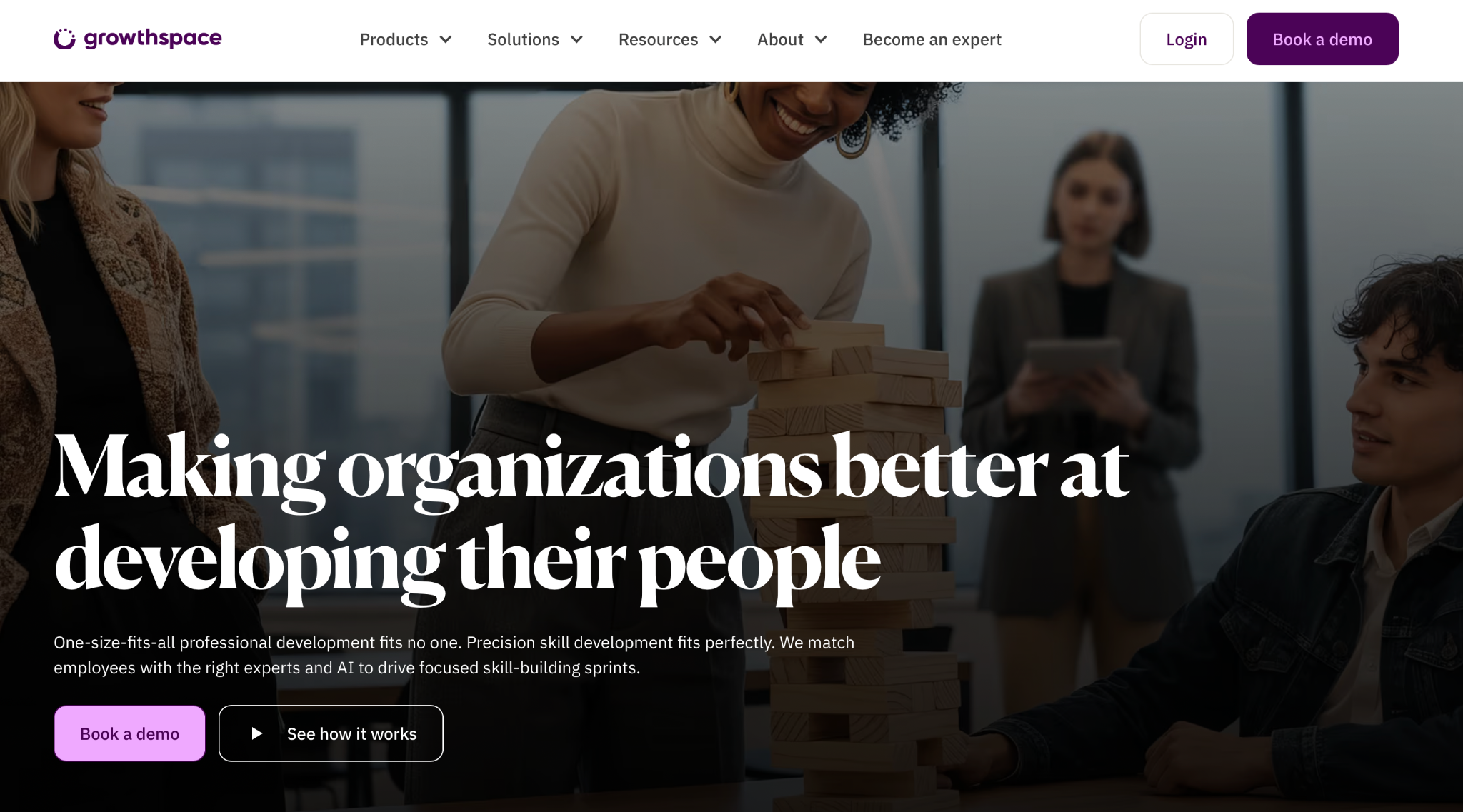
7. GrowthSpace
Best For: Organizations that want precision skill development by matching employees with the right experts for focused, measurable growth.
Why It Stands Out GrowthSpace helps you connect employees with domain experts based on specific skills and development needs. It uses AI to match people with experts from a network of over 2,500 practitioners across 1,100+ skills. Development happens through structured 6–8 week sprints, delivered through formats like 1:1 sessions, small groups, workshops, or internal mentoring. The platform also helps you manage program execution and track outcomes, so you can run development at scale without heavy admin work.
Strengths
AI-powered expert matching across 1,100+ skills for targeted development
Flexible formats including 1:1, group sessions, workshops, and mentoring
Structured sprints with measurable outcomes, including reported improvements in internal mobility
Limitations
Sprint-based model may not suit long-term, continuous career planning
Coach availability across time zones may require scheduling flexibility
Pricing: Custom pricing.
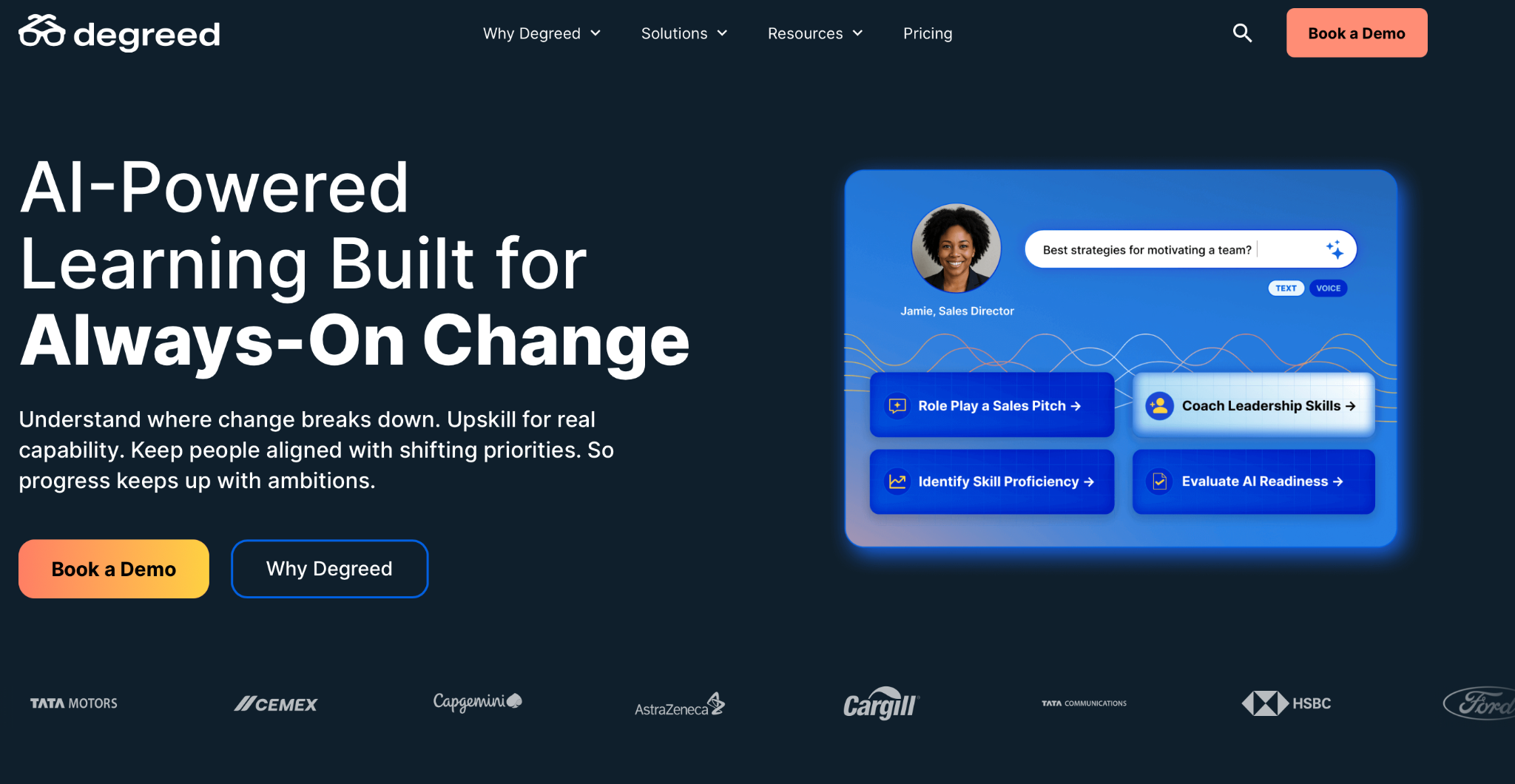
8. Degreed
Best For: Organizations that want a skills-first approach, bringing learning from multiple sources into one personalized experience.
Why It Stands Out Degreed helps you bring together learning from different sources into a single place. It aggregates content from platforms like LinkedIn Learning, Coursera, internal libraries, articles, and even podcasts, and personalizes it based on each person’s skills and career goals. Its AI-powered Skills Ontology gives you a clear view of what your workforce can do, how skills are developing over time, and where your learning investments are making an impact.
Strengths
Aggregates learning from multiple sources into one personalized experience
AI-driven skills analytics for workforce planning and gap analysis
Works well if you already use multiple learning providers
Limitations
Best suited for larger organizations with existing learning ecosystems
Does not include full performance management or career pathing on its own
Pricing: Custom pricing.
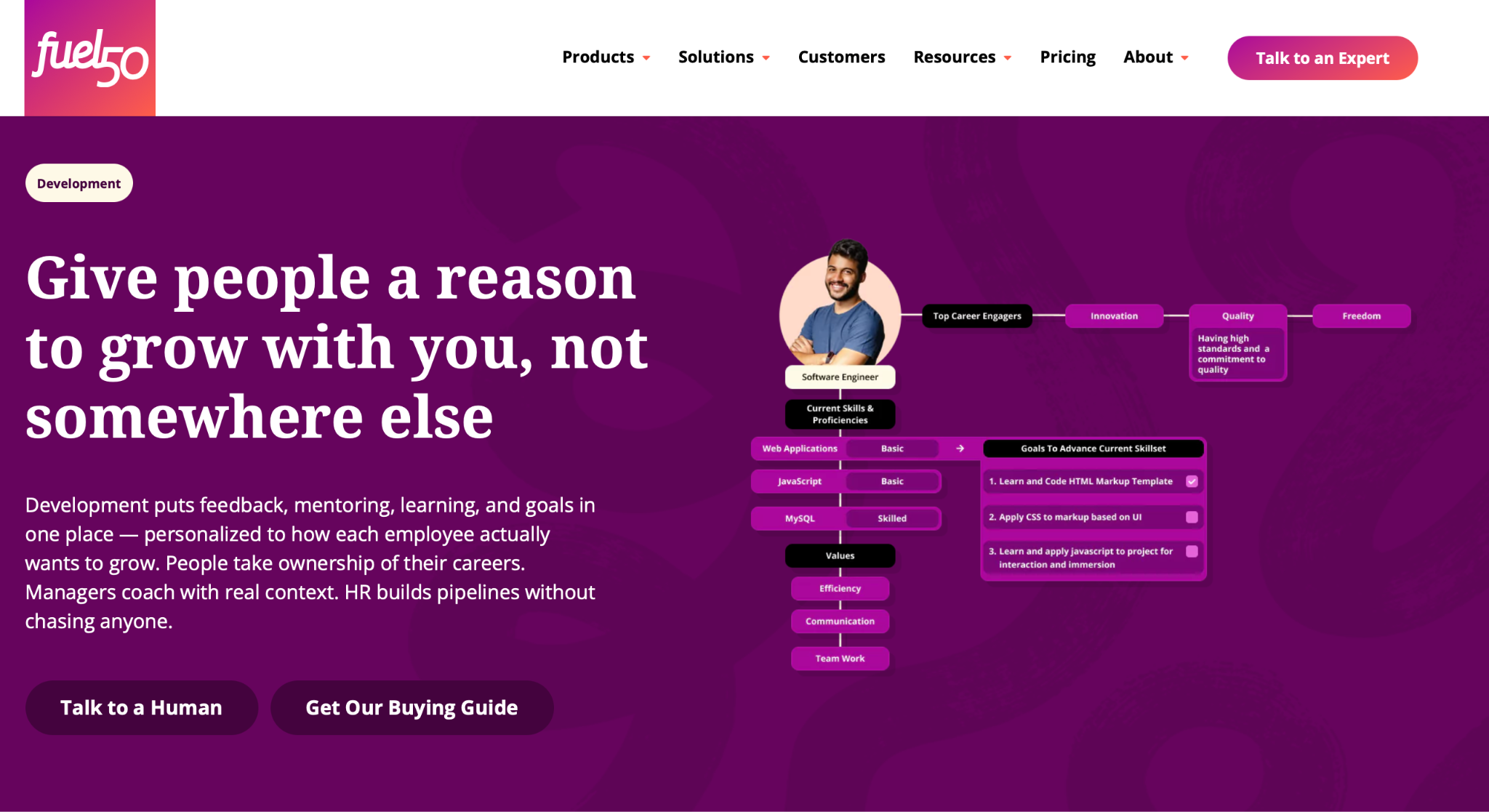
9. Fuel50
Best For: Mid-size to enterprise organizations that want a dedicated career development platform combining personalized growth, mentoring, skills-based feedback, and internal mobility.
Why It Stands Out Fuel50’s Development product brings feedback, mentoring, learning, and goals into one place, tailored to how each employee wants to grow. It helps you understand what drives each person, identify skill gaps, connect them with the right mentors, and link learning to real career goals. Managers get better context for development conversations, while HR teams can run and track mentoring programs in a more structured way.
Strengths
Personalized development built on employee values, motivators, and career aspirations
Skills-based mentor matching and consolidated mentoring programs
Clear visibility into skill gaps between current and target roles, with connected learning
Limitations
Requires upfront investment in skills architecture and change management
Some advanced features, like Coach, are offered as add-ons
Pricing: Custom pricing.
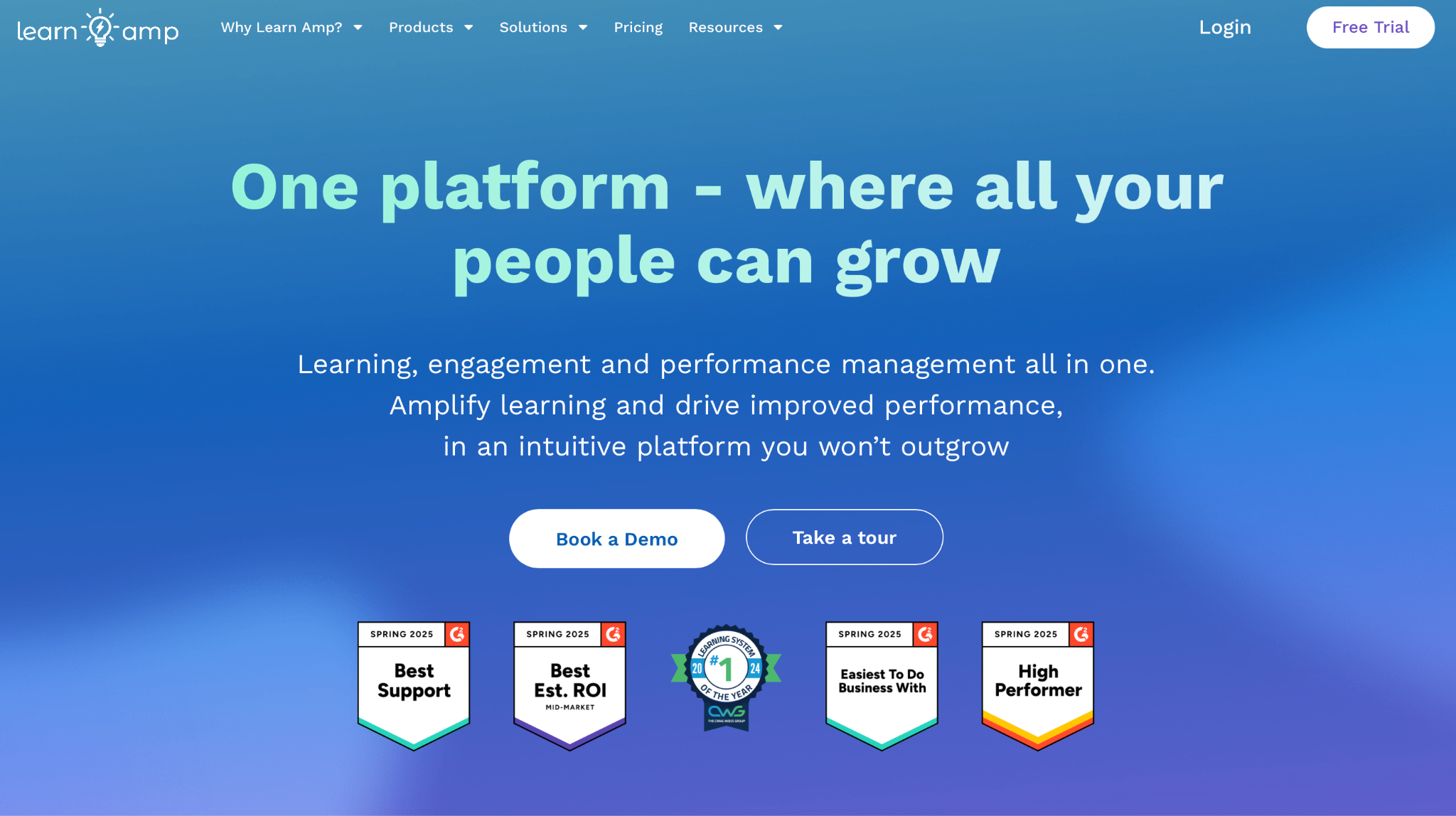
10. Learn Amp
Best For: Mid-size and scaling organizations that want learning, performance, and employee development connected in one platform without managing separate tools.
Why It Stands Out Learn Amp brings learning, performance, and development into one system, so growth becomes part of everyday work instead of a separate initiative. It helps you create personalized learning paths, track skills, and build development journeys, while giving managers visibility into progress alongside 1:1s and performance data. For HR teams, it makes it easier to connect learning outcomes to career growth and business impact. It’s used by companies like Metro Bank, Specsavers, and Rapid7.
Strengths
Combines learning, performance management, and development in one platform
AI-powered personalized development journeys tied to skills and career goals
Strong customer support highlighted in user reviews
Limitations
Smaller platform, so feature depth may not match larger enterprise tools
Less widely known, which can affect stakeholder buy-in
Pricing: Starts around $4 per user per month. Custom pricing for larger teams.
Why Employee Development Is Important
We often hear employee development described as a "nice to have." But organizations that build strong, resilient teams treat it as something fundamental.
People stay where they can grow. Companies with strong internal mobility keep employees nearly twice as long as those without it. This is not about perks, it is about whether people feel like their career is actually moving forward.
Skills need to keep pace with change. The World Economic Forum estimates that 44% of worker skills will need updating by 2030, and AI is only accelerating that shift. When you build continuous learning into how your organization operates, you are better prepared when priorities change.
Developing your people is also more effective than replacing them. Hiring a replacement can cost anywhere from 50% to 200% of an employee’s annual salary, and that does not account for lost context, relationships, and momentum. Investing in the people you already have is usually the better long-term decision.
Employee development is how you build better managers. Research shows that training managers can significantly reduce disengagement. Development is not just for individual contributors, it is how you build the leadership bench your organization will need over time.
How to Choose the Right Staff Development Software
Do You Need an LMS or Career Pathing Tool?
You first need to understand what kind of tool your team actually needs. An LMS helps you deliver and track training content, while a career pathing tool helps employees see where they can grow and how to get there. Some employee development platforms, like Cornerstone and Leapsome, combine both. Others focus more on one side, like Degreed for learning or Quantum Workplace for career development. Start with the gap you are trying to solve.
Identify Where Your Biggest Development Gap Is
Different problems point to different tools. If managers struggle to lead growth conversations, tools like Culture Amp or GrowthSpace can help. If employees lack visibility into internal opportunities, platforms like Quantum Workplace or Fuel50 are a better fit. If the issue is around skills visibility, tools like Degreed or Cornerstone offer stronger capabilities. Once you identify the gap, the right type of talent development software becomes much clearer.
Check How Development Data Connects to Other Decisions
Development data is only useful if it connects to how decisions are made. The right employee development platform should bring development goals into performance reviews, talent planning, and promotion discussions. If development lives in a separate system, it often gets ignored over time.
Test the Manager Experience First
Managers play the biggest role in making development happen. If the platform feels like extra work, adoption will drop quickly. It helps to have a few managers test it by setting up plans, reviewing progress, and preparing for real development conversations before making a decision.
Match the Tool to Where Your Team Is Today
What works for one company will not work for another. A small team usually needs something simple and quick to roll out. Mid-sized companies often need more structure around career frameworks. Larger organizations need depth and flexibility. Start with what fits your current stage, and choose a platform that can grow with you.
How Assembly and Quantum Workplace Turn Development Into Everyday Action
Even with strong development plans and career frameworks in place, many organizations struggle to keep them active over time. A few months in, those plans often stop being used. The issue is rarely the plan itself. It is making development part of how your team works every day.
Quantum Workplace’s Growth platform helps you handle the structured side of development. Employees can define where they want to grow using Career Vision, and the AI Career Coach builds personalized plans with clear next steps. Features like Growth Areas and Job Explorer help you understand what skills to build and what internal opportunities are available. Managers also get visibility through Team Plans, so 1:1s stay focused on real progress.
Assembly covers the part most employee development tools miss. It helps you make growth visible as it happens. When someone applies a new skill or takes on a stretch project, peer recognition captures it in Slack, Microsoft Teams, or your company feed. Over time, this creates a clear record of development that can be used in reviews and promotion discussions.
Together, they create a simple loop:
An employee sets a growth goal in Quantum Workplace, such as building cross-functional project management skills
A manager assigns work that supports that goal
Teammates recognize contributions in Assembly as those skills are applied
In the next review, managers can reference both progress and recognition as part of the discussion
The plan provides direction. The work provides practice. Recognition provides proof. For HR teams, Assembly’s analytics also make it easier to see who is actively developing and who might be getting overlooked.
Final Words
The most effective way to support your team’s growth is to make development part of how your organization works every day, not something separate that competes for attention.
Start today by identifying where your biggest development gaps are. Choose a tool that fits your team’s size and needs. Run a pilot with real managers before committing. And make sure the platform connects development to the conversations and decisions that shape people’s careers.
If you want to explore this further, you can book a demo with Assembly to see how recognition supports everyday development, and pair it with Quantum Workplace for structured career pathing.
FAQ
What is employee development software?
Employee development software helps you plan, deliver, and track professional growth. It can include career pathing, skills tracking, learning management, coaching tools, and development plans. The goal is to make growth structured, personalized, and connected to real outcomes.
What is the goal of employee development?
The goal is to help employees build skills for their current role and prepare for future ones. For organizations, this leads to better retention, stronger leadership pipelines, and a workforce that can adapt as needs change.
Why is employee development important?
Employees who see a clear path to grow tend to stay longer, perform better, and take on more responsibility. Organizations with strong development practices retain more talent, promote internally more often, and adapt more quickly to change.
What are employee development areas?
Common areas include leadership skills, technical expertise, communication, strategic thinking, emotional intelligence, and role-specific knowledge. The most effective plans focus on areas that align with both employee goals and business priorities.
What is the difference between employee development software and an LMS?
An LMS focuses on delivering and tracking training content like courses and certifications. Employee development software is broader. It includes career pathing, skills mapping, development plans, coaching, and connections to performance data. Some platforms combine both, but if your goal is long-term growth and internal mobility, you will likely need more than just an LMS.
class SampleComponent extends React.Component {
  // using the experimental public class field syntax below. We can also attach
  // the contextType to the current class
  static contextType = ColorContext;
  render() {
    return <Button color={this.color} />
  }
}
Every team has people who are ready to grow. They are curious, take on new challenges, and want clarity on where their career is heading. For leaders and HR teams, the goal is to make sure that growth happens within the organization, not at the next company.
The opportunity is clear. LinkedIn’s 2025 Workplace Learning Report found that 88% of organizations are concerned about employee retention, and learning opportunities are their top strategy to address it. From the employee perspective, 73% say that stronger learning and development programs would make them stay longer, according to the TalentLMS 2026 L&D Report.
And this is where employee development software becomes essential.
The right platform makes growth visible, structured, and part of everyday work. It enables organizations to build clear career paths, track skills, deliver relevant learning, and connect training and development efforts to real outcomes.
In this guide, we’ll cover the best employee development software tools for 2026, what to look for when evaluating them, and how to choose the right fit for your team.
What to Look for in Employee Development Software
Employee development software is a different category from performance management tools. Performance tools focus on how someone is performing today, while development tools focus on where they can grow next. When evaluating options, here are the key areas to prioritize:
Career Pathing and Personalized Growth Plans
Employees need clarity on where they can grow and what it takes to get there. The best career development tools for employees provide guided career pathing, personalized development plans with clear milestones, and visibility into internal roles along with required skills.
A strong employee development plan software solution ensures these plans are not static, but evolve as employees grow.
Skills Tracking and Competency Mapping
Good people development software should help you map competencies at the role level and spot skill gaps across teams. It should also make it easier to align learning with what your business actually needs. Many talent development platforms now use AI to speed this up, especially as your team grows.
Learning Content and Delivery
What matters most is helping employees access the right learning at the right time. This could be through built-in course libraries or integrations with platforms like LinkedIn Learning or Coursera. The best employee training and development software focuses on personalized recommendations, since these tend to drive higher completion rates than generic course assignments.
Manager Coaching and Enablement
Most development happens in conversations, not just courses. The right staff development software helps you support managers with simple tools like coaching prompts, development templates, and visibility into each person’s goals. When managers are properly enabled, you’re far more likely to see consistent adoption. For a practical framework on structuring these conversations, see our guide on how to run effective one-on-one meetings.
Connection to Performance and Engagement Data
Growth plans rarely get followed up on when they sit in a separate system. The best employee development plan software helps you connect development goals with performance reviews, 1:1s, and engagement data, so growth stays part of your everyday workflow.
You need a clear view of what’s working and what’s not. The right talent development software helps you track plan adoption, skill progression, and trends across teams. This makes it easier to see which teams are actively developing people, where gaps are growing, and what’s actually making a difference.
Comparison: Top Talent Development Platforms
Key Differences
Platform
Best For
Starting Price
G2 Rating
Development Strength
Quantum Workplace + Assembly
AI career pathing + recognition-driven growth
Custom pricing
4.3/5
AI Career Coach, growth plans, competency mapping, and recognition that reinforces development
Lattice
Integrated performance + L&D
From $11/seat/mo
4.7/5
Career frameworks, growth plans, and competency tracking tied to goals and reviews
TalentGuard
Structured career pathing + workforce intelligence
Custom pricing
4.6/5
AI career pathing, competency frameworks, talent marketplace, and mentor matching
Leapsome
Learning + performance in one stack
From ~$8/user/mo
4.8/5
Personalized learning paths, skill modules, and competency frameworks with 32-language support
Culture Amp
Science-backed habit building
Custom pricing
4.5/5
Skills Coach microlearning and behavioral science coaching tools
Cornerstone OnDemand
Enterprise learning at scale
Custom pricing
4.1/5
Full LMS/LXP with AI skills intelligence and content marketplace
GrowthSpace
Precision skill development
Custom pricing
4.8/5
AI expert matching across 1,100+ skills with structured development sprints
Degreed
Skills-first learning
Custom pricing
4.2/5
Content aggregation from thousands of sources with AI skills analytics
Fuel50
Career pathing + internal mobility
Custom pricing
4.5/5
AI career journeys, skills gap analysis, talent marketplace, and internal mobility
Learn Amp
Learning + development in one platform
From $4/user/mo
4.7/5
Personalized development journeys connecting learning, performance, and career growth
10 Best Employee Development Software Tools in 2026
Let’s take a closer look at each talent development platform, focusing on how they support growth and where they can add the most value for your team.
1. Quantum Workplace + Assembly
Best For: Organizations that want AI-powered career pathing and personalized growth plans, with recognition built in to reinforce development as it happens.
Why It Stands Out Quantum Workplace’s Growth product helps you guide employees through career visioning, build personalized growth plans, and explore internal opportunities through features like Job Explorer. Quantum Workplace's AI Career Coach provides tailored development recommendations, so employees don’t have to start from scratch. Managers also get access to Team Plans, with development insights that connect directly to 1:1s and performance reviews. Talent reviews connect individual development plans directly to leadership pipeline planning.
Assembly adds an important layer that many employee development tools miss. When someone applies a new skill or takes on a stretch project, peer recognition that aligns with career development captures it in tools like Slack, Microsoft Teams, or your HRIS. This creates a visible, ongoing record of development in action. Milestone celebrations acknowledge career moments. And manager 1:1 tools keep development accountability part of the weekly workflow.
Strengths
AI Career Coach and Career Vision for personalized development planning
Assembly's recognition creates a documented trail of growth for reviews and promotions
Limitations
Best suited for organizations ready to invest in structured development, not teams looking for a simple LMS
Learning content is linked within the tool, but deep external LMS automation depends on your existing tech stack
Pricing: Quantum Workplace uses custom pricing. Assembly starts at $2/employee/month with free onboarding.
2. Lattice
Best For: Mid-market to enterprise teams that want development closely connected to performance goals, reviews, and career frameworks.
Why It Stands Out Lattice brings development into the same system you already use for performance management. It offers competency tracking, growth plans tied to role expectations, and internal career ladders employees can explore. Its L&D module lets you create and assign learning content, track progress, and connect learning back to performance conversations like reviews and 1:1s.
Strengths
L&D module with course creation, assignment, and progress tracking
Career frameworks and competency tracking aligned to role expectations
Growth plans integrated into reviews and 1:1s
Limitations
L&D features are still evolving compared to dedicated learning platforms
$4,000/year minimum, with costs increasing as you add modules
Pricing: Starts at $11 per seat per month, with a $4,000 annual minimum.
3. TalentGuard
Best For: Organizations that want structured career pathing with clear competency frameworks, skill gap tracking, and a built-in talent marketplace for internal mobility.
Why It Stands Out TalentGuard is designed specifically to help you build structured development programs. Its Career Pathways Builder helps employees map step-by-step plans toward future roles, while Career Canvas visualizes career trajectories and the competencies needed to get there. The platform also includes AI-powered career pathing, skill gap tracking, a talent marketplace for internal opportunities, and mentoring features that help employees connect with the right people to support their growth.
Strengths
AI-powered career pathing with clear role expectations and skill requirements
Talent marketplace that surfaces internal opportunities aligned with employee goals
Mentor matching to support development beyond manager conversations
Limitations
Initial setup can take time, especially in more complex organizations
Interface feels less modern compared to some newer platforms
Pricing: Custom pricing.
4. Leapsome
Best For: Growing companies that want personalized learning paths and skill development built directly into their performance and HR ecosystem.
Why It Stands Out Leapsome treats learning and development as a core part of the platform, not an add-on. It helps you create personalized learning paths, build competency frameworks, and connect skill development directly to performance data. When someone completes a development module, that progress is reflected in their performance profile, their manager’s dashboard, and upcoming reviews. For global teams, its 32-language support makes rollout much easier.
Strengths
Dedicated learning modules with personalized paths and competency-based skill building
Development progress visible across reviews, 1:1s, and manager dashboards
32-language support for global teams
Limitations
Setup can take time due to the breadth of features
Costs increase as you add more modules
Pricing: Starts around $8 per user per month. Free trial available.
5. Culture Amp
Best For: Organizations that want a science-backed approach to development, focused on building daily growth habits through coaching and microlearning.
Why It Stands Out Culture Amp focuses more on building habits than completing courses. Its Skills Coach delivers bite-sized, research-backed learning designed to build new behaviors over time. It also helps you support managers with playbooks and development-focused 1:1 templates, while Life Labs provide deeper, facilitator-led learning for leadership development. If you’re looking for an evidence-based approach to growing your team, this is a strong option.
Strengths
Skills Coach microlearning helps build consistent development habits
Content grounded in behavioral science
Life Labs support leadership development at scale
Limitations
No built-in HRIS or full course authoring LMS
Implementation can take longer than simpler tools
Pricing: Custom pricing.
6. Cornerstone
Best For: Large enterprises that need a full-scale learning and talent development platform for training, upskilling, compliance, and career pathing across a global workforce.
Why It Stands Out Cornerstone brings together an LMS, learning experience platform (LXP), AI-driven skills intelligence, and talent management in one ecosystem. It helps you map workforce skills, identify gaps, and recommend personalized development paths using AI. You also get access to a large content marketplace, along with the ability to create your own learning programs. With support for over 50 languages, it’s built to handle global employee training and development at scale.
Strengths
Enterprise-grade LMS and LXP with AI-driven skills intelligence
Extensive content marketplace across industries
Strong compliance tracking and multilingual support
Limitations
Setup can be complex, especially for smaller teams
Enterprise pricing is not publicly available
Pricing: Custom enterprise pricing.
7. GrowthSpace
Best For: Organizations that want precision skill development by matching employees with the right experts for focused, measurable growth.
Why It Stands Out GrowthSpace helps you connect employees with domain experts based on specific skills and development needs. It uses AI to match people with experts from a network of over 2,500 practitioners across 1,100+ skills. Development happens through structured 6–8 week sprints, delivered through formats like 1:1 sessions, small groups, workshops, or internal mentoring. The platform also helps you manage program execution and track outcomes, so you can run development at scale without heavy admin work.
Strengths
AI-powered expert matching across 1,100+ skills for targeted development
Flexible formats including 1:1, group sessions, workshops, and mentoring
Structured sprints with measurable outcomes, including reported improvements in internal mobility
Limitations
Sprint-based model may not suit long-term, continuous career planning
Coach availability across time zones may require scheduling flexibility
Pricing: Custom pricing.
8. Degreed
Best For: Organizations that want a skills-first approach, bringing learning from multiple sources into one personalized experience.
Why It Stands Out Degreed helps you bring together learning from different sources into a single place. It aggregates content from platforms like LinkedIn Learning, Coursera, internal libraries, articles, and even podcasts, and personalizes it based on each person’s skills and career goals. Its AI-powered Skills Ontology gives you a clear view of what your workforce can do, how skills are developing over time, and where your learning investments are making an impact.
Strengths
Aggregates learning from multiple sources into one personalized experience
AI-driven skills analytics for workforce planning and gap analysis
Works well if you already use multiple learning providers
Limitations
Best suited for larger organizations with existing learning ecosystems
Does not include full performance management or career pathing on its own
Pricing: Custom pricing.
9. Fuel50
Best For: Mid-size to enterprise organizations that want a dedicated career development platform combining personalized growth, mentoring, skills-based feedback, and internal mobility.
Why It Stands Out Fuel50’s Development product brings feedback, mentoring, learning, and goals into one place, tailored to how each employee wants to grow. It helps you understand what drives each person, identify skill gaps, connect them with the right mentors, and link learning to real career goals. Managers get better context for development conversations, while HR teams can run and track mentoring programs in a more structured way.
Strengths
Personalized development built on employee values, motivators, and career aspirations
Skills-based mentor matching and consolidated mentoring programs
Clear visibility into skill gaps between current and target roles, with connected learning
Limitations
Requires upfront investment in skills architecture and change management
Some advanced features, like Coach, are offered as add-ons
Pricing: Custom pricing.
10. Learn Amp
Best For: Mid-size and scaling organizations that want learning, performance, and employee development connected in one platform without managing separate tools.
Why It Stands Out Learn Amp brings learning, performance, and development into one system, so growth becomes part of everyday work instead of a separate initiative. It helps you create personalized learning paths, track skills, and build development journeys, while giving managers visibility into progress alongside 1:1s and performance data. For HR teams, it makes it easier to connect learning outcomes to career growth and business impact. It’s used by companies like Metro Bank, Specsavers, and Rapid7.
Strengths
Combines learning, performance management, and development in one platform
AI-powered personalized development journeys tied to skills and career goals
Strong customer support highlighted in user reviews
Limitations
Smaller platform, so feature depth may not match larger enterprise tools
Less widely known, which can affect stakeholder buy-in
Pricing: Starts around $4 per user per month. Custom pricing for larger teams.
Why Employee Development Is Important
We often hear employee development described as a "nice to have." But organizations that build strong, resilient teams treat it as something fundamental.
People stay where they can grow. Companies with strong internal mobility keep employees nearly twice as long as those without it. This is not about perks, it is about whether people feel like their career is actually moving forward.
Skills need to keep pace with change. The World Economic Forum estimates that 44% of worker skills will need updating by 2030, and AI is only accelerating that shift. When you build continuous learning into how your organization operates, you are better prepared when priorities change.
Developing your people is also more effective than replacing them. Hiring a replacement can cost anywhere from 50% to 200% of an employee’s annual salary, and that does not account for lost context, relationships, and momentum. Investing in the people you already have is usually the better long-term decision.
Employee development is how you build better managers. Research shows that training managers can significantly reduce disengagement. Development is not just for individual contributors, it is how you build the leadership bench your organization will need over time.
How to Choose the Right Staff Development Software
Do You Need an LMS or Career Pathing Tool?
You first need to understand what kind of tool your team actually needs. An LMS helps you deliver and track training content, while a career pathing tool helps employees see where they can grow and how to get there. Some employee development platforms, like Cornerstone and Leapsome, combine both. Others focus more on one side, like Degreed for learning or Quantum Workplace for career development. Start with the gap you are trying to solve.
Identify Where Your Biggest Development Gap Is
Different problems point to different tools. If managers struggle to lead growth conversations, tools like Culture Amp or GrowthSpace can help. If employees lack visibility into internal opportunities, platforms like Quantum Workplace or Fuel50 are a better fit. If the issue is around skills visibility, tools like Degreed or Cornerstone offer stronger capabilities. Once you identify the gap, the right type of talent development software becomes much clearer.
Check How Development Data Connects to Other Decisions
Development data is only useful if it connects to how decisions are made. The right employee development platform should bring development goals into performance reviews, talent planning, and promotion discussions. If development lives in a separate system, it often gets ignored over time.
Test the Manager Experience First
Managers play the biggest role in making development happen. If the platform feels like extra work, adoption will drop quickly. It helps to have a few managers test it by setting up plans, reviewing progress, and preparing for real development conversations before making a decision.
Match the Tool to Where Your Team Is Today
What works for one company will not work for another. A small team usually needs something simple and quick to roll out. Mid-sized companies often need more structure around career frameworks. Larger organizations need depth and flexibility. Start with what fits your current stage, and choose a platform that can grow with you.
How Assembly and Quantum Workplace Turn Development Into Everyday Action
Even with strong development plans and career frameworks in place, many organizations struggle to keep them active over time. A few months in, those plans often stop being used. The issue is rarely the plan itself. It is making development part of how your team works every day.
Quantum Workplace’s Growth platform helps you handle the structured side of development. Employees can define where they want to grow using Career Vision, and the AI Career Coach builds personalized plans with clear next steps. Features like Growth Areas and Job Explorer help you understand what skills to build and what internal opportunities are available. Managers also get visibility through Team Plans, so 1:1s stay focused on real progress.
Assembly covers the part most employee development tools miss. It helps you make growth visible as it happens. When someone applies a new skill or takes on a stretch project, peer recognition captures it in Slack, Microsoft Teams, or your company feed. Over time, this creates a clear record of development that can be used in reviews and promotion discussions.
Together, they create a simple loop:
An employee sets a growth goal in Quantum Workplace, such as building cross-functional project management skills
A manager assigns work that supports that goal
Teammates recognize contributions in Assembly as those skills are applied
In the next review, managers can reference both progress and recognition as part of the discussion
The plan provides direction. The work provides practice. Recognition provides proof. For HR teams, Assembly’s analytics also make it easier to see who is actively developing and who might be getting overlooked.
Final Words
The most effective way to support your team’s growth is to make development part of how your organization works every day, not something separate that competes for attention.
Start today by identifying where your biggest development gaps are. Choose a tool that fits your team’s size and needs. Run a pilot with real managers before committing. And make sure the platform connects development to the conversations and decisions that shape people’s careers.
If you want to explore this further, you can book a demo with Assembly to see how recognition supports everyday development, and pair it with Quantum Workplace for structured career pathing.
FAQ
What is employee development software?
Employee development software helps you plan, deliver, and track professional growth. It can include career pathing, skills tracking, learning management, coaching tools, and development plans. The goal is to make growth structured, personalized, and connected to real outcomes.
What is the goal of employee development?
The goal is to help employees build skills for their current role and prepare for future ones. For organizations, this leads to better retention, stronger leadership pipelines, and a workforce that can adapt as needs change.
Why is employee development important?
Employees who see a clear path to grow tend to stay longer, perform better, and take on more responsibility. Organizations with strong development practices retain more talent, promote internally more often, and adapt more quickly to change.
What are employee development areas?
Common areas include leadership skills, technical expertise, communication, strategic thinking, emotional intelligence, and role-specific knowledge. The most effective plans focus on areas that align with both employee goals and business priorities.
What is the difference between employee development software and an LMS?
An LMS focuses on delivering and tracking training content like courses and certifications. Employee development software is broader. It includes career pathing, skills mapping, development plans, coaching, and connections to performance data. Some platforms combine both, but if your goal is long-term growth and internal mobility, you will likely need more than just an LMS.
Browse our Free Employee Recognition Guide
Get the foundational knowledge on creating an employee recognition program that boosts employee engagement and helps them feel valued.