Hiring the right people takes a lot of effort. Keeping them takes even more.
Not because teams are doing something wrong, but because the things that make employees want to stay are easy to overlook when work gets busy. Feeling valued. Growing in their role. Having a manager who follows through. Getting recognized for good work.
These are not one-time fixes. This is exactly why many companies start looking for employee retention software that helps make these habits consistent.
The data makes this pretty clear. The Work Institute’s 2025 Retention Report, based on more than 120,000 exit interviews, found that 75% of voluntary departures could have been prevented. Another research also found that half of employees worldwide are open to new job opportunities. Not necessarily because they want to leave, but because they are not fully convinced they should stay.
That is where employee retention software helps. These tools help companies build better habits around recognition, feedback, manager check-ins, engagement, and career growth. Instead of relying on good intentions or scattered processes, everything lives in one place and happens more consistently.
In this guide, we will explain what employee retention software is, the features to look for when comparing employee retention tools, the best employee retention platforms for 2026, and how to choose the right option for your team.
What Is Employee Retention Software?
Employee retention software helps companies understand why employees stay, where turnover risk is starting to build, and what actually helps keep good people around long term.
Retention usually is not caused by one big problem. It is often a mix of smaller things. Employees want to feel recognized. They want a good relationship with their manager. They want to see growth in their role and feel heard when they share feedback.
The best employee retention platforms bring all of this into one place. Instead of reacting after someone has already decided to leave, HR teams and managers can spot problems earlier and take action before disengagement turns into turnover.
When comparing employee retention software, here are the key features to look for:
Recognition and rewards: Employees who feel appreciated are more likely to stay. In fact, companies with strong employee recognition programs see 31% lower voluntary turnover. Look for tools that support peer-to-peer recognition, company values, public recognition feeds, and rewards that integrate with Slack, Microsoft Teams, or your HR system.
Engagement surveys and pulse checks: You cannot improve retention if you do not know how employees are feeling. Pulse surveys, eNPS, and regular feedback tools help companies spot disengagement early instead of waiting for an annual survey.
Manager 1:1 and check-in tools: Managers have a huge impact on retention. Research shows that many employees leave because of poor management, not compensation. Good retention platforms make 1:1 meetings easier with shared agendas, notes, action items, and conversation history that help managers follow through consistently.
Performance reviews and continuous feedback: Employees want clear expectations and fair feedback. Structured reviews and ongoing feedback help people understand their progress, feel supported, and see a future inside the company.
Career development and growth paths: People often leave when they feel stuck. Good staff retention software helps employees see growth opportunities, build development plans, and connect long-term career goals to their day-to-day work. If development is your primary focus, our guide on the best employee development software covers dedicated tools for this.
Analytics and retention insights: Strong employee retention platforms help HR teams spot trends that are hard to see manually. This could include teams with low engagement, managers with high turnover, or employees who may be at higher risk of leaving.
AI and automation: Modern retention software also uses AI to make good management habits easier to maintain. AI can help managers write better recognition messages, summarize engagement feedback, identify overlooked employees, and automate celebrations for milestones and achievements. These small actions add up over time and help create a stronger employee experience.
Compare the Best Talent Retention Software
Key Differences
Retention Tool
Best For
Key Feature
G2 Rating
Assembly
Recognition-driven retention
Peer recognition, rewards, AI insights, milestones
4.8/5
Quantum Workplace
Unified engagement + performance
Surveys, reviews, goals, AI analytics
4.3/5
Lattice
Performance + engagement + comp
Reviews, OKRs, surveys, compensation
4.7/5
Culture Amp
Data-driven engagement analytics
Research-backed surveys, benchmarking
4.5/5
15Five
Manager effectiveness + feedback
Weekly check-ins, coaching, AMAYA AI
4.6/5
Leapsome
All-in-one people management
Performance, engagement, learning, HRIS
4.8/5
BambooHR
SMBs needing HRIS + basics
HR platform with onboarding and reviews
4.4/5
Bonusly
Lightweight peer recognition
Points-based recognition, rewards, pulse checks
4.7/5
Workday Peakon
Enterprise employee listening
Continuous listening, sentiment analysis
4.6/5
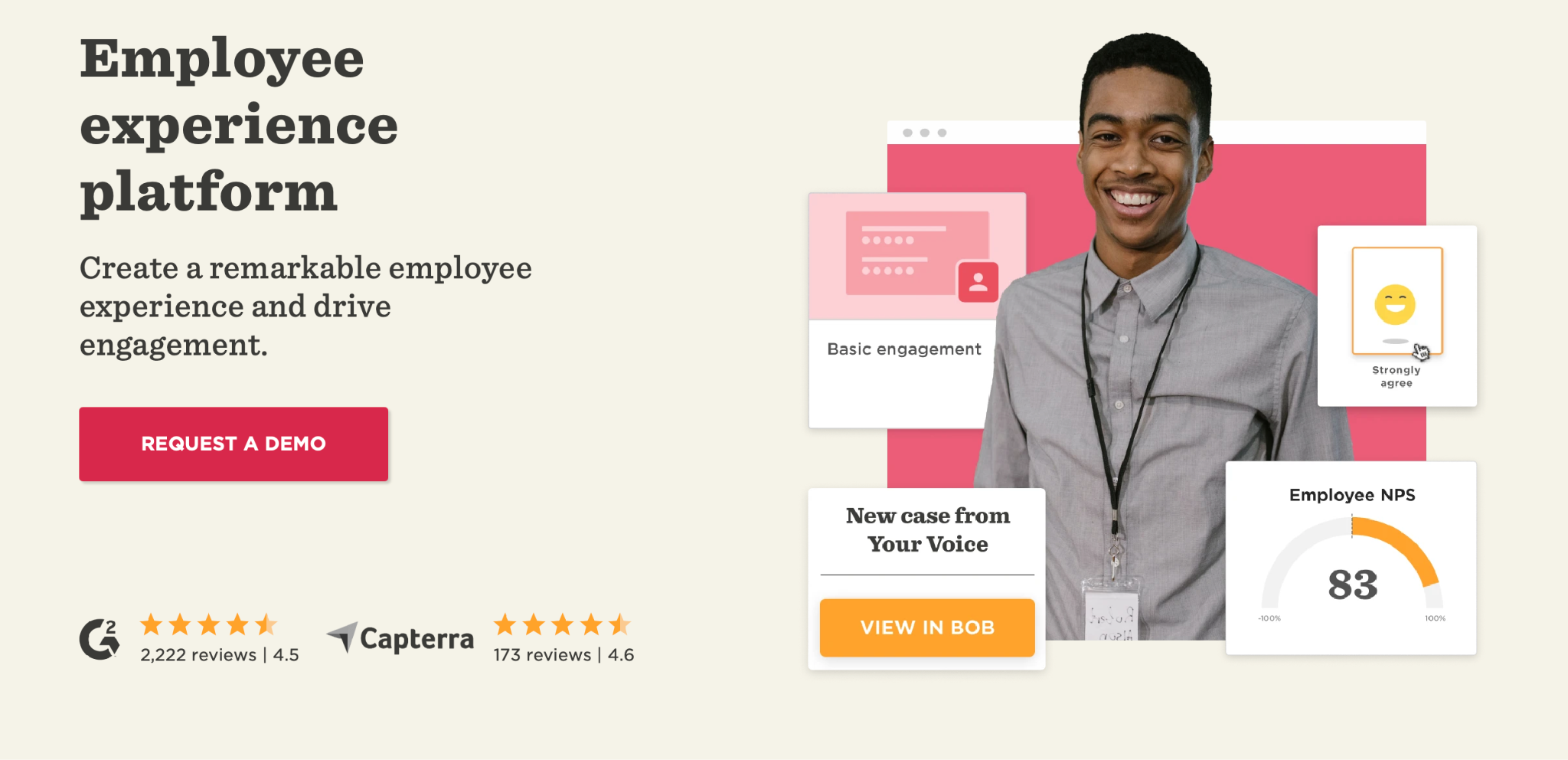
HiBob
Modern HRIS + culture tools
Reviews, compensation, payroll, culture
4.5/5
Nectar
Recognition + internal comms
Peer recognition, rewards, challenges
4.7/5
Achievers
Enterprise-scale recognition
Global rewards (190 countries), listening
4.6/5
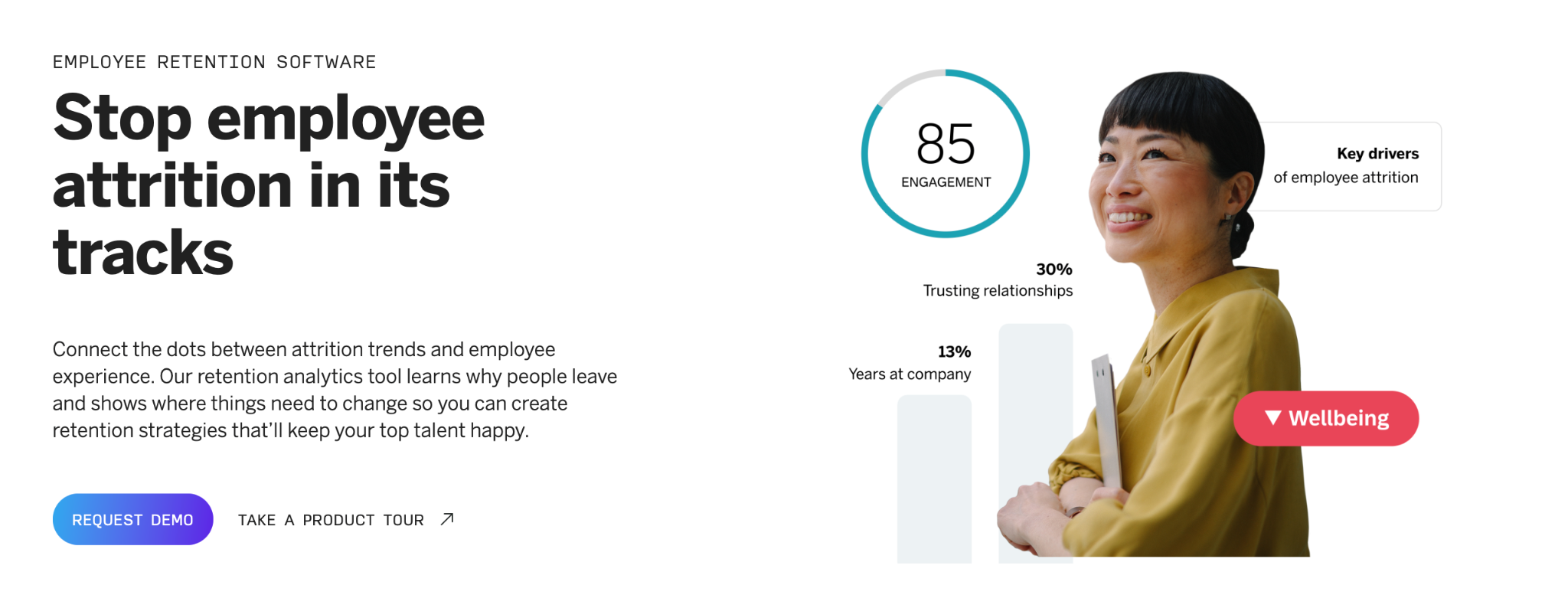
Qualtrics XM
Retention analytics + lifecycle
Attrition modeling, segment analysis
4.4/5
Motivosity
Connection-driven recognition
Peer recognition, manager tools, community
4.7/5
Vantage Circle
Recognition + wellness
Recognition, wellness programs, discounts
4.7/5
Top Employee Retention Software for 2026
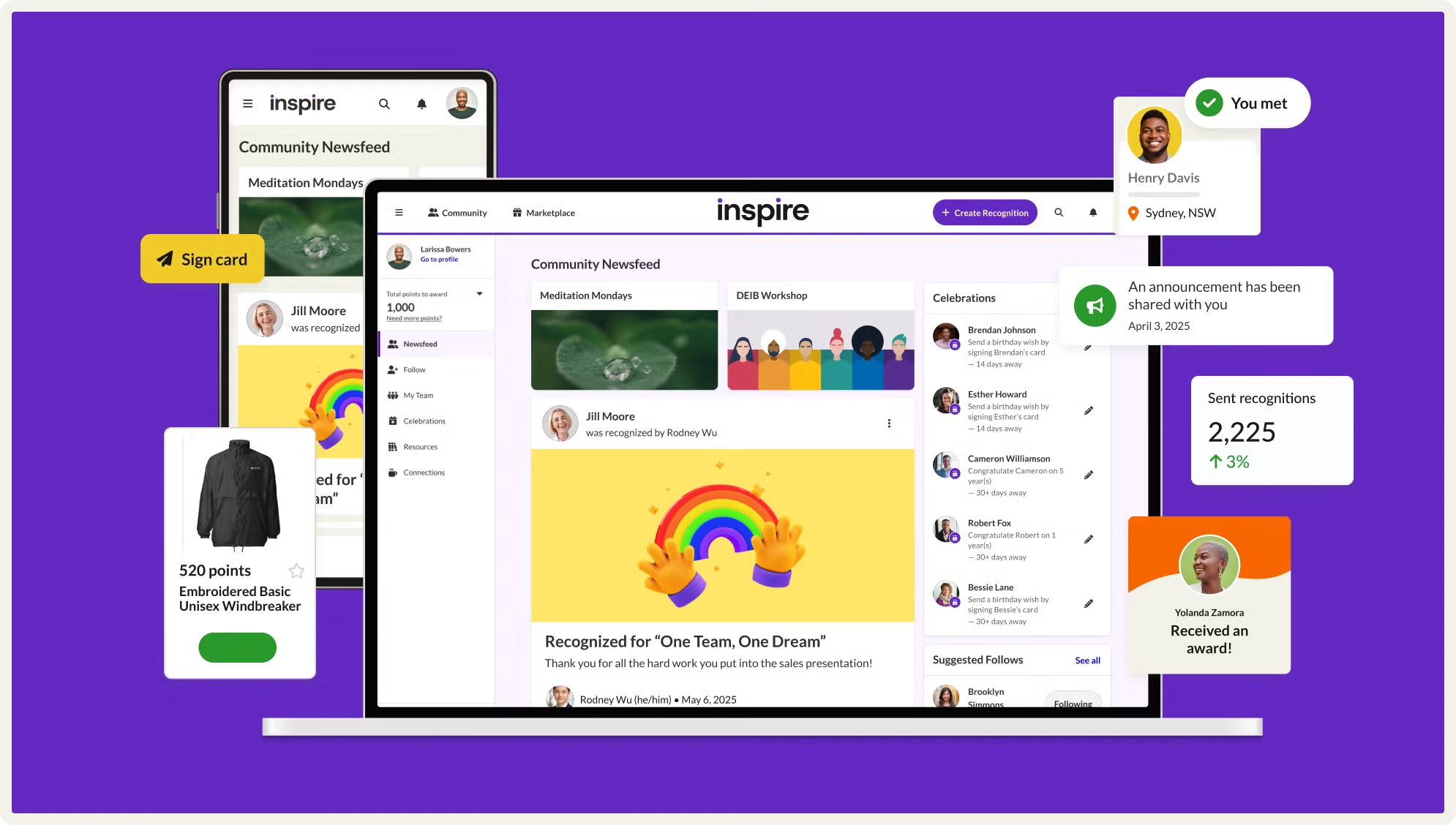
1. Assembly
Best for: Teams of any size that want employee recognition at the center of their retention strategy.
Why Companies Like It:
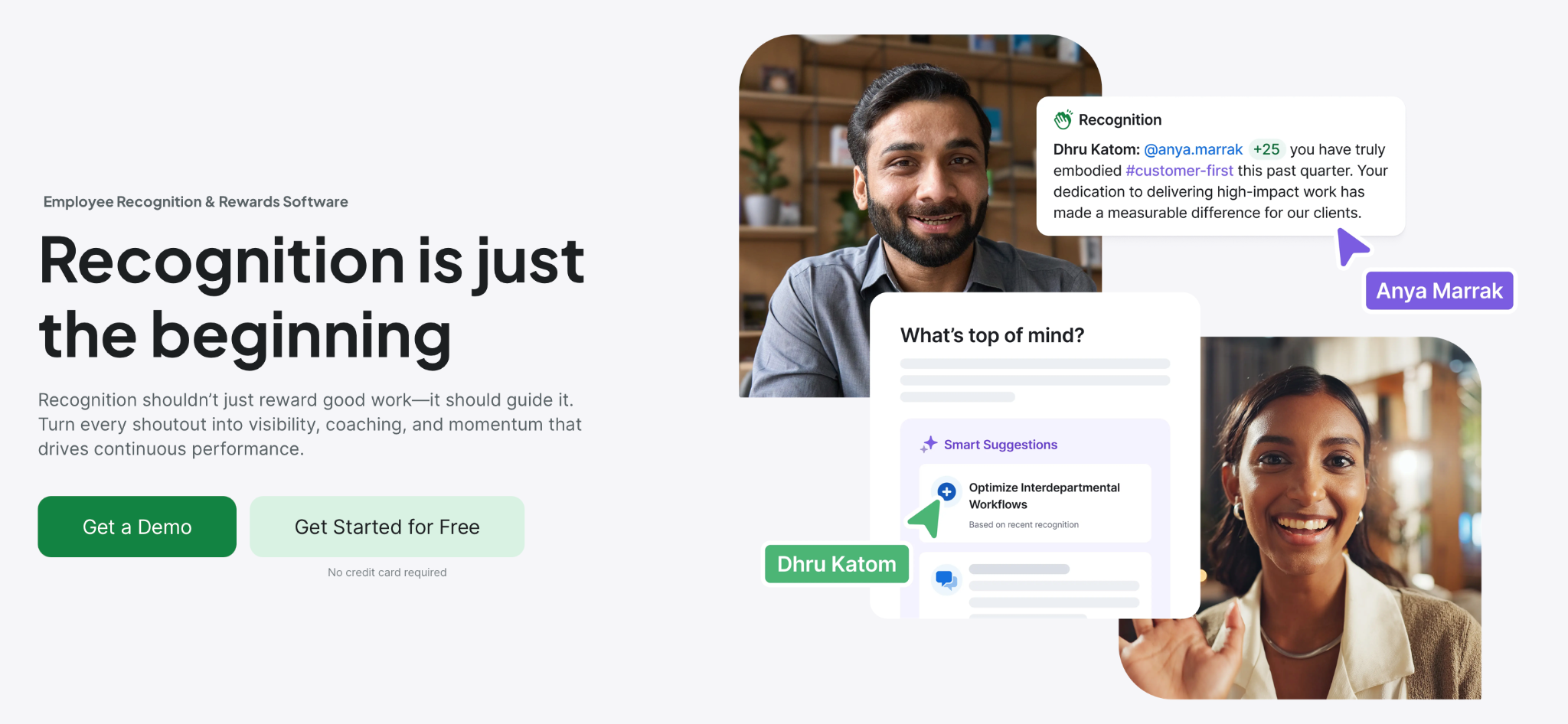
Most retention tools treat recognition like a secondary feature. Assembly puts recognition at the center of your employee retention program. Employees can recognize each other directly inside Slack, Teams, or your HRIS, making appreciation visible across the company instead of buried in private conversations.
The platform also includes AI-powered recognition insights, automated milestone celebrations, rewards, and manager tools that help teams stay connected and engaged over time.
Strengths: High participation rates, easy setup, strong Slack and Teams integrations, AI-powered recognition insights, automated celebrations, and flexible rewards.
Limitations: More focused on recognition and engagement than deep performance management.
Pricing: Starts at $2 per employee/month with free onboarding and training.
2. Quantum Workplace
Best for: Mid-sized and enterprise companies that want engagement, performance, and retention data connected in one system.
Why Companies Like It
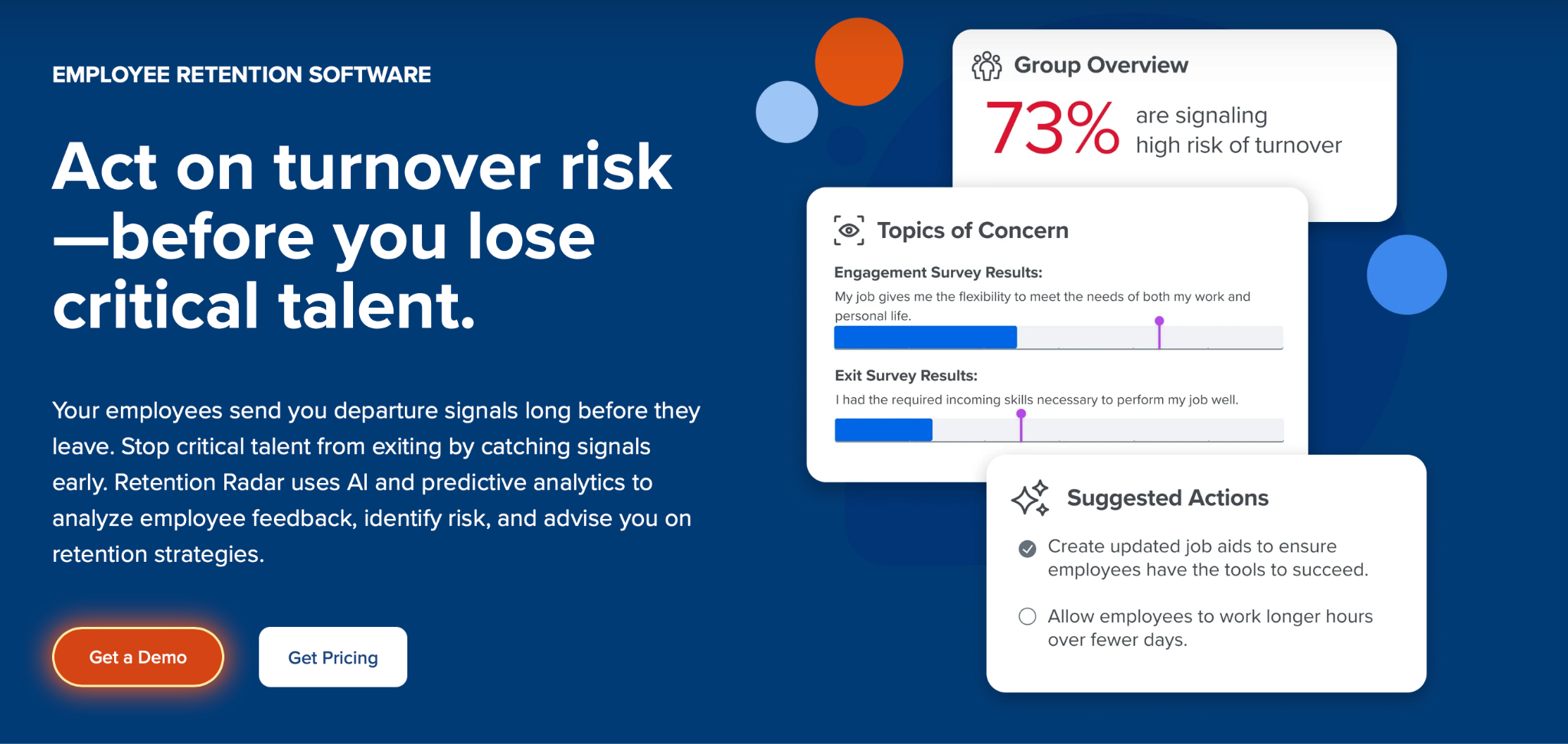
Quantum Workplace brings engagement surveys, performance reviews, goal tracking, and talent analytics into one system. This helps HR teams connect engagement and performance data to better understand what is driving retention or turnover.
The platform also includes AI tools that reduce manager workload and, through its Assembly integration, supports recognition and rewards alongside surveys, reviews, and goals.
Strengths: Strong reporting and analytics, connected engagement and performance data, AI tools that save managers time, flexible review workflows, and strong implementation support.
Limitations: Feature-rich platform that can take time to learn fully. Pricing is not publicly available.
Pricing: Custom pricing based on company size and features.
3. Lattice
Best for: Mid-market and enterprise companies that want performance, engagement, goals, and compensation in one place.
Why Companies Like It
Lattice combines performance reviews, OKRs, engagement surveys, career growth, and compensation tools in one system. This helps managers connect performance trends with engagement and retention risks earlier. The platform also includes AI tools that help managers write reviews and coaching feedback more efficiently.
Strengths: Performance, engagement, goals, and compensation in one platform. AI support for reviews and coaching. 50+ integrations.
Limitations: Pricing increases as more modules are added. Annual minimum commitment can be expensive for smaller teams.
Pricing: Starts at $11 per seat/month with a $4,000 yearly minimum.
4. Culture Amp
Best for: Companies that want deep engagement insights and employee feedback data.
Why Companies Like It
Culture Amp is known for its research-backed engagement surveys and benchmarking tools. The platform helps companies understand not just whether engagement is dropping, but why it is happening and which teams are most affected. It also includes manager coaching tools and sentiment analysis that help HR teams take action before disengagement turns into turnover.
Limitations: Performance management tools are not as advanced as dedicated performance platforms.
Pricing: Custom pricing.
5. 15Five
Best for: Mid-sized companies that want better manager and employee communication.
Why Companies Like It
15Five focuses heavily on regular check-ins between managers and employees. Team members can share updates, raise concerns, and reflect on their work through weekly check-ins that keep conversations consistent. The platform also includes manager coaching features and AI tools that help identify retention risks early.
Limitations: Can feel lightweight for larger enterprises. Engagement survey features are still less advanced than dedicated survey platforms.
Pricing: Starts at $4 per user/month.
6. Leapsome
Best for: Companies that want performance, engagement, learning, and HR tools in one platform.
Why Companies Like It
Leapsome combines performance reviews, OKRs, engagement surveys, learning, compensation, and HRIS features into one system. This makes it attractive for companies trying to reduce the number of HR tools they manage. The platform also supports 32 languages, making it a strong option for global teams.
Strengths: Broad feature set covering performance, engagement, learning, compensation, and HRIS. Strong multilingual support.
Limitations: Setup can feel overwhelming because of how many features are included. Costs rise as more modules are added.
Pricing: Starts at around $8 per user/month.
7. BambooHR
Best for: Small businesses that want basic HR and retention tools in one system.
Why Companies Like It
BambooHR is primarily an HRIS platform, but it also includes simple performance management and employee feedback tools. Companies already using BambooHR for payroll, onboarding, and employee records can add retention-related features without adopting another platform. Its biggest advantage is simplicity. The interface is easy to use and works well for smaller teams that do not need advanced retention analytics.
Strengths: HR, payroll, onboarding, and performance tools in one platform. Easy to use for small teams.
Limitations: Retention and analytics features are more limited compared to dedicated retention platforms.
Pricing: Starts at around $10 per user/month.
8. Bonusly
Best for: Teams that want a simple peer recognition and rewards tool.
Why Companies Like It
Bonusly focuses on making recognition easy and consistent. Employees can give each other points tied to company values, which can later be redeemed for rewards like gift cards, donations, or custom perks. The platform also includes pulse surveys, 1:1 tools, and AI-generated recaps, but recognition remains the main focus.
Strengths: Easy to adopt, strong Slack and Teams integrations, and recognition tied to company values.
Limitations: More focused on recognition than broader retention analytics or performance management.
Pricing: Starts at $2 per user/month
9. Workday Peakon
Best for: Enterprise companies that want continuous employee feedback and advanced analytics.
Why Companies Like It
Workday Peakon helps companies collect employee feedback through short, frequent surveys instead of long annual engagement reviews. The platform gives managers and HR teams real-time insights into engagement trends across teams and departments. Its benchmarking and analytics tools are especially strong for large organizations operating across multiple regions.
Limitations: Enterprise pricing and no built-in recognition or rewards features.
Pricing: Custom enterprise pricing.
10. HiBob
Best for: Fast-growing companies that want HR, performance, and culture tools together.
Why Companies Like It
HiBob combines HRIS, performance reviews, compensation, payroll, and employee engagement features in one platform. It also includes peer recognition, continuous feedback, and OKRs, helping companies manage both culture and performance in the same system. The platform is especially popular with modern and global teams because of its clean interface and flexible workflows.
Strengths: Modern user experience, strong HR and culture tools, and built-in AI support for managers.
Limitations: Performance management features are not as deep as dedicated performance platforms.
Pricing: Custom pricing.
11. Nectar
Best for: Teams that want recognition, rewards, and internal communication features together.
Why Companies Like It
Nectar focuses on peer recognition and rewards while also adding internal communication and engagement tools. Employees can celebrate milestones, participate in challenges, and redeem rewards through a broad catalog that includes Amazon rewards and gift cards. The platform is designed to help companies build a stronger culture through everyday recognition.
Strengths: Strong rewards catalog, automated celebrations, and built-in engagement features.
Limitations: More focused on recognition than full performance or retention management.
Pricing: Custom pricing.
12. Achievers
Best for: Large global enterprises that need recognition and rewards at scale.
Why Companies Like It
Achievers is built for large organizations with distributed teams across multiple countries. The platform supports recognition and rewards in more than 190 countries and 29 languages, making it a strong fit for global companies. It also includes employee listening tools like surveys and feedback collection to help companies track engagement and retention trends.
Strengths: Strong global support, high adoption rates, AI-powered analytics, and multilingual capabilities.
Limitations: Enterprise-focused pricing and feature set may be too heavy for smaller teams.
Pricing: Custom pricing.
13. Qualtrics XM
Best for: Enterprise companies that want advanced retention analytics and employee experience insights.
Why Companies Like It
Qualtrics XM focuses heavily on employee feedback and retention analytics. The platform helps companies identify the biggest drivers of turnover, compare trends between employees who stay versus leave, and spot at-risk groups early.
It also supports lifecycle surveys across onboarding, engagement, and exit stages, giving HR teams a more complete view of the employee experience.
Strengths: Advanced analytics, attrition modeling, and strong employee experience insights.
Limitations: Does not include built-in recognition or performance management tools.
Pricing: Custom pricing.
14. Motivosity
Best for: Teams that want to improve retention through recognition and workplace connection.
Why Companies Like It
Motivosity focuses on helping employees feel more connected and appreciated at work. The platform combines peer recognition, manager tools, pulse surveys, and community features that encourage stronger relationships across teams. It is especially useful for companies that want to improve culture and engagement without implementing a large enterprise system.
Strengths: Strong focus on connection and community, simple interface, and built-in manager tools.
Limitations: Less depth in performance management compared to larger HR platforms.
Pricing: Custom pricing.
15. Vantage Circle
Best for: Companies that want employee recognition combined with wellness and perks.
Why Companies Like It
Vantage Circle combines recognition and rewards with employee wellness programs, fitness challenges, and corporate discounts. This gives companies another way to support engagement beyond traditional recognition programs.
The platform also supports global teams with multi-language support and international rewards options.
Strengths: Combines recognition, wellness, and employee perks in one platform. Good support for global teams.
Limitations: Recognition analytics are not as advanced as some dedicated retention platforms.
Pricing: Custom pricing.
How to Choose Employee Retention Software
Start with the retention problem you are trying to solve. Some companies struggle with inconsistent recognition. Others have weak manager check-ins or low engagement visibility. The best tool depends on where the problem actually starts. If you are also evaluating recognition platforms, our guide on the best employee recognition software is a good starting point.
Think about managers early in the process. Managers are the people who make retention efforts work day to day. If the software feels complicated or adds extra work, adoption usually drops quickly. Look for tools that make check-ins, feedback, and recognition easier instead of adding more admin work. For a practical framework, see our guide on how to run effective one-on-one meetings.
Match the tool to your team size and stage. A 50-person company and a 5,000-person enterprise will have very different needs. Smaller teams usually care more about simplicity, fast setup, and pricing. Larger organizations often need deeper analytics, stronger integrations, and more customization.
Do not compare features alone. Adoption matters just as much. The best employee retention software is useless if employees and managers do not actually use it. If possible, run a small pilot with real teams and see whether people naturally engage with the platform.
Finally, look at how well the data connects across the system. Recognition, engagement, feedback, and performance should not live in separate silos. The best employee retention platforms bring these signals together so HR teams can make better decisions. The companies running the best employee retention programs are the ones where recognition, feedback, and performance data all connect, and managers can actually act on what they see.
How Assembly Is the Right Employee Retention Platform for Your Organization
The tools in this guide each solve a piece of the retention puzzle. Assembly brings together the pieces that have the most direct daily impact: recognition, manager support, belonging, and visibility.
When recognition happens inside the tools your team already uses, it stops being a separate program and becomes part of how work gets done. Managers get structure without extra admin. Remote teams get community without forced interaction. And HR teams get real data on who is being seen and who might be slipping through the cracks.
Employees can recognize each other directly inside Slack, Teams, or your HRIS, making appreciation visible across the company. The platform also includes rewards, automated milestone celebrations, and Community Spaces that help teams stay connected. Dora AI helps managers by surfacing engagement trends and identifying employees who may be getting overlooked.
What makes this stronger is how Assembly connects with Quantum Workplace. Recognition activity feeds into performance conversations. Engagement survey results highlight where appreciation is making a difference and where it is missing. Goals, reviews, and feedback all live alongside recognition in one ecosystem.
The result is a retention strategy that feels natural inside everyday work instead of another HR process employees ignore. Ready to see how it works? Book a demo with Assembly.
Final Words
Retention is not about one tool or one big initiative. It comes from the small things employees experience every day: feeling recognized, supported, heard, and connected to their team.
The best employee retention software helps make those things consistent. It helps managers follow through, makes recognition part of everyday work, and gives HR teams better visibility into engagement and turnover risks before employees leave.
Start with the retention problem that matters most for your team. Choose a platform people will actually use. And look for tools that connect recognition, feedback, engagement, and performance data together so you can make better decisions with the full picture in front of you.
FAQ
What is employee retention software?
Employee retention software helps organizations reduce turnover by strengthening recognition, manager support, career growth, engagement feedback, and fair evaluations. The best retention tools for employees connect these areas so HR teams can spot risks early and act before people leave.
How does employee recognition improve retention?
When employees feel their work is noticed and valued, they are more likely to stay. Organizations with strong employee recognition programs see 31% lower voluntary turnover, making recognition one of the most practical retention levers available.
What features should I look for in an employee retention platform?
Prioritize peer-to-peer recognition, engagement surveys, manager 1:1 tools, performance reviews, career development features, and analytics. The best data-driven employee retention platforms connect these so you can see the full picture and act on what matters.
How much does employee retention software cost?
Pricing varies. Recognition-focused platforms like Assembly start at $2/user/month. Mid-market tools like Lattice start at $11/seat/month. Enterprise platforms like Workday Peakon and Achievers use custom pricing.
Can small businesses use employee retention software?
Yes. Assembly, Bonusly, and BambooHR work well for smaller teams. Look for fast setup, simple interfaces, and affordable per-user pricing.
What is the difference between employee retention software and an HRIS?
An HRIS focuses on administrative functions like payroll and compliance. Employee retention software focuses on engagement, recognition, manager conversations, career growth, and analytics that help you understand why people stay or leave.
class SampleComponent extends React.Component {
  // using the experimental public class field syntax below. We can also attach
  // the contextType to the current class
  static contextType = ColorContext;
  render() {
    return <Button color={this.color} />
  }
}
Hiring the right people takes a lot of effort. Keeping them takes even more.
Not because teams are doing something wrong, but because the things that make employees want to stay are easy to overlook when work gets busy. Feeling valued. Growing in their role. Having a manager who follows through. Getting recognized for good work.
These are not one-time fixes. This is exactly why many companies start looking for employee retention software that helps make these habits consistent.
The data makes this pretty clear. The Work Institute’s 2025 Retention Report, based on more than 120,000 exit interviews, found that 75% of voluntary departures could have been prevented. Another research also found that half of employees worldwide are open to new job opportunities. Not necessarily because they want to leave, but because they are not fully convinced they should stay.
That is where employee retention software helps. These tools help companies build better habits around recognition, feedback, manager check-ins, engagement, and career growth. Instead of relying on good intentions or scattered processes, everything lives in one place and happens more consistently.
In this guide, we will explain what employee retention software is, the features to look for when comparing employee retention tools, the best employee retention platforms for 2026, and how to choose the right option for your team.
What Is Employee Retention Software?
Employee retention software helps companies understand why employees stay, where turnover risk is starting to build, and what actually helps keep good people around long term.
Retention usually is not caused by one big problem. It is often a mix of smaller things. Employees want to feel recognized. They want a good relationship with their manager. They want to see growth in their role and feel heard when they share feedback.
The best employee retention platforms bring all of this into one place. Instead of reacting after someone has already decided to leave, HR teams and managers can spot problems earlier and take action before disengagement turns into turnover.
When comparing employee retention software, here are the key features to look for:
Recognition and rewards: Employees who feel appreciated are more likely to stay. In fact, companies with strong employee recognition programs see 31% lower voluntary turnover. Look for tools that support peer-to-peer recognition, company values, public recognition feeds, and rewards that integrate with Slack, Microsoft Teams, or your HR system.
Engagement surveys and pulse checks: You cannot improve retention if you do not know how employees are feeling. Pulse surveys, eNPS, and regular feedback tools help companies spot disengagement early instead of waiting for an annual survey.
Manager 1:1 and check-in tools: Managers have a huge impact on retention. Research shows that many employees leave because of poor management, not compensation. Good retention platforms make 1:1 meetings easier with shared agendas, notes, action items, and conversation history that help managers follow through consistently.
Performance reviews and continuous feedback: Employees want clear expectations and fair feedback. Structured reviews and ongoing feedback help people understand their progress, feel supported, and see a future inside the company.
Career development and growth paths: People often leave when they feel stuck. Good staff retention software helps employees see growth opportunities, build development plans, and connect long-term career goals to their day-to-day work. If development is your primary focus, our guide on the best employee development software covers dedicated tools for this.
Analytics and retention insights: Strong employee retention platforms help HR teams spot trends that are hard to see manually. This could include teams with low engagement, managers with high turnover, or employees who may be at higher risk of leaving.
AI and automation: Modern retention software also uses AI to make good management habits easier to maintain. AI can help managers write better recognition messages, summarize engagement feedback, identify overlooked employees, and automate celebrations for milestones and achievements. These small actions add up over time and help create a stronger employee experience.
Compare the Best Talent Retention Software
Key Differences
Retention Tool
Best For
Key Feature
G2 Rating
Assembly
Recognition-driven retention
Peer recognition, rewards, AI insights, milestones
4.8/5
Quantum Workplace
Unified engagement + performance
Surveys, reviews, goals, AI analytics
4.3/5
Lattice
Performance + engagement + comp
Reviews, OKRs, surveys, compensation
4.7/5
Culture Amp
Data-driven engagement analytics
Research-backed surveys, benchmarking
4.5/5
15Five
Manager effectiveness + feedback
Weekly check-ins, coaching, AMAYA AI
4.6/5
Leapsome
All-in-one people management
Performance, engagement, learning, HRIS
4.8/5
BambooHR
SMBs needing HRIS + basics
HR platform with onboarding and reviews
4.4/5
Bonusly
Lightweight peer recognition
Points-based recognition, rewards, pulse checks
4.7/5
Workday Peakon
Enterprise employee listening
Continuous listening, sentiment analysis
4.6/5
HiBob
Modern HRIS + culture tools
Reviews, compensation, payroll, culture
4.5/5
Nectar
Recognition + internal comms
Peer recognition, rewards, challenges
4.7/5
Achievers
Enterprise-scale recognition
Global rewards (190 countries), listening
4.6/5
Qualtrics XM
Retention analytics + lifecycle
Attrition modeling, segment analysis
4.4/5
Motivosity
Connection-driven recognition
Peer recognition, manager tools, community
4.7/5
Vantage Circle
Recognition + wellness
Recognition, wellness programs, discounts
4.7/5
Top Employee Retention Software for 2026
1. Assembly
Best for: Teams of any size that want employee recognition at the center of their retention strategy.
Why Companies Like It:
Most retention tools treat recognition like a secondary feature. Assembly puts recognition at the center of your employee retention program. Employees can recognize each other directly inside Slack, Teams, or your HRIS, making appreciation visible across the company instead of buried in private conversations.
The platform also includes AI-powered recognition insights, automated milestone celebrations, rewards, and manager tools that help teams stay connected and engaged over time.
Strengths: High participation rates, easy setup, strong Slack and Teams integrations, AI-powered recognition insights, automated celebrations, and flexible rewards.
Limitations: More focused on recognition and engagement than deep performance management.
Pricing: Starts at $2 per employee/month with free onboarding and training.
2. Quantum Workplace
Best for: Mid-sized and enterprise companies that want engagement, performance, and retention data connected in one system.
Why Companies Like It
Quantum Workplace brings engagement surveys, performance reviews, goal tracking, and talent analytics into one system. This helps HR teams connect engagement and performance data to better understand what is driving retention or turnover.
The platform also includes AI tools that reduce manager workload and, through its Assembly integration, supports recognition and rewards alongside surveys, reviews, and goals.
Strengths: Strong reporting and analytics, connected engagement and performance data, AI tools that save managers time, flexible review workflows, and strong implementation support.
Limitations: Feature-rich platform that can take time to learn fully. Pricing is not publicly available.
Pricing: Custom pricing based on company size and features.
3. Lattice
Best for: Mid-market and enterprise companies that want performance, engagement, goals, and compensation in one place.
Why Companies Like It
Lattice combines performance reviews, OKRs, engagement surveys, career growth, and compensation tools in one system. This helps managers connect performance trends with engagement and retention risks earlier. The platform also includes AI tools that help managers write reviews and coaching feedback more efficiently.
Strengths: Performance, engagement, goals, and compensation in one platform. AI support for reviews and coaching. 50+ integrations.
Limitations: Pricing increases as more modules are added. Annual minimum commitment can be expensive for smaller teams.
Pricing: Starts at $11 per seat/month with a $4,000 yearly minimum.
4. Culture Amp
Best for: Companies that want deep engagement insights and employee feedback data.
Why Companies Like It
Culture Amp is known for its research-backed engagement surveys and benchmarking tools. The platform helps companies understand not just whether engagement is dropping, but why it is happening and which teams are most affected. It also includes manager coaching tools and sentiment analysis that help HR teams take action before disengagement turns into turnover.
Limitations: Performance management tools are not as advanced as dedicated performance platforms.
Pricing: Custom pricing.
5. 15Five
Best for: Mid-sized companies that want better manager and employee communication.
Why Companies Like It
15Five focuses heavily on regular check-ins between managers and employees. Team members can share updates, raise concerns, and reflect on their work through weekly check-ins that keep conversations consistent. The platform also includes manager coaching features and AI tools that help identify retention risks early.
Limitations: Can feel lightweight for larger enterprises. Engagement survey features are still less advanced than dedicated survey platforms.
Pricing: Starts at $4 per user/month.
6. Leapsome
Best for: Companies that want performance, engagement, learning, and HR tools in one platform.
Why Companies Like It
Leapsome combines performance reviews, OKRs, engagement surveys, learning, compensation, and HRIS features into one system. This makes it attractive for companies trying to reduce the number of HR tools they manage. The platform also supports 32 languages, making it a strong option for global teams.
Strengths: Broad feature set covering performance, engagement, learning, compensation, and HRIS. Strong multilingual support.
Limitations: Setup can feel overwhelming because of how many features are included. Costs rise as more modules are added.
Pricing: Starts at around $8 per user/month.
7. BambooHR
Best for: Small businesses that want basic HR and retention tools in one system.
Why Companies Like It
BambooHR is primarily an HRIS platform, but it also includes simple performance management and employee feedback tools. Companies already using BambooHR for payroll, onboarding, and employee records can add retention-related features without adopting another platform. Its biggest advantage is simplicity. The interface is easy to use and works well for smaller teams that do not need advanced retention analytics.
Strengths: HR, payroll, onboarding, and performance tools in one platform. Easy to use for small teams.
Limitations: Retention and analytics features are more limited compared to dedicated retention platforms.
Pricing: Starts at around $10 per user/month.
8. Bonusly
Best for: Teams that want a simple peer recognition and rewards tool.
Why Companies Like It
Bonusly focuses on making recognition easy and consistent. Employees can give each other points tied to company values, which can later be redeemed for rewards like gift cards, donations, or custom perks. The platform also includes pulse surveys, 1:1 tools, and AI-generated recaps, but recognition remains the main focus.
Strengths: Easy to adopt, strong Slack and Teams integrations, and recognition tied to company values.
Limitations: More focused on recognition than broader retention analytics or performance management.
Pricing: Starts at $2 per user/month
9. Workday Peakon
Best for: Enterprise companies that want continuous employee feedback and advanced analytics.
Why Companies Like It
Workday Peakon helps companies collect employee feedback through short, frequent surveys instead of long annual engagement reviews. The platform gives managers and HR teams real-time insights into engagement trends across teams and departments. Its benchmarking and analytics tools are especially strong for large organizations operating across multiple regions.
Limitations: Enterprise pricing and no built-in recognition or rewards features.
Pricing: Custom enterprise pricing.
10. HiBob
Best for: Fast-growing companies that want HR, performance, and culture tools together.
Why Companies Like It
HiBob combines HRIS, performance reviews, compensation, payroll, and employee engagement features in one platform. It also includes peer recognition, continuous feedback, and OKRs, helping companies manage both culture and performance in the same system. The platform is especially popular with modern and global teams because of its clean interface and flexible workflows.
Strengths: Modern user experience, strong HR and culture tools, and built-in AI support for managers.
Limitations: Performance management features are not as deep as dedicated performance platforms.
Pricing: Custom pricing.
11. Nectar
Best for: Teams that want recognition, rewards, and internal communication features together.
Why Companies Like It
Nectar focuses on peer recognition and rewards while also adding internal communication and engagement tools. Employees can celebrate milestones, participate in challenges, and redeem rewards through a broad catalog that includes Amazon rewards and gift cards. The platform is designed to help companies build a stronger culture through everyday recognition.
Strengths: Strong rewards catalog, automated celebrations, and built-in engagement features.
Limitations: More focused on recognition than full performance or retention management.
Pricing: Custom pricing.
12. Achievers
Best for: Large global enterprises that need recognition and rewards at scale.
Why Companies Like It
Achievers is built for large organizations with distributed teams across multiple countries. The platform supports recognition and rewards in more than 190 countries and 29 languages, making it a strong fit for global companies. It also includes employee listening tools like surveys and feedback collection to help companies track engagement and retention trends.
Strengths: Strong global support, high adoption rates, AI-powered analytics, and multilingual capabilities.
Limitations: Enterprise-focused pricing and feature set may be too heavy for smaller teams.
Pricing: Custom pricing.
13. Qualtrics XM
Best for: Enterprise companies that want advanced retention analytics and employee experience insights.
Why Companies Like It
Qualtrics XM focuses heavily on employee feedback and retention analytics. The platform helps companies identify the biggest drivers of turnover, compare trends between employees who stay versus leave, and spot at-risk groups early.
It also supports lifecycle surveys across onboarding, engagement, and exit stages, giving HR teams a more complete view of the employee experience.
Strengths: Advanced analytics, attrition modeling, and strong employee experience insights.
Limitations: Does not include built-in recognition or performance management tools.
Pricing: Custom pricing.
14. Motivosity
Best for: Teams that want to improve retention through recognition and workplace connection.
Why Companies Like It
Motivosity focuses on helping employees feel more connected and appreciated at work. The platform combines peer recognition, manager tools, pulse surveys, and community features that encourage stronger relationships across teams. It is especially useful for companies that want to improve culture and engagement without implementing a large enterprise system.
Strengths: Strong focus on connection and community, simple interface, and built-in manager tools.
Limitations: Less depth in performance management compared to larger HR platforms.
Pricing: Custom pricing.
15. Vantage Circle
Best for: Companies that want employee recognition combined with wellness and perks.
Why Companies Like It
Vantage Circle combines recognition and rewards with employee wellness programs, fitness challenges, and corporate discounts. This gives companies another way to support engagement beyond traditional recognition programs.
The platform also supports global teams with multi-language support and international rewards options.
Strengths: Combines recognition, wellness, and employee perks in one platform. Good support for global teams.
Limitations: Recognition analytics are not as advanced as some dedicated retention platforms.
Pricing: Custom pricing.
How to Choose Employee Retention Software
Start with the retention problem you are trying to solve. Some companies struggle with inconsistent recognition. Others have weak manager check-ins or low engagement visibility. The best tool depends on where the problem actually starts. If you are also evaluating recognition platforms, our guide on the best employee recognition software is a good starting point.
Think about managers early in the process. Managers are the people who make retention efforts work day to day. If the software feels complicated or adds extra work, adoption usually drops quickly. Look for tools that make check-ins, feedback, and recognition easier instead of adding more admin work. For a practical framework, see our guide on how to run effective one-on-one meetings.
Match the tool to your team size and stage. A 50-person company and a 5,000-person enterprise will have very different needs. Smaller teams usually care more about simplicity, fast setup, and pricing. Larger organizations often need deeper analytics, stronger integrations, and more customization.
Do not compare features alone. Adoption matters just as much. The best employee retention software is useless if employees and managers do not actually use it. If possible, run a small pilot with real teams and see whether people naturally engage with the platform.
Finally, look at how well the data connects across the system. Recognition, engagement, feedback, and performance should not live in separate silos. The best employee retention platforms bring these signals together so HR teams can make better decisions. The companies running the best employee retention programs are the ones where recognition, feedback, and performance data all connect, and managers can actually act on what they see.
How Assembly Is the Right Employee Retention Platform for Your Organization
The tools in this guide each solve a piece of the retention puzzle. Assembly brings together the pieces that have the most direct daily impact: recognition, manager support, belonging, and visibility.
When recognition happens inside the tools your team already uses, it stops being a separate program and becomes part of how work gets done. Managers get structure without extra admin. Remote teams get community without forced interaction. And HR teams get real data on who is being seen and who might be slipping through the cracks.
Employees can recognize each other directly inside Slack, Teams, or your HRIS, making appreciation visible across the company. The platform also includes rewards, automated milestone celebrations, and Community Spaces that help teams stay connected. Dora AI helps managers by surfacing engagement trends and identifying employees who may be getting overlooked.
What makes this stronger is how Assembly connects with Quantum Workplace. Recognition activity feeds into performance conversations. Engagement survey results highlight where appreciation is making a difference and where it is missing. Goals, reviews, and feedback all live alongside recognition in one ecosystem.
The result is a retention strategy that feels natural inside everyday work instead of another HR process employees ignore. Ready to see how it works? Book a demo with Assembly.
Final Words
Retention is not about one tool or one big initiative. It comes from the small things employees experience every day: feeling recognized, supported, heard, and connected to their team.
The best employee retention software helps make those things consistent. It helps managers follow through, makes recognition part of everyday work, and gives HR teams better visibility into engagement and turnover risks before employees leave.
Start with the retention problem that matters most for your team. Choose a platform people will actually use. And look for tools that connect recognition, feedback, engagement, and performance data together so you can make better decisions with the full picture in front of you.
FAQ
What is employee retention software?
Employee retention software helps organizations reduce turnover by strengthening recognition, manager support, career growth, engagement feedback, and fair evaluations. The best retention tools for employees connect these areas so HR teams can spot risks early and act before people leave.
How does employee recognition improve retention?
When employees feel their work is noticed and valued, they are more likely to stay. Organizations with strong employee recognition programs see 31% lower voluntary turnover, making recognition one of the most practical retention levers available.
What features should I look for in an employee retention platform?
Prioritize peer-to-peer recognition, engagement surveys, manager 1:1 tools, performance reviews, career development features, and analytics. The best data-driven employee retention platforms connect these so you can see the full picture and act on what matters.
How much does employee retention software cost?
Pricing varies. Recognition-focused platforms like Assembly start at $2/user/month. Mid-market tools like Lattice start at $11/seat/month. Enterprise platforms like Workday Peakon and Achievers use custom pricing.
Can small businesses use employee retention software?
Yes. Assembly, Bonusly, and BambooHR work well for smaller teams. Look for fast setup, simple interfaces, and affordable per-user pricing.
What is the difference between employee retention software and an HRIS?
An HRIS focuses on administrative functions like payroll and compliance. Employee retention software focuses on engagement, recognition, manager conversations, career growth, and analytics that help you understand why people stay or leave.
Browse our Free Employee Recognition Guide
Get the foundational knowledge on creating an employee recognition program that boosts employee engagement and helps them feel valued.