Every organization has a culture, whether you've built it intentionally or it's simply developed over time. It shapes how people work together, how employees feel when they start their day, and whether they can picture a future with the company.
The good news is that culture isn't permanent. No matter where your organization stands today, you can take practical steps to make it better.
According to Deloitte, 87% of organizations cite culture and engagement as one of their top challenges. And yet, another study found that only 2 in 10 U.S. workers strongly agree they feel connected to their organization's culture.
That gap isn't just a problem. It's an opportunity.
Recognition is one of the simplest and most effective places to start. When employees across different roles, teams, and levels feel seen and appreciated, trust grows. People feel more connected, and they're more likely to stay engaged.
In this guide, we break down what company culture means, why it matters, the common problems organizations face, and practical ways to build a workplace where people can do their best work.
What Is Company Culture?
At its core, company culture is the way an organization gets things done. It shows up in how we make decisions, how we communicate, how we celebrate employees, and in the daily actions, attitudes, and behaviors that collectively shape the workplace.
You can see it in how teams collaborate, how leaders treat employees, and how coworkers support one another. Think of it as your organization's personality. It influences everything from how meetings are run to how disagreements are handled and whether employees feel comfortable sharing honest feedback.
Company culture isn't just a set of values displayed on a wall or written on a careers page. It's what people experience in their everyday work, especially when no one is watching.
It includes both the formal rules, such as policies, processes, and company values, and the unwritten rules, such as what gets rewarded, what gets ignored, and whose opinions are taken seriously.
Whether you've shaped it intentionally or not, your organization already has a culture. The real question is whether that culture supports the kind of workplace you want to build.
Why Is Company Culture Important?
Company culture is important because it affects how employees feel about their work, how long they stay, and how much effort they're willing to put in. When the culture is strong, people tend to feel more motivated, work better together, and build a stronger connection with the organization.
When the culture is weak or unhealthy, the opposite happens. Employees become disengaged, communication breaks down, and turnover often increases.
Research from Gallup found that employees with a strong sense of purpose at work are 5.6 times more likely to be engaged. People are more likely to care about their work when they understand why it matters and feel connected to something larger than their daily tasks.
A healthy culture also makes hiring easier. When candidates can see that a company genuinely values its people, not just their output, they’re more likely to want to join. The employees already there are also more likely to stay.
Culture also shapes how teams handle pressure, how openly people communicate, and whether employees feel safe raising concerns before small issues become big ones. Over time, those everyday moments add up to either trust or turnover.
So, when we talk about how to improve company culture, we’re really talking about creating a workplace where people feel respected, supported, and able to do their best work.
What Makes a Good Company Culture?
A good company culture won’t look exactly the same in every organization. Still, a few characteristics tend to show up wherever employees feel supported, trusted, and motivated to do their best work.
Trust and transparency: Employees understand what’s happening in the organization and trust leaders to communicate honestly. Information flows both ways, and people aren’t left guessing about important decisions.
Recognition and appreciation. People want to know that their work matters. Regular recognition from managers and colleagues helps employees feel seen and reminds them how their contributions support the wider team.
Psychological safety. Employees feel comfortable sharing ideas, asking questions, and admitting mistakes without worrying about embarrassment or punishment. This makes honest feedback and experimentation possible.
Growth opportunities. People can see a future for themselves within the organization. Mentorship, professional development, and internal mobility show employees that the company is willing to invest in their progress.
Work-life balance. Healthy boundaries are respected, time off is encouraged, and burnout isn’t treated as proof of commitment.
Inclusion and belonging. Employees from different backgrounds, roles, and experiences feel welcome. They also have a fair opportunity to contribute, be heard, and grow.
Aligned values. What the company says it believes should match how it actually operates. Employees need to see those values reflected in everyday decisions, rewards, and leadership behavior.
These are some good corporate culture characteristics that shape a workplace where people feel respected, connected, and able to do their best work. HR managers can help turn these cultural principles into everyday practices through hiring, communication, recognition, and employee development. Learn more about the qualities of a good HR manager.
Types of Organizational Culture
Not every strong company culture looks the same. Some organizations are highly collaborative, while others are more competitive, innovative, or process-driven.
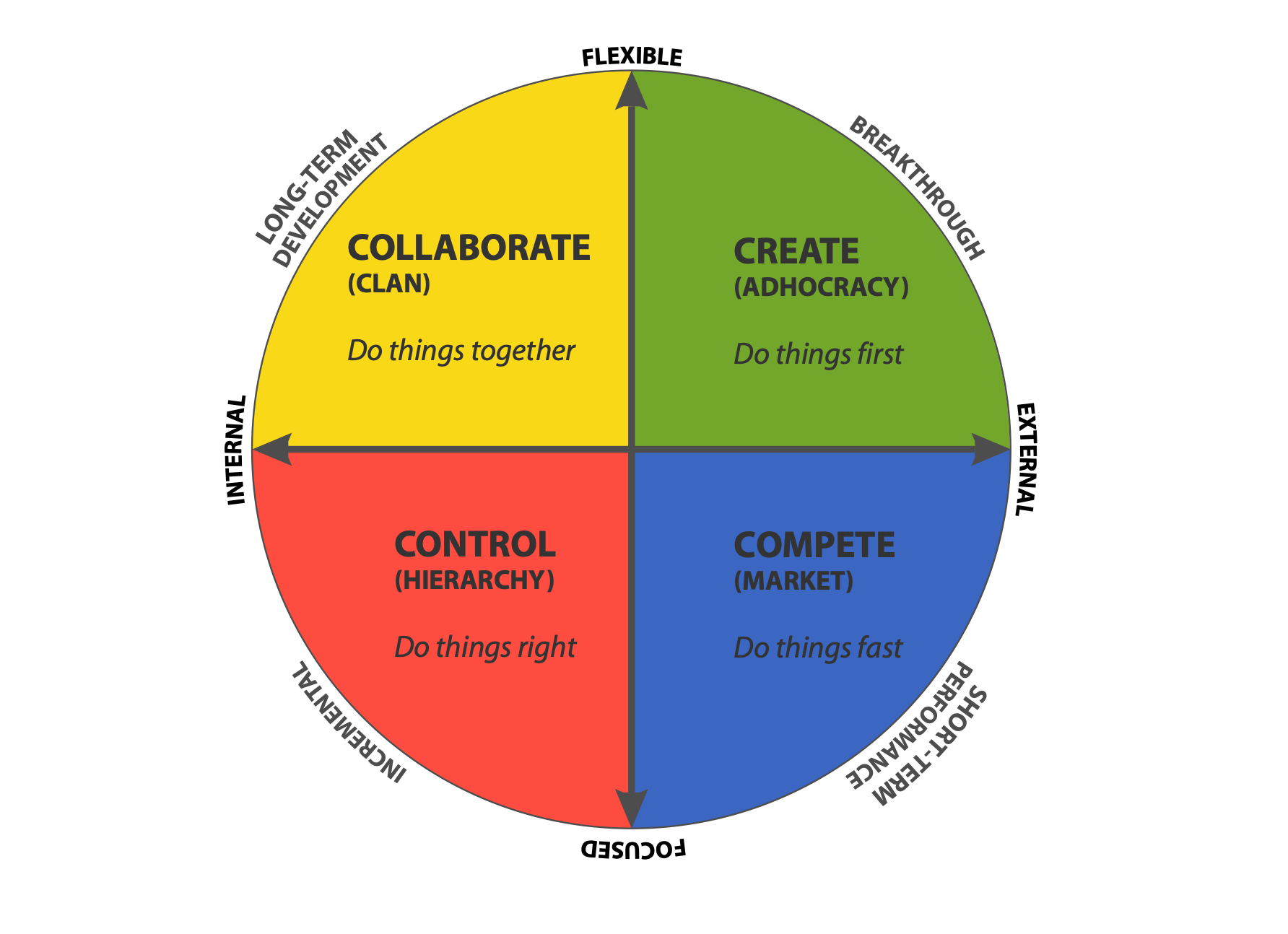
The Competing Values Framework, developed by Robert Quinn and Kim Cameron at the University of Michigan, identifies four common types of organizational culture. Understanding which one best describes your company can help you see what’s working and what may need to change.
Clan culture: This culture feels like a close-knit team. People support one another, work collaboratively, and often build strong personal connections. Leaders usually guide and mentor employees rather than simply giving orders. Southwest Airlines is often used as an example.
Adhocracy culture: An adhocracy culture focuses on new ideas and experimentation. Employees are encouraged to try different approaches, take risks, and find better ways of doing things. It’s common in fast-moving industries where innovation is important. Google is often associated with this type.
Market culture: Results come first in a market culture. Employees are expected to meet targets, perform well, and help the company stay ahead of competitors. It can motivate people to achieve more, but it may also create stress if performance becomes the only priority.
Hierarchy culture: Clear rules, defined roles, and structured processes shape a hierarchy culture. Employees usually know who makes decisions and what steps they need to follow. It’s common in healthcare, government, and financial services, where consistency and compliance matter.
Most organizations don’t fit perfectly into just one category. You’ll often see a mix of two or more. What matters is understanding your current culture and deciding which qualities you want to strengthen.
Organizational Culture Problems and Solutions
Even companies with good intentions can run into culture problems. What matters is noticing them early and addressing them before they become part of how the organization operates.
1. Employees Don’t Feel Recognized
When people put in effort but rarely hear that it’s appreciated, motivation can drop quickly.
How to fix it: Make recognition part of everyday work. Encourage managers and peers to acknowledge good work, celebrate progress, and highlight contributions when they happen. Recognition doesn’t need to be formal or expensive to feel meaningful.
2. Leadership Communication Is Unclear
When employees don’t understand what’s happening or why decisions are being made, they often fill in the gaps themselves. This can lead to confusion, frustration, and mistrust.
How to fix it: Communicate regularly and honestly. Town halls, team meetings, and short updates can help employees stay informed. It’s also important to leave room for questions and feedback instead of keeping communication one-sided.
3. Company Values Don’t Match Everyday Behavior
A company may say it values teamwork, fairness, or innovation, but employees will notice when promotions, rewards, and leadership decisions suggest otherwise.
How to fix it: Review whether your policies and decisions reflect the values you promote. Recognition programs, performance reviews, and hiring practices should all reinforce the behaviors you want to see.
4. Burnout Becomes Normal
Heavy workloads, constant urgency, and poor boundaries can wear people down, even if they were once highly engaged.
How to fix it: Pay attention to workloads, encourage employees to use their time off, and make healthy boundaries part of the culture. Leaders also need to model these behaviors themselves.
5. Teams Work in Silos
When departments rarely communicate, employees can lose sight of shared goals and find it harder to collaborate.
How to fix it: Create more opportunities for teams to work together. Cross-functional projects, shared channels, and informal events can help employees build relationships outside their immediate teams.
6. Employees Don’t See Room to Grow
People are more likely to leave when they feel stuck or can’t picture their next step within the organization.
How to fix it: Offer clear career paths, mentoring, training, and opportunities to take on new responsibilities. Employees should be able to see that growth doesn’t always require leaving the company.
Most organizational culture problems aren’t solved through one major initiative. They improve through small, consistent changes that show employees the company is listening and willing to act.
How to Improve Your Company Culture
Building company culture isn't about launching one big initiative and expecting everything to change. It takes consistent effort across the way people communicate, lead, recognize one another, and work together.
Here are ten practical ways to get started.
1. Start by Listening
Before making changes, find out how employees currently experience the workplace. Engagement surveys, pulse checks, stay interviews, and informal conversations can help you understand what people value, what frustrates them, and where they want to see improvement. Tools like Quantum Workplace's pulse surveys can help you do this in a structured, repeatable way.
The key is to listen before acting. When you start with real feedback instead of assumptions, the changes you make are more likely to land where they're needed.
2. Make Recognition Part of Everyday Work
Recognition shouldn’t be limited to annual awards or formal reviews. Employees are more likely to feel valued when appreciation happens regularly and close to the moment.
Encourage managers and peers to recognize good work, progress, collaboration, and everyday contributions. Peer-to-peer recognition is especially useful because it allows appreciation to come from across the organization, not just from the top.
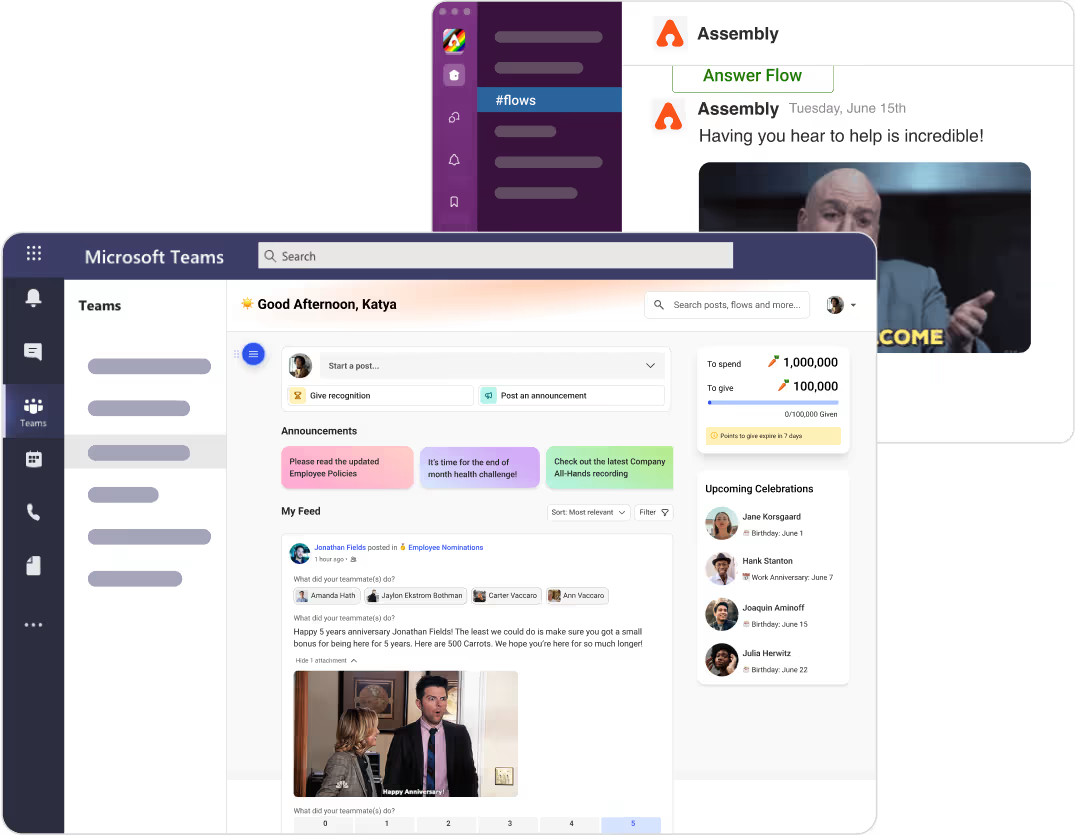
Assembly (by Quantum Workplace) makes this easier by bringing recognition into tools such as Slack and Microsoft Teams, where employees already spend much of their day.
3. Align Your Values With Your Actions
Company values only matter when employees can see them reflected in everyday decisions.
Look at your hiring practices, performance reviews, promotions, and recognition programs. Do they reward the behaviors your values describe? If not, identify where the gaps are and start closing them.
People trust consistent behavior more than slogans.
4. Invest in Your Managers
Managers shape much of an employee’s day-to-day experience. A supportive manager can strengthen trust and engagement, while a poor one can quickly damage both.
Give managers the training and support they need to listen well, provide useful feedback, recognize contributions, handle difficult conversations, and help employees grow.
5. Create More Opportunities for Connection
Strong company cultures are built on strong relationships. Employees should have opportunities to connect beyond tasks, deadlines, and project updates.
Team-building activities, employee resource groups, community channels, cross-functional projects, and informal check-ins can all help people build stronger connections across the organization.
6. Communicate With Transparency
Employees don’t need to know every detail behind every decision, but they should understand what’s changing and why.
Share the reasoning behind important decisions, explain what employees can expect, and be honest when some details are still uncertain. Clear communication builds trust, especially during periods of change.
7. Celebrate Milestones and Meaningful Moments
Birthdays, work anniversaries, promotions, project wins, and personal milestones all create opportunities to show employees that they’re noticed.
These moments don’t need to be elaborate. What matters is that recognition feels timely and genuine. Assembly (by Quantum Workplace)’s Milestones feature can automate these celebrations so important moments don’t get overlooked.
8. Build Feedback Loops That Lead to Action
Collecting feedback is only useful when employees can see what happens next.
After a survey or listening session, explain what you heard, what the company plans to do, and which issues may take more time. Even when every suggestion can’t be implemented, closing the loop shows employees that their input was taken seriously.
9. Support Healthy Work-Life Balance
Burnout can quickly weaken even a positive culture. Set realistic expectations around workloads and working hours, encourage employees to take time off, and avoid treating constant availability as a sign of commitment.
Leaders should model these habits themselves. Employees are more likely to maintain healthy boundaries when they see managers doing the same.
10. Track What’s Changing
Culture change takes time, so it helps to measure progress along the way.
Track engagement scores, eNPS, retention, recognition activity, feedback participation, and other relevant indicators. Look at trends rather than isolated numbers, and use what you learn to adjust your approach.
The goal isn’t to make culture feel like another reporting exercise. It’s to understand whether your efforts are making a real difference.
Positive Workplace Culture Examples
Looking at companies with strong workplace cultures can help you see what good culture looks like in practice. The details may differ, but the strongest examples usually have a few things in common: clear values, consistent leadership, and a genuine investment in employees.
Salesforce
Salesforce built much of its culture around the idea of Ohana, a Hawaiian word meaning family. The company uses this idea to describe the relationship between employees, customers, partners, and the wider community.
Its culture places a strong emphasis on equality, belonging, and giving employees a sense of connection to something larger than their individual roles. Salesforce has also appeared regularly on Fortune’s Best Companies to Work For list.
Zerodha
Zerodha, India’s largest stock broker has built a large business while keeping its team relatively small and maintaining low attrition, particularly in its technology team. The company avoids aggressive sales targets and has chosen not to grow its workforce simply for the sake of expansion. That approach helps it protect the kind of workplace it wants to maintain.
When concerns about AI-related job losses were increasing, founder Nithin Kamath also told employees that the company wouldn’t let people go simply because new technology could replace parts of their work. That kind of clarity can go a long way in building trust.
Patagonia
Patagonia's culture is built around its mission to save the planet, and that commitment shows up in how the company actually operates. Through its Environmental Internship Program, employees can spend up to two months working full time for a grassroots environmental organization while still receiving full pay and benefits. The company also reviews resumes from the bottom up, looking at hobbies and passions before job titles, to make sure new hires genuinely connect with the mission.
That consistency matters. Employees are more likely to believe in company values when they can see those values shaping real choices, not just marketing messages.
How Do You Measure Company Culture?
Company culture can feel difficult to measure because it shows up in everyday experiences, not just in a single score. Still, a few useful metrics can help you understand how employees feel and whether your culture is improving over time.
Employee Net Promoter Score (eNPS). This asks employees how likely they are to recommend the company as a place to work. It gives you a quick view of overall sentiment and is easy to track regularly
Engagement survey results. Engagement surveys show how connected employees feel to their work, their team, and the organization. The most useful insights usually come from looking at trends over time rather than focusing on one survey.
Retention and turnover. A rise in voluntary turnover can point to deeper culture issues. Break the data down by team, role, and tenure to spot patterns that may otherwise go unnoticed.
Recognition activity. Look at how often employees are recognized, who gives recognition, and whether appreciation is reaching people across different teams and levels.
Absenteeism. Frequent or rising absences can sometimes signal burnout, stress, or disengagement. It’s worth looking more closely when a pattern starts to appear.
Internal mobility. Track how often employees move into new roles or take on greater responsibility within the company. Strong internal mobility suggests that people can see opportunities to grow.
Feedback participation. Survey responses, focus group participation, and employee suggestions can all show whether people believe their opinions will be heard and acted on.
Employee referrals. When employees recommend friends or former colleagues for open roles, it can be a positive sign that they feel good about the workplace.
The clearest picture comes from combining quantitative data with employee conversations, interviews, and open-ended feedback. Numbers can show you where to look, while employee comments help explain what’s happening and why.
How Assembly (by Quantum Workplace) Helps Improve Company Culture
Improving company culture is easier when recognition, connection, and feedback are built into the way people already work. That’s where Assembly (by Quantum Workplace) can help.
With peer-to-peer recognition, employees can appreciate one another in real time instead of waiting for a formal review or company-wide award. Because recognition can happen inside Slack or Microsoft Teams, it becomes a more natural part of everyday communication.
When recognition comes from peers and not just managers, it starts to feel like part of how the team works together, not something handed down from leadership.
Assembly also helps teams celebrate birthdays, work anniversaries, promotions, and other meaningful moments through Milestones and Cultural Moments. These small touchpoints can make employees feel noticed and ensure important occasions don’t get missed.
Community Spaces give people a way to connect outside their immediate teams. Employees can join groups based on shared interests, experiences, or workplace communities, which can strengthen relationships and create a greater sense of belonging.
That kind of connection is often what makes the difference between people who just show up and people who actually feel like they're part of something.
Leaders can also use recognition analytics to understand how appreciation is being shared across the organization. This can reveal whether certain teams or employees are being overlooked and where recognition may need to become more consistent.
Dora AI makes that data easier to understand by turning it into clear, practical insights. And with Quantum Workplace’s pulse and engagement surveys, organizations can gather broader employee feedback and track how sentiment changes over time.
Together, these tools help companies listen to employees, recognize their contributions, and build stronger connections across the workplace.
Final Words
Company culture isn’t shaped by one policy, event, or leadership speech. It develops through everyday decisions, interactions, and the way people are treated across the organization.
The companies that build strong cultures don’t treat it as a one-time project. They listen to employees, act on feedback, communicate openly, and make sure their values show up in the way work actually gets done.
Recognition plays an important role in that process. When people feel seen for their contributions, they’re more likely to feel connected to their team and confident that their work matters.
So, if you’re thinking about how to improve company culture, start with a few simple questions. Are employees being heard? Do they feel appreciated? Can they see the company’s values reflected in everyday decisions?
Start with recognition. It costs nothing extra, it can happen tomorrow, and it signals to employees that their work is noticed. Everything else tends to follow from there.
FAQs
How do you create a company culture from scratch?
Start by defining the values and behaviours you want to see across the organisation. Then make sure those values show up in hiring, leadership, communication, recognition, and everyday decisions. Building feedback and appreciation into your workflows from the beginning can help shape the culture intentionally.
How long does it take to change company culture?
Culture change takes time. You may notice early improvements in morale or communication within a few months, but lasting change usually requires consistent effort over a longer period. Regular feedback and measurement can help you see whether the changes are working.
What role does leadership play in company culture?
Leadership sets the tone for the rest of the organisation. When leaders communicate openly, model company values, and recognise employee contributions, others are more likely to follow. When their actions do not match what the company says it values, trust can quickly weaken.
How do you change organisational culture?
Begin by understanding the culture you have now through surveys, interviews, and everyday observation. Identify the biggest gaps between the current experience and the culture you want to create. Then focus on a few practical changes, such as improving communication, strengthening recognition, or supporting managers more effectively.
Can small companies have a strong culture?
Yes. Small companies often have an advantage because leaders are more accessible and communication is usually more direct. The key is to be intentional about your values, how people are treated, how feedback is handled, and how good work is recognised.
class SampleComponent extends React.Component {
  // using the experimental public class field syntax below. We can also attach
  // the contextType to the current class
  static contextType = ColorContext;
  render() {
    return <Button color={this.color} />
  }
}
Every organization has a culture, whether you've built it intentionally or it's simply developed over time. It shapes how people work together, how employees feel when they start their day, and whether they can picture a future with the company.
The good news is that culture isn't permanent. No matter where your organization stands today, you can take practical steps to make it better.
According to Deloitte, 87% of organizations cite culture and engagement as one of their top challenges. And yet, another study found that only 2 in 10 U.S. workers strongly agree they feel connected to their organization's culture.
That gap isn't just a problem. It's an opportunity.
Recognition is one of the simplest and most effective places to start. When employees across different roles, teams, and levels feel seen and appreciated, trust grows. People feel more connected, and they're more likely to stay engaged.
In this guide, we break down what company culture means, why it matters, the common problems organizations face, and practical ways to build a workplace where people can do their best work.
What Is Company Culture?
At its core, company culture is the way an organization gets things done. It shows up in how we make decisions, how we communicate, how we celebrate employees, and in the daily actions, attitudes, and behaviors that collectively shape the workplace.
You can see it in how teams collaborate, how leaders treat employees, and how coworkers support one another. Think of it as your organization's personality. It influences everything from how meetings are run to how disagreements are handled and whether employees feel comfortable sharing honest feedback.
Company culture isn't just a set of values displayed on a wall or written on a careers page. It's what people experience in their everyday work, especially when no one is watching.
It includes both the formal rules, such as policies, processes, and company values, and the unwritten rules, such as what gets rewarded, what gets ignored, and whose opinions are taken seriously.
Whether you've shaped it intentionally or not, your organization already has a culture. The real question is whether that culture supports the kind of workplace you want to build.
Why Is Company Culture Important?
Company culture is important because it affects how employees feel about their work, how long they stay, and how much effort they're willing to put in. When the culture is strong, people tend to feel more motivated, work better together, and build a stronger connection with the organization.
When the culture is weak or unhealthy, the opposite happens. Employees become disengaged, communication breaks down, and turnover often increases.
Research from Gallup found that employees with a strong sense of purpose at work are 5.6 times more likely to be engaged. People are more likely to care about their work when they understand why it matters and feel connected to something larger than their daily tasks.
A healthy culture also makes hiring easier. When candidates can see that a company genuinely values its people, not just their output, they’re more likely to want to join. The employees already there are also more likely to stay.
Culture also shapes how teams handle pressure, how openly people communicate, and whether employees feel safe raising concerns before small issues become big ones. Over time, those everyday moments add up to either trust or turnover.
So, when we talk about how to improve company culture, we’re really talking about creating a workplace where people feel respected, supported, and able to do their best work.
What Makes a Good Company Culture?
A good company culture won’t look exactly the same in every organization. Still, a few characteristics tend to show up wherever employees feel supported, trusted, and motivated to do their best work.
Trust and transparency: Employees understand what’s happening in the organization and trust leaders to communicate honestly. Information flows both ways, and people aren’t left guessing about important decisions.
Recognition and appreciation. People want to know that their work matters. Regular recognition from managers and colleagues helps employees feel seen and reminds them how their contributions support the wider team.
Psychological safety. Employees feel comfortable sharing ideas, asking questions, and admitting mistakes without worrying about embarrassment or punishment. This makes honest feedback and experimentation possible.
Growth opportunities. People can see a future for themselves within the organization. Mentorship, professional development, and internal mobility show employees that the company is willing to invest in their progress.
Work-life balance. Healthy boundaries are respected, time off is encouraged, and burnout isn’t treated as proof of commitment.
Inclusion and belonging. Employees from different backgrounds, roles, and experiences feel welcome. They also have a fair opportunity to contribute, be heard, and grow.
Aligned values. What the company says it believes should match how it actually operates. Employees need to see those values reflected in everyday decisions, rewards, and leadership behavior.
These are some good corporate culture characteristics that shape a workplace where people feel respected, connected, and able to do their best work. HR managers can help turn these cultural principles into everyday practices through hiring, communication, recognition, and employee development. Learn more about the qualities of a good HR manager.
Types of Organizational Culture
Not every strong company culture looks the same. Some organizations are highly collaborative, while others are more competitive, innovative, or process-driven.
The Competing Values Framework, developed by Robert Quinn and Kim Cameron at the University of Michigan, identifies four common types of organizational culture. Understanding which one best describes your company can help you see what’s working and what may need to change.
Clan culture: This culture feels like a close-knit team. People support one another, work collaboratively, and often build strong personal connections. Leaders usually guide and mentor employees rather than simply giving orders. Southwest Airlines is often used as an example.
Adhocracy culture: An adhocracy culture focuses on new ideas and experimentation. Employees are encouraged to try different approaches, take risks, and find better ways of doing things. It’s common in fast-moving industries where innovation is important. Google is often associated with this type.
Market culture: Results come first in a market culture. Employees are expected to meet targets, perform well, and help the company stay ahead of competitors. It can motivate people to achieve more, but it may also create stress if performance becomes the only priority.
Hierarchy culture: Clear rules, defined roles, and structured processes shape a hierarchy culture. Employees usually know who makes decisions and what steps they need to follow. It’s common in healthcare, government, and financial services, where consistency and compliance matter.
Most organizations don’t fit perfectly into just one category. You’ll often see a mix of two or more. What matters is understanding your current culture and deciding which qualities you want to strengthen.
Organizational Culture Problems and Solutions
Even companies with good intentions can run into culture problems. What matters is noticing them early and addressing them before they become part of how the organization operates.
1. Employees Don’t Feel Recognized
When people put in effort but rarely hear that it’s appreciated, motivation can drop quickly.
How to fix it: Make recognition part of everyday work. Encourage managers and peers to acknowledge good work, celebrate progress, and highlight contributions when they happen. Recognition doesn’t need to be formal or expensive to feel meaningful.
2. Leadership Communication Is Unclear
When employees don’t understand what’s happening or why decisions are being made, they often fill in the gaps themselves. This can lead to confusion, frustration, and mistrust.
How to fix it: Communicate regularly and honestly. Town halls, team meetings, and short updates can help employees stay informed. It’s also important to leave room for questions and feedback instead of keeping communication one-sided.
3. Company Values Don’t Match Everyday Behavior
A company may say it values teamwork, fairness, or innovation, but employees will notice when promotions, rewards, and leadership decisions suggest otherwise.
How to fix it: Review whether your policies and decisions reflect the values you promote. Recognition programs, performance reviews, and hiring practices should all reinforce the behaviors you want to see.
4. Burnout Becomes Normal
Heavy workloads, constant urgency, and poor boundaries can wear people down, even if they were once highly engaged.
How to fix it: Pay attention to workloads, encourage employees to use their time off, and make healthy boundaries part of the culture. Leaders also need to model these behaviors themselves.
5. Teams Work in Silos
When departments rarely communicate, employees can lose sight of shared goals and find it harder to collaborate.
How to fix it: Create more opportunities for teams to work together. Cross-functional projects, shared channels, and informal events can help employees build relationships outside their immediate teams.
6. Employees Don’t See Room to Grow
People are more likely to leave when they feel stuck or can’t picture their next step within the organization.
How to fix it: Offer clear career paths, mentoring, training, and opportunities to take on new responsibilities. Employees should be able to see that growth doesn’t always require leaving the company.
Most organizational culture problems aren’t solved through one major initiative. They improve through small, consistent changes that show employees the company is listening and willing to act.
How to Improve Your Company Culture
Building company culture isn't about launching one big initiative and expecting everything to change. It takes consistent effort across the way people communicate, lead, recognize one another, and work together.
Here are ten practical ways to get started.
1. Start by Listening
Before making changes, find out how employees currently experience the workplace. Engagement surveys, pulse checks, stay interviews, and informal conversations can help you understand what people value, what frustrates them, and where they want to see improvement. Tools like Quantum Workplace's pulse surveys can help you do this in a structured, repeatable way.
The key is to listen before acting. When you start with real feedback instead of assumptions, the changes you make are more likely to land where they're needed.
2. Make Recognition Part of Everyday Work
Recognition shouldn’t be limited to annual awards or formal reviews. Employees are more likely to feel valued when appreciation happens regularly and close to the moment.
Encourage managers and peers to recognize good work, progress, collaboration, and everyday contributions. Peer-to-peer recognition is especially useful because it allows appreciation to come from across the organization, not just from the top.
Assembly (by Quantum Workplace) makes this easier by bringing recognition into tools such as Slack and Microsoft Teams, where employees already spend much of their day.
3. Align Your Values With Your Actions
Company values only matter when employees can see them reflected in everyday decisions.
Look at your hiring practices, performance reviews, promotions, and recognition programs. Do they reward the behaviors your values describe? If not, identify where the gaps are and start closing them.
People trust consistent behavior more than slogans.
4. Invest in Your Managers
Managers shape much of an employee’s day-to-day experience. A supportive manager can strengthen trust and engagement, while a poor one can quickly damage both.
Give managers the training and support they need to listen well, provide useful feedback, recognize contributions, handle difficult conversations, and help employees grow.
5. Create More Opportunities for Connection
Strong company cultures are built on strong relationships. Employees should have opportunities to connect beyond tasks, deadlines, and project updates.
Team-building activities, employee resource groups, community channels, cross-functional projects, and informal check-ins can all help people build stronger connections across the organization.
6. Communicate With Transparency
Employees don’t need to know every detail behind every decision, but they should understand what’s changing and why.
Share the reasoning behind important decisions, explain what employees can expect, and be honest when some details are still uncertain. Clear communication builds trust, especially during periods of change.
7. Celebrate Milestones and Meaningful Moments
Birthdays, work anniversaries, promotions, project wins, and personal milestones all create opportunities to show employees that they’re noticed.
These moments don’t need to be elaborate. What matters is that recognition feels timely and genuine. Assembly (by Quantum Workplace)’s Milestones feature can automate these celebrations so important moments don’t get overlooked.
8. Build Feedback Loops That Lead to Action
Collecting feedback is only useful when employees can see what happens next.
After a survey or listening session, explain what you heard, what the company plans to do, and which issues may take more time. Even when every suggestion can’t be implemented, closing the loop shows employees that their input was taken seriously.
9. Support Healthy Work-Life Balance
Burnout can quickly weaken even a positive culture. Set realistic expectations around workloads and working hours, encourage employees to take time off, and avoid treating constant availability as a sign of commitment.
Leaders should model these habits themselves. Employees are more likely to maintain healthy boundaries when they see managers doing the same.
10. Track What’s Changing
Culture change takes time, so it helps to measure progress along the way.
Track engagement scores, eNPS, retention, recognition activity, feedback participation, and other relevant indicators. Look at trends rather than isolated numbers, and use what you learn to adjust your approach.
The goal isn’t to make culture feel like another reporting exercise. It’s to understand whether your efforts are making a real difference.
Positive Workplace Culture Examples
Looking at companies with strong workplace cultures can help you see what good culture looks like in practice. The details may differ, but the strongest examples usually have a few things in common: clear values, consistent leadership, and a genuine investment in employees.
Salesforce
Salesforce built much of its culture around the idea of Ohana, a Hawaiian word meaning family. The company uses this idea to describe the relationship between employees, customers, partners, and the wider community.
Its culture places a strong emphasis on equality, belonging, and giving employees a sense of connection to something larger than their individual roles. Salesforce has also appeared regularly on Fortune’s Best Companies to Work For list.
Zerodha
Zerodha, India’s largest stock broker has built a large business while keeping its team relatively small and maintaining low attrition, particularly in its technology team. The company avoids aggressive sales targets and has chosen not to grow its workforce simply for the sake of expansion. That approach helps it protect the kind of workplace it wants to maintain.
When concerns about AI-related job losses were increasing, founder Nithin Kamath also told employees that the company wouldn’t let people go simply because new technology could replace parts of their work. That kind of clarity can go a long way in building trust.
Patagonia
Patagonia's culture is built around its mission to save the planet, and that commitment shows up in how the company actually operates. Through its Environmental Internship Program, employees can spend up to two months working full time for a grassroots environmental organization while still receiving full pay and benefits. The company also reviews resumes from the bottom up, looking at hobbies and passions before job titles, to make sure new hires genuinely connect with the mission.
That consistency matters. Employees are more likely to believe in company values when they can see those values shaping real choices, not just marketing messages.
How Do You Measure Company Culture?
Company culture can feel difficult to measure because it shows up in everyday experiences, not just in a single score. Still, a few useful metrics can help you understand how employees feel and whether your culture is improving over time.
Employee Net Promoter Score (eNPS). This asks employees how likely they are to recommend the company as a place to work. It gives you a quick view of overall sentiment and is easy to track regularly
Engagement survey results. Engagement surveys show how connected employees feel to their work, their team, and the organization. The most useful insights usually come from looking at trends over time rather than focusing on one survey.
Retention and turnover. A rise in voluntary turnover can point to deeper culture issues. Break the data down by team, role, and tenure to spot patterns that may otherwise go unnoticed.
Recognition activity. Look at how often employees are recognized, who gives recognition, and whether appreciation is reaching people across different teams and levels.
Absenteeism. Frequent or rising absences can sometimes signal burnout, stress, or disengagement. It’s worth looking more closely when a pattern starts to appear.
Internal mobility. Track how often employees move into new roles or take on greater responsibility within the company. Strong internal mobility suggests that people can see opportunities to grow.
Feedback participation. Survey responses, focus group participation, and employee suggestions can all show whether people believe their opinions will be heard and acted on.
Employee referrals. When employees recommend friends or former colleagues for open roles, it can be a positive sign that they feel good about the workplace.
The clearest picture comes from combining quantitative data with employee conversations, interviews, and open-ended feedback. Numbers can show you where to look, while employee comments help explain what’s happening and why.
How Assembly (by Quantum Workplace) Helps Improve Company Culture
Improving company culture is easier when recognition, connection, and feedback are built into the way people already work. That’s where Assembly (by Quantum Workplace) can help.
With peer-to-peer recognition, employees can appreciate one another in real time instead of waiting for a formal review or company-wide award. Because recognition can happen inside Slack or Microsoft Teams, it becomes a more natural part of everyday communication.
When recognition comes from peers and not just managers, it starts to feel like part of how the team works together, not something handed down from leadership.
Assembly also helps teams celebrate birthdays, work anniversaries, promotions, and other meaningful moments through Milestones and Cultural Moments. These small touchpoints can make employees feel noticed and ensure important occasions don’t get missed.
Community Spaces give people a way to connect outside their immediate teams. Employees can join groups based on shared interests, experiences, or workplace communities, which can strengthen relationships and create a greater sense of belonging.
That kind of connection is often what makes the difference between people who just show up and people who actually feel like they're part of something.
Leaders can also use recognition analytics to understand how appreciation is being shared across the organization. This can reveal whether certain teams or employees are being overlooked and where recognition may need to become more consistent.
Dora AI makes that data easier to understand by turning it into clear, practical insights. And with Quantum Workplace’s pulse and engagement surveys, organizations can gather broader employee feedback and track how sentiment changes over time.
Together, these tools help companies listen to employees, recognize their contributions, and build stronger connections across the workplace.
Final Words
Company culture isn’t shaped by one policy, event, or leadership speech. It develops through everyday decisions, interactions, and the way people are treated across the organization.
The companies that build strong cultures don’t treat it as a one-time project. They listen to employees, act on feedback, communicate openly, and make sure their values show up in the way work actually gets done.
Recognition plays an important role in that process. When people feel seen for their contributions, they’re more likely to feel connected to their team and confident that their work matters.
So, if you’re thinking about how to improve company culture, start with a few simple questions. Are employees being heard? Do they feel appreciated? Can they see the company’s values reflected in everyday decisions?
Start with recognition. It costs nothing extra, it can happen tomorrow, and it signals to employees that their work is noticed. Everything else tends to follow from there.
FAQs
How do you create a company culture from scratch?
Start by defining the values and behaviours you want to see across the organisation. Then make sure those values show up in hiring, leadership, communication, recognition, and everyday decisions. Building feedback and appreciation into your workflows from the beginning can help shape the culture intentionally.
How long does it take to change company culture?
Culture change takes time. You may notice early improvements in morale or communication within a few months, but lasting change usually requires consistent effort over a longer period. Regular feedback and measurement can help you see whether the changes are working.
What role does leadership play in company culture?
Leadership sets the tone for the rest of the organisation. When leaders communicate openly, model company values, and recognise employee contributions, others are more likely to follow. When their actions do not match what the company says it values, trust can quickly weaken.
How do you change organisational culture?
Begin by understanding the culture you have now through surveys, interviews, and everyday observation. Identify the biggest gaps between the current experience and the culture you want to create. Then focus on a few practical changes, such as improving communication, strengthening recognition, or supporting managers more effectively.
Can small companies have a strong culture?
Yes. Small companies often have an advantage because leaders are more accessible and communication is usually more direct. The key is to be intentional about your values, how people are treated, how feedback is handled, and how good work is recognised.
Browse our Free Employee Recognition Guide
Get the foundational knowledge on creating an employee recognition program that boosts employee engagement and helps them feel valued.