Employee recognition has always been part of the workplace, but the way organizations approach it has changed significantly. It's no longer limited to annual awards, service milestones, or occasional praise. Today, recognition plays a central role in shaping culture, strengthening engagement, and helping organizations retain top talent.
When employees feel valued for their contributions, they're more likely to stay motivated, remain engaged, and build a stronger connection with their work and their team. Yet despite widespread agreement on the importance of recognition, many organizations struggle to make it a consistent part of the employee experience. Great work happens every day, but busy schedules, competing priorities, and distributed teams often mean those contributions go unnoticed.
Over time, a lack of recognition can have real consequences. Employees who don't feel seen or appreciated are more likely to disengage, feel disconnected from their organization, and eventually look for opportunities elsewhere.
That's why employee recognition has become a strategic priority for HR leaders and managers alike. A thoughtful recognition strategy helps reinforce company values, encourage desired behaviors, improve employee engagement, and create a workplace where people feel their efforts matter.
This guide covers everything you need to know about employee recognition in 2026. We'll look at why recognition matters, the different types of recognition, and how successful organizations build effective programs. You'll also find practical recognition ideas, tips for measuring success, and guidance on choosing the right tools to support your strategy.
What Is Employee Recognition?
Employee recognition is the practice of acknowledging and rewarding employees for their contributions, achievements, efforts, and behaviors. It helps employees understand that their work is valued and that their contributions have a meaningful impact on the organization.
Effective employee recognition is timely, specific, and genuine. Rather than waiting for annual reviews or formal award ceremonies, organizations with strong recognition cultures make recognition a regular part of the employee experience. This can take many forms, from a manager praising a team member for a successful project to peers recognizing one another for collaboration and support.
It's also important to understand the difference between employee recognition and appreciation. Employee recognition focuses on what a person has done, such as achieving a goal, demonstrating a company value, or delivering exceptional work. Employee appreciation whereas focuses on who a person is and the value they bring to the workplace beyond a specific accomplishment. The strongest employee recognition and appreciation strategies combine both, helping employees feel valued for their contributions and respected as individuals.
For a deeper look at the topic, explore our guide on what is employee recognition, including its benefits, key principles, and real-world examples.
Why Is Employee Recognition Important?
Employee recognition is often viewed as a nice-to-have, but its impact extends far beyond making employees feel good. When done consistently, it can influence engagement, retention, performance, and workplace culture.
Research from the SHRM/Globoforce Employee Recognition Survey found that organizations with strategic recognition programs reported 23.4% lower voluntary turnover than organizations without recognition programs. The same organizations also reported lower employee frustration levels and a stronger understanding of organizational goals, highlighting the broader business impact of recognition.
1. Recognition Drives Employee Engagement
One of the clearest benefits of employee recognition in the workplace is stronger employee engagement. When employees know their contributions are valued, they're more likely to feel connected to their work and motivated to contribute.
Recognition also reinforces the behaviors organizations want to encourage. In the SHRM/Globoforce study, companies that tied recognition directly to company values were more likely to report high levels of employee engagement than organizations that did not.
So how does recognition impact employee engagement? It creates a positive cycle where employees who feel valued invest more discretionary effort, collaborate more willingly, and take greater ownership of their work. Over time, these individual shifts add up to measurably stronger engagement across the organization.
People don't just leave for more money. They leave because they don't feel valued. When recognition is frequent and meaningful, it builds loyalty and connection that makes someone think twice before looking elsewhere.
While recognition alone won't solve turnover challenges, organizations with structured recognition programs consistently report better retention outcomes than those without them. A strong recognition culture is one of the most practical employee retention strategies you can invest in.
3. Recognition Helps Motivate Better Performance
Recognition provides employees with clear feedback about what success looks like. By acknowledging specific contributions and achievements, organizations reinforce positive behaviors and encourage employees to repeat them.
For leaders looking at how to motivate employees to be more productive, recognition can be one of the most effective tools available. It creates positive reinforcement without relying solely on financial rewards and is often a practical way to motivate employees without money.
4. Recognition Strengthens Culture and Belonging
Workplace culture is shaped by the behaviors organizations celebrate. Recognition helps bring company values to life by highlighting real examples of those values in action.
When employees regularly receive meaningful recognition, they're more likely to feel included, respected, and connected to the organization. Over time, these moments help create a stronger sense of belonging across teams.
5. Supports Better Leadership
Recognition is one of the simplest and most effective tools managers have for building trust and strengthening relationships with employees.
When recognition becomes part of regular one-on-one meetings, team discussions, and performance conversations, employees gain greater clarity, confidence, and motivation. The result is a workplace where people understand that their contributions matter and where managers play an active role in reinforcing success.
Types of Employee Recognition
There are many types of employee recognition, and the most effective organizations use a combination of approaches rather than relying on a single method. Different forms of recognition serve different purposes, from celebrating major achievements to reinforcing everyday positive behaviors.
Public recognition acknowledges achievements in front of others through team meetings, company announcements, newsletters, or recognition platforms. Public recognition helps reinforce company values by making great work visible across the organization.
Private recognition happens one-on-one through personal conversations, messages, handwritten notes, or direct feedback from a manager. For employees who prefer a more personal approach, private recognition often feels more genuine and meaningful.
Peer-to-peer recognition empowers employees to recognize and celebrate each other's contributions. Because colleagues often see day-to-day efforts that managers may miss, peer recognition can help create a stronger culture of appreciation.
Monetary recognition includes rewards with financial value, such as bonuses, gift cards, profit-sharing programs, or spot awards. These rewards are commonly used to celebrate exceptional performance or major milestones.
Non-monetary recognition focuses on meaningful appreciation without direct financial rewards. Public praise, professional development opportunities, flexible work arrangements, and additional time off can often be just as impactful as monetary incentives.
Promotional recognition rewards strong performance through career growth opportunities. Promotions, expanded responsibilities, and leadership opportunities demonstrate that the organization values both current contributions and future potential.
Experiential recognition provides memorable experiences such as team outings, retreats, special events, or unique activities. These experiences create lasting memories while strengthening relationships and team connections.
Most employee recognition programs combine several of these approaches to create a balanced and inclusive recognition strategy. For a detailed breakdown of employee recognition types and how they can work together, explore our guide to employee recognition types.
How to Create an Employee Recognition Program
A successful employee recognition program doesn't happen by accident. The best programs are intentional, easy to use, and aligned with what employees actually value. Whether you're starting from scratch or improving an existing initiative, the goal is to create a system that encourages consistent recognition across the organization.
Before choosing rewards, recognition channels, or software, decide what you're trying to achieve. Some organizations focus on engagement, while others prioritize retention, culture, productivity, or employee experience. Clear goals make it easier to design a program that delivers measurable results.
Employees are more likely to participate when they see appreciation happening around them. Many organizations use an employee recognition board, company intranet, or dedicated Slack channel to celebrate achievements and reinforce company values.
Step 4 - Think About Rewards and Incentives
Recognition doesn't always require a large budget. Some organizations focus on appreciation alone, while others combine recognition with rewards. Exploring different employee incentive programs can help you find a balance that fits your culture and budget. If resources are limited, a budget-friendly recognition program can still have a meaningful impact.
Step 5 - Focus on Adoption and Continuous Improvement
Knowing how to implement an employee recognition program is just as important as designing one. Train managers, encourage participation across teams, and gather feedback regularly. If you're looking at how to improve employee recognition, review participation rates, employee feedback, and recognition patterns to identify opportunities for growth. The strongest recognition programs aren't one-time initiatives. They become part of how people work, communicate, and celebrate success every day.
The most common reason recognition programs fail isn't lack of budget or bad software. It's that recognition stays concentrated at the top. When only managers or HR give recognition, most of the great work happening between peers goes unnoticed. The programs that actually stick are the ones that make it easy for anyone to recognize anyone, regardless of title or department.
How to Implement an Employee Recognition Program
Having a great plan on paper is one thing. Knowing how to implement an employee recognition program that people actually use is another. The difference between programs that stick and programs that fade usually comes down to execution.
Tie recognition to company values. Recognition is more effective when it reinforces the behaviors your organization wants to encourage. When employees are recognized for collaboration, ownership, innovation, or customer focus, those values become easier to understand and repeat. Our guide on integrating recognition programs with your company values explains how to make that connection stronger.
Set a realistic budget. Recognition does not have to be expensive, but it does need some planning. Some organizations use mostly non-monetary recognition, while others add rewards, gift cards, or experiences for major milestones. Our employee recognition budget planning guide walks through how to set a budget that fits your organization.
Build recognition into existing habits. Recognition works best when it becomes part of routines employees already have. Add shoutouts to team meetings, encourage managers to recognize employees during 1:1s, and use all-hands meetings to celebrate larger wins. This makes recognition feel natural instead of like one more HR task.
Train managers to recognize well. Managers play a major role in whether recognition feels meaningful. Give them simple guidance on making recognition timely, specific, and connected to real contributions. A generic "great job" is easy to ignore, but specific recognition helps employees understand exactly what they did well.
Keep improving over time. Learning how to improve employee recognition is an ongoing process. Collect feedback, review participation data, and watch for common recognition mistakes such as inconsistency, favoritism, or recognition that feels transactional. The programs that work best are the ones that evolve based on what employees actually need.
How to Measure Employee Recognition
Knowing how to measure employee recognition helps you understand whether your program is creating real impact or simply generating activity. The goal is to look beyond the number of shoutouts and understand how recognition affects engagement, retention, performance, and the overall employee experience.
Track participation and frequency. Measure how many employees are giving recognition, how many are receiving it, and how often recognition happens. If most recognition comes from a small group of people, it may be a sign that the program is not yet part of the broader culture.
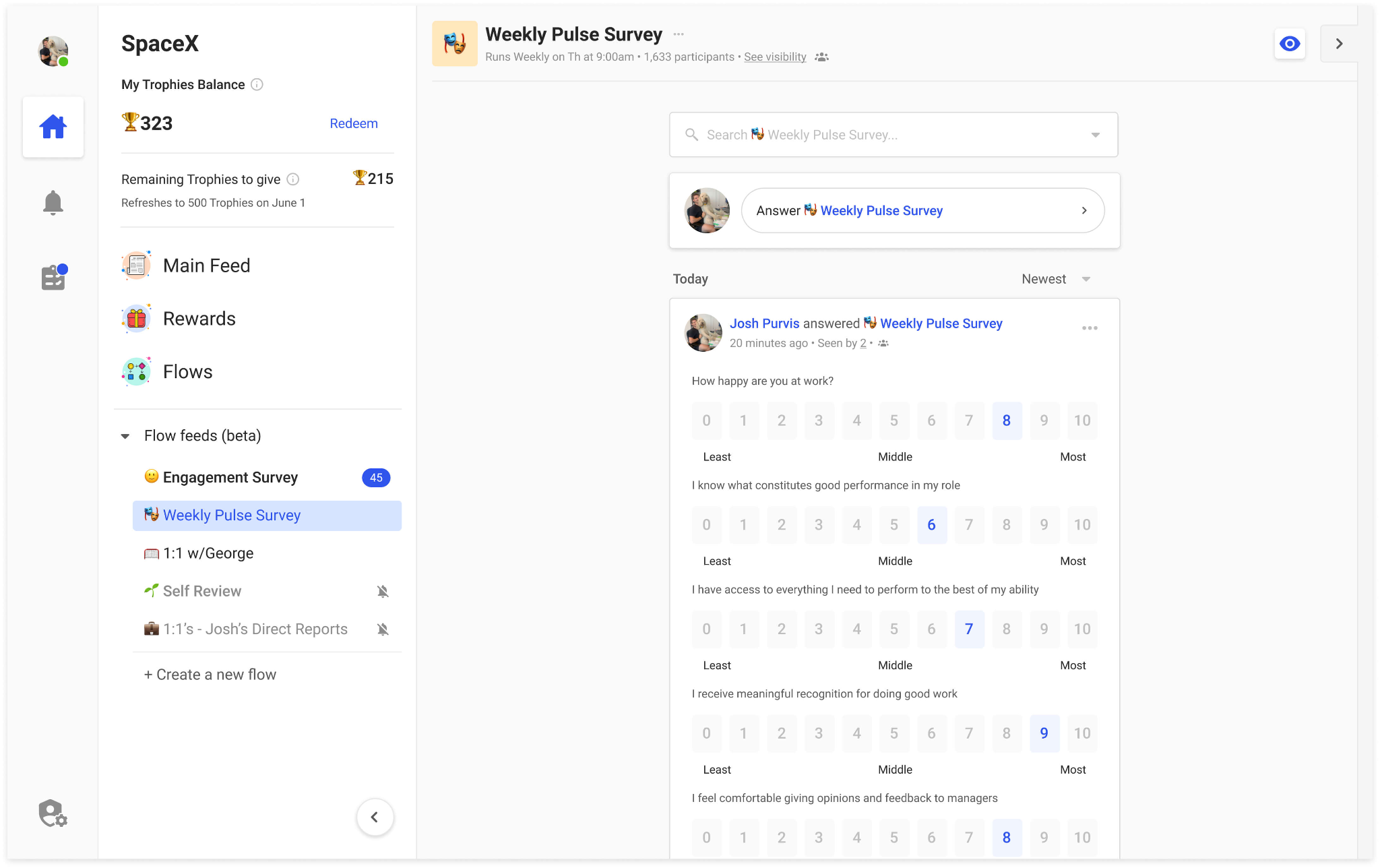
Measure employee sentiment. Use pulse surveys to ask employees whether they feel recognized, valued, and appreciated. These responses can help you understand whether recognition is meaningful or whether it feels inconsistent, generic, or limited to certain teams.
Monitor retention and turnover. Compare retention and turnover trends before and after your recognition program launches. Break the data down by department, location, and manager to identify where recognition may be supporting retention and where gaps still exist.
Connect recognition to performance. Look at whether employees who receive regular recognition also show stronger performance, higher engagement, or greater participation in team goals. This can help you understand which recognition behaviors are most closely tied to business outcomes.
Calculate recognition ROI. Review the cost of your program against measurable outcomes such as reduced turnover, improved engagement, and stronger productivity. Our guide on how to measure the ROI of employee recognition programs walks through this process in more detail.
As you measure results, watch for common issues like low adoption, inconsistent manager participation, favoritism, or recognition that feels transactional. Our guide to employee recognition mistakes to avoid can help you identify and fix these problems before they weaken your program.
Employee Recognition Ideas
Even the best recognition strategy can lose momentum if recognition starts to feel repetitive. Mixing different employee recognition ideas into your program helps keep appreciation fresh, meaningful, and engaging for employees throughout the year.
1. Creative Employee Recognition Ideas
The most memorable recognition often goes beyond a simple thank-you. Creative employee recognition ideas can include a "Wall of Wins," employee spotlight features, personalized rewards, lunch with leadership, or giving employees the opportunity to lead a project they're passionate about.
Recognition should not always feel formal. Fun employee recognition ideas can help create energy and strengthen team relationships. Team challenges, themed appreciation weeks, surprise treats, and seasonal celebrations can all make recognition more enjoyable.
Small gestures often have the biggest impact. Staff appreciation ideas can include handwritten thank-you notes, flexible workdays, wellness benefits, team lunches, or public recognition during company meetings.
Employee birthdays provide a simple opportunity to make people feel valued. A personalized message, team celebration, small gift, or birthday shoutout can help employees feel seen and appreciated. Many organizations also combine birthday recognition with work anniversaries and other milestones to create a more comprehensive recognition experience.
Employee of the Month programs work best when they're tied to clear criteria rather than popularity. Consider recognizing different categories such as innovation, collaboration, customer service, or leadership to ensure a wider range of contributions are celebrated.
Recognition is just as important for remote and hybrid teams. Virtual employee recognition ideas include dedicated Slack channels, digital shoutouts, virtual coffee chats, online awards, and surprise deliveries sent directly to employees' homes.
Knowing how to show appreciation to employees is about making recognition specific, timely, and personal. Formal programs help, but everyday moments of appreciation are what make employees feel consistently valued.
Be specific. Understanding how to appreciate employees starts with naming the exact contribution. Instead of saying "great job," explain what the employee did well and why it mattered.
Recognize people quickly. Appreciation has more impact when it happens close to the moment. If someone solves a customer issue, supports a teammate, or completes an important project, acknowledge it while the contribution is still fresh.
Make it personal. Different employees prefer different kinds of recognition. Some appreciate a public shoutout, while others value a private message or one-on-one thank-you.
Praise teams, not just individuals. Knowing how to praise a team for good work matters when success comes from collaboration. Highlight the group outcome and the specific contributions that made it possible.
Recognize without spending. Learning how to recognize staff or how to recognize employees without money often comes down to intention. A sincere thank-you, a thoughtful note, or asking for someone's input can be meaningful without adding cost.
Use Employee Appreciation Day as a starting point.Employee Appreciation Day (first Friday of March) is a useful moment to celebrate your people, but appreciation should not be limited to one day a year. Use it to build habits that continue throughout the year.
Employee Recognition Examples, Messages, and Quotes
Writer’s block is real, especially when you want recognition to feel thoughtful instead of generic. If you need a starting point, these employee recognition examples can help you find the right words.
When writing positive recognition examples, focus on the impact. Instead of stopping at “great job,” explain what the person did and why it mattered. Here are a few examples you can adapt:
1. "Thank you for staying late to help the new team member get up to speed on the project. That kind of generosity with your time makes a real difference in how quickly people feel at home here."
2. "Your presentation to the leadership team was incredibly well-prepared. The data you pulled together told a clear story, and it directly influenced the decision to move forward."
3. "I noticed you stepped in to manage the vendor issue without being asked. That initiative is exactly the kind of thing that keeps our team running smoothly."
Shout out messages examples are especially useful for team meetings, Slack channels, and company announcements. For example: “Huge shoutout to Priya for catching that data error before it reached the client. Your attention to detail helped the team avoid a major issue.” You can also explore these employee appreciation message examples for more ready-to-use wording.
Employee recognition quotes can add a thoughtful touch to presentations, award announcements, or appreciation campaigns. For inspiration, browse our list of employee appreciation quotes.
If you’re wondering how to write a recognition for an employee, start with the specific action they took, explain the result, and close with genuine thanks.
The same approach works when deciding how to nominate an employee for recognition. Tell a clear story with concrete details: what happened, what the employee did, and what impact it had.
For major milestones, promotions, or formal awards, an employee recognition letter can feel more personal and lasting. Keep it warm, specific, and focused on the contribution they’ll remember.
Employee Recognition Awards and Rewards
Employee recognition awards work best when they feel tied to real contributions, not just generic titles. Instead of handing out the same trophy every quarter, create awards around the behaviors you want to celebrate, like collaboration, customer impact, innovation, or living company values.
Employee rewards and recognition should also give people some choice. Some employees may love public praise, while others may value extra time off, a learning opportunity, or a thoughtful experience. The best employee recognition rewards feel personal, useful, and connected to the reason someone is being recognized.
Employee recognition gifts do not need to be expensive to be meaningful. A small personalized gift, a handwritten note, or employee recognition gift cards can all work well when they are paired with a specific message about what the person did and why it mattered.
Employee Recognition Software: What to Look For
The best employee recognition software should make appreciation easier, not add another tool people forget to use. Look for a platform that lets employees recognize each other quickly, connects recognition to company values, and makes wins visible across the organization.
It should also fit into the tools your team already uses. Slack, Microsoft Teams, HRIS, and calendar integrations can help recognition become part of daily work instead of a separate task. Strong analytics matter too, because HR teams need to see participation, manager activity, reward usage, and recognition gaps across teams.
If you want recognition to connect with broader employee experience efforts, consider employee engagement software that includes surveys, goals, feedback, and reporting alongside recognition. You can compare options in our guides to the best employee recognition software and best employee engagement software.
Rewards are another important factor. Look for flexible options like gift cards, experiences, charitable donations, and custom rewards so employees can choose what feels meaningful to them. Our guide to the benefits of employee recognition and rewards software explains how these features support engagement and retention.
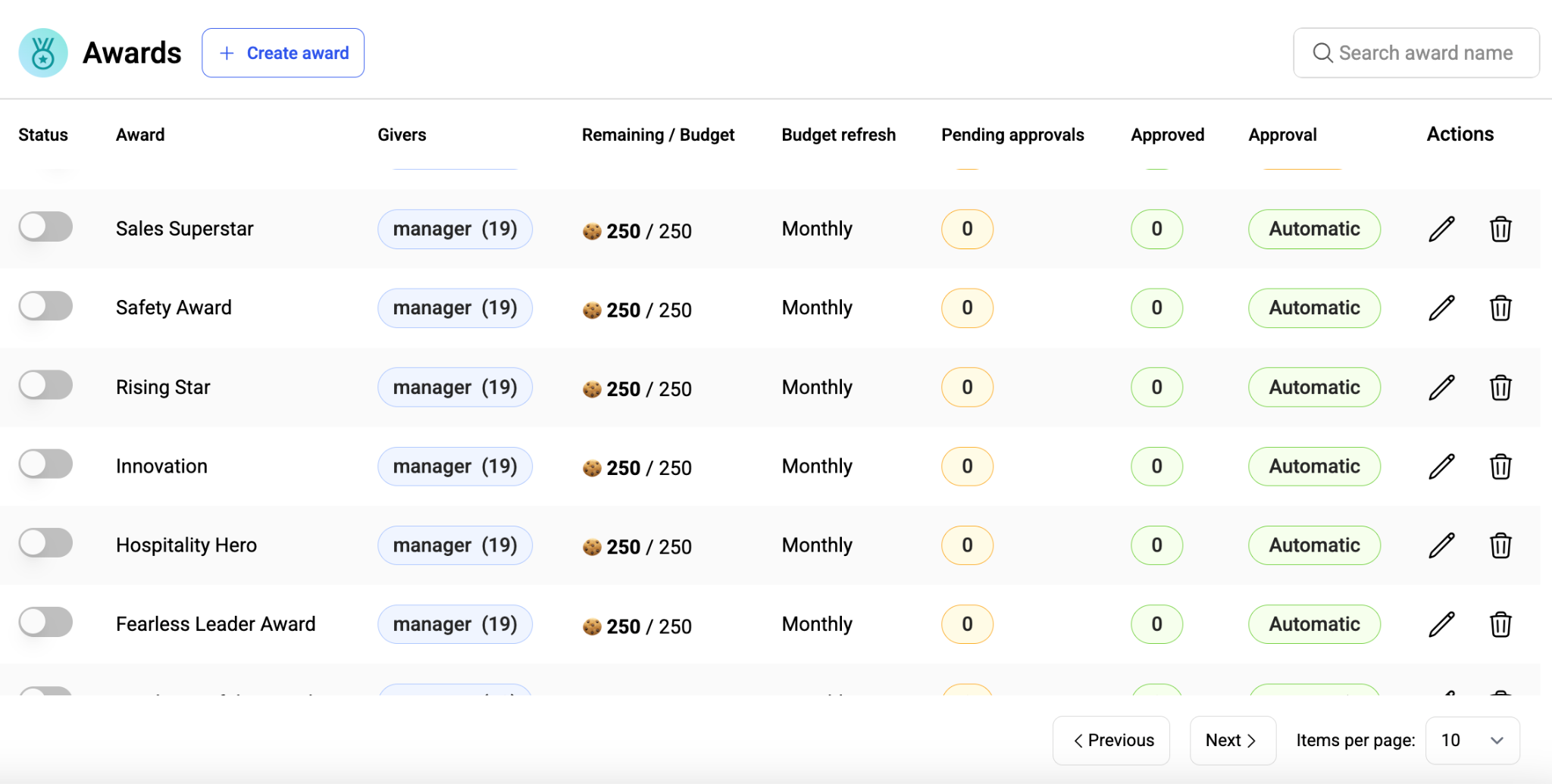
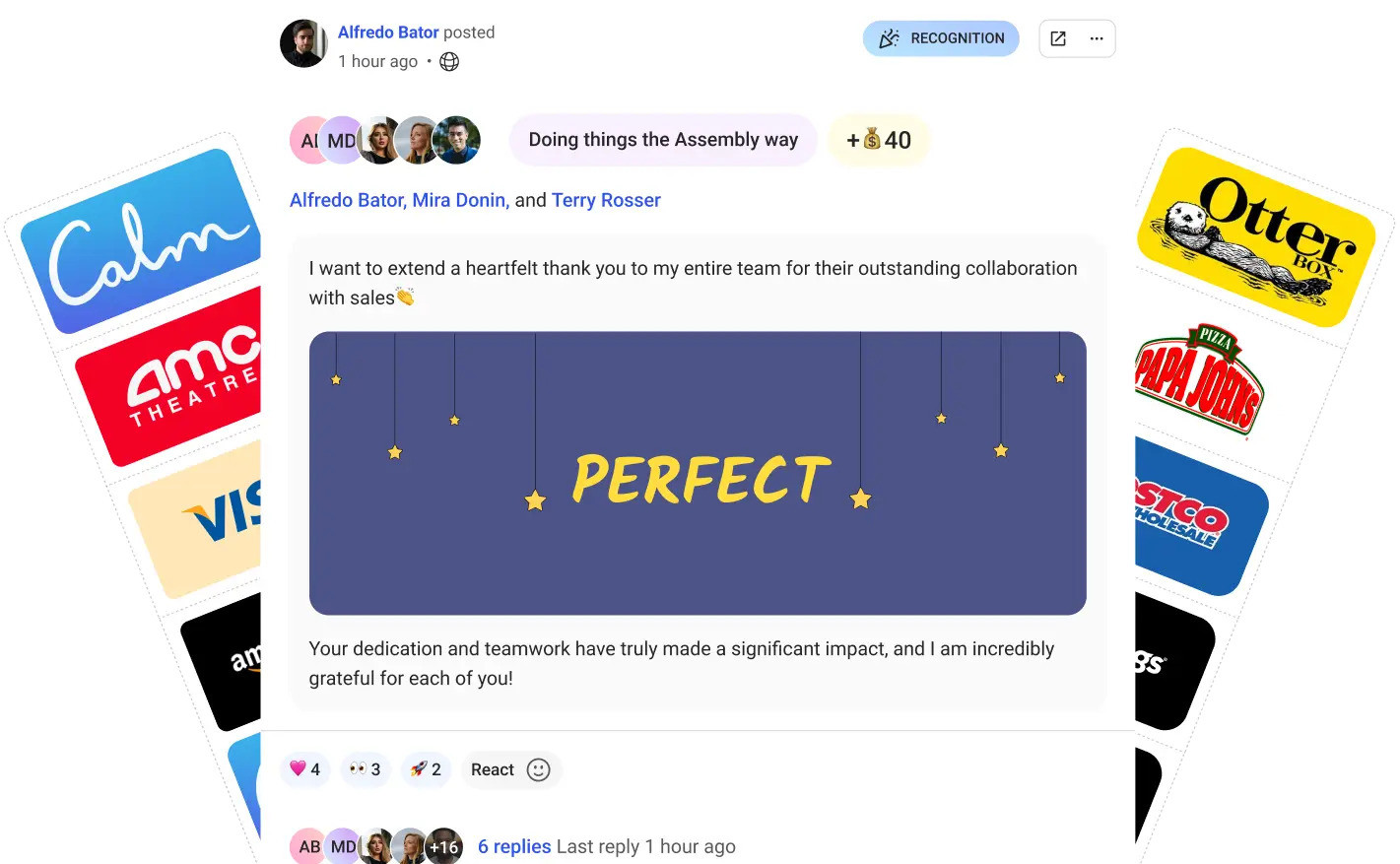
Assembly is designed to make recognition simple, consistent, and part of the way people already work. Instead of treating appreciation as a separate HR task, Assembly brings recognition into everyday team communication.
Employees can recognize peers in seconds, with each shoutout connected to company values. Milestones and Cultural Moments help teams celebrate birthdays, anniversaries, and important workplace moments without letting them slip through the cracks.
Assembly also gives teams spaces to share wins, leaders a way to make announcements, and managers a place to bring recognition into regular 1:1 conversations. Recognition analytics help HR teams see what is working, spot gaps, and understand how recognition connects to engagement.
With rewards, pulse surveys, goal management, and integrations with tools like Slack, Microsoft Teams, and HRIS platforms, Assembly helps organizations build a culture where recognition happens naturally and consistently.
Final Thoughts
Employee recognition does not have to be complicated. At its core, it is about noticing good work, naming it clearly, and helping employees understand that their contributions matter.
The challenge is consistency. Recognition works best when it becomes part of everyday habits, not something saved for annual reviews or occasional awards.
Start small. Choose one recognition habit you can repeat for the next 30 days. Add shoutouts to team meetings, encourage managers to recognize specific contributions, or ask employees how they prefer to be appreciated.
Over time, those small moments can shape a stronger culture of recognition. And with the right systems in place, appreciation becomes easier to practice, measure, and scale.
What is the difference between employee recognition and employee appreciation?
Employee recognition focuses on specific actions, achievements, or behaviours. Employee appreciation is broader and acknowledges the value someone brings as a person and team member.
How often should employees be recognised?
Frequent recognition tends to be more effective than occasional formal awards. Many organisations encourage weekly recognition moments to help appreciation become part of everyday work.
How do you recognise employees without money?
A sincere thank-you, public praise, additional flexibility, growth opportunities, or involving employees in important decisions can all be meaningful forms of recognition without direct financial rewards.
How does recognition impact employee engagement?
When employees feel their contributions are noticed, they are more likely to feel connected to their work and motivated to contribute. Organisations that tie recognition to company values consistently report higher engagement levels. Learn more in our guide on how recognition impacts employee engagement.
Do employee recognition programmes work for remote teams?
Yes. Recognition can be especially important for remote and hybrid teams because employees have fewer informal opportunities to receive appreciation. Digital recognition tools help keep recognition visible and consistent regardless of location.
What are the biggest employee recognition trends right now?
Many organisations are moving toward more frequent, real-time recognition, stronger peer-to-peer recognition programmes, personalised rewards, and recognition tied directly to company values. Explore more of the latest employee recognition trends.
How is AI being used in employee recognition?
AI is increasingly being used to help managers write better recognition messages, identify recognition gaps, surface employee achievements, and improve participation across teams. Learn more about AI employee recognition.
class SampleComponent extends React.Component {
  // using the experimental public class field syntax below. We can also attach
  // the contextType to the current class
  static contextType = ColorContext;
  render() {
    return <Button color={this.color} />
  }
}
Employee recognition has always been part of the workplace, but the way organizations approach it has changed significantly. It's no longer limited to annual awards, service milestones, or occasional praise. Today, recognition plays a central role in shaping culture, strengthening engagement, and helping organizations retain top talent.
When employees feel valued for their contributions, they're more likely to stay motivated, remain engaged, and build a stronger connection with their work and their team. Yet despite widespread agreement on the importance of recognition, many organizations struggle to make it a consistent part of the employee experience. Great work happens every day, but busy schedules, competing priorities, and distributed teams often mean those contributions go unnoticed.
Over time, a lack of recognition can have real consequences. Employees who don't feel seen or appreciated are more likely to disengage, feel disconnected from their organization, and eventually look for opportunities elsewhere.
That's why employee recognition has become a strategic priority for HR leaders and managers alike. A thoughtful recognition strategy helps reinforce company values, encourage desired behaviors, improve employee engagement, and create a workplace where people feel their efforts matter.
This guide covers everything you need to know about employee recognition in 2026. We'll look at why recognition matters, the different types of recognition, and how successful organizations build effective programs. You'll also find practical recognition ideas, tips for measuring success, and guidance on choosing the right tools to support your strategy.
What Is Employee Recognition?
Employee recognition is the practice of acknowledging and rewarding employees for their contributions, achievements, efforts, and behaviors. It helps employees understand that their work is valued and that their contributions have a meaningful impact on the organization.
Effective employee recognition is timely, specific, and genuine. Rather than waiting for annual reviews or formal award ceremonies, organizations with strong recognition cultures make recognition a regular part of the employee experience. This can take many forms, from a manager praising a team member for a successful project to peers recognizing one another for collaboration and support.
It's also important to understand the difference between employee recognition and appreciation. Employee recognition focuses on what a person has done, such as achieving a goal, demonstrating a company value, or delivering exceptional work. Employee appreciation whereas focuses on who a person is and the value they bring to the workplace beyond a specific accomplishment. The strongest employee recognition and appreciation strategies combine both, helping employees feel valued for their contributions and respected as individuals.
For a deeper look at the topic, explore our guide on what is employee recognition, including its benefits, key principles, and real-world examples.
Why Is Employee Recognition Important?
Employee recognition is often viewed as a nice-to-have, but its impact extends far beyond making employees feel good. When done consistently, it can influence engagement, retention, performance, and workplace culture.
Research from the SHRM/Globoforce Employee Recognition Survey found that organizations with strategic recognition programs reported 23.4% lower voluntary turnover than organizations without recognition programs. The same organizations also reported lower employee frustration levels and a stronger understanding of organizational goals, highlighting the broader business impact of recognition.
1. Recognition Drives Employee Engagement
One of the clearest benefits of employee recognition in the workplace is stronger employee engagement. When employees know their contributions are valued, they're more likely to feel connected to their work and motivated to contribute.
Recognition also reinforces the behaviors organizations want to encourage. In the SHRM/Globoforce study, companies that tied recognition directly to company values were more likely to report high levels of employee engagement than organizations that did not.
So how does recognition impact employee engagement? It creates a positive cycle where employees who feel valued invest more discretionary effort, collaborate more willingly, and take greater ownership of their work. Over time, these individual shifts add up to measurably stronger engagement across the organization.
People don't just leave for more money. They leave because they don't feel valued. When recognition is frequent and meaningful, it builds loyalty and connection that makes someone think twice before looking elsewhere.
While recognition alone won't solve turnover challenges, organizations with structured recognition programs consistently report better retention outcomes than those without them. A strong recognition culture is one of the most practical employee retention strategies you can invest in.
3. Recognition Helps Motivate Better Performance
Recognition provides employees with clear feedback about what success looks like. By acknowledging specific contributions and achievements, organizations reinforce positive behaviors and encourage employees to repeat them.
For leaders looking at how to motivate employees to be more productive, recognition can be one of the most effective tools available. It creates positive reinforcement without relying solely on financial rewards and is often a practical way to motivate employees without money.
4. Recognition Strengthens Culture and Belonging
Workplace culture is shaped by the behaviors organizations celebrate. Recognition helps bring company values to life by highlighting real examples of those values in action.
When employees regularly receive meaningful recognition, they're more likely to feel included, respected, and connected to the organization. Over time, these moments help create a stronger sense of belonging across teams.
5. Supports Better Leadership
Recognition is one of the simplest and most effective tools managers have for building trust and strengthening relationships with employees.
When recognition becomes part of regular one-on-one meetings, team discussions, and performance conversations, employees gain greater clarity, confidence, and motivation. The result is a workplace where people understand that their contributions matter and where managers play an active role in reinforcing success.
Types of Employee Recognition
There are many types of employee recognition, and the most effective organizations use a combination of approaches rather than relying on a single method. Different forms of recognition serve different purposes, from celebrating major achievements to reinforcing everyday positive behaviors.
Public recognition acknowledges achievements in front of others through team meetings, company announcements, newsletters, or recognition platforms. Public recognition helps reinforce company values by making great work visible across the organization.
Private recognition happens one-on-one through personal conversations, messages, handwritten notes, or direct feedback from a manager. For employees who prefer a more personal approach, private recognition often feels more genuine and meaningful.
Peer-to-peer recognition empowers employees to recognize and celebrate each other's contributions. Because colleagues often see day-to-day efforts that managers may miss, peer recognition can help create a stronger culture of appreciation.
Monetary recognition includes rewards with financial value, such as bonuses, gift cards, profit-sharing programs, or spot awards. These rewards are commonly used to celebrate exceptional performance or major milestones.
Non-monetary recognition focuses on meaningful appreciation without direct financial rewards. Public praise, professional development opportunities, flexible work arrangements, and additional time off can often be just as impactful as monetary incentives.
Promotional recognition rewards strong performance through career growth opportunities. Promotions, expanded responsibilities, and leadership opportunities demonstrate that the organization values both current contributions and future potential.
Experiential recognition provides memorable experiences such as team outings, retreats, special events, or unique activities. These experiences create lasting memories while strengthening relationships and team connections.
Most employee recognition programs combine several of these approaches to create a balanced and inclusive recognition strategy. For a detailed breakdown of employee recognition types and how they can work together, explore our guide to employee recognition types.
How to Create an Employee Recognition Program
A successful employee recognition program doesn't happen by accident. The best programs are intentional, easy to use, and aligned with what employees actually value. Whether you're starting from scratch or improving an existing initiative, the goal is to create a system that encourages consistent recognition across the organization.
Before choosing rewards, recognition channels, or software, decide what you're trying to achieve. Some organizations focus on engagement, while others prioritize retention, culture, productivity, or employee experience. Clear goals make it easier to design a program that delivers measurable results.
Employees are more likely to participate when they see appreciation happening around them. Many organizations use an employee recognition board, company intranet, or dedicated Slack channel to celebrate achievements and reinforce company values.
Step 4 - Think About Rewards and Incentives
Recognition doesn't always require a large budget. Some organizations focus on appreciation alone, while others combine recognition with rewards. Exploring different employee incentive programs can help you find a balance that fits your culture and budget. If resources are limited, a budget-friendly recognition program can still have a meaningful impact.
Step 5 - Focus on Adoption and Continuous Improvement
Knowing how to implement an employee recognition program is just as important as designing one. Train managers, encourage participation across teams, and gather feedback regularly. If you're looking at how to improve employee recognition, review participation rates, employee feedback, and recognition patterns to identify opportunities for growth. The strongest recognition programs aren't one-time initiatives. They become part of how people work, communicate, and celebrate success every day.
The most common reason recognition programs fail isn't lack of budget or bad software. It's that recognition stays concentrated at the top. When only managers or HR give recognition, most of the great work happening between peers goes unnoticed. The programs that actually stick are the ones that make it easy for anyone to recognize anyone, regardless of title or department.
How to Implement an Employee Recognition Program
Having a great plan on paper is one thing. Knowing how to implement an employee recognition program that people actually use is another. The difference between programs that stick and programs that fade usually comes down to execution.
Tie recognition to company values. Recognition is more effective when it reinforces the behaviors your organization wants to encourage. When employees are recognized for collaboration, ownership, innovation, or customer focus, those values become easier to understand and repeat. Our guide on integrating recognition programs with your company values explains how to make that connection stronger.
Set a realistic budget. Recognition does not have to be expensive, but it does need some planning. Some organizations use mostly non-monetary recognition, while others add rewards, gift cards, or experiences for major milestones. Our employee recognition budget planning guide walks through how to set a budget that fits your organization.
Build recognition into existing habits. Recognition works best when it becomes part of routines employees already have. Add shoutouts to team meetings, encourage managers to recognize employees during 1:1s, and use all-hands meetings to celebrate larger wins. This makes recognition feel natural instead of like one more HR task.
Train managers to recognize well. Managers play a major role in whether recognition feels meaningful. Give them simple guidance on making recognition timely, specific, and connected to real contributions. A generic "great job" is easy to ignore, but specific recognition helps employees understand exactly what they did well.
Keep improving over time. Learning how to improve employee recognition is an ongoing process. Collect feedback, review participation data, and watch for common recognition mistakes such as inconsistency, favoritism, or recognition that feels transactional. The programs that work best are the ones that evolve based on what employees actually need.
How to Measure Employee Recognition
Knowing how to measure employee recognition helps you understand whether your program is creating real impact or simply generating activity. The goal is to look beyond the number of shoutouts and understand how recognition affects engagement, retention, performance, and the overall employee experience.
Track participation and frequency. Measure how many employees are giving recognition, how many are receiving it, and how often recognition happens. If most recognition comes from a small group of people, it may be a sign that the program is not yet part of the broader culture.
Measure employee sentiment. Use pulse surveys to ask employees whether they feel recognized, valued, and appreciated. These responses can help you understand whether recognition is meaningful or whether it feels inconsistent, generic, or limited to certain teams.
Monitor retention and turnover. Compare retention and turnover trends before and after your recognition program launches. Break the data down by department, location, and manager to identify where recognition may be supporting retention and where gaps still exist.
Connect recognition to performance. Look at whether employees who receive regular recognition also show stronger performance, higher engagement, or greater participation in team goals. This can help you understand which recognition behaviors are most closely tied to business outcomes.
Calculate recognition ROI. Review the cost of your program against measurable outcomes such as reduced turnover, improved engagement, and stronger productivity. Our guide on how to measure the ROI of employee recognition programs walks through this process in more detail.
As you measure results, watch for common issues like low adoption, inconsistent manager participation, favoritism, or recognition that feels transactional. Our guide to employee recognition mistakes to avoid can help you identify and fix these problems before they weaken your program.
Employee Recognition Ideas
Even the best recognition strategy can lose momentum if recognition starts to feel repetitive. Mixing different employee recognition ideas into your program helps keep appreciation fresh, meaningful, and engaging for employees throughout the year.
1. Creative Employee Recognition Ideas
The most memorable recognition often goes beyond a simple thank-you. Creative employee recognition ideas can include a "Wall of Wins," employee spotlight features, personalized rewards, lunch with leadership, or giving employees the opportunity to lead a project they're passionate about.
Recognition should not always feel formal. Fun employee recognition ideas can help create energy and strengthen team relationships. Team challenges, themed appreciation weeks, surprise treats, and seasonal celebrations can all make recognition more enjoyable.
Small gestures often have the biggest impact. Staff appreciation ideas can include handwritten thank-you notes, flexible workdays, wellness benefits, team lunches, or public recognition during company meetings.
Employee birthdays provide a simple opportunity to make people feel valued. A personalized message, team celebration, small gift, or birthday shoutout can help employees feel seen and appreciated. Many organizations also combine birthday recognition with work anniversaries and other milestones to create a more comprehensive recognition experience.
Employee of the Month programs work best when they're tied to clear criteria rather than popularity. Consider recognizing different categories such as innovation, collaboration, customer service, or leadership to ensure a wider range of contributions are celebrated.
Recognition is just as important for remote and hybrid teams. Virtual employee recognition ideas include dedicated Slack channels, digital shoutouts, virtual coffee chats, online awards, and surprise deliveries sent directly to employees' homes.
Knowing how to show appreciation to employees is about making recognition specific, timely, and personal. Formal programs help, but everyday moments of appreciation are what make employees feel consistently valued.
Be specific. Understanding how to appreciate employees starts with naming the exact contribution. Instead of saying "great job," explain what the employee did well and why it mattered.
Recognize people quickly. Appreciation has more impact when it happens close to the moment. If someone solves a customer issue, supports a teammate, or completes an important project, acknowledge it while the contribution is still fresh.
Make it personal. Different employees prefer different kinds of recognition. Some appreciate a public shoutout, while others value a private message or one-on-one thank-you.
Praise teams, not just individuals. Knowing how to praise a team for good work matters when success comes from collaboration. Highlight the group outcome and the specific contributions that made it possible.
Recognize without spending. Learning how to recognize staff or how to recognize employees without money often comes down to intention. A sincere thank-you, a thoughtful note, or asking for someone's input can be meaningful without adding cost.
Use Employee Appreciation Day as a starting point.Employee Appreciation Day (first Friday of March) is a useful moment to celebrate your people, but appreciation should not be limited to one day a year. Use it to build habits that continue throughout the year.
Employee Recognition Examples, Messages, and Quotes
Writer’s block is real, especially when you want recognition to feel thoughtful instead of generic. If you need a starting point, these employee recognition examples can help you find the right words.
When writing positive recognition examples, focus on the impact. Instead of stopping at “great job,” explain what the person did and why it mattered. Here are a few examples you can adapt:
1. "Thank you for staying late to help the new team member get up to speed on the project. That kind of generosity with your time makes a real difference in how quickly people feel at home here."
2. "Your presentation to the leadership team was incredibly well-prepared. The data you pulled together told a clear story, and it directly influenced the decision to move forward."
3. "I noticed you stepped in to manage the vendor issue without being asked. That initiative is exactly the kind of thing that keeps our team running smoothly."
Shout out messages examples are especially useful for team meetings, Slack channels, and company announcements. For example: “Huge shoutout to Priya for catching that data error before it reached the client. Your attention to detail helped the team avoid a major issue.” You can also explore these employee appreciation message examples for more ready-to-use wording.
Employee recognition quotes can add a thoughtful touch to presentations, award announcements, or appreciation campaigns. For inspiration, browse our list of employee appreciation quotes.
If you’re wondering how to write a recognition for an employee, start with the specific action they took, explain the result, and close with genuine thanks.
The same approach works when deciding how to nominate an employee for recognition. Tell a clear story with concrete details: what happened, what the employee did, and what impact it had.
For major milestones, promotions, or formal awards, an employee recognition letter can feel more personal and lasting. Keep it warm, specific, and focused on the contribution they’ll remember.
Employee Recognition Awards and Rewards
Employee recognition awards work best when they feel tied to real contributions, not just generic titles. Instead of handing out the same trophy every quarter, create awards around the behaviors you want to celebrate, like collaboration, customer impact, innovation, or living company values.
Employee rewards and recognition should also give people some choice. Some employees may love public praise, while others may value extra time off, a learning opportunity, or a thoughtful experience. The best employee recognition rewards feel personal, useful, and connected to the reason someone is being recognized.
Employee recognition gifts do not need to be expensive to be meaningful. A small personalized gift, a handwritten note, or employee recognition gift cards can all work well when they are paired with a specific message about what the person did and why it mattered.
Employee Recognition Software: What to Look For
The best employee recognition software should make appreciation easier, not add another tool people forget to use. Look for a platform that lets employees recognize each other quickly, connects recognition to company values, and makes wins visible across the organization.
It should also fit into the tools your team already uses. Slack, Microsoft Teams, HRIS, and calendar integrations can help recognition become part of daily work instead of a separate task. Strong analytics matter too, because HR teams need to see participation, manager activity, reward usage, and recognition gaps across teams.
If you want recognition to connect with broader employee experience efforts, consider employee engagement software that includes surveys, goals, feedback, and reporting alongside recognition. You can compare options in our guides to the best employee recognition software and best employee engagement software.
Rewards are another important factor. Look for flexible options like gift cards, experiences, charitable donations, and custom rewards so employees can choose what feels meaningful to them. Our guide to the benefits of employee recognition and rewards software explains how these features support engagement and retention.
Assembly is designed to make recognition simple, consistent, and part of the way people already work. Instead of treating appreciation as a separate HR task, Assembly brings recognition into everyday team communication.
Employees can recognize peers in seconds, with each shoutout connected to company values. Milestones and Cultural Moments help teams celebrate birthdays, anniversaries, and important workplace moments without letting them slip through the cracks.
Assembly also gives teams spaces to share wins, leaders a way to make announcements, and managers a place to bring recognition into regular 1:1 conversations. Recognition analytics help HR teams see what is working, spot gaps, and understand how recognition connects to engagement.
With rewards, pulse surveys, goal management, and integrations with tools like Slack, Microsoft Teams, and HRIS platforms, Assembly helps organizations build a culture where recognition happens naturally and consistently.
Final Thoughts
Employee recognition does not have to be complicated. At its core, it is about noticing good work, naming it clearly, and helping employees understand that their contributions matter.
The challenge is consistency. Recognition works best when it becomes part of everyday habits, not something saved for annual reviews or occasional awards.
Start small. Choose one recognition habit you can repeat for the next 30 days. Add shoutouts to team meetings, encourage managers to recognize specific contributions, or ask employees how they prefer to be appreciated.
Over time, those small moments can shape a stronger culture of recognition. And with the right systems in place, appreciation becomes easier to practice, measure, and scale.
What is the difference between employee recognition and employee appreciation?
Employee recognition focuses on specific actions, achievements, or behaviours. Employee appreciation is broader and acknowledges the value someone brings as a person and team member.
How often should employees be recognised?
Frequent recognition tends to be more effective than occasional formal awards. Many organisations encourage weekly recognition moments to help appreciation become part of everyday work.
How do you recognise employees without money?
A sincere thank-you, public praise, additional flexibility, growth opportunities, or involving employees in important decisions can all be meaningful forms of recognition without direct financial rewards.
How does recognition impact employee engagement?
When employees feel their contributions are noticed, they are more likely to feel connected to their work and motivated to contribute. Organisations that tie recognition to company values consistently report higher engagement levels. Learn more in our guide on how recognition impacts employee engagement.
Do employee recognition programmes work for remote teams?
Yes. Recognition can be especially important for remote and hybrid teams because employees have fewer informal opportunities to receive appreciation. Digital recognition tools help keep recognition visible and consistent regardless of location.
What are the biggest employee recognition trends right now?
Many organisations are moving toward more frequent, real-time recognition, stronger peer-to-peer recognition programmes, personalised rewards, and recognition tied directly to company values. Explore more of the latest employee recognition trends.
How is AI being used in employee recognition?
AI is increasingly being used to help managers write better recognition messages, identify recognition gaps, surface employee achievements, and improve participation across teams. Learn more about AI employee recognition.
Browse our Free Employee Recognition Guide
Get the foundational knowledge on creating an employee recognition program that boosts employee engagement and helps them feel valued.






.png)