Employee awards aren't a new idea. Most companies have some version of them. The challenge isn't whether to give awards. It's making sure the awards you give actually reflect the work people are doing and the values your team cares about.
When awards are generic, predictable, or disconnected from real work, employees notice. The title may sound nice, but it does not always feel earned, specific, or useful. Over time, that weakens the impact of the entire awards and recognition program.
Employee awards work best when they are tied to clear contributions. They should show employees what the company values, celebrate different types of effort, and give teams a fair way to recognize great work. That can include performance awards, service awards, peer-nominated awards, funny workplace awards, employee of the month awards, team awards, and values-based recognition.
In this guide we’ll walk you through what employee recognition awards are, the key types of awards to consider, practical employee award ideas, employee of the month examples, nomination tips, and how to build an employee recognition award program that feels fair, inclusive, and easy to sustain.
What Are Employee Recognition Awards?
Employee recognition awards are a way to call out work that deserves more than a quick “thank you.” They can be simple, like a team shout-out or digital badge, or more formal, like a certificate, plaque, bonus, or company-wide award.
The point isn’t just to hand someone a title. A good award explains what the employee did, why it mattered, and what kind of behavior the company wants to see more often.
That is where recognition and awards connect. Recognition is the act of noticing good work. Awards give that recognition more weight. They make it visible to the team and easier to remember.
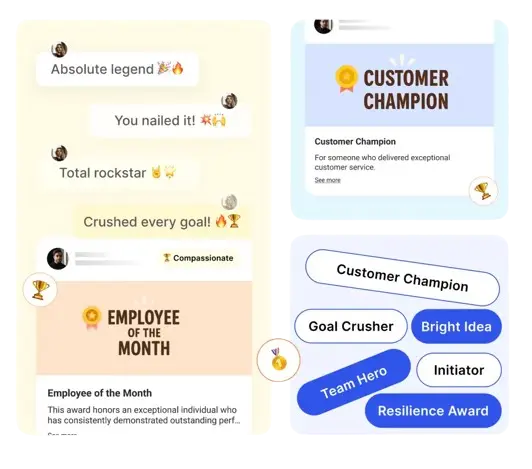
The best employee awards and recognition programs don’t just celebrate top performers. They recognize a wider range of contributions, including collaboration, leadership, customer support, innovation, mentorship, and living company values. This makes awards feel less like a popularity contest and more like a fair, intentional part of the company culture.
Not every award should celebrate the same thing. If your program only rewards sales numbers or big public wins, a lot of valuable work gets missed. A strong employee awards program uses different categories so people can be recognized for performance, teamwork, service, values, creativity, and day-to-day support.
1. Performance-Based Awards
Performance-based awards recognize employees who deliver strong, measurable results. This could include hitting a major sales target, completing a difficult project, improving a process, or consistently producing high-quality work.
An outstanding performance award or best performance award works best when the criteria are clear before the award is given. Employees should understand what is being measured and why the winner earned it. That keeps the award from feeling random or based on favoritism.
2. Values-Based Awards
Values-based awards recognize employees who show the company’s values through their actions. For example, if one of your values is customer focus, the award might go to someone who handled a difficult customer situation with patience and care.
These awards are useful because they show employees that culture is not just something written for the careers page. It’s something people are expected to practice in daily work. They also reinforce the importance of awards and recognition for employees in a way that feels connected to everyday behavior.
3. Peer-Nominated Awards
Peer-nominated awards let employees recognize the coworkers they work with every day. This matters because managers don’t always see the small but important things happening across a team.
A peer-nominated best helper award, teamwork award, or collaboration award can highlight people who answer questions, support new hires, step in during busy periods, or make work easier for everyone else. These awards can also make the program feel more fair because recognition doesn’t only come from the top down.
Employee service awards and anniversary awards recognize loyalty, tenure, and long-term contribution. These can mark milestones like one year, five years, ten years, or other important moments in an employee’s journey within the org.
The mistake many companies make is treating service awards like an automatic checkbox. A better approach is to include a personal message about the employee’s impact. The award shouldn’t only say, “You stayed here for five years.” It should say, “Here’s what your five years have meant to the team.”
5. Team Awards
Team awards recognize work that couldn’t have happened through one person alone. These awards are useful for product launches, customer recovery efforts, cross-functional projects, process improvements, or any result that depended on strong collaboration and culture.
A teamwork award works well when the write-up explains what the group achieved together. This helps reinforce collaboration instead of making every award feel like an individual competition.
6. Funny and Creative Awards
Funny awards for employees can make recognition feel more relaxed and inclusive. These might include lighthearted titles like “Meeting Saver,” “Snack Hero,” or “Most Likely to Fix the Printer Without Complaining.”
The key is to keep funny awards kind, workplace-appropriate, and optional. They should make people feel seen, not embarrassed. Used well, funny awards for coworkers, staff, and teams can bring energy to end-of-season celebrations, offsites, and casual recognition moments.
7. Social Recognition Awards
Social recognition awards make appreciation visible across the company. Instead of recognition staying private between a manager and employee, coworkers can share praise through a public feed, Slack, Microsoft Teams, or another workplace channel.
These awards work well for frequent, everyday recognition. They help employees see good work as it happens, not months later during an annual ceremony.
Employee Recognition Award Ideas
The best employee award ideas are specific, easy to understand, and tied to real work. A vague “great job” award is easy to forget. A clear award gives the employee something meaningful to remember and gives the rest of the team a better example to follow.
The ideas below cover formal awards, service awards, team awards, funny workplace awards, and creative titles you can adapt for different teams.
Corporate and Formal Award Ideas
Corporate award ideas work well for annual ceremonies, company-wide meetings, leadership events, or formal recognition programs. These awards usually carry more visibility, so the criteria should be clear and tied to real business impact.
Employee of the Year: Recognizes the employee who made the strongest overall contribution during the year.
Leadership Excellence Award: Honors a manager or team lead who develops people, supports the team, and delivers results.
Innovation Award: Celebrates someone who improved a process, introduced a useful idea, or solved a hard problem.
Customer Service Award: Recognizes employees who consistently support customers with patience, ownership, and care.
Outstanding Performance Award: Highlights someone who delivered strong, measurable results over a specific period.
These awards are most effective when the wording explains why the person won. For example, an employee of the year award should include clear employee of the year award criteria, not just a broad statement about being “excellent.” Employee of the year award wording could say: “Recognized for leading the customer onboarding project, improving team handoffs, and setting a high standard for ownership throughout the year.”
Years of service awards recognize employees who have stayed, grown, and contributed over time. They are common, but they only feel meaningful when they include a personal touch.
First Year Award: Celebrates an employee’s first full year and the progress they made after onboarding.
5-Year Milestone Award: Recognizes long-term commitment and consistent contribution.
10-Year Service Award: Honors loyalty, institutional knowledge, and lasting impact.
Mentorship Award: Celebrates employees who help others grow.
Legacy Award: Recognizes someone whose influence has shaped the team beyond one project or role.
Employee years of service awards can include plaques, certificates, gifts, extra time off, or public recognition. Employee award plaques still work well for formal milestones, but the message matters more than the object itself. A plaque with specific appreciation award wording will feel more personal than a generic “thank you for your service.”
End of Year Award Ideas
End of year awards give teams a chance to pause and look back at the work, wins, and progress of the year. They are useful because they celebrate the full picture, not just one month or one project.
Most Valuable Contributor: Recognizes the person whose work had the biggest impact across the team or company.
Rookie of the Year: Celebrates a newer employee who made a strong early contribution.
Culture Champion: Honors someone who consistently reflects company values.
Growth Mindset Award: Recognizes an employee who took on new challenges and improved visibly.
Unsung Hero: Celebrates behind-the-scenes work that made a major difference.
These awards work especially well when nominations come from both managers and peers. That helps surface contributions leadership may not see every day.
Team Award Ideas
Team award ideas help reinforce collaboration. They are useful when the result came from shared effort, not one person working alone.
Best Team Award: Recognizes a group that delivered a strong result together.
Collaboration Award: Celebrates a team that worked well across departments or functions.
Customer Save Award: Honors a team that solved a difficult customer issue.
Launch Team Award: Recognizes the group behind a successful project, campaign, or product release.
Problem-Solver Team Award: Celebrates a team that fixed a recurring issue or improved a process.
A strong team award should explain what the group achieved and how they worked together. This keeps the focus on collaboration, not just the final result.
Our guide to the teamwork award has more examples for recognizing group contributions.
Funny Awards for Employees and Coworkers
Funny awards for staff, coworkers, and teams can make recognition feel less stiff. These funny team award ideas work well for team offsites, end-of-season events, casual meetings, and employee of the month programs with a lighter tone.
Walking Encyclopedia Award: For the coworker who always seems to know the answer.
Mute Button MVP: For the person who saves meetings from background noise.
Snack Hero: For the employee who keeps the team fed.
Calendar Champion: For the person who somehow finds meeting slots that work.
Comeback Award: For someone who handled a setback with humor and resilience.
Funny awards in the workplace should stay kind. The goal is to make people laugh with the recipient, not at them. Avoid jokes about appearance, age, personal habits, or anything that could embarrass someone.
Creative Award Titles for Employees
Creative award titles make recognition more memorable. Instead of using the same standard titles every year, choose names that match the contribution.
The Connector: For someone who brings people and teams together.
The Spark: For the employee who brings energy and new ideas.
The Steady Hand: For someone others rely on during pressure.
The Bridge Builder: For a person who improves cross-team relationships.
The Closer: For someone who finishes difficult work with focus and consistency.
Creative award titles for employees and superlative awards for work are useful when you want recognition to feel more personal. The title should be simple, clear, and easy for the team to understand.
Employee of the Month: How to Run a Program That Sticks
An employee of the month award can be a simple way to keep recognition visible. It gives teams a regular moment to pause, celebrate good work, and show what the company values in practice.
But employee of the month programs can also fall flat when they feel vague or repetitive. If the same visible roles win every month, employees may start to feel that the program is based on popularity instead of real contribution. A better program makes different types of work visible, from customer support and teamwork to process improvements, mentoring, problem solving, and living company values.
Good employee of the month program examples usually have three things in common: clear criteria, open nominations, and specific award wording. Employees should know what the award is based on, how nominations work, and why the winner was selected.
Setting Criteria That Are Fair and Inclusive
Start by defining what “employee of the month” means at your company. The criteria for employee of the month award should be specific enough that employees understand what qualifies, but broad enough to include different roles and departments.
Useful criteria can include:
Strong performance on a project or goal
Helpfulness toward teammates
Positive customer feedback
Process improvements or problem solving
Consistent demonstration of company values
Rotating the focus each month can also make the program more inclusive. For example, one month could focus on teamwork, another on customer impact, and another on innovation or reliability. This helps prevent the same type of employee from winning every cycle.
Nominations should also be open to more than managers. Peers often see the small, daily contributions that leadership may miss. A simple nomination form can ask who is being nominated, what they did, and why it mattered.
An employee of the month award template should be simple, but not generic. The goal is to explain the contribution clearly so the recipient feels recognized for something real.
A basic template can look like this:
Employee of the Month: [Employee Name] Awarded for: [Specific contribution or behavior] Impact: [How it helped the team, customer, or company] Message: [Short note of appreciation]
Here is an example: “[Name] is recognized as Employee of the Month for leading the onboarding redesign and helping reduce new hire ramp-up time by two weeks. Your work made the process clearer for new employees and easier for managers to support.”
Wording like this works because it is specific. It doesn’t just say “great job” or “thanks for your hard work.” It clearly explains what the employee did and why it mattered.
You can also adjust the wording based on the tone of the award. A formal award might focus on measurable impact, while a lighter version might recognize teamwork, energy, or reliability.
How to Build an Employee Recognition Award Program
Starting an employee recognition program doesn’t have to be complicated. The goal is to create a process that feels fair, easy to understand, and simple enough to repeat. A good employee recognition award program should make strong work visible without turning recognition into extra admin work for HR or managers.
Step 1: Define Your Goals
Start by getting clear on what the program should support. Are you trying to improve engagement, strengthen retention, reinforce company values, or encourage more peer recognition? Your goals will shape the award categories, nomination process, and how often awards are given.
Step 2: Choose Your Award Categories
Use a mix of categories so different roles and contributions are included. For example, you might include performance awards, values-based awards, team awards, service award programs, and social recognition programs. This keeps the program from only rewarding the most visible employees.
Step 3: Set Up a Nomination Process
Open nominations to everyone, not just managers. Peer nominations help surface the daily contributions leadership may not always see, such as helping coworkers, solving small but important problems, or supporting customers behind the scenes.
Step 4: Pick a Platform
Manual tracking can break down quickly as the program grows. A recognition platform can help manage nominations, approvals, awards, and social recognition in one place. This makes the program easier to run and easier for employees to join.
Tell employees what the program is, why it exists, and how they can participate. Make the first round of awards visible so people understand how the program works. The more clearly you launch it, the easier it is for employees to trust and use it.
Employee Award Program Names
The name of your program sets the tone. Names like The Impact Awards, The Values Spotlight, The Helping Hands Awards, or The [Company Name] Honors feel clear and tied to culture.
Avoid names that sound too corporate or generic. The right name gives the program an identity employees can recognize and remember.
Best Practices for Employee Recognition and Awards Program
The best practices for employee recognition and awards are simple: keep recognition timely, specific, and inclusive. Rotate categories so the same people do not win every cycle. Make sure participation is open across departments, not limited to a few visible teams.
Awards should always connect back to a real contribution. Instead of a vague “great job,” explain what the employee did, why it mattered, and how it helped the team or company. The best programs feel like they belong to everyone, not just HR.
A fair nomination process is what separates meaningful awards from popularity contests. Without one, the same people can win repeatedly while quieter but important contributions get missed.
Open nominations to all employees, not just leadership. Give employees a simple form that asks for the nominee’s name, the award category, the specific contribution, and the impact it had on the team, customer, or company. Clear criteria also help people understand what kind of work qualifies for an award nomination for employee recognition.
A sample write-up for an employee award nomination might look like this:
“I’m nominating [Name] for the Collaboration Award. During Q2, [Name] coordinated with three departments to resolve a recurring billing issue that had been affecting customer satisfaction. Their approach brought the right people together and helped create a permanent fix.”
Appreciation award wording examples like this work because they are specific. They explain what the employee did, why it mattered, and how it helped others.
Review nominations through a small, diverse committee to reduce bias. Rotate the committee members from time to time so that no single group controls the outcomes. Share results clearly, and celebrate nominees alongside winners so employees feel encouraged to participate again.
How Assembly Powers Employee Recognition Awards
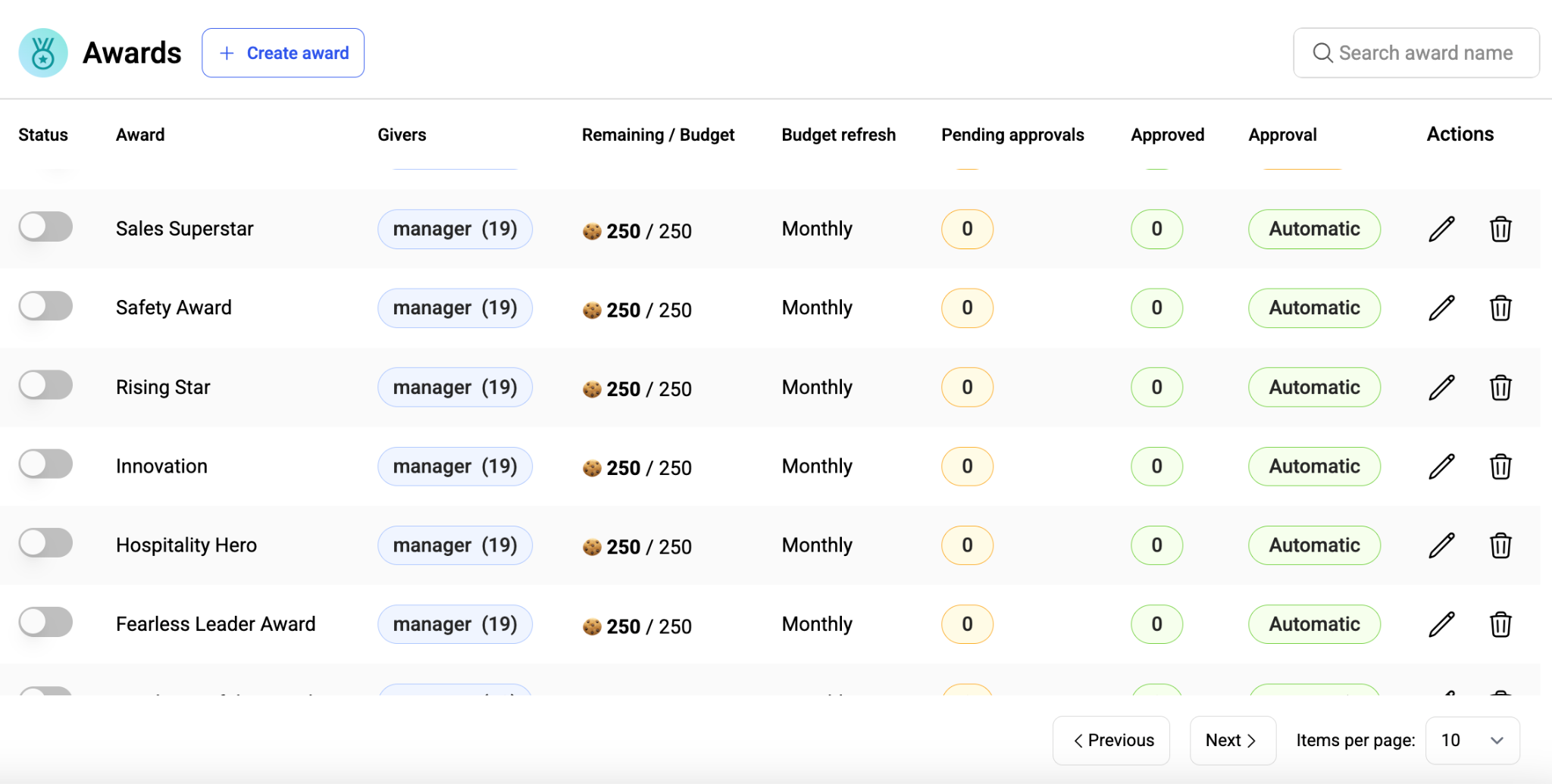
Building an awards program is easier when the process is simple for everyone involved. Assembly helps teams create custom employee awards, collect peer nominations, manage approvals, and share recognition in a visible way across the company.
Teams can use Assembly to recognize performance, teamwork, service milestones, values-based behavior, and everyday contributions. Recognition can also be tied to company values, shared through tools like Slack or Microsoft Teams, and connected to rewards so employees receive something meaningful along with the message.
For HR teams, this makes employee awards easier to manage without relying on spreadsheets or one-off reminders. Managers get more context, employees get a clear way to participate, and recognition becomes part of daily work instead of a once-a-year event.
Employee awards work best when people can see the reason behind them. The award itself matters less than the message attached to it.
A title, plaque, badge, or reward means more when it points to something real: a problem solved, a teammate supported, a customer helped, a value lived, or a project carried across the finish line.
For HR teams, the next step is to make that process easier to repeat. Start with a few clear award categories, open nominations to employees, and make every award specific enough that people understand why it was given. Over time, this turns employee awards from a routine announcement into a recognition habit people trust.
Want to make employee awards easier to manage?
Book a demo with Assembly to see how your team can create awards, collect nominations, and celebrate great work in one place.
Frequently Asked Questions
What are employee recognition awards?
Employee recognition awards are formal ways to recognise employees for their contributions, achievements, or workplace behaviours. They can include certificates, plaques, digital awards, peer-nominated awards, service awards, or employee of the month awards.
What are the key types of recognition awards?
Common types include performance-based awards, values-based awards, peer-nominated awards, service and anniversary awards, team awards, funny awards, and social recognition awards.
What makes a good employee award?
A good employee award is specific, fair, and connected to real work. It should explain what the employee did, why it mattered, and how it helped the team, customer, or company.
How do you choose employee award categories?
Start with the behaviours and contributions you want to encourage. Most companies use a mix of performance awards, service awards, team awards, peer recognition, and values-based awards so different employees can be recognised.
What are some good employee award ideas?
Good employee award ideas include Employee of the Year, Culture Champion, Best Team Award, Customer Service Award, Innovation Award, Mentorship Award, Unsung Hero, and Years of Service Award.
How do you write an employee award nomination?
A strong nomination should include the employee's name, the award category, the specific contribution, and the impact of that work. Avoid vague wording and use a real example whenever possible.
What should be included in an employee of the month award?
An employee of the month award should include the employee's name, the reason they were selected, the specific contribution being recognised, and a short message of appreciation.
Are employee achievement awards taxable?
In the U.S., many employee achievement awards may be taxable, especially cash, gift cards, and high-value rewards. Some non-cash awards may qualify for limited exclusions, but companies should check with their payroll or tax advisor before setting rules.
How often should companies give employee awards?
Monthly, quarterly, and annual awards can all work. The right frequency depends on the size of the company and the type of award. The key is to keep recognition consistent enough that employees see it as part of the culture.
How can small companies run employee award programs?
Small companies can keep the process simple. Start with a few award categories, open nominations to everyone, use clear criteria, and recognise winners in team meetings or company channels. A large budget is not required for awards to feel meaningful.
class SampleComponent extends React.Component {
  // using the experimental public class field syntax below. We can also attach
  // the contextType to the current class
  static contextType = ColorContext;
  render() {
    return <Button color={this.color} />
  }
}
Employee awards aren't a new idea. Most companies have some version of them. The challenge isn't whether to give awards. It's making sure the awards you give actually reflect the work people are doing and the values your team cares about.
When awards are generic, predictable, or disconnected from real work, employees notice. The title may sound nice, but it does not always feel earned, specific, or useful. Over time, that weakens the impact of the entire awards and recognition program.
Employee awards work best when they are tied to clear contributions. They should show employees what the company values, celebrate different types of effort, and give teams a fair way to recognize great work. That can include performance awards, service awards, peer-nominated awards, funny workplace awards, employee of the month awards, team awards, and values-based recognition.
In this guide we’ll walk you through what employee recognition awards are, the key types of awards to consider, practical employee award ideas, employee of the month examples, nomination tips, and how to build an employee recognition award program that feels fair, inclusive, and easy to sustain.
What Are Employee Recognition Awards?
Employee recognition awards are a way to call out work that deserves more than a quick “thank you.” They can be simple, like a team shout-out or digital badge, or more formal, like a certificate, plaque, bonus, or company-wide award.
The point isn’t just to hand someone a title. A good award explains what the employee did, why it mattered, and what kind of behavior the company wants to see more often.
That is where recognition and awards connect. Recognition is the act of noticing good work. Awards give that recognition more weight. They make it visible to the team and easier to remember.
The best employee awards and recognition programs don’t just celebrate top performers. They recognize a wider range of contributions, including collaboration, leadership, customer support, innovation, mentorship, and living company values. This makes awards feel less like a popularity contest and more like a fair, intentional part of the company culture.
Not every award should celebrate the same thing. If your program only rewards sales numbers or big public wins, a lot of valuable work gets missed. A strong employee awards program uses different categories so people can be recognized for performance, teamwork, service, values, creativity, and day-to-day support.
1. Performance-Based Awards
Performance-based awards recognize employees who deliver strong, measurable results. This could include hitting a major sales target, completing a difficult project, improving a process, or consistently producing high-quality work.
An outstanding performance award or best performance award works best when the criteria are clear before the award is given. Employees should understand what is being measured and why the winner earned it. That keeps the award from feeling random or based on favoritism.
2. Values-Based Awards
Values-based awards recognize employees who show the company’s values through their actions. For example, if one of your values is customer focus, the award might go to someone who handled a difficult customer situation with patience and care.
These awards are useful because they show employees that culture is not just something written for the careers page. It’s something people are expected to practice in daily work. They also reinforce the importance of awards and recognition for employees in a way that feels connected to everyday behavior.
3. Peer-Nominated Awards
Peer-nominated awards let employees recognize the coworkers they work with every day. This matters because managers don’t always see the small but important things happening across a team.
A peer-nominated best helper award, teamwork award, or collaboration award can highlight people who answer questions, support new hires, step in during busy periods, or make work easier for everyone else. These awards can also make the program feel more fair because recognition doesn’t only come from the top down.
Employee service awards and anniversary awards recognize loyalty, tenure, and long-term contribution. These can mark milestones like one year, five years, ten years, or other important moments in an employee’s journey within the org.
The mistake many companies make is treating service awards like an automatic checkbox. A better approach is to include a personal message about the employee’s impact. The award shouldn’t only say, “You stayed here for five years.” It should say, “Here’s what your five years have meant to the team.”
5. Team Awards
Team awards recognize work that couldn’t have happened through one person alone. These awards are useful for product launches, customer recovery efforts, cross-functional projects, process improvements, or any result that depended on strong collaboration and culture.
A teamwork award works well when the write-up explains what the group achieved together. This helps reinforce collaboration instead of making every award feel like an individual competition.
6. Funny and Creative Awards
Funny awards for employees can make recognition feel more relaxed and inclusive. These might include lighthearted titles like “Meeting Saver,” “Snack Hero,” or “Most Likely to Fix the Printer Without Complaining.”
The key is to keep funny awards kind, workplace-appropriate, and optional. They should make people feel seen, not embarrassed. Used well, funny awards for coworkers, staff, and teams can bring energy to end-of-season celebrations, offsites, and casual recognition moments.
7. Social Recognition Awards
Social recognition awards make appreciation visible across the company. Instead of recognition staying private between a manager and employee, coworkers can share praise through a public feed, Slack, Microsoft Teams, or another workplace channel.
These awards work well for frequent, everyday recognition. They help employees see good work as it happens, not months later during an annual ceremony.
Employee Recognition Award Ideas
The best employee award ideas are specific, easy to understand, and tied to real work. A vague “great job” award is easy to forget. A clear award gives the employee something meaningful to remember and gives the rest of the team a better example to follow.
The ideas below cover formal awards, service awards, team awards, funny workplace awards, and creative titles you can adapt for different teams.
Corporate and Formal Award Ideas
Corporate award ideas work well for annual ceremonies, company-wide meetings, leadership events, or formal recognition programs. These awards usually carry more visibility, so the criteria should be clear and tied to real business impact.
Employee of the Year: Recognizes the employee who made the strongest overall contribution during the year.
Leadership Excellence Award: Honors a manager or team lead who develops people, supports the team, and delivers results.
Innovation Award: Celebrates someone who improved a process, introduced a useful idea, or solved a hard problem.
Customer Service Award: Recognizes employees who consistently support customers with patience, ownership, and care.
Outstanding Performance Award: Highlights someone who delivered strong, measurable results over a specific period.
These awards are most effective when the wording explains why the person won. For example, an employee of the year award should include clear employee of the year award criteria, not just a broad statement about being “excellent.” Employee of the year award wording could say: “Recognized for leading the customer onboarding project, improving team handoffs, and setting a high standard for ownership throughout the year.”
Years of service awards recognize employees who have stayed, grown, and contributed over time. They are common, but they only feel meaningful when they include a personal touch.
First Year Award: Celebrates an employee’s first full year and the progress they made after onboarding.
5-Year Milestone Award: Recognizes long-term commitment and consistent contribution.
10-Year Service Award: Honors loyalty, institutional knowledge, and lasting impact.
Mentorship Award: Celebrates employees who help others grow.
Legacy Award: Recognizes someone whose influence has shaped the team beyond one project or role.
Employee years of service awards can include plaques, certificates, gifts, extra time off, or public recognition. Employee award plaques still work well for formal milestones, but the message matters more than the object itself. A plaque with specific appreciation award wording will feel more personal than a generic “thank you for your service.”
End of Year Award Ideas
End of year awards give teams a chance to pause and look back at the work, wins, and progress of the year. They are useful because they celebrate the full picture, not just one month or one project.
Most Valuable Contributor: Recognizes the person whose work had the biggest impact across the team or company.
Rookie of the Year: Celebrates a newer employee who made a strong early contribution.
Culture Champion: Honors someone who consistently reflects company values.
Growth Mindset Award: Recognizes an employee who took on new challenges and improved visibly.
Unsung Hero: Celebrates behind-the-scenes work that made a major difference.
These awards work especially well when nominations come from both managers and peers. That helps surface contributions leadership may not see every day.
Team Award Ideas
Team award ideas help reinforce collaboration. They are useful when the result came from shared effort, not one person working alone.
Best Team Award: Recognizes a group that delivered a strong result together.
Collaboration Award: Celebrates a team that worked well across departments or functions.
Customer Save Award: Honors a team that solved a difficult customer issue.
Launch Team Award: Recognizes the group behind a successful project, campaign, or product release.
Problem-Solver Team Award: Celebrates a team that fixed a recurring issue or improved a process.
A strong team award should explain what the group achieved and how they worked together. This keeps the focus on collaboration, not just the final result.
Our guide to the teamwork award has more examples for recognizing group contributions.
Funny Awards for Employees and Coworkers
Funny awards for staff, coworkers, and teams can make recognition feel less stiff. These funny team award ideas work well for team offsites, end-of-season events, casual meetings, and employee of the month programs with a lighter tone.
Walking Encyclopedia Award: For the coworker who always seems to know the answer.
Mute Button MVP: For the person who saves meetings from background noise.
Snack Hero: For the employee who keeps the team fed.
Calendar Champion: For the person who somehow finds meeting slots that work.
Comeback Award: For someone who handled a setback with humor and resilience.
Funny awards in the workplace should stay kind. The goal is to make people laugh with the recipient, not at them. Avoid jokes about appearance, age, personal habits, or anything that could embarrass someone.
Creative Award Titles for Employees
Creative award titles make recognition more memorable. Instead of using the same standard titles every year, choose names that match the contribution.
The Connector: For someone who brings people and teams together.
The Spark: For the employee who brings energy and new ideas.
The Steady Hand: For someone others rely on during pressure.
The Bridge Builder: For a person who improves cross-team relationships.
The Closer: For someone who finishes difficult work with focus and consistency.
Creative award titles for employees and superlative awards for work are useful when you want recognition to feel more personal. The title should be simple, clear, and easy for the team to understand.
Employee of the Month: How to Run a Program That Sticks
An employee of the month award can be a simple way to keep recognition visible. It gives teams a regular moment to pause, celebrate good work, and show what the company values in practice.
But employee of the month programs can also fall flat when they feel vague or repetitive. If the same visible roles win every month, employees may start to feel that the program is based on popularity instead of real contribution. A better program makes different types of work visible, from customer support and teamwork to process improvements, mentoring, problem solving, and living company values.
Good employee of the month program examples usually have three things in common: clear criteria, open nominations, and specific award wording. Employees should know what the award is based on, how nominations work, and why the winner was selected.
Setting Criteria That Are Fair and Inclusive
Start by defining what “employee of the month” means at your company. The criteria for employee of the month award should be specific enough that employees understand what qualifies, but broad enough to include different roles and departments.
Useful criteria can include:
Strong performance on a project or goal
Helpfulness toward teammates
Positive customer feedback
Process improvements or problem solving
Consistent demonstration of company values
Rotating the focus each month can also make the program more inclusive. For example, one month could focus on teamwork, another on customer impact, and another on innovation or reliability. This helps prevent the same type of employee from winning every cycle.
Nominations should also be open to more than managers. Peers often see the small, daily contributions that leadership may miss. A simple nomination form can ask who is being nominated, what they did, and why it mattered.
An employee of the month award template should be simple, but not generic. The goal is to explain the contribution clearly so the recipient feels recognized for something real.
A basic template can look like this:
Employee of the Month: [Employee Name] Awarded for: [Specific contribution or behavior] Impact: [How it helped the team, customer, or company] Message: [Short note of appreciation]
Here is an example: “[Name] is recognized as Employee of the Month for leading the onboarding redesign and helping reduce new hire ramp-up time by two weeks. Your work made the process clearer for new employees and easier for managers to support.”
Wording like this works because it is specific. It doesn’t just say “great job” or “thanks for your hard work.” It clearly explains what the employee did and why it mattered.
You can also adjust the wording based on the tone of the award. A formal award might focus on measurable impact, while a lighter version might recognize teamwork, energy, or reliability.
How to Build an Employee Recognition Award Program
Starting an employee recognition program doesn’t have to be complicated. The goal is to create a process that feels fair, easy to understand, and simple enough to repeat. A good employee recognition award program should make strong work visible without turning recognition into extra admin work for HR or managers.
Step 1: Define Your Goals
Start by getting clear on what the program should support. Are you trying to improve engagement, strengthen retention, reinforce company values, or encourage more peer recognition? Your goals will shape the award categories, nomination process, and how often awards are given.
Step 2: Choose Your Award Categories
Use a mix of categories so different roles and contributions are included. For example, you might include performance awards, values-based awards, team awards, service award programs, and social recognition programs. This keeps the program from only rewarding the most visible employees.
Step 3: Set Up a Nomination Process
Open nominations to everyone, not just managers. Peer nominations help surface the daily contributions leadership may not always see, such as helping coworkers, solving small but important problems, or supporting customers behind the scenes.
Step 4: Pick a Platform
Manual tracking can break down quickly as the program grows. A recognition platform can help manage nominations, approvals, awards, and social recognition in one place. This makes the program easier to run and easier for employees to join.
Tell employees what the program is, why it exists, and how they can participate. Make the first round of awards visible so people understand how the program works. The more clearly you launch it, the easier it is for employees to trust and use it.
Employee Award Program Names
The name of your program sets the tone. Names like The Impact Awards, The Values Spotlight, The Helping Hands Awards, or The [Company Name] Honors feel clear and tied to culture.
Avoid names that sound too corporate or generic. The right name gives the program an identity employees can recognize and remember.
Best Practices for Employee Recognition and Awards Program
The best practices for employee recognition and awards are simple: keep recognition timely, specific, and inclusive. Rotate categories so the same people do not win every cycle. Make sure participation is open across departments, not limited to a few visible teams.
Awards should always connect back to a real contribution. Instead of a vague “great job,” explain what the employee did, why it mattered, and how it helped the team or company. The best programs feel like they belong to everyone, not just HR.
A fair nomination process is what separates meaningful awards from popularity contests. Without one, the same people can win repeatedly while quieter but important contributions get missed.
Open nominations to all employees, not just leadership. Give employees a simple form that asks for the nominee’s name, the award category, the specific contribution, and the impact it had on the team, customer, or company. Clear criteria also help people understand what kind of work qualifies for an award nomination for employee recognition.
A sample write-up for an employee award nomination might look like this:
“I’m nominating [Name] for the Collaboration Award. During Q2, [Name] coordinated with three departments to resolve a recurring billing issue that had been affecting customer satisfaction. Their approach brought the right people together and helped create a permanent fix.”
Appreciation award wording examples like this work because they are specific. They explain what the employee did, why it mattered, and how it helped others.
Review nominations through a small, diverse committee to reduce bias. Rotate the committee members from time to time so that no single group controls the outcomes. Share results clearly, and celebrate nominees alongside winners so employees feel encouraged to participate again.
How Assembly Powers Employee Recognition Awards
Building an awards program is easier when the process is simple for everyone involved. Assembly helps teams create custom employee awards, collect peer nominations, manage approvals, and share recognition in a visible way across the company.
Teams can use Assembly to recognize performance, teamwork, service milestones, values-based behavior, and everyday contributions. Recognition can also be tied to company values, shared through tools like Slack or Microsoft Teams, and connected to rewards so employees receive something meaningful along with the message.
For HR teams, this makes employee awards easier to manage without relying on spreadsheets or one-off reminders. Managers get more context, employees get a clear way to participate, and recognition becomes part of daily work instead of a once-a-year event.
Employee awards work best when people can see the reason behind them. The award itself matters less than the message attached to it.
A title, plaque, badge, or reward means more when it points to something real: a problem solved, a teammate supported, a customer helped, a value lived, or a project carried across the finish line.
For HR teams, the next step is to make that process easier to repeat. Start with a few clear award categories, open nominations to employees, and make every award specific enough that people understand why it was given. Over time, this turns employee awards from a routine announcement into a recognition habit people trust.
Want to make employee awards easier to manage?
Book a demo with Assembly to see how your team can create awards, collect nominations, and celebrate great work in one place.
Frequently Asked Questions
What are employee recognition awards?
Employee recognition awards are formal ways to recognise employees for their contributions, achievements, or workplace behaviours. They can include certificates, plaques, digital awards, peer-nominated awards, service awards, or employee of the month awards.
What are the key types of recognition awards?
Common types include performance-based awards, values-based awards, peer-nominated awards, service and anniversary awards, team awards, funny awards, and social recognition awards.
What makes a good employee award?
A good employee award is specific, fair, and connected to real work. It should explain what the employee did, why it mattered, and how it helped the team, customer, or company.
How do you choose employee award categories?
Start with the behaviours and contributions you want to encourage. Most companies use a mix of performance awards, service awards, team awards, peer recognition, and values-based awards so different employees can be recognised.
What are some good employee award ideas?
Good employee award ideas include Employee of the Year, Culture Champion, Best Team Award, Customer Service Award, Innovation Award, Mentorship Award, Unsung Hero, and Years of Service Award.
How do you write an employee award nomination?
A strong nomination should include the employee's name, the award category, the specific contribution, and the impact of that work. Avoid vague wording and use a real example whenever possible.
What should be included in an employee of the month award?
An employee of the month award should include the employee's name, the reason they were selected, the specific contribution being recognised, and a short message of appreciation.
Are employee achievement awards taxable?
In the U.S., many employee achievement awards may be taxable, especially cash, gift cards, and high-value rewards. Some non-cash awards may qualify for limited exclusions, but companies should check with their payroll or tax advisor before setting rules.
How often should companies give employee awards?
Monthly, quarterly, and annual awards can all work. The right frequency depends on the size of the company and the type of award. The key is to keep recognition consistent enough that employees see it as part of the culture.
How can small companies run employee award programs?
Small companies can keep the process simple. Start with a few award categories, open nominations to everyone, use clear criteria, and recognise winners in team meetings or company channels. A large budget is not required for awards to feel meaningful.
Browse our Free Employee Recognition Guide
Get the foundational knowledge on creating an employee recognition program that boosts employee engagement and helps them feel valued.






.png)