Employee engagement has become one of the most important priorities for modern workplaces. It affects how people show up every day, how teams work together, how long employees stay, and how well a company can adapt to change.
When employees feel connected to their work, supported by their manager, and recognized for what they contribute, the impact is easy to see. Teams are more productive, turnover is lower, collaboration improves, and employees are more likely to care about the company’s goals. But even when leaders understand why engagement matters, many organizations still struggle to make it consistent.
The cost of disengagement is high. McKinsey estimates that the average S&P 500 company loses roughly $282 million each year because of disengaged employees. Another Employee Engagement Report also found that while engagement reached 59% in 2025, many employees still remain less than fully engaged.
The good news is that employee engagement is not a mystery. The main drivers are well known: trust, recognition, manager support, growth, purpose, and a culture where people feel heard. With the right strategy and right tools, companies can move engagement from an annual survey or one-off initiative into something that happens throughout the year.
This guide covers what employee engagement means in 2026, why it matters, what drives it, and how to measure it. You will also find practical employee engagement ideas, strategies, activities, survey guidance, and tools that can help build a more connected and motivated workplace.
What Is Employee Engagement?
Employee engagement is the connection employees have with their work, their team, and the organization they work for. It includes how much people care about their role, how much effort they are willing to give, and whether they feel their work has value.
An engaged employee is usually not just completing assigned tasks. They may notice problems early, share ideas without being pushed, support coworkers, and take more care with the quality of their work. The point is not that engaged employees work longer hours. It is that they are more mentally and emotionally invested in the work they are already doing.
Employee engagement is different from job satisfaction. A satisfied employee may like their pay, schedule, manager, or benefits, but still feel little connection to the company’s goals. Satisfaction often reflects comfort. Engagement reflects investment. The two can overlap, but they should not be treated as the same measure.
Levels of Employee Engagement
Most employee engagement models place employees into three broad groups:
Engaged employees are connected to their work and usually willing to contribute beyond the basic requirements of the role. They tend to bring ideas, support teammates, and take ownership of outcomes.
Not engaged employees complete their work, but with limited energy or attachment. They may not be unhappy, but they are also not strongly invested in the organization or its goals.
Actively disengaged employees feel disconnected or dissatisfied in ways that can affect their work and the people around them. Their frustration may show up through low effort, poor collaboration, resistance to change, or negative behavior.
The middle group is often the hardest to spot. These employees may attend meetings, respond to messages, and finish assigned work. But their best thinking is often absent. Over time, that quiet disengagement can affect productivity, morale, and retention.
The Difference Between Employee Engagement and Motivation
Employee engagement and motivation are connected, but they work differently.
Motivation is the energy behind a specific action. It may come from something external, such as a bonus, deadline, or promotion opportunity. Engagement runs deeper. It is the sustained connection someone feels to their role, their team, and the organization’s purpose.
Employee motivation and engagement strategies often overlap, but the distinction matters. Motivation can fade when the incentive disappears. Engagement is more durable when the conditions that built it, such as trust, recognition, and growth, are still present.
If you are trying to measure employee motivation alongside engagement, this distinction helps you understand whether employees are responding to short-term incentives or developing a stronger connection to the workplace.
Employee Engagement Statistics 2026
Employee engagement statistics for 2026 show a workplace problem that is not really new, but has become harder to ignore. Many employees are still showing up and doing the work, yet they do not necessarily see a long-term future with their employer.
A 2026 Engagement and Retention Report found that only 25% of employees see a long-term career with their current employer. The same report found that 34% plan to look for a new job in 2026. Appreciation also appears to matter. Employees who feel appreciated are 17 times more likely to see a long-term future with their employer.
O.C. Tanner’s 2026 Global Culture Report adds a useful point here. Based on responses from more than 38,000 employees, leaders, HR practitioners, and executives across 23 countries, the report found that employees are likely to stay two years longer when their organization combines high expectations with high support.
Deloitte’s 2026 Global Human Capital Trends research points to another pressure: change fatigue. One third of surveyed workers experienced 15 major workplace changes in the previous year, while only 27% of leaders said their organizations manage change well.
Taken together, these findings suggest that one of the main employee engagement trends for 2026 is consistency. Employees are not only asking for better programs. They are looking for regular recognition, clearer communication, stronger manager support, and some evidence that their feedback leads to action.
Benefits of Employee Engagement at Workplace
If you are wondering why employee engagement is important, it goes well beyond culture scores. The benefits of employee engagement show up in how people work, how teams collaborate, how long employees stay, and how well the organization handles change.
The impact of employee engagement is easiest to see in the following areas.
1. Higher Productivity and Work Quality
Engaged employees tend to bring more attention and care to their work. They are more likely to notice problems early, follow through on details, and take ownership of outcomes.
This does not mean engaged employees should simply be expected to do more work. That is where many organizations get it wrong. The real benefit is better effort, not endless effort. When employees understand the value of their work and feel supported in doing it well, productivity and work quality are more likely to improve.
2. Stronger Employee Retention
Employee engagement and retention are closely connected. People do not usually leave because of one bad quarter or a missed promotion. They leave when they stop feeling seen. When contributions go unnoticed for long enough, employees start looking elsewhere, often quietly.
That is why efforts to improve employee retention should start before employees become flight risks. Exit interviews can explain why someone left, but engagement work helps leaders understand what might make people stay. The catch is simple: if employees feel ignored for too long, retention efforts often come too late.
3. Better Collaboration and Team Building
Engagement also affects how people work with each other. When employees trust their teammates and feel respected, they are more likely to share ideas, ask questions, and solve problems together.
The benefits of team building go beyond social events or games. Good team building helps employees understand how others communicate, make decisions, and handle pressure. Over time, that can improve collaboration because people are not starting from scratch every time they work together.
4. Lower Burnout Risk and Better Wellbeing
Employee engagement does not remove stress from work. Still, engaged teams are often better positioned to notice when something is wrong. Regular check-ins, employee feedback, and manager support can make it easier to spot workload problems before they become serious.
There is one important limit here. Highly engaged employees can also be vulnerable to burnout because they often take on more responsibility. Engagement should not become a reason to keep asking the same people for more. It should sit alongside workload management, recovery time, and clear efforts to prevent employee burnout.
5. Greater Adaptability During Change
Change is easier to manage when employees trust the organization and understand the reason behind decisions. Engaged employees are more likely to ask useful questions, raise concerns early, and stay involved when priorities shift.
This matters because many workplaces are dealing with new tools, new expectations, and changing employee needs. Engagement gives leaders a stronger base to work from. Without it, even good changes can meet resistance because employees do not feel heard or included in the process.
Drivers of Employee Engagement
The drivers of employee engagement are the conditions that shape how connected employees feel to their work. Most engagement issues usually trace back to a few areas: culture, recognition, manager support, growth, and purpose.
Company Culture and Belonging
Employee engagement and culture are closely connected. Culture is not only what leaders say in meetings. It is what employees experience in daily work: how people communicate, make decisions, handle conflict, and treat each other.
Company culture and employee engagement also reinforce each other. A healthy culture makes people feel more included and respected. Engaged employees often strengthen that culture through better collaboration, stronger ownership, and more support for their teammates.
Recognition and Appreciation
Employee engagement and recognition are strongly linked because recognition makes contribution visible. When employees see that good work is noticed, they are more likely to feel that their effort matters.
Recognition does not need to be formal every time. A specific note from a manager, a peer shoutout, or a quick mention in a team meeting can help when it is timely and specific. The detail matters here. “Good job” is less useful than naming what someone did and why it helped.
Manager Relationships and Support
Managers are one of the strongest drivers of employee engagement. They shape the daily experience of work: how feedback is given, how priorities are explained, and whether employees feel safe raising concerns.
For many employees, the manager is the company in practical terms. A strong manager relationship can make work feel clearer and more manageable. A weak one can make even a good role feel frustrating. Regular manager conversations through weekly check-ins can help employees feel heard and supported.
Growth and Career Development
People disengage when they feel stuck. Growth does not always mean a promotion. It can mean learning a skill, taking on a stretch project, getting useful feedback, or seeing a clearer path forward.
This matters as job requirements change. Engagement is harder to sustain when employees feel they are being asked to adapt without support.
Purpose and Connection to the Mission
Purpose is another driver of employee engagement, but it has to be practical. Most employees do not connect to a mission statement in the abstract. They connect when they can see how their work contributes to team goals, customer outcomes, or the company’s direction.
It starts with managers connecting individual contributions to team and company goals in one-on-ones and team meetings. For teams that want to make those conversations more useful, our checklist for an effective one-on-one meeting offers a simple place to start.
How Employee Engagement Improves Employee Productivity and Retention
Engagement, productivity, and retention feed into each other. When employees are engaged, they are more likely to stay. When they stay longer, they build stronger relationships, understand the work more deeply, and collaborate with less friction.
That momentum matters. A team with experienced, connected employees can move faster because people know how to work together. A team that is always replacing people spends more time rebuilding trust, context, and basic working habits.
The same cycle can work in the other direction. When recognition drops, manager support weakens, or employees stop seeing a path forward, engagement starts to slip. Productivity becomes harder to sustain, and retention becomes more fragile. People do not always leave right away. Sometimes they stay, but stop bringing their best ideas and effort.
That is why engagement is not just an HR metric. It is part of how organizations protect performance and reduce avoidable turnover.
Employee Engagement Ideas and Activities
Employee engagement ideas do not need to be expensive or complicated. The best ones usually fit into the way people already work. Small, regular actions often do more than a large event that happens once a year.
Fun Employee Engagement Activities
Fun employee engagement activities give employees a reason to interact beyond daily tasks. They work best when participation is easy and the activity does not feel forced.
A few employee engagement examples include:
Team trivia or office bingo
Monthly show-and-tell sessions
Photo challenges around a simple theme
Scavenger hunts for in-office or hybrid teams
Short recognition rounds during team meetings
Employee engagement games should also be low-pressure. The point is not to make every employee perform. It is to create small moments where people can talk, laugh, and build familiarity.
Remote and Virtual Employee Engagement Ideas
Remote employee engagement activities need more intention because connection does not happen as naturally when people are distributed. Employee engagement ideas for remote workers should be simple, repeatable, and easy to join.
Useful virtual employee engagement ideas include:
Virtual coffee chats across teams
Dedicated Slack or Teams channels for non-work interests
Monthly “wins and lessons” sessions
Online quiz games or Pictionary
Peer recognition prompts during remote meetings
Fun employee engagement activities virtual teams use should not add more screen fatigue. Keep them short, optional when possible, and connected to how the team already communicates.
Inexpensive Employee Engagement Ideas
Some of the most useful inexpensive employee engagement ideas are basic, but they work because they are personal. A specific note of appreciation can mean more than a generic gift card.
Examples include:
Public shoutouts in team meetings
Flexible start times when the work allows it
Peer-to-peer recognition
Letting employees choose a stretch project
Manager check-ins focused on workload and support
These staff engagement ideas work because they show attention. Small actions become meaningful when they are specific and consistent.
Good team building gives employees a reason to collaborate with more trust. That matters more than the activity itself.
Employee Engagement Strategies in 2026 at Workplace
A good employee engagement strategy is not a one-time campaign. It needs regular habits, clear ownership, and enough measurement to show whether the work is helping. These employee engagement strategies are a useful place to focus in 2026:
Make Recognition a Daily Practice to Improve Employee Engagement
Recognition loses its effect when it only happens during annual reviews or formal programs. The value comes from frequency. A short note after a meeting, a peer shoutout in a team channel, or a quick message when someone solves a hard problem. None of that takes more than a minute.
The goal is not to praise everything. It is to recognize useful contributions when they happen. Over time, that consistency can help increase employee engagement across teams.
Equip Managers to Lead Engagement
Managers shape much of the daily employee experience. They explain priorities, give feedback, handle conflict, and notice when someone is struggling.
That makes manager enablement one of the most practical HR initiatives for employee engagement. HR managers also play an important role in helping managers build the skills and practices needed to support engagement.
Give managers clear one-on-one frameworks, simple recognition prompts, and access to engagement data they can actually use. For guidance, check out our guide on how to run effective one-on-one meetings.
Act on Feedback to Improve Employee Satisfaction
Surveys only matter if employees see something happen afterward. Share what you learned, explain what will change, and be honest about what cannot change now.
This is one of the simplest ways to improve employee satisfaction. People do not expect every request to be accepted. They do expect their feedback to be taken seriously.
Build a Social Media Employee Engagement Strategy
A social media employee engagement strategy can help employees share work milestones, project highlights, team moments, and company culture in a more natural way.
This should stay voluntary. Employees should not feel pressured to promote the company online. But when people are proud of their work, giving them simple ways to share it can support employer branding and internal pride at the same time.
Use an Employee Engagement Calendar
An employee engagement calendar helps teams plan recognition moments, survey windows, team activities, and internal campaigns across the year.
Without a calendar, engagement work often becomes reactive. Planning ahead makes it easier to increase employee engagement at the workplace because you are not trying to invent activities at the last minute.
Prioritize Flexibility and Wellbeing
Flexibility and wellbeing remain part of strong employee retention and engagement strategies. Employees are more likely to stay engaged when they have some control over how they work and when workloads are managed honestly.
This does not mean every company can offer the same level of flexibility. The point is to look for practical room within the work model: clearer boundaries, better workload planning, recovery time after intense periods, and manager check-ins that treat wellbeing as part of performance.
How to Develop an Employee Engagement Strategy
Step 1: Assess where you stand. Run an engagement survey, review eNPS scores, and look at retention trends. You need a baseline before you can measure whether your employee engagement strategy is working.
Step 2: Identify your key drivers. Look at survey data, exit interviews, manager feedback, and participation patterns. These should show the two or three drivers of employee engagement that matter most for your team.
Step 3: Set clear employee engagement goals. “Improve engagement” is too vague. Set goals that are specific and measurable, such as increasing recognition frequency to once a week across all teams within six months.
Step 4: Build the action plan. Define the actions, owners, and timelines. Include a few quick wins, but do not rely only on easy fixes. Some engagement problems need longer-term work.
Step 5: Communicate the plan. Share the plan with managers and employees. Explain what you heard, what you are prioritizing, and what will happen next. People are more likely to trust the process when they can see how decisions were made.
Step 6: Execute, measure, and adjust. Use pulse surveys, manager feedback, and retention data to check whether the plan is working. If the results are weak, adjust the plan instead of treating the first version as final.
How to Measure Employee Engagement
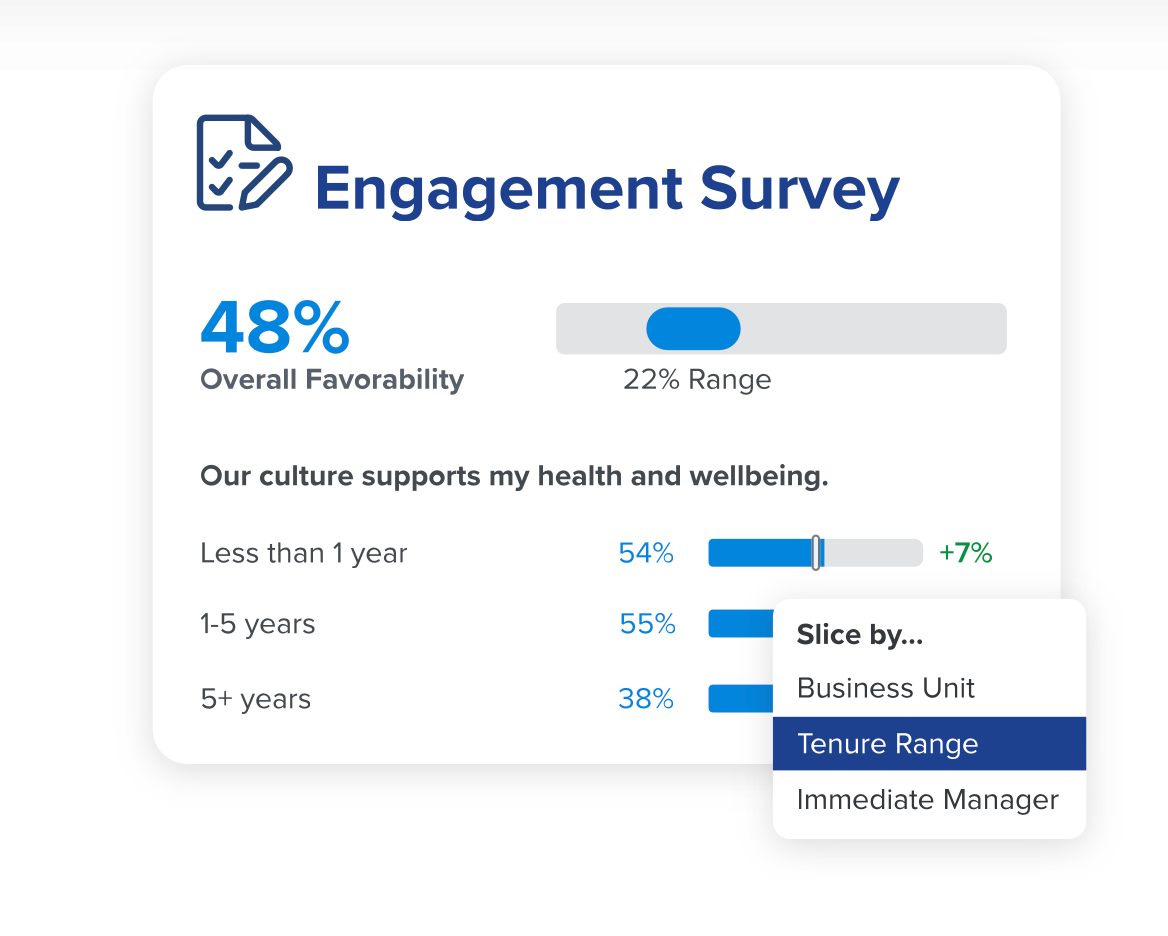
You cannot improve what you do not measure. Most companies measure employee engagement through a mix of engagement surveys, pulse surveys, eNPS, and recognition data. Engagement surveys give the broader picture, pulse surveys show more frequent changes, eNPS captures overall sentiment, and recognition data can show whose work is being valued or overlooked.
The engagement score usually comes from averaging survey responses or tracking the percentage of favorable answers across key questions. Employee engagement benchmarks help you compare that score against broader averages. The 2026 employee engagement report puts overall engagement at 59%. If your employee engagement score benchmark falls below that, dig deeper and figure out what’s wrong.
But do not fixate on one number. A steady five-point increase over two quarters may tell you more than where you started. The useful question is where engagement is improving, where it is weak, and which groups may still be getting overlooked.
Employee Engagement Surveys: How to Listen and Act
Employee engagement surveys are useful only when they lead to action. The survey itself is just the listening step. The harder part is deciding what to change, assigning owners, and telling employees what happened next.
Purpose of Employee Engagement Survey
The purpose of employee engagement survey work is to give employees a structured way to share how they experience work. It also gives leaders a clearer view of what is working, where employees are struggling, and which issues need attention.
A well-designed employee engagement questionnaire should cover the main drivers of engagement, including recognition, manager support, growth, workload, belonging, communication, and trust.
Employee Engagement Survey Questions
Strong employee engagement survey questions are specific and actionable. Broad questions may show that something is wrong, but they often do not show what to fix.
Useful questions usually ask about areas leaders can act on: whether employees feel recognized, whether they get useful feedback, whether workloads are manageable, and whether they see a future with the organization. An employee engagement survey template can help teams avoid starting from a blank page.
Fun Employee Engagement Questions
Fun employee engagement questions can make a survey feel less like a compliance task. Used carefully, they can also surface useful details about morale and team connection.
Examples include:
What made you smile at work this week?
What is one skill you would like to learn from a coworker?
What is one small change that would make your workday easier?
These questions should not replace core engagement questions. They work best as a small addition that makes the survey more human.
Employee Engagement Pulse Survey
An annual survey gives the broader picture, but a lot can change in 12 months. An employee engagement pulse survey gives teams shorter, more frequent feedback.
Pulse surveys are especially useful after a new initiative, leadership change, restructuring, or period of heavy workload. They help leaders see whether engagement is improving, slipping, or staying flat.
Employee Engagement Survey Tool
The benefits of employee engagement survey work depend on what happens after the results come in. A survey tool can help by organizing responses, showing trends, and turning feedback into action plans.
The best process is simple: listen, act, and close the loop. Engagement survey examples often show the same pattern. Employees are more likely to keep participating when they see that their feedback leads to visible decisions.
Employee Engagement Programs and Action Plans
Employee engagement programs work best when they connect listening with action. A survey can show where employees are struggling, but the program is what turns that feedback into visible change.
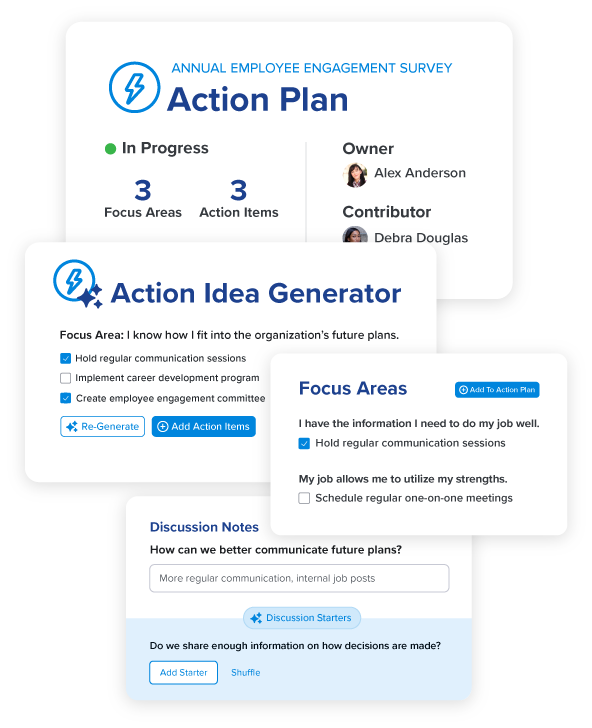
An employee engagement action plan should answer five questions: What problem are we trying to solve? What action will we take? Who owns it? When will it happen? How will we know if it worked?
Employee engagement action plan examples should be specific. If employees say they feel disconnected from company goals, the plan might include manager talking points for one-on-ones, a quarterly leadership update, and a follow-up pulse survey in 60 days. If recognition scores are low, the plan might include weekly peer recognition prompts and manager reminders.
An employee engagement template or employee engagement plan template can help teams organize priorities, owners, timelines, and follow-up measures. The value is not the template itself. It is the habit of turning feedback into decisions employees can actually see.
Employee Engagement Platforms and Software
The best employee engagement software brings recognition, surveys, manager tools, and analytics into one place. That matters because engagement work becomes harder to manage when feedback, recognition, and action plans sit in separate systems.
When comparing the best employee engagement platforms, look for tools that support peer recognition, pulse surveys, one-on-ones, milestone celebrations, and reporting. The best employee engagement tools are not always the ones with the longest feature list. They are the ones employees and managers will actually use.
A good employee engagement platform should also fit into existing workflows, such as Slack, Teams, HRIS systems, or performance tools. If people have to remember another login just to give recognition or review feedback, usage will usually drop.
How Assembly and Quantum Workplace Drive Employee Engagement
Assembly and Quantum Workplace work as one product family to build engagement into daily workflows.
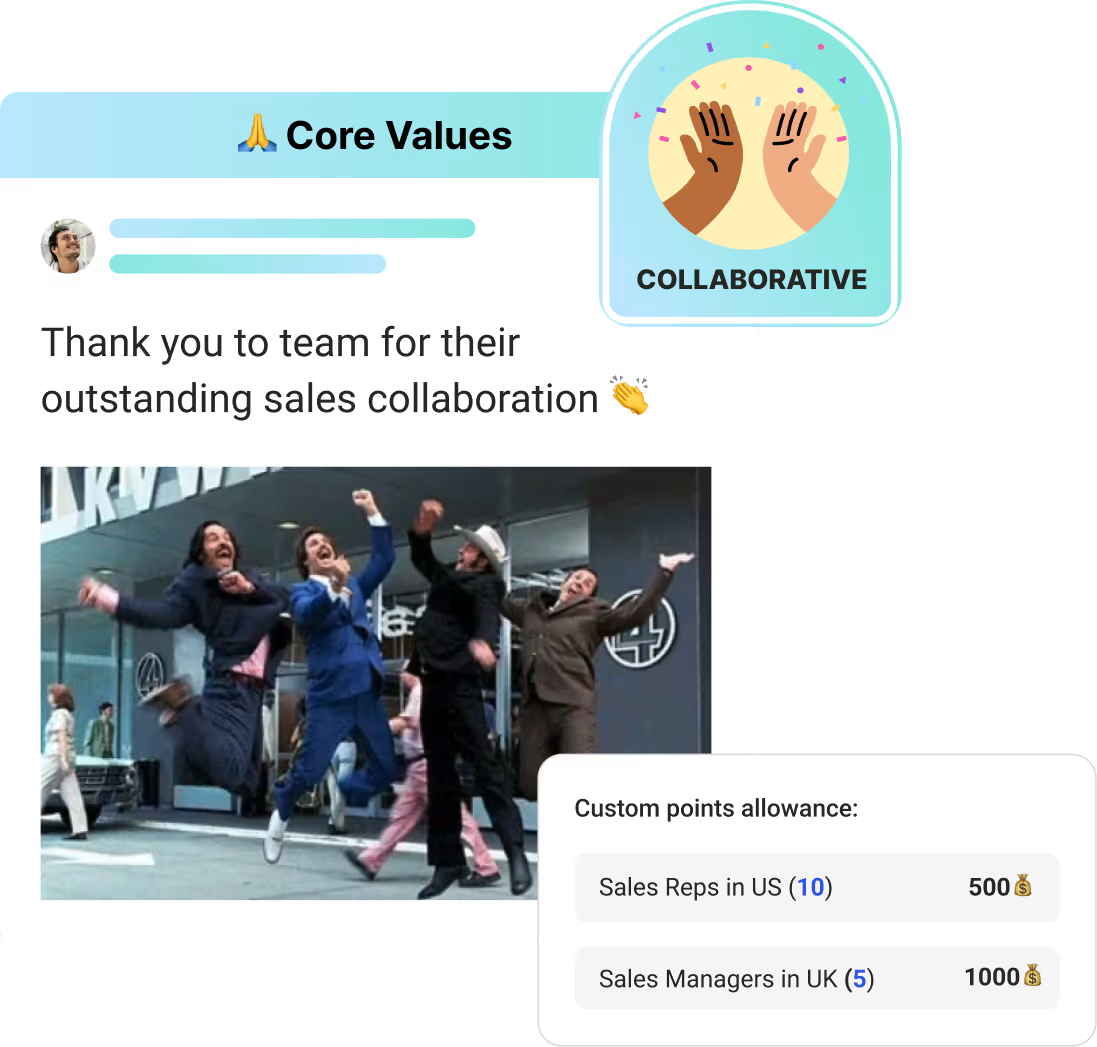
Assembly handles recognition and connection. Employees can recognize each other directly inside Slack, Teams, or an HRIS, making appreciation visible across the company instead of buried in private messages. The platform automates milestone celebrations, offers flexible rewards, and surfaces AI-powered insights that help managers spot gaps before they widen.
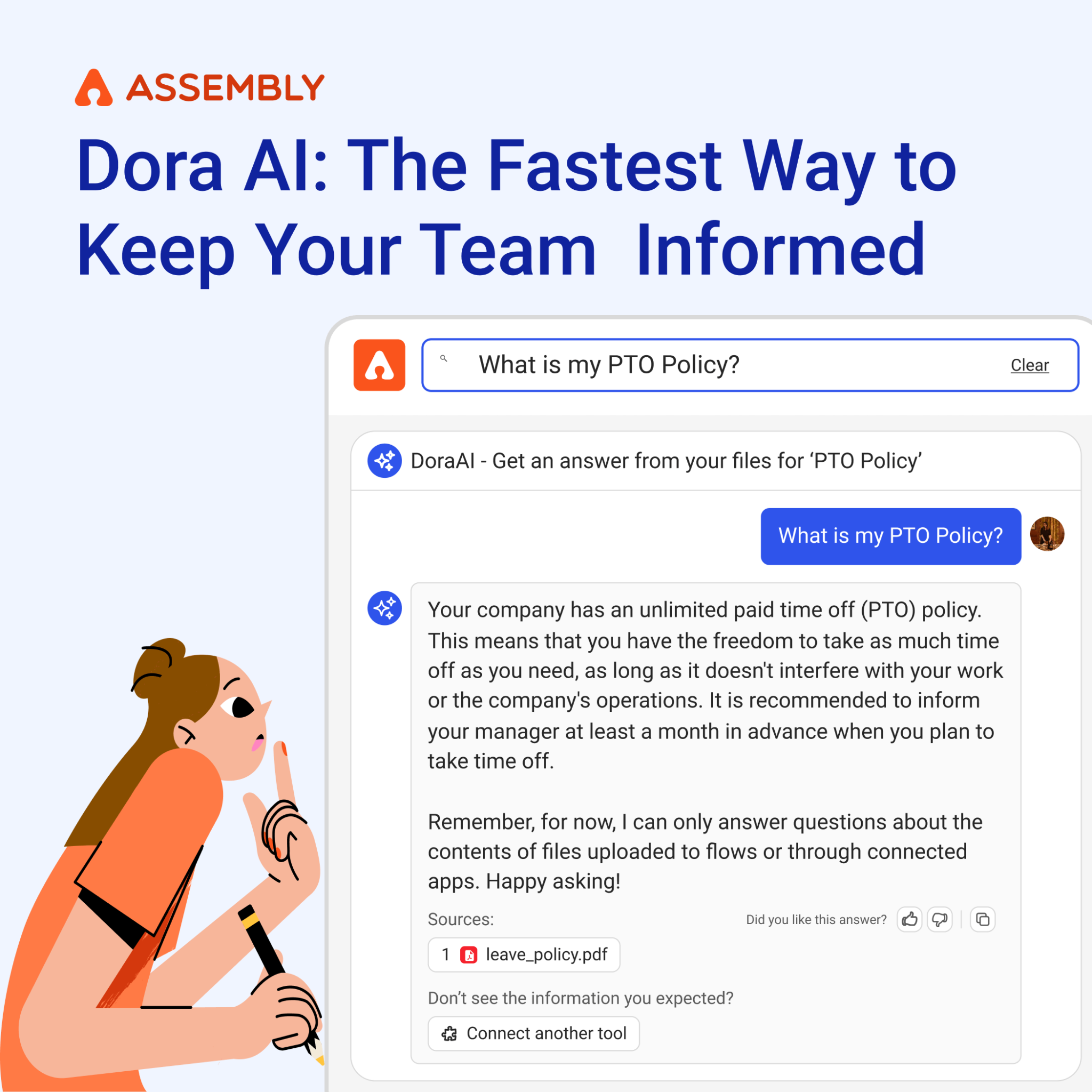
Dora AI lets managers ask plain-language questions about recognition data, such as “Which teams have not received recognition this month?” and get visual answers. That is the role of AI in employee engagement right now: not replacing human connection, but helping managers notice patterns and act sooner.
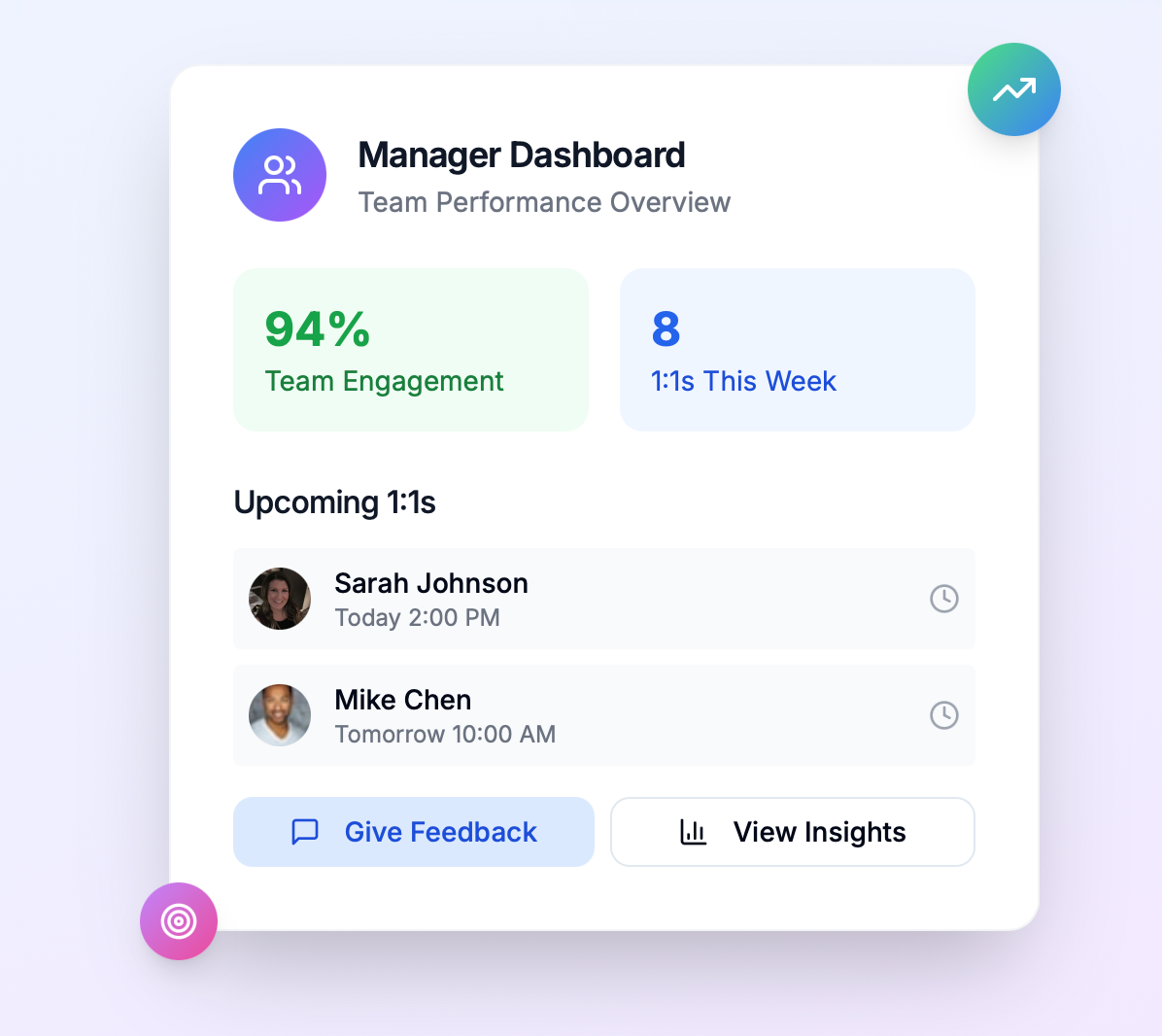
Quantum Workplace complements this with engagement surveys, performance management, goal tracking, and people analytics. Together, the two give HR teams a clearer view of recognition, engagement, performance, and retention.
Teams using Assembly report more productive one-on-one conversations and better follow-through on commitments. That is what happens when engagement lives in the flow of work, not in a separate program.
Want to see how it works? Book a demo with Assembly and explore how recognition, feedback, and connection come together in one place.
Final Words
Employee engagement isn't a program you launch once. It's the ongoing work of building a place where people feel connected, valued, and invested.
There is a reason so many employee engagement quotes come back to the same point: people do their best work where they feel seen.
Start with one thing this week. Recognize someone for a specific contribution. Have an honest one-on-one. Ask your team what one change would improve their experience, and then actually follow through. Engagement builds when people see their voice matters. Everything else grows from there.
Frequently Asked Questions
How can you increase employee engagement survey participation?
Keep the survey short, explain why you are running it, and tell employees how the results will be used. Participation usually improves when people see that past feedback led to action. Giving employees time during the workday to complete the survey also helps.
How often should companies run employee engagement surveys?
Most companies can run one comprehensive engagement survey each year, supported by shorter pulse surveys monthly or quarterly. Pulse surveys help teams track changes between larger surveys and respond before small issues become harder to fix.
How can you improve employee retention and motivation?
Focus on manager support, regular recognition, clear growth paths, and meaningful work. Retention and motivation tend to improve when employees feel valued, supported, and able to see a future with the organisation.
How can you improve employee satisfaction?
Listen to employees and act on what you learn. Run surveys, share results openly, and follow through on the changes you commit to. Satisfaction improves when employees feel heard and can see that their input affects decisions.
How can you encourage employees to participate in events?
Ask employees what kinds of events they would actually attend. Offer a mix of in-person and virtual options, keep participation easy, and avoid making events feel like another obligation. People are more likely to show up when they feel some ownership over the activity.
How can you improve employee engagement in healthcare?
Healthcare employees often deal with long shifts, emotional strain, and staffing pressure. Engagement efforts should focus on immediate recognition, manager support, workload concerns, and giving frontline employees a real voice in decisions that affect their daily work.
How can you improve employee engagement in manufacturing?
Manufacturing teams are often left out of engagement programmes built mainly for desk workers. Use mobile-friendly survey tools, recognise good work on the floor, and involve shift leaders so feedback and recognition happen close to the work.
How can you tell an employee they need to improve?
Be specific, timely, and direct. Describe the situation, the behaviour you observed, and the impact it had. Ask for the employee's perspective, agree on next steps, and follow up. The conversation should be clear, but it should also leave room for support and improvement.
class SampleComponent extends React.Component {
  // using the experimental public class field syntax below. We can also attach
  // the contextType to the current class
  static contextType = ColorContext;
  render() {
    return <Button color={this.color} />
  }
}
Employee engagement has become one of the most important priorities for modern workplaces. It affects how people show up every day, how teams work together, how long employees stay, and how well a company can adapt to change.
When employees feel connected to their work, supported by their manager, and recognized for what they contribute, the impact is easy to see. Teams are more productive, turnover is lower, collaboration improves, and employees are more likely to care about the company’s goals. But even when leaders understand why engagement matters, many organizations still struggle to make it consistent.
The cost of disengagement is high. McKinsey estimates that the average S&P 500 company loses roughly $282 million each year because of disengaged employees. Another Employee Engagement Report also found that while engagement reached 59% in 2025, many employees still remain less than fully engaged.
The good news is that employee engagement is not a mystery. The main drivers are well known: trust, recognition, manager support, growth, purpose, and a culture where people feel heard. With the right strategy and right tools, companies can move engagement from an annual survey or one-off initiative into something that happens throughout the year.
This guide covers what employee engagement means in 2026, why it matters, what drives it, and how to measure it. You will also find practical employee engagement ideas, strategies, activities, survey guidance, and tools that can help build a more connected and motivated workplace.
What Is Employee Engagement?
Employee engagement is the connection employees have with their work, their team, and the organization they work for. It includes how much people care about their role, how much effort they are willing to give, and whether they feel their work has value.
An engaged employee is usually not just completing assigned tasks. They may notice problems early, share ideas without being pushed, support coworkers, and take more care with the quality of their work. The point is not that engaged employees work longer hours. It is that they are more mentally and emotionally invested in the work they are already doing.
Employee engagement is different from job satisfaction. A satisfied employee may like their pay, schedule, manager, or benefits, but still feel little connection to the company’s goals. Satisfaction often reflects comfort. Engagement reflects investment. The two can overlap, but they should not be treated as the same measure.
Levels of Employee Engagement
Most employee engagement models place employees into three broad groups:
Engaged employees are connected to their work and usually willing to contribute beyond the basic requirements of the role. They tend to bring ideas, support teammates, and take ownership of outcomes.
Not engaged employees complete their work, but with limited energy or attachment. They may not be unhappy, but they are also not strongly invested in the organization or its goals.
Actively disengaged employees feel disconnected or dissatisfied in ways that can affect their work and the people around them. Their frustration may show up through low effort, poor collaboration, resistance to change, or negative behavior.
The middle group is often the hardest to spot. These employees may attend meetings, respond to messages, and finish assigned work. But their best thinking is often absent. Over time, that quiet disengagement can affect productivity, morale, and retention.
The Difference Between Employee Engagement and Motivation
Employee engagement and motivation are connected, but they work differently.
Motivation is the energy behind a specific action. It may come from something external, such as a bonus, deadline, or promotion opportunity. Engagement runs deeper. It is the sustained connection someone feels to their role, their team, and the organization’s purpose.
Employee motivation and engagement strategies often overlap, but the distinction matters. Motivation can fade when the incentive disappears. Engagement is more durable when the conditions that built it, such as trust, recognition, and growth, are still present.
If you are trying to measure employee motivation alongside engagement, this distinction helps you understand whether employees are responding to short-term incentives or developing a stronger connection to the workplace.
Employee Engagement Statistics 2026
Employee engagement statistics for 2026 show a workplace problem that is not really new, but has become harder to ignore. Many employees are still showing up and doing the work, yet they do not necessarily see a long-term future with their employer.
A 2026 Engagement and Retention Report found that only 25% of employees see a long-term career with their current employer. The same report found that 34% plan to look for a new job in 2026. Appreciation also appears to matter. Employees who feel appreciated are 17 times more likely to see a long-term future with their employer.
O.C. Tanner’s 2026 Global Culture Report adds a useful point here. Based on responses from more than 38,000 employees, leaders, HR practitioners, and executives across 23 countries, the report found that employees are likely to stay two years longer when their organization combines high expectations with high support.
Deloitte’s 2026 Global Human Capital Trends research points to another pressure: change fatigue. One third of surveyed workers experienced 15 major workplace changes in the previous year, while only 27% of leaders said their organizations manage change well.
Taken together, these findings suggest that one of the main employee engagement trends for 2026 is consistency. Employees are not only asking for better programs. They are looking for regular recognition, clearer communication, stronger manager support, and some evidence that their feedback leads to action.
Benefits of Employee Engagement at Workplace
If you are wondering why employee engagement is important, it goes well beyond culture scores. The benefits of employee engagement show up in how people work, how teams collaborate, how long employees stay, and how well the organization handles change.
The impact of employee engagement is easiest to see in the following areas.
1. Higher Productivity and Work Quality
Engaged employees tend to bring more attention and care to their work. They are more likely to notice problems early, follow through on details, and take ownership of outcomes.
This does not mean engaged employees should simply be expected to do more work. That is where many organizations get it wrong. The real benefit is better effort, not endless effort. When employees understand the value of their work and feel supported in doing it well, productivity and work quality are more likely to improve.
2. Stronger Employee Retention
Employee engagement and retention are closely connected. People do not usually leave because of one bad quarter or a missed promotion. They leave when they stop feeling seen. When contributions go unnoticed for long enough, employees start looking elsewhere, often quietly.
That is why efforts to improve employee retention should start before employees become flight risks. Exit interviews can explain why someone left, but engagement work helps leaders understand what might make people stay. The catch is simple: if employees feel ignored for too long, retention efforts often come too late.
3. Better Collaboration and Team Building
Engagement also affects how people work with each other. When employees trust their teammates and feel respected, they are more likely to share ideas, ask questions, and solve problems together.
The benefits of team building go beyond social events or games. Good team building helps employees understand how others communicate, make decisions, and handle pressure. Over time, that can improve collaboration because people are not starting from scratch every time they work together.
4. Lower Burnout Risk and Better Wellbeing
Employee engagement does not remove stress from work. Still, engaged teams are often better positioned to notice when something is wrong. Regular check-ins, employee feedback, and manager support can make it easier to spot workload problems before they become serious.
There is one important limit here. Highly engaged employees can also be vulnerable to burnout because they often take on more responsibility. Engagement should not become a reason to keep asking the same people for more. It should sit alongside workload management, recovery time, and clear efforts to prevent employee burnout.
5. Greater Adaptability During Change
Change is easier to manage when employees trust the organization and understand the reason behind decisions. Engaged employees are more likely to ask useful questions, raise concerns early, and stay involved when priorities shift.
This matters because many workplaces are dealing with new tools, new expectations, and changing employee needs. Engagement gives leaders a stronger base to work from. Without it, even good changes can meet resistance because employees do not feel heard or included in the process.
Drivers of Employee Engagement
The drivers of employee engagement are the conditions that shape how connected employees feel to their work. Most engagement issues usually trace back to a few areas: culture, recognition, manager support, growth, and purpose.
Company Culture and Belonging
Employee engagement and culture are closely connected. Culture is not only what leaders say in meetings. It is what employees experience in daily work: how people communicate, make decisions, handle conflict, and treat each other.
Company culture and employee engagement also reinforce each other. A healthy culture makes people feel more included and respected. Engaged employees often strengthen that culture through better collaboration, stronger ownership, and more support for their teammates.
Recognition and Appreciation
Employee engagement and recognition are strongly linked because recognition makes contribution visible. When employees see that good work is noticed, they are more likely to feel that their effort matters.
Recognition does not need to be formal every time. A specific note from a manager, a peer shoutout, or a quick mention in a team meeting can help when it is timely and specific. The detail matters here. “Good job” is less useful than naming what someone did and why it helped.
Manager Relationships and Support
Managers are one of the strongest drivers of employee engagement. They shape the daily experience of work: how feedback is given, how priorities are explained, and whether employees feel safe raising concerns.
For many employees, the manager is the company in practical terms. A strong manager relationship can make work feel clearer and more manageable. A weak one can make even a good role feel frustrating. Regular manager conversations through weekly check-ins can help employees feel heard and supported.
Growth and Career Development
People disengage when they feel stuck. Growth does not always mean a promotion. It can mean learning a skill, taking on a stretch project, getting useful feedback, or seeing a clearer path forward.
This matters as job requirements change. Engagement is harder to sustain when employees feel they are being asked to adapt without support.
Purpose and Connection to the Mission
Purpose is another driver of employee engagement, but it has to be practical. Most employees do not connect to a mission statement in the abstract. They connect when they can see how their work contributes to team goals, customer outcomes, or the company’s direction.
It starts with managers connecting individual contributions to team and company goals in one-on-ones and team meetings. For teams that want to make those conversations more useful, our checklist for an effective one-on-one meeting offers a simple place to start.
How Employee Engagement Improves Employee Productivity and Retention
Engagement, productivity, and retention feed into each other. When employees are engaged, they are more likely to stay. When they stay longer, they build stronger relationships, understand the work more deeply, and collaborate with less friction.
That momentum matters. A team with experienced, connected employees can move faster because people know how to work together. A team that is always replacing people spends more time rebuilding trust, context, and basic working habits.
The same cycle can work in the other direction. When recognition drops, manager support weakens, or employees stop seeing a path forward, engagement starts to slip. Productivity becomes harder to sustain, and retention becomes more fragile. People do not always leave right away. Sometimes they stay, but stop bringing their best ideas and effort.
That is why engagement is not just an HR metric. It is part of how organizations protect performance and reduce avoidable turnover.
Employee Engagement Ideas and Activities
Employee engagement ideas do not need to be expensive or complicated. The best ones usually fit into the way people already work. Small, regular actions often do more than a large event that happens once a year.
Fun Employee Engagement Activities
Fun employee engagement activities give employees a reason to interact beyond daily tasks. They work best when participation is easy and the activity does not feel forced.
A few employee engagement examples include:
Team trivia or office bingo
Monthly show-and-tell sessions
Photo challenges around a simple theme
Scavenger hunts for in-office or hybrid teams
Short recognition rounds during team meetings
Employee engagement games should also be low-pressure. The point is not to make every employee perform. It is to create small moments where people can talk, laugh, and build familiarity.
Remote and Virtual Employee Engagement Ideas
Remote employee engagement activities need more intention because connection does not happen as naturally when people are distributed. Employee engagement ideas for remote workers should be simple, repeatable, and easy to join.
Useful virtual employee engagement ideas include:
Virtual coffee chats across teams
Dedicated Slack or Teams channels for non-work interests
Monthly “wins and lessons” sessions
Online quiz games or Pictionary
Peer recognition prompts during remote meetings
Fun employee engagement activities virtual teams use should not add more screen fatigue. Keep them short, optional when possible, and connected to how the team already communicates.
Inexpensive Employee Engagement Ideas
Some of the most useful inexpensive employee engagement ideas are basic, but they work because they are personal. A specific note of appreciation can mean more than a generic gift card.
Examples include:
Public shoutouts in team meetings
Flexible start times when the work allows it
Peer-to-peer recognition
Letting employees choose a stretch project
Manager check-ins focused on workload and support
These staff engagement ideas work because they show attention. Small actions become meaningful when they are specific and consistent.
Good team building gives employees a reason to collaborate with more trust. That matters more than the activity itself.
Employee Engagement Strategies in 2026 at Workplace
A good employee engagement strategy is not a one-time campaign. It needs regular habits, clear ownership, and enough measurement to show whether the work is helping. These employee engagement strategies are a useful place to focus in 2026:
Make Recognition a Daily Practice to Improve Employee Engagement
Recognition loses its effect when it only happens during annual reviews or formal programs. The value comes from frequency. A short note after a meeting, a peer shoutout in a team channel, or a quick message when someone solves a hard problem. None of that takes more than a minute.
The goal is not to praise everything. It is to recognize useful contributions when they happen. Over time, that consistency can help increase employee engagement across teams.
Equip Managers to Lead Engagement
Managers shape much of the daily employee experience. They explain priorities, give feedback, handle conflict, and notice when someone is struggling.
That makes manager enablement one of the most practical HR initiatives for employee engagement. HR managers also play an important role in helping managers build the skills and practices needed to support engagement.
Give managers clear one-on-one frameworks, simple recognition prompts, and access to engagement data they can actually use. For guidance, check out our guide on how to run effective one-on-one meetings.
Act on Feedback to Improve Employee Satisfaction
Surveys only matter if employees see something happen afterward. Share what you learned, explain what will change, and be honest about what cannot change now.
This is one of the simplest ways to improve employee satisfaction. People do not expect every request to be accepted. They do expect their feedback to be taken seriously.
Build a Social Media Employee Engagement Strategy
A social media employee engagement strategy can help employees share work milestones, project highlights, team moments, and company culture in a more natural way.
This should stay voluntary. Employees should not feel pressured to promote the company online. But when people are proud of their work, giving them simple ways to share it can support employer branding and internal pride at the same time.
Use an Employee Engagement Calendar
An employee engagement calendar helps teams plan recognition moments, survey windows, team activities, and internal campaigns across the year.
Without a calendar, engagement work often becomes reactive. Planning ahead makes it easier to increase employee engagement at the workplace because you are not trying to invent activities at the last minute.
Prioritize Flexibility and Wellbeing
Flexibility and wellbeing remain part of strong employee retention and engagement strategies. Employees are more likely to stay engaged when they have some control over how they work and when workloads are managed honestly.
This does not mean every company can offer the same level of flexibility. The point is to look for practical room within the work model: clearer boundaries, better workload planning, recovery time after intense periods, and manager check-ins that treat wellbeing as part of performance.
How to Develop an Employee Engagement Strategy
Step 1: Assess where you stand. Run an engagement survey, review eNPS scores, and look at retention trends. You need a baseline before you can measure whether your employee engagement strategy is working.
Step 2: Identify your key drivers. Look at survey data, exit interviews, manager feedback, and participation patterns. These should show the two or three drivers of employee engagement that matter most for your team.
Step 3: Set clear employee engagement goals. “Improve engagement” is too vague. Set goals that are specific and measurable, such as increasing recognition frequency to once a week across all teams within six months.
Step 4: Build the action plan. Define the actions, owners, and timelines. Include a few quick wins, but do not rely only on easy fixes. Some engagement problems need longer-term work.
Step 5: Communicate the plan. Share the plan with managers and employees. Explain what you heard, what you are prioritizing, and what will happen next. People are more likely to trust the process when they can see how decisions were made.
Step 6: Execute, measure, and adjust. Use pulse surveys, manager feedback, and retention data to check whether the plan is working. If the results are weak, adjust the plan instead of treating the first version as final.
How to Measure Employee Engagement
You cannot improve what you do not measure. Most companies measure employee engagement through a mix of engagement surveys, pulse surveys, eNPS, and recognition data. Engagement surveys give the broader picture, pulse surveys show more frequent changes, eNPS captures overall sentiment, and recognition data can show whose work is being valued or overlooked.
The engagement score usually comes from averaging survey responses or tracking the percentage of favorable answers across key questions. Employee engagement benchmarks help you compare that score against broader averages. The 2026 employee engagement report puts overall engagement at 59%. If your employee engagement score benchmark falls below that, dig deeper and figure out what’s wrong.
But do not fixate on one number. A steady five-point increase over two quarters may tell you more than where you started. The useful question is where engagement is improving, where it is weak, and which groups may still be getting overlooked.
Employee Engagement Surveys: How to Listen and Act
Employee engagement surveys are useful only when they lead to action. The survey itself is just the listening step. The harder part is deciding what to change, assigning owners, and telling employees what happened next.
Purpose of Employee Engagement Survey
The purpose of employee engagement survey work is to give employees a structured way to share how they experience work. It also gives leaders a clearer view of what is working, where employees are struggling, and which issues need attention.
A well-designed employee engagement questionnaire should cover the main drivers of engagement, including recognition, manager support, growth, workload, belonging, communication, and trust.
Employee Engagement Survey Questions
Strong employee engagement survey questions are specific and actionable. Broad questions may show that something is wrong, but they often do not show what to fix.
Useful questions usually ask about areas leaders can act on: whether employees feel recognized, whether they get useful feedback, whether workloads are manageable, and whether they see a future with the organization. An employee engagement survey template can help teams avoid starting from a blank page.
Fun Employee Engagement Questions
Fun employee engagement questions can make a survey feel less like a compliance task. Used carefully, they can also surface useful details about morale and team connection.
Examples include:
What made you smile at work this week?
What is one skill you would like to learn from a coworker?
What is one small change that would make your workday easier?
These questions should not replace core engagement questions. They work best as a small addition that makes the survey more human.
Employee Engagement Pulse Survey
An annual survey gives the broader picture, but a lot can change in 12 months. An employee engagement pulse survey gives teams shorter, more frequent feedback.
Pulse surveys are especially useful after a new initiative, leadership change, restructuring, or period of heavy workload. They help leaders see whether engagement is improving, slipping, or staying flat.
Employee Engagement Survey Tool
The benefits of employee engagement survey work depend on what happens after the results come in. A survey tool can help by organizing responses, showing trends, and turning feedback into action plans.
The best process is simple: listen, act, and close the loop. Engagement survey examples often show the same pattern. Employees are more likely to keep participating when they see that their feedback leads to visible decisions.
Employee Engagement Programs and Action Plans
Employee engagement programs work best when they connect listening with action. A survey can show where employees are struggling, but the program is what turns that feedback into visible change.
An employee engagement action plan should answer five questions: What problem are we trying to solve? What action will we take? Who owns it? When will it happen? How will we know if it worked?
Employee engagement action plan examples should be specific. If employees say they feel disconnected from company goals, the plan might include manager talking points for one-on-ones, a quarterly leadership update, and a follow-up pulse survey in 60 days. If recognition scores are low, the plan might include weekly peer recognition prompts and manager reminders.
An employee engagement template or employee engagement plan template can help teams organize priorities, owners, timelines, and follow-up measures. The value is not the template itself. It is the habit of turning feedback into decisions employees can actually see.
Employee Engagement Platforms and Software
The best employee engagement software brings recognition, surveys, manager tools, and analytics into one place. That matters because engagement work becomes harder to manage when feedback, recognition, and action plans sit in separate systems.
When comparing the best employee engagement platforms, look for tools that support peer recognition, pulse surveys, one-on-ones, milestone celebrations, and reporting. The best employee engagement tools are not always the ones with the longest feature list. They are the ones employees and managers will actually use.
A good employee engagement platform should also fit into existing workflows, such as Slack, Teams, HRIS systems, or performance tools. If people have to remember another login just to give recognition or review feedback, usage will usually drop.
How Assembly and Quantum Workplace Drive Employee Engagement
Assembly and Quantum Workplace work as one product family to build engagement into daily workflows.
Assembly handles recognition and connection. Employees can recognize each other directly inside Slack, Teams, or an HRIS, making appreciation visible across the company instead of buried in private messages. The platform automates milestone celebrations, offers flexible rewards, and surfaces AI-powered insights that help managers spot gaps before they widen.
Dora AI lets managers ask plain-language questions about recognition data, such as “Which teams have not received recognition this month?” and get visual answers. That is the role of AI in employee engagement right now: not replacing human connection, but helping managers notice patterns and act sooner.
Quantum Workplace complements this with engagement surveys, performance management, goal tracking, and people analytics. Together, the two give HR teams a clearer view of recognition, engagement, performance, and retention.
Teams using Assembly report more productive one-on-one conversations and better follow-through on commitments. That is what happens when engagement lives in the flow of work, not in a separate program.
Want to see how it works? Book a demo with Assembly and explore how recognition, feedback, and connection come together in one place.
Final Words
Employee engagement isn't a program you launch once. It's the ongoing work of building a place where people feel connected, valued, and invested.
There is a reason so many employee engagement quotes come back to the same point: people do their best work where they feel seen.
Start with one thing this week. Recognize someone for a specific contribution. Have an honest one-on-one. Ask your team what one change would improve their experience, and then actually follow through. Engagement builds when people see their voice matters. Everything else grows from there.
Frequently Asked Questions
How can you increase employee engagement survey participation?
Keep the survey short, explain why you are running it, and tell employees how the results will be used. Participation usually improves when people see that past feedback led to action. Giving employees time during the workday to complete the survey also helps.
How often should companies run employee engagement surveys?
Most companies can run one comprehensive engagement survey each year, supported by shorter pulse surveys monthly or quarterly. Pulse surveys help teams track changes between larger surveys and respond before small issues become harder to fix.
How can you improve employee retention and motivation?
Focus on manager support, regular recognition, clear growth paths, and meaningful work. Retention and motivation tend to improve when employees feel valued, supported, and able to see a future with the organisation.
How can you improve employee satisfaction?
Listen to employees and act on what you learn. Run surveys, share results openly, and follow through on the changes you commit to. Satisfaction improves when employees feel heard and can see that their input affects decisions.
How can you encourage employees to participate in events?
Ask employees what kinds of events they would actually attend. Offer a mix of in-person and virtual options, keep participation easy, and avoid making events feel like another obligation. People are more likely to show up when they feel some ownership over the activity.
How can you improve employee engagement in healthcare?
Healthcare employees often deal with long shifts, emotional strain, and staffing pressure. Engagement efforts should focus on immediate recognition, manager support, workload concerns, and giving frontline employees a real voice in decisions that affect their daily work.
How can you improve employee engagement in manufacturing?
Manufacturing teams are often left out of engagement programmes built mainly for desk workers. Use mobile-friendly survey tools, recognise good work on the floor, and involve shift leaders so feedback and recognition happen close to the work.
How can you tell an employee they need to improve?
Be specific, timely, and direct. Describe the situation, the behaviour you observed, and the impact it had. Ask for the employee's perspective, agree on next steps, and follow up. The conversation should be clear, but it should also leave room for support and improvement.
Browse our Free Employee Recognition Guide
Get the foundational knowledge on creating an employee recognition program that boosts employee engagement and helps them feel valued.