At 50 employees, recognition often happens naturally. Leaders know most people by name, managers see good work as it happens, and a quick message in Slack or a mention during a team meeting can make someone feel genuinely appreciated.
That stops working somewhere between 200 and 500 employees. Teams grow faster than relationships can keep up. Managers are juggling more people, more priorities, and less time. And the employees doing great work in less visible roles? They start wondering if anyone notices.
This does not mean the company cares less about its people. It means the informal habits that worked at a smaller size are no longer enough.
To keep recognition meaningful during this stage of growth, companies need a more consistent and inclusive approach. In this guide, we explain why recognition often breaks down between 200 and 500 employees, the challenges HR teams are likely to face, and how to build a program that scales without making appreciation feel forced or impersonal.
Why Does Employee Recognition Break Down Between 200 and 500 Employees?
Employee recognition does not become less important as a company grows. It becomes harder to deliver consistently.
In a smaller organization, recognition often depends on proximity. Leaders know who handled a difficult client, supported a colleague, or stayed late to solve a problem. Good work is easier to see, and appreciation can happen naturally through a quick message, a team meeting, or an informal conversation.
That visibility starts to shrink as the company moves beyond 200 employees. New departments form, management layers increase, and employees collaborate across locations and time zones. Senior leaders are further removed from day-to-day work, while managers have larger teams and more competing responsibilities.
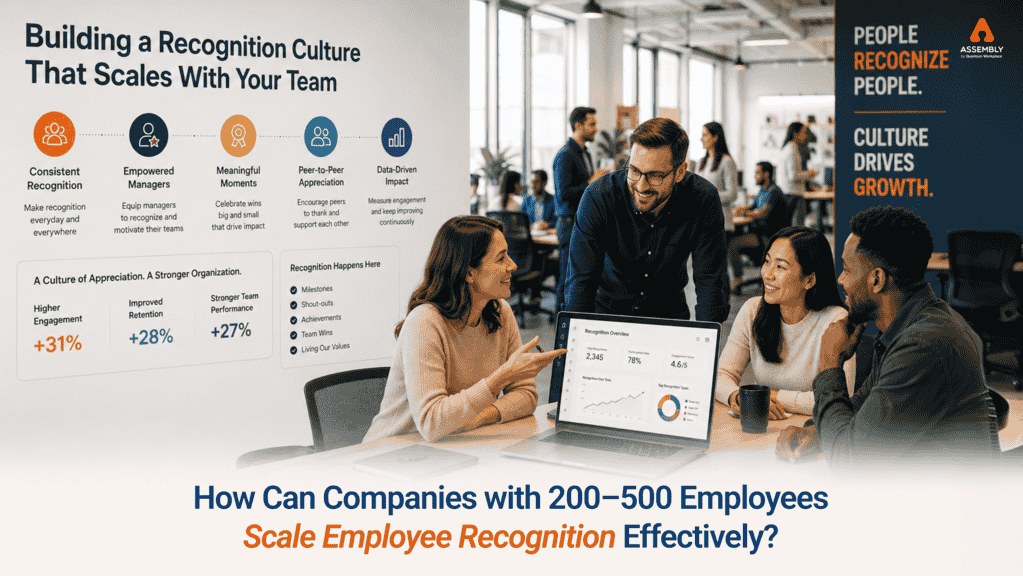
As a result, recognition becomes uneven. The 2024 State of Rewards and Recognition report found that 94% of organizations have recognition programs, but only 31% rate their program's effectiveness as high. That gap tends to appear most during this growth stage.
Some teams receive frequent appreciation because their manager makes it a priority. Others hear very little, even when employees are doing valuable work. Contributions from quieter employees, remote workers, support teams, and people working behind the scenes may be especially easy to miss.
The problem is not usually a lack of care. It is that informal recognition habits were not designed for a larger organization. Between 200 and 500 employees, companies need clearer expectations, shared processes, and better visibility to ensure appreciation reaches people consistently and fairly.
Biggest Employee Recognition Challenges for Mid-Size Companies
Most mid-size companies do not struggle with recognition because they lack good intentions. The difficulty comes from trying to maintain a personal and consistent employee experience while teams, locations, and management responsibilities are changing quickly. Between 200 and 500 employees, a few common gaps tend to appear.
Recognition Becomes Too Dependent on Managers
When there is no shared approach to recognition, each employee’s experience depends heavily on their manager. Some managers regularly acknowledge good work, while others may only give feedback during formal reviews or when something goes wrong.
This creates an uneven culture. Employees in one department may feel appreciated and supported, while equally strong performers elsewhere receive little acknowledgment. HR teams can encourage recognition, but without clear expectations and simple tools, consistency is difficult to maintain across dozens of managers. Our guide to common recognition mistakes breaks down the most frequent patterns and how to fix them.
Peer Contributions Become Less Visible
In smaller teams, employees often see one another’s work closely enough to recognize helpful contributions naturally. As the company grows, departments become more specialized and employees have less visibility into work happening outside their immediate teams.
This means cross-functional support, knowledge sharing, mentoring, and behind-the-scenes contributions may go unnoticed. When recognition only moves from managers to direct reports, companies miss much of the valuable work employees do for one another.
Remote and Distributed Employees Are Easier to Overlook
Remote and hybrid employees do not always benefit from the informal visibility available in an office. They may miss spontaneous conversations, in-person celebrations, or the casual moments when a leader notices someone’s contribution.
The same challenge can affect employees working in regional offices, on different shifts, or in frontline roles. Without a deliberate recognition process that reaches people across locations and working styles, appreciation can become concentrated among the most visible employees.
Recognition Becomes Generic
As organizations grow, recognition can become less personal. Specific appreciation may be replaced by broad phrases such as “great work” or “thanks, team.”
Although the intention is positive, generic praise does not always help employees understand what they did well or why their contribution mattered. Meaningful recognition should identify the action, connect it to an outcome, and explain its value to the team, customer, or organization. Without that context, recognition can start to feel routine rather than genuine.
Our guide to employee recognition ideas offers practical ways to keep appreciation specific and personal as your team grows.
HR Has Limited Visibility Into Recognition Gaps
At a smaller company, leaders may be able to sense whether employees are being appreciated. At 300 or 500 employees, that becomes much harder.
HR teams may not know which managers recognize employees regularly, which departments participate, or whether certain groups are consistently receiving less recognition. Without reliable data, these gaps can remain hidden until they appear in engagement surveys, manager feedback, or retention patterns. Measuring participation and distribution helps HR identify where the program is working and where additional support is needed.
A clear framework for measuring recognition ROI can help HR teams track these patterns before they become retention problems.
How to Scale Employee Recognition Effectively for Companies with 200 to 500 Employees
Scaling employee recognition does not require a complicated program. It requires a clear structure that makes recognition easy, consistent, and accessible across teams.
The goal is to create a system that supports managers, encourages peer participation, and works for employees across different roles, locations, and working styles.
Make Recognition Part of the Operating Rhythm
Recognition is more likely to happen consistently when it is built into routines employees already follow. HR teams can add a recognition moment to weekly meetings, include appreciation prompts in one-on-one meetings, and highlight employee contributions during all-hands sessions.
This keeps recognition from becoming a separate initiative that employees remember only during special campaigns. It also gives managers regular opportunities to acknowledge progress, collaboration, and everyday contributions, not just major achievements.
Open Recognition Beyond Managers
Managers should not be the only people responsible for recognizing good work. Employees often see contributions their managers miss, especially during cross-functional projects, peer support, and informal mentoring.
A peer-to-peer recognition system allows employees to acknowledge colleagues across teams and levels. This creates broader visibility and helps recognition feel like a shared part of the culture rather than a top-down process. HR should also make sure the process is simple enough for employees to participate without additional administrative work.
Connect Recognition to Company Values
Recognition becomes more useful when it reinforces the behaviors the company wants to encourage. Instead of giving general praise, employees and managers can connect different types of recognition to values such as collaboration, ownership, customer care, or innovation.
For example, instead of "Great job on the project," a manager could say, "You spotted the vendor delay two weeks before it would have hit our timeline and pulled three teams together to reroute delivery. That's exactly the kind of ownership we talk about but rarely see at this scale."
That level of detail turns recognition into something people remember.
Give Managers a Simple Recognition Playbook
Managers often recognize employees inconsistently because expectations are unclear, not because they do not care. HR can address this by providing a short and practical playbook.
The guidance might ask managers to recognize employees regularly, describe the specific contribution, explain why it mattered, and consider whether the employee prefers public or private appreciation.
Managers should also be encouraged to notice less visible work, including mentoring, emotional support, process improvements, and contributions from remote or quieter team members. A month-by-month recognition plan can help managers build this habit across the year.
Use Tools That Fit Existing Workflows
Recognition platforms are more likely to succeed when employees can use them inside the tools they already rely on. Requiring people to visit a separate platform and remember another login can reduce participation.
For companies using Slack, Microsoft Teams, or an HR platform, recognition should fit naturally into those workflows. Employees should be able to send recognition quickly, while HR still has enough structure to track participation, connect messages to company values, and maintain visibility across departments.
Automate Predictable Recognition Moments
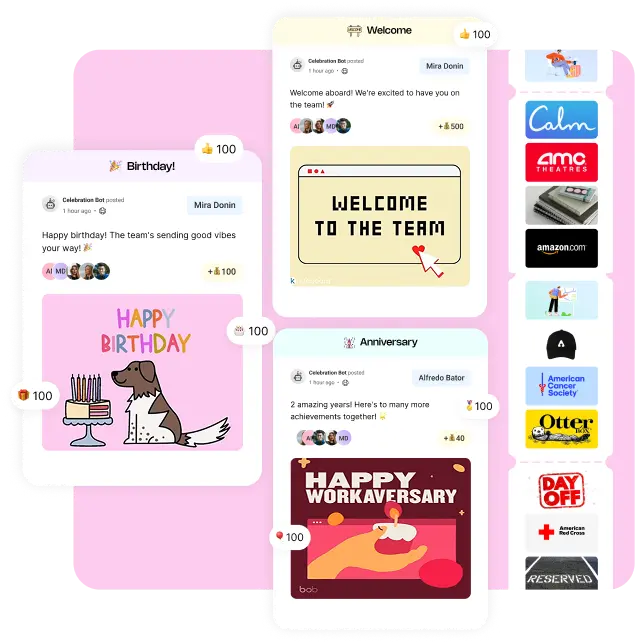
Birthdays, work anniversaries, service milestones, and onboarding achievements become harder to track manually as headcount grows. Automation helps ensure these moments are acknowledged consistently without relying on managers or HR teams to remember every date.
However, automation should support personal recognition rather than replace it. A scheduled anniversary message can provide the reminder, but managers and teammates should still add specific comments about the employee’s impact. Companies should also respect individual preferences, since not everyone wants birthdays or milestones celebrated publicly.
Track Participation and Address Recognition Gaps
At 200 to 500 employees, HR needs more than anecdotal feedback to understand whether recognition is working. Track how often recognition is given, which teams participate, who receives it, and whether certain departments, locations, or employee groups are being overlooked.
The goal is not to create a leaderboard or pressure employees to send a fixed number of messages. Instead, use the data to identify patterns. HR can coach managers with low participation, investigate gaps between teams, and compare recognition trends with engagement and retention feedback. Regular reviews help the program remain fair and useful as the company continues to grow.
How Much Should a Company With 200 to 500 Employees Spend on Employee Recognition?
There is no single recognition budget that works for every company.
Research from Bersin & Associates found that companies invest roughly 1% of payroll in recognition on average, but many employees don't even know their programs exist, which highlights that how the budget is used matters more than the amount. The right amount depends on factors such as headcount, average salary, available resources, reward preferences, and whether the program includes software, points, gifts, events, or non-monetary recognition.
Many companies start with a per-employee annual budget because it is easier to plan and scale. For example, a company may set aside a fixed amount for each employee and then divide it across peer recognition, manager awards, service milestones, and team celebrations. Others calculate recognition spending as a percentage of payroll.
The important thing is to separate the different parts of the budget. Platform fees, reward funding, milestone gifts, and administrative costs should not all be treated as the same expense. This gives HR a clearer view of how much is being spent on the program itself and how much employees can actually receive.
Companies should also avoid spending most of the budget on a few large annual awards.
Smaller, more frequent recognition tends to reach more employees and helps appreciation become part of everyday work. A clear recognition budget plan can help HR teams structure spending across these categories without overcomplicating the process.
Not every form of recognition needs a financial reward. Specific praise, public acknowledgment, handwritten notes, development opportunities, and additional flexibility can all be meaningful. The budget should support recognition, not become the only reason employees participate.
How Assembly (by Quantum Workplace) Scales Recognition for Companies at 200 to 500 Employees
Assembly (by Quantum Workplace) helps companies at 200 to 500 employees build recognition into the way they work, not as a separate initiative but as part of how teams already communicate.
Employees can recognize peers, connect messages to company values, and make contributions visible across the organization through a shared recognition feed. This helps reduce overreliance on managers and gives recognition to work that might otherwise go unnoticed, including collaboration, mentoring, and cross-functional support.
Assembly (by Quantum Workplace) also integrates with tools such as Slack and Microsoft Teams, allowing employees to participate without leaving the platforms they already use. That makes recognition easier to give in the moment and helps improve adoption.
For predictable occasions, Assembly (by Quantum Workplace) can automate birthdays, work anniversaries, and service milestones. HR teams spend less time tracking dates manually, while managers and colleagues can still add personal messages to keep recognition meaningful.
Assembly (by Quantum Workplace)'s Manager 1:1 tool also helps managers keep recognition connected to ongoing development conversations, with shared agendas and action tracking that prevent good work from being acknowledged once and then forgotten.
Recognition analytics and AI-powered insights give HR a clearer view of participation across teams and locations. These insights can help identify overlooked groups, inconsistent manager participation, and areas where the program may need more support.
Through its connection with Quantum Workplace, Assembly (by Quantum Workplace) can also help organizations understand how recognition fits into broader engagement, performance, and retention efforts.
Final Words
The companies that get recognition right at 200 to 500 employees aren't the ones with the biggest budgets or the fanciest platforms. They're the ones who build simple habits into how work already happens and pay attention to who's being seen and who isn't.
Start with one change this week. Give every manager the same expectation. Open recognition to peers. Build it into the tools your teams already use. And track whether it's reaching everyone, not just the loudest contributors.
Frequently Asked Questions
Why does employee recognition get harder as companies grow?
As companies grow, leaders and managers have less visibility into every employee's work. Teams become more specialised, employees work across different locations, and informal recognition becomes less reliable. Without a shared system, appreciation may depend too heavily on individual managers, causing some teams and contributions to receive more attention than others.
What is the right budget for an employee recognition programme at 200–500 employees?
The right budget depends on the company's resources, workforce, and programme goals. Companies should account separately for platform costs, employee rewards, milestone celebrations, and team-level recognition. The most important factor is sustainability. A modest budget used consistently throughout the year is generally more effective than a large budget concentrated around a few annual awards.
What is the best employee recognition software for companies at 200–500 employees?
The best software is one employees can use easily within their existing workflows. Look for peer-to-peer recognition, company-value alignment, automated milestones, Slack or Microsoft Teams integrations, reward options, and participation analytics. The platform should also help HR identify recognition gaps without creating significant administrative work.
How do you measure whether a recognition programme is actually working?
Track participation rates, recognition frequency, and how recognition is distributed across teams, locations, and employee groups. HR teams should also use employee surveys to measure whether people feel valued and compare recognition trends with engagement and retention data. High activity alone is not enough if recognition remains generic or concentrated among a small group.
Can a company run an effective recognition programme without a large budget?
Yes. Meaningful recognition does not always require financial rewards. Specific praise, peer shout-outs, handwritten notes, development opportunities, and additional flexibility can all make employees feel valued. A limited budget can then support selected rewards, milestones, or special achievements without making every recognition moment dependent on points or gifts. For more on this, see our guide to monetary vs non-monetary rewards.
How can AI help companies scale employee recognition?
AI can help analyse participation patterns, identify teams receiving less recognition, suggest prompts for managers, and summarise recognition trends for HR. It can also help employees improve the clarity of a message. However, recognition should still include personal details about what the employee did and why it mattered.
Can AI make employee recognition feel impersonal?
It can if companies use automated, generic messages without adding human context. AI should support recognition rather than create it entirely. Managers and employees can use AI for reminders or wording suggestions, but the final message should reflect a real contribution, a specific outcome, and the relationship between the people involved.
class SampleComponent extends React.Component {
  // using the experimental public class field syntax below. We can also attach
  // the contextType to the current class
  static contextType = ColorContext;
  render() {
    return <Button color={this.color} />
  }
}
At 50 employees, recognition often happens naturally. Leaders know most people by name, managers see good work as it happens, and a quick message in Slack or a mention during a team meeting can make someone feel genuinely appreciated.
That stops working somewhere between 200 and 500 employees. Teams grow faster than relationships can keep up. Managers are juggling more people, more priorities, and less time. And the employees doing great work in less visible roles? They start wondering if anyone notices.
This does not mean the company cares less about its people. It means the informal habits that worked at a smaller size are no longer enough.
To keep recognition meaningful during this stage of growth, companies need a more consistent and inclusive approach. In this guide, we explain why recognition often breaks down between 200 and 500 employees, the challenges HR teams are likely to face, and how to build a program that scales without making appreciation feel forced or impersonal.
Why Does Employee Recognition Break Down Between 200 and 500 Employees?
Employee recognition does not become less important as a company grows. It becomes harder to deliver consistently.
In a smaller organization, recognition often depends on proximity. Leaders know who handled a difficult client, supported a colleague, or stayed late to solve a problem. Good work is easier to see, and appreciation can happen naturally through a quick message, a team meeting, or an informal conversation.
That visibility starts to shrink as the company moves beyond 200 employees. New departments form, management layers increase, and employees collaborate across locations and time zones. Senior leaders are further removed from day-to-day work, while managers have larger teams and more competing responsibilities.
As a result, recognition becomes uneven. The 2024 State of Rewards and Recognition report found that 94% of organizations have recognition programs, but only 31% rate their program's effectiveness as high. That gap tends to appear most during this growth stage.
Some teams receive frequent appreciation because their manager makes it a priority. Others hear very little, even when employees are doing valuable work. Contributions from quieter employees, remote workers, support teams, and people working behind the scenes may be especially easy to miss.
The problem is not usually a lack of care. It is that informal recognition habits were not designed for a larger organization. Between 200 and 500 employees, companies need clearer expectations, shared processes, and better visibility to ensure appreciation reaches people consistently and fairly.
Biggest Employee Recognition Challenges for Mid-Size Companies
Most mid-size companies do not struggle with recognition because they lack good intentions. The difficulty comes from trying to maintain a personal and consistent employee experience while teams, locations, and management responsibilities are changing quickly. Between 200 and 500 employees, a few common gaps tend to appear.
Recognition Becomes Too Dependent on Managers
When there is no shared approach to recognition, each employee’s experience depends heavily on their manager. Some managers regularly acknowledge good work, while others may only give feedback during formal reviews or when something goes wrong.
This creates an uneven culture. Employees in one department may feel appreciated and supported, while equally strong performers elsewhere receive little acknowledgment. HR teams can encourage recognition, but without clear expectations and simple tools, consistency is difficult to maintain across dozens of managers. Our guide to common recognition mistakes breaks down the most frequent patterns and how to fix them.
Peer Contributions Become Less Visible
In smaller teams, employees often see one another’s work closely enough to recognize helpful contributions naturally. As the company grows, departments become more specialized and employees have less visibility into work happening outside their immediate teams.
This means cross-functional support, knowledge sharing, mentoring, and behind-the-scenes contributions may go unnoticed. When recognition only moves from managers to direct reports, companies miss much of the valuable work employees do for one another.
Remote and Distributed Employees Are Easier to Overlook
Remote and hybrid employees do not always benefit from the informal visibility available in an office. They may miss spontaneous conversations, in-person celebrations, or the casual moments when a leader notices someone’s contribution.
The same challenge can affect employees working in regional offices, on different shifts, or in frontline roles. Without a deliberate recognition process that reaches people across locations and working styles, appreciation can become concentrated among the most visible employees.
Recognition Becomes Generic
As organizations grow, recognition can become less personal. Specific appreciation may be replaced by broad phrases such as “great work” or “thanks, team.”
Although the intention is positive, generic praise does not always help employees understand what they did well or why their contribution mattered. Meaningful recognition should identify the action, connect it to an outcome, and explain its value to the team, customer, or organization. Without that context, recognition can start to feel routine rather than genuine.
Our guide to employee recognition ideas offers practical ways to keep appreciation specific and personal as your team grows.
HR Has Limited Visibility Into Recognition Gaps
At a smaller company, leaders may be able to sense whether employees are being appreciated. At 300 or 500 employees, that becomes much harder.
HR teams may not know which managers recognize employees regularly, which departments participate, or whether certain groups are consistently receiving less recognition. Without reliable data, these gaps can remain hidden until they appear in engagement surveys, manager feedback, or retention patterns. Measuring participation and distribution helps HR identify where the program is working and where additional support is needed.
A clear framework for measuring recognition ROI can help HR teams track these patterns before they become retention problems.
How to Scale Employee Recognition Effectively for Companies with 200 to 500 Employees
Scaling employee recognition does not require a complicated program. It requires a clear structure that makes recognition easy, consistent, and accessible across teams.
The goal is to create a system that supports managers, encourages peer participation, and works for employees across different roles, locations, and working styles.
Make Recognition Part of the Operating Rhythm
Recognition is more likely to happen consistently when it is built into routines employees already follow. HR teams can add a recognition moment to weekly meetings, include appreciation prompts in one-on-one meetings, and highlight employee contributions during all-hands sessions.
This keeps recognition from becoming a separate initiative that employees remember only during special campaigns. It also gives managers regular opportunities to acknowledge progress, collaboration, and everyday contributions, not just major achievements.
Open Recognition Beyond Managers
Managers should not be the only people responsible for recognizing good work. Employees often see contributions their managers miss, especially during cross-functional projects, peer support, and informal mentoring.
A peer-to-peer recognition system allows employees to acknowledge colleagues across teams and levels. This creates broader visibility and helps recognition feel like a shared part of the culture rather than a top-down process. HR should also make sure the process is simple enough for employees to participate without additional administrative work.
Connect Recognition to Company Values
Recognition becomes more useful when it reinforces the behaviors the company wants to encourage. Instead of giving general praise, employees and managers can connect different types of recognition to values such as collaboration, ownership, customer care, or innovation.
For example, instead of "Great job on the project," a manager could say, "You spotted the vendor delay two weeks before it would have hit our timeline and pulled three teams together to reroute delivery. That's exactly the kind of ownership we talk about but rarely see at this scale."
That level of detail turns recognition into something people remember.
Give Managers a Simple Recognition Playbook
Managers often recognize employees inconsistently because expectations are unclear, not because they do not care. HR can address this by providing a short and practical playbook.
The guidance might ask managers to recognize employees regularly, describe the specific contribution, explain why it mattered, and consider whether the employee prefers public or private appreciation.
Managers should also be encouraged to notice less visible work, including mentoring, emotional support, process improvements, and contributions from remote or quieter team members. A month-by-month recognition plan can help managers build this habit across the year.
Use Tools That Fit Existing Workflows
Recognition platforms are more likely to succeed when employees can use them inside the tools they already rely on. Requiring people to visit a separate platform and remember another login can reduce participation.
For companies using Slack, Microsoft Teams, or an HR platform, recognition should fit naturally into those workflows. Employees should be able to send recognition quickly, while HR still has enough structure to track participation, connect messages to company values, and maintain visibility across departments.
Automate Predictable Recognition Moments
Birthdays, work anniversaries, service milestones, and onboarding achievements become harder to track manually as headcount grows. Automation helps ensure these moments are acknowledged consistently without relying on managers or HR teams to remember every date.
However, automation should support personal recognition rather than replace it. A scheduled anniversary message can provide the reminder, but managers and teammates should still add specific comments about the employee’s impact. Companies should also respect individual preferences, since not everyone wants birthdays or milestones celebrated publicly.
Track Participation and Address Recognition Gaps
At 200 to 500 employees, HR needs more than anecdotal feedback to understand whether recognition is working. Track how often recognition is given, which teams participate, who receives it, and whether certain departments, locations, or employee groups are being overlooked.
The goal is not to create a leaderboard or pressure employees to send a fixed number of messages. Instead, use the data to identify patterns. HR can coach managers with low participation, investigate gaps between teams, and compare recognition trends with engagement and retention feedback. Regular reviews help the program remain fair and useful as the company continues to grow.
How Much Should a Company With 200 to 500 Employees Spend on Employee Recognition?
There is no single recognition budget that works for every company.
Research from Bersin & Associates found that companies invest roughly 1% of payroll in recognition on average, but many employees don't even know their programs exist, which highlights that how the budget is used matters more than the amount. The right amount depends on factors such as headcount, average salary, available resources, reward preferences, and whether the program includes software, points, gifts, events, or non-monetary recognition.
Many companies start with a per-employee annual budget because it is easier to plan and scale. For example, a company may set aside a fixed amount for each employee and then divide it across peer recognition, manager awards, service milestones, and team celebrations. Others calculate recognition spending as a percentage of payroll.
The important thing is to separate the different parts of the budget. Platform fees, reward funding, milestone gifts, and administrative costs should not all be treated as the same expense. This gives HR a clearer view of how much is being spent on the program itself and how much employees can actually receive.
Companies should also avoid spending most of the budget on a few large annual awards.
Smaller, more frequent recognition tends to reach more employees and helps appreciation become part of everyday work. A clear recognition budget plan can help HR teams structure spending across these categories without overcomplicating the process.
Not every form of recognition needs a financial reward. Specific praise, public acknowledgment, handwritten notes, development opportunities, and additional flexibility can all be meaningful. The budget should support recognition, not become the only reason employees participate.
How Assembly (by Quantum Workplace) Scales Recognition for Companies at 200 to 500 Employees
Assembly (by Quantum Workplace) helps companies at 200 to 500 employees build recognition into the way they work, not as a separate initiative but as part of how teams already communicate.
Employees can recognize peers, connect messages to company values, and make contributions visible across the organization through a shared recognition feed. This helps reduce overreliance on managers and gives recognition to work that might otherwise go unnoticed, including collaboration, mentoring, and cross-functional support.
Assembly (by Quantum Workplace) also integrates with tools such as Slack and Microsoft Teams, allowing employees to participate without leaving the platforms they already use. That makes recognition easier to give in the moment and helps improve adoption.
For predictable occasions, Assembly (by Quantum Workplace) can automate birthdays, work anniversaries, and service milestones. HR teams spend less time tracking dates manually, while managers and colleagues can still add personal messages to keep recognition meaningful.
Assembly (by Quantum Workplace)'s Manager 1:1 tool also helps managers keep recognition connected to ongoing development conversations, with shared agendas and action tracking that prevent good work from being acknowledged once and then forgotten.
Recognition analytics and AI-powered insights give HR a clearer view of participation across teams and locations. These insights can help identify overlooked groups, inconsistent manager participation, and areas where the program may need more support.
Through its connection with Quantum Workplace, Assembly (by Quantum Workplace) can also help organizations understand how recognition fits into broader engagement, performance, and retention efforts.
Final Words
The companies that get recognition right at 200 to 500 employees aren't the ones with the biggest budgets or the fanciest platforms. They're the ones who build simple habits into how work already happens and pay attention to who's being seen and who isn't.
Start with one change this week. Give every manager the same expectation. Open recognition to peers. Build it into the tools your teams already use. And track whether it's reaching everyone, not just the loudest contributors.
Frequently Asked Questions
Why does employee recognition get harder as companies grow?
As companies grow, leaders and managers have less visibility into every employee's work. Teams become more specialised, employees work across different locations, and informal recognition becomes less reliable. Without a shared system, appreciation may depend too heavily on individual managers, causing some teams and contributions to receive more attention than others.
What is the right budget for an employee recognition programme at 200–500 employees?
The right budget depends on the company's resources, workforce, and programme goals. Companies should account separately for platform costs, employee rewards, milestone celebrations, and team-level recognition. The most important factor is sustainability. A modest budget used consistently throughout the year is generally more effective than a large budget concentrated around a few annual awards.
What is the best employee recognition software for companies at 200–500 employees?
The best software is one employees can use easily within their existing workflows. Look for peer-to-peer recognition, company-value alignment, automated milestones, Slack or Microsoft Teams integrations, reward options, and participation analytics. The platform should also help HR identify recognition gaps without creating significant administrative work.
How do you measure whether a recognition programme is actually working?
Track participation rates, recognition frequency, and how recognition is distributed across teams, locations, and employee groups. HR teams should also use employee surveys to measure whether people feel valued and compare recognition trends with engagement and retention data. High activity alone is not enough if recognition remains generic or concentrated among a small group.
Can a company run an effective recognition programme without a large budget?
Yes. Meaningful recognition does not always require financial rewards. Specific praise, peer shout-outs, handwritten notes, development opportunities, and additional flexibility can all make employees feel valued. A limited budget can then support selected rewards, milestones, or special achievements without making every recognition moment dependent on points or gifts. For more on this, see our guide to monetary vs non-monetary rewards.
How can AI help companies scale employee recognition?
AI can help analyse participation patterns, identify teams receiving less recognition, suggest prompts for managers, and summarise recognition trends for HR. It can also help employees improve the clarity of a message. However, recognition should still include personal details about what the employee did and why it mattered.
Can AI make employee recognition feel impersonal?
It can if companies use automated, generic messages without adding human context. AI should support recognition rather than create it entirely. Managers and employees can use AI for reminders or wording suggestions, but the final message should reflect a real contribution, a specific outcome, and the relationship between the people involved.
Browse our Free Employee Recognition Guide
Get the foundational knowledge on creating an employee recognition program that boosts employee engagement and helps them feel valued.






.png)