Every HR leader wants to build a workplace where people feel valued, supported, and excited about what comes next.
That’s why trends like quiet quitting and job hugging deserve attention. They’re not just workplace buzzwords. They’re signals that employees may need more recognition, clearer growth paths, stronger manager support, or greater confidence in their future at work.
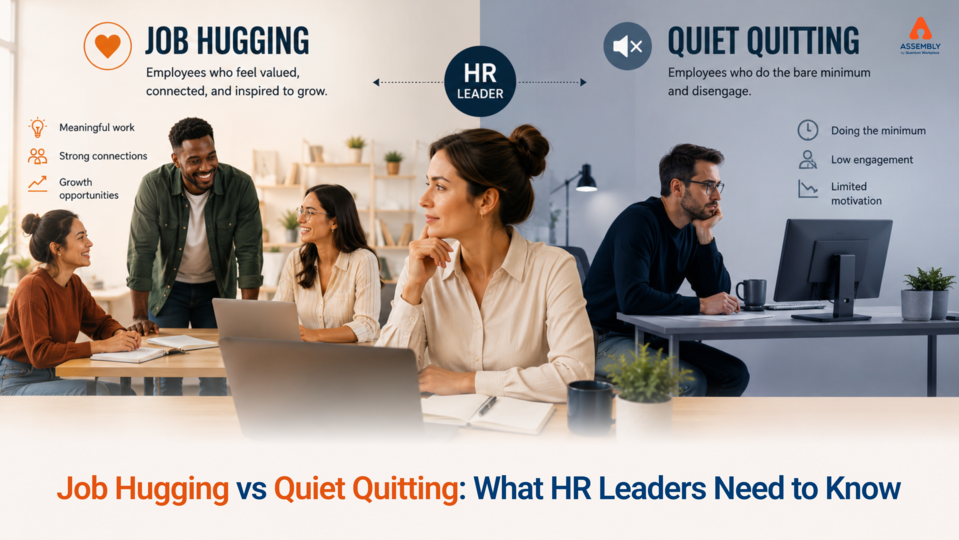
Quiet quitting happens when employees continue doing their jobs but stop going beyond the basics. Job hugging happens when employees stay in roles longer than they normally would, not because they’re fully engaged, but because staying feels safer than making a move.
At first, these trends can look very different. Quiet quitting may show up as lower initiative or reduced participation. Job hugging may look like strong retention. But both can tell HR leaders something important about the employee experience.
The opportunity is to catch these signals early and respond with care. When employees feel seen, heard, and connected to their growth, they’re more likely to contribute with energy, stay for the right reasons, and see a future with the organization.
In this guide, we’ll break down job hugging vs quiet quitting, the signs HR leaders should watch for, and how to prevent quiet quitting while creating a workplace where employees genuinely want to grow.
What Is Quiet Quitting at Work?
Quiet quitting does not mean someone actually quits their job. It means they’ve mentally stepped back while still showing up. They complete their core tasks, but they stop going the extra mile. No volunteering for new projects. No raising their hand in meetings. Just enough effort to meet expectations and nothing more.
A 2025 survey of 1,000 U.S. employees found that 54% experience persistent workplace unhappiness, ranging from occasionally to constantly. The same survey found that employees who frequently feel this way are 68% less likely to feel valued and recognized at work compared to those who do not.
So why does quiet quitting happen?
It usually comes down to a few things: burnout from carrying heavy workloads without enough support, feeling like contributions go unnoticed, poor communication from leadership, and not seeing a clear path for growth.
Quiet quitting isn’t about people being lazy. It’s often a sign that an employee once cared deeply, but stopped feeling like that care was returned. Research from Bowling Green State University found that when employees believe their organization has kept its promises around things like autonomy, skill variety, and fairness, they’re far less likely to disengage.
The takeaway is encouraging: when we get the basics right, people naturally want to do their best work.
What Is Job Hugging?
Job hugging is the opposite of pulling back. Instead of reducing effort or stepping away, employees hold tightly to their current roles because stability, familiarity, and security feel especially important. They might still care about their work and their team, but they don’t feel confident enough to explore a new opportunity, role change, or a career move.
Monster.com’s 2025 Job Hugging Report found that 48% of U.S. workers are staying in their roles longer than they normally would, driven by a need for comfort, security, or stability. By February 2026, that number had climbed to 57%, according to another survey of more than 2,100 workers.
So why do employees hug their jobs?
Economic uncertainty is a major factor. Many workers are staying put because the job market feels unpredictable, open roles feel harder to find, or making a move feels too risky. The survey mentioned earlier also found that 70% of job huggers are concerned about AI affecting their job security in the next six months.
When employees see fewer opportunities, more uncertainty, and constant change around them, staying in place can feel like the safest option, even when the role itself no longer feels fulfilling.
MetLife's 2026 Employee Benefit Trends Study adds some important context to this discussion. While 77% of employees say they plan to stay with their current employer, only 18% are staying because they genuinely want to. The rest are staying because they feel they need to.
That gap is worth paying attention to. For HR leaders, job hugging is a reminder that retention only tells part of the story. The real goal is to build a workplace where employees feel secure, supported, and motivated to grow.
Job Hugging vs Quiet Quitting: The Key Differences
Now that we’ve covered what each trend looks like on its own, it helps to put them side by side. Quiet quitting and job hugging can both point to disengagement, but they show up in very different ways. As an HR leader, understanding the difference helps you respond with the right kind of support.
A quiet quitter pulls back. They’re still doing the job, but they may have stopped stretching beyond the basics. A job hugger holds on tighter. They may be staying in the organization, but they may also feel hesitant to explore a new role, take a bigger career step, or make a change.
Here is how the two compare across the areas that matter most to HR leaders.
Key Differences
Quiet Quitting
Job Hugging
What it looks like
Doing only what is required and stepping back from extra effort
Staying in a role longer than they normally would
What's driving it
Burnout, feeling overlooked, weak manager relationships, or limited growth
A desire for stability, economic uncertainty, AI-related job security concerns, or concern about external opportunities
How it shows up at work
Lower initiative, less collaboration, fewer new ideas, or reduced participation
Surface-level stability, but slower growth, fewer stretch moves, and lower internal mobility
What the employee is thinking
"I will do my job, but I do not feel motivated to go above and beyond right now."
"Staying where I am feels safer than making a change right now."
What it costs the organisation
Productivity loss, weaker team energy, and declining engagement
Workforce stagnation, blocked internal mobility, and hidden disengagement
What happens next
May leave when a better opportunity comes along
Unlikely to leave, but unlikely to grow either
The important thing for HR leaders is to recognize that neither one is a character flaw. Both are responses to real workplace gaps, and both give us a chance to step in with better recognition, clearer communication, stronger manager support, and more visible growth paths.
The Warning Signs HR Leaders Are Missing
The clearest warning signs aren’t always dramatic. They often show up as small shifts in energy, participation, growth, and confidence. For HR leaders, the goal is not to label employees as quiet quitters or job huggers, but to notice patterns early and understand what kind of support may be missing.
Signs of Quiet Quitting in the Job
Quiet quitting does not usually happen overnight. It builds gradually, and the early signs can be easy to miss when teams are busy and managers are focused on day-to-day priorities.
One sign is a change in participation. An employee who used to share ideas in meetings may become quieter. Someone who once volunteered for new projects, helped onboard teammates, or contributed beyond their core role may start stepping back.
You may also notice a shift in the quality of their work. Not only in how much they produce, but in how much thought, creativity, or ownership they bring to it. Another signal is when someone who used to stay naturally engaged during busy periods now logs off the moment their shift ends every day.
Career conversations can also tell you a lot. If an employee who once asked about growth, development, or future opportunities has stopped bringing it up, that may not be contentment. It may be a sign that they have stopped expecting things to improve.
The earlier you notice these changes, the sooner you can start a thoughtful conversation and understand what support the employee needs.
Signs of Job Hugging
Job hugging can be harder to spot because, on the surface, everything may look fine. The employee shows up, completes their work, and does not create obvious issues.
But when you look closer, certain patterns may appear. They avoid stretch assignments or lateral moves, even when good opportunities come up. They seem hesitant during career growth conversations or uncomfortable when new responsibilities are discussed. They’re doing the same work in the same way they were a year ago, with little visible development.
Job huggers often play it safe. They may avoid questioning existing processes, rarely share new ideas, and hesitate to push for change. They blend in, which makes the trend easy to overlook. But low disruption is not always the same as strong engagement.
The key question for HR leaders is this: is this employee staying because they feel engaged and excited to grow, or because staying feels safer than change? That distinction matters because it changes how we support them.
Why Is Job Hugging the New Quiet Quitting?
When quiet quitting entered the workplace conversation in 2022, it challenged a common assumption: that employees who care will always go above and beyond. The reality was more complex. Many people were pulling back not because they lacked motivation, but because they felt burned out, overlooked, or unsupported.
Job hugging is raising a similar concern, but from the other side.
Monster's 2025 report found that 63% of workers expect job hugging to keep growing in 2026. And according to the ResumeBuilder.com survey, 71% of job huggers say they plan to continue holding on for at least six more months, with no intention of making a move.
Both trends come from similar workplace gaps. Quiet quitting shows up when employees feel undervalued, burned out, or unsupported. Job hugging can show up when employees feel uncertain, stuck, or cautious about what comes next. The reactions look different, but the message is similar: employees need stronger reasons to feel confident, connected, and supported at work.
That’s why job hugging deserves attention. Quiet quitting often leaves visible clues. Output drops. Collaboration slows. Energy fades. Job hugging is easier to miss because it hides behind metrics organizations usually celebrate. Retention looks strong. Headcount is stable. People are staying.
But if employees are staying because change feels risky, not because they feel excited about their future, that stability may not last.
For HR leaders, this is an opportunity. By looking beyond surface-level retention, they can start better conversations and build workplaces where people stay because they genuinely want to grow.
Why Low Turnover Is Not the Win It Looks Like
When turnover is low, it is natural to feel encouraged. It means people are staying. But if many employees are staying because they feel stuck rather than motivated, the numbers can give HR leaders an incomplete picture.
McKinsey research found that employee disengagement and attrition can cost a median-size S&P 500 company between $228 million and $355 million a year in lost productivity. Over five years, that adds up to at least $1.1 billion in lost value per company. The same research also found that more than half of all employees report being relatively unproductive at work.
When too many people stay without growing, progress slows. Internal mobility drops because fewer employees pursue new roles or projects. Innovation stalls because people play it safe instead of experimenting. Succession planning gets harder because fewer employees are building the skills needed for bigger responsibilities.
Low turnover without genuine engagement is really a talent bottleneck. People are not leaving, but they are not moving forward either. And when the job market opens up again, employees who stayed out of caution may be the first to explore what else is available.
That is why low turnover should be seen as a window, not a finish line. Your people are still here. There is still time to reconnect, understand what they need, and turn “staying because I have to” into “staying because I want to.”
What HR Leaders Should Do Right Now
If you are wondering how to prevent quiet quitting and job hugging, start with one core goal. Create a workplace where employees feel valued, supported, and confident about their future. Both trends grow when people feel overlooked, disconnected, or unsure about what comes next. These five actions address those root causes directly:
Run Engagement Surveys That Lead to Real Action
Collecting feedback matters, but acting on it matters more. Use engagement surveys to track how teams are feeling over time, spot patterns across departments, and identify where specific groups need more support.
When employees see their input lead to real change, trust grows. That trust helps prevent quiet quitting because people feel heard instead of ignored.
Build a Culture of Consistent Recognition
The 2026 Global Culture Report found that 79% of employees who voluntarily left their jobs identified lack of recognition as a primary factor. That tells us something important: people do not just want fair pay. They want to feel seen.
Recognition works best when it is regular and specific. Peer-to-peer shoutouts, value-based appreciation, and timely acknowledgment of everyday contributions help employees feel that their work genuinely matters.
Create Visible Growth Opportunities
When employees cannot see a path forward, they may either pull back or stay frozen in place. HR leaders can prevent this by offering lateral stretch assignments, mentorship programs, skill-building opportunities, and clearer internal career paths.
Growth does not always mean a promotion. It can mean leading a project, learning a new skill, or contributing to a team outside their usual scope. What matters is that employees can see movement and possibility.
Strengthen the Manager-Employee Relationship
Managers shape the daily employee experience more than any policy or program. SHRM research found that a positive employee experience makes workers 68% less likely to consider leaving.
Weekly check-ins, honest two-way feedback, and genuine interest in an employee’s goals can help managers spot disengagement early. When managers listen well and follow through, employees are more likely to stay engaged.
Communicate Transparently About the Future
Uncertainty fuels both quiet quitting and job hugging. When employees do not know where the company is heading or where they fit in, they may start to disconnect or play it safe.
Transparent communication helps reduce that uncertainty. Share regular updates about business health, strategy, team priorities, and upcoming opportunities. You do not need to have every answer. You just need to be clear, honest, and consistent enough for employees to feel included in the bigger picture.
How Assembly Helps HR Leaders Get Ahead of Both Trends
Quiet quitting and job hugging are easier to address when HR leaders can spot disengagement early and give managers simple ways to respond.
Assembly helps by making recognition, feedback, and engagement part of everyday work. Peer-to-peer recognition through Slack, Microsoft Teams, and existing HR workflows helps employees feel seen before they start pulling back. Each recognition moment can also tie back to company values, reinforcing the culture leaders want to build.
Assembly’s engagement analytics give HR leaders visibility into where participation is strong, where recognition may be dropping, and which teams may need more support. These signals can help identify early signs of quiet quitting or fear-driven retention before they become bigger problems.
For managers, Assembly’s AI-powered recognition tools make it easier to send thoughtful appreciation consistently. Built-in 1:1 tools also help managers keep growth conversations on track, which is especially important for employees who may be staying but no longer moving forward.
When recognition, feedback, and development conversations happen consistently, employees are more likely to feel valued, supported, and confident about their future at work.
Final Words
HR leaders do this work because they care about people. And right now, trends like quiet quitting and job hugging are telling us something important: employees need more recognition, more growth, and more honest conversations about where they fit into the future of work.
These trends are not problems to fear. They are signals to act on. And the fact that employees are still here means organizations still have a chance to reconnect, listen, and make the employee experience stronger.
The answer does not have to be a complete overhaul. Start with one meaningful step. Run an engagement survey and follow through on what you hear. Build recognition into the weekly rhythm. Help managers check in more consistently. Communicate clearly about the company’s direction so employees are not left guessing.
Small, steady changes add up. When employees feel valued, heard, and connected to their future, the difference shows up in their energy, ideas, collaboration, and decision to stay for the right reasons.
The organizations that invest in their people now will be better positioned to keep their best talent when the market shifts. More importantly, they will build workplaces where people do not just stay. They grow, contribute, and thrive.
FAQs
What is the difference between quiet quitting and job hugging?
Quiet quitting is when employees do only what's required and stop going beyond their basic responsibilities. Job hugging is when employees stay in their roles longer than they'd choose to, driven by fear and economic uncertainty rather than genuine satisfaction. Both signal disengagement, but quiet quitting reduces effort while job hugging reduces ambition and growth.
Is quiet quitting still a problem in 2026?
Yes. A 2025 TalentLMS survey found that 54% of employees experience persistent workplace unhappiness. The causes behind quiet quitting, including burnout, poor management, and lack of recognition, have not gone away. Many employees move in and out of quiet quitting depending on workload, how supported they feel, and whether they see a future with their organisation.
How can HR leaders prevent quiet quitting?
Build consistent recognition into everyday workflows, create visible growth opportunities, and strengthen manager-employee relationships. O.C. Tanner research found that 79% of employees who left their jobs cited lack of appreciation as a key reason. Regular check-ins, transparent communication, and genuine career development go a long way.
Why is job hugging a concern for organisations?
Job hugging creates a false sense of stability. When employees stay because they feel stuck rather than excited, engagement drops, innovation slows, and internal mobility stalls. Monster's 2025 report found that 75% of workers plan to stay in their current roles for at least two more years, but many of them are staying out of caution, not commitment.
What are the warning signs of job hugging in the workplace?
Look for employees who avoid stretch assignments, resist career development conversations, and show little skill growth over time. Job huggers tend to play it safe and rarely contribute new ideas or challenge existing processes. Low turnover paired with flat engagement scores across teams is a strong signal that job hugging may be widespread.
class SampleComponent extends React.Component {
  // using the experimental public class field syntax below. We can also attach
  // the contextType to the current class
  static contextType = ColorContext;
  render() {
    return <Button color={this.color} />
  }
}
Every HR leader wants to build a workplace where people feel valued, supported, and excited about what comes next.
That’s why trends like quiet quitting and job hugging deserve attention. They’re not just workplace buzzwords. They’re signals that employees may need more recognition, clearer growth paths, stronger manager support, or greater confidence in their future at work.
Quiet quitting happens when employees continue doing their jobs but stop going beyond the basics. Job hugging happens when employees stay in roles longer than they normally would, not because they’re fully engaged, but because staying feels safer than making a move.
At first, these trends can look very different. Quiet quitting may show up as lower initiative or reduced participation. Job hugging may look like strong retention. But both can tell HR leaders something important about the employee experience.
The opportunity is to catch these signals early and respond with care. When employees feel seen, heard, and connected to their growth, they’re more likely to contribute with energy, stay for the right reasons, and see a future with the organization.
In this guide, we’ll break down job hugging vs quiet quitting, the signs HR leaders should watch for, and how to prevent quiet quitting while creating a workplace where employees genuinely want to grow.
What Is Quiet Quitting at Work?
Quiet quitting does not mean someone actually quits their job. It means they’ve mentally stepped back while still showing up. They complete their core tasks, but they stop going the extra mile. No volunteering for new projects. No raising their hand in meetings. Just enough effort to meet expectations and nothing more.
A 2025 survey of 1,000 U.S. employees found that 54% experience persistent workplace unhappiness, ranging from occasionally to constantly. The same survey found that employees who frequently feel this way are 68% less likely to feel valued and recognized at work compared to those who do not.
So why does quiet quitting happen?
It usually comes down to a few things: burnout from carrying heavy workloads without enough support, feeling like contributions go unnoticed, poor communication from leadership, and not seeing a clear path for growth.
Quiet quitting isn’t about people being lazy. It’s often a sign that an employee once cared deeply, but stopped feeling like that care was returned. Research from Bowling Green State University found that when employees believe their organization has kept its promises around things like autonomy, skill variety, and fairness, they’re far less likely to disengage.
The takeaway is encouraging: when we get the basics right, people naturally want to do their best work.
What Is Job Hugging?
Job hugging is the opposite of pulling back. Instead of reducing effort or stepping away, employees hold tightly to their current roles because stability, familiarity, and security feel especially important. They might still care about their work and their team, but they don’t feel confident enough to explore a new opportunity, role change, or a career move.
Monster.com’s 2025 Job Hugging Report found that 48% of U.S. workers are staying in their roles longer than they normally would, driven by a need for comfort, security, or stability. By February 2026, that number had climbed to 57%, according to another survey of more than 2,100 workers.
So why do employees hug their jobs?
Economic uncertainty is a major factor. Many workers are staying put because the job market feels unpredictable, open roles feel harder to find, or making a move feels too risky. The survey mentioned earlier also found that 70% of job huggers are concerned about AI affecting their job security in the next six months.
When employees see fewer opportunities, more uncertainty, and constant change around them, staying in place can feel like the safest option, even when the role itself no longer feels fulfilling.
MetLife's 2026 Employee Benefit Trends Study adds some important context to this discussion. While 77% of employees say they plan to stay with their current employer, only 18% are staying because they genuinely want to. The rest are staying because they feel they need to.
That gap is worth paying attention to. For HR leaders, job hugging is a reminder that retention only tells part of the story. The real goal is to build a workplace where employees feel secure, supported, and motivated to grow.
Job Hugging vs Quiet Quitting: The Key Differences
Now that we’ve covered what each trend looks like on its own, it helps to put them side by side. Quiet quitting and job hugging can both point to disengagement, but they show up in very different ways. As an HR leader, understanding the difference helps you respond with the right kind of support.
A quiet quitter pulls back. They’re still doing the job, but they may have stopped stretching beyond the basics. A job hugger holds on tighter. They may be staying in the organization, but they may also feel hesitant to explore a new role, take a bigger career step, or make a change.
Here is how the two compare across the areas that matter most to HR leaders.
Key Differences
Quiet Quitting
Job Hugging
What it looks like
Doing only what is required and stepping back from extra effort
Staying in a role longer than they normally would
What's driving it
Burnout, feeling overlooked, weak manager relationships, or limited growth
A desire for stability, economic uncertainty, AI-related job security concerns, or concern about external opportunities
How it shows up at work
Lower initiative, less collaboration, fewer new ideas, or reduced participation
Surface-level stability, but slower growth, fewer stretch moves, and lower internal mobility
What the employee is thinking
"I will do my job, but I do not feel motivated to go above and beyond right now."
"Staying where I am feels safer than making a change right now."
What it costs the organisation
Productivity loss, weaker team energy, and declining engagement
Workforce stagnation, blocked internal mobility, and hidden disengagement
What happens next
May leave when a better opportunity comes along
Unlikely to leave, but unlikely to grow either
The important thing for HR leaders is to recognize that neither one is a character flaw. Both are responses to real workplace gaps, and both give us a chance to step in with better recognition, clearer communication, stronger manager support, and more visible growth paths.
The Warning Signs HR Leaders Are Missing
The clearest warning signs aren’t always dramatic. They often show up as small shifts in energy, participation, growth, and confidence. For HR leaders, the goal is not to label employees as quiet quitters or job huggers, but to notice patterns early and understand what kind of support may be missing.
Signs of Quiet Quitting in the Job
Quiet quitting does not usually happen overnight. It builds gradually, and the early signs can be easy to miss when teams are busy and managers are focused on day-to-day priorities.
One sign is a change in participation. An employee who used to share ideas in meetings may become quieter. Someone who once volunteered for new projects, helped onboard teammates, or contributed beyond their core role may start stepping back.
You may also notice a shift in the quality of their work. Not only in how much they produce, but in how much thought, creativity, or ownership they bring to it. Another signal is when someone who used to stay naturally engaged during busy periods now logs off the moment their shift ends every day.
Career conversations can also tell you a lot. If an employee who once asked about growth, development, or future opportunities has stopped bringing it up, that may not be contentment. It may be a sign that they have stopped expecting things to improve.
The earlier you notice these changes, the sooner you can start a thoughtful conversation and understand what support the employee needs.
Signs of Job Hugging
Job hugging can be harder to spot because, on the surface, everything may look fine. The employee shows up, completes their work, and does not create obvious issues.
But when you look closer, certain patterns may appear. They avoid stretch assignments or lateral moves, even when good opportunities come up. They seem hesitant during career growth conversations or uncomfortable when new responsibilities are discussed. They’re doing the same work in the same way they were a year ago, with little visible development.
Job huggers often play it safe. They may avoid questioning existing processes, rarely share new ideas, and hesitate to push for change. They blend in, which makes the trend easy to overlook. But low disruption is not always the same as strong engagement.
The key question for HR leaders is this: is this employee staying because they feel engaged and excited to grow, or because staying feels safer than change? That distinction matters because it changes how we support them.
Why Is Job Hugging the New Quiet Quitting?
When quiet quitting entered the workplace conversation in 2022, it challenged a common assumption: that employees who care will always go above and beyond. The reality was more complex. Many people were pulling back not because they lacked motivation, but because they felt burned out, overlooked, or unsupported.
Job hugging is raising a similar concern, but from the other side.
Monster's 2025 report found that 63% of workers expect job hugging to keep growing in 2026. And according to the ResumeBuilder.com survey, 71% of job huggers say they plan to continue holding on for at least six more months, with no intention of making a move.
Both trends come from similar workplace gaps. Quiet quitting shows up when employees feel undervalued, burned out, or unsupported. Job hugging can show up when employees feel uncertain, stuck, or cautious about what comes next. The reactions look different, but the message is similar: employees need stronger reasons to feel confident, connected, and supported at work.
That’s why job hugging deserves attention. Quiet quitting often leaves visible clues. Output drops. Collaboration slows. Energy fades. Job hugging is easier to miss because it hides behind metrics organizations usually celebrate. Retention looks strong. Headcount is stable. People are staying.
But if employees are staying because change feels risky, not because they feel excited about their future, that stability may not last.
For HR leaders, this is an opportunity. By looking beyond surface-level retention, they can start better conversations and build workplaces where people stay because they genuinely want to grow.
Why Low Turnover Is Not the Win It Looks Like
When turnover is low, it is natural to feel encouraged. It means people are staying. But if many employees are staying because they feel stuck rather than motivated, the numbers can give HR leaders an incomplete picture.
McKinsey research found that employee disengagement and attrition can cost a median-size S&P 500 company between $228 million and $355 million a year in lost productivity. Over five years, that adds up to at least $1.1 billion in lost value per company. The same research also found that more than half of all employees report being relatively unproductive at work.
When too many people stay without growing, progress slows. Internal mobility drops because fewer employees pursue new roles or projects. Innovation stalls because people play it safe instead of experimenting. Succession planning gets harder because fewer employees are building the skills needed for bigger responsibilities.
Low turnover without genuine engagement is really a talent bottleneck. People are not leaving, but they are not moving forward either. And when the job market opens up again, employees who stayed out of caution may be the first to explore what else is available.
That is why low turnover should be seen as a window, not a finish line. Your people are still here. There is still time to reconnect, understand what they need, and turn “staying because I have to” into “staying because I want to.”
What HR Leaders Should Do Right Now
If you are wondering how to prevent quiet quitting and job hugging, start with one core goal. Create a workplace where employees feel valued, supported, and confident about their future. Both trends grow when people feel overlooked, disconnected, or unsure about what comes next. These five actions address those root causes directly:
Run Engagement Surveys That Lead to Real Action
Collecting feedback matters, but acting on it matters more. Use engagement surveys to track how teams are feeling over time, spot patterns across departments, and identify where specific groups need more support.
When employees see their input lead to real change, trust grows. That trust helps prevent quiet quitting because people feel heard instead of ignored.
Build a Culture of Consistent Recognition
The 2026 Global Culture Report found that 79% of employees who voluntarily left their jobs identified lack of recognition as a primary factor. That tells us something important: people do not just want fair pay. They want to feel seen.
Recognition works best when it is regular and specific. Peer-to-peer shoutouts, value-based appreciation, and timely acknowledgment of everyday contributions help employees feel that their work genuinely matters.
Create Visible Growth Opportunities
When employees cannot see a path forward, they may either pull back or stay frozen in place. HR leaders can prevent this by offering lateral stretch assignments, mentorship programs, skill-building opportunities, and clearer internal career paths.
Growth does not always mean a promotion. It can mean leading a project, learning a new skill, or contributing to a team outside their usual scope. What matters is that employees can see movement and possibility.
Strengthen the Manager-Employee Relationship
Managers shape the daily employee experience more than any policy or program. SHRM research found that a positive employee experience makes workers 68% less likely to consider leaving.
Weekly check-ins, honest two-way feedback, and genuine interest in an employee’s goals can help managers spot disengagement early. When managers listen well and follow through, employees are more likely to stay engaged.
Communicate Transparently About the Future
Uncertainty fuels both quiet quitting and job hugging. When employees do not know where the company is heading or where they fit in, they may start to disconnect or play it safe.
Transparent communication helps reduce that uncertainty. Share regular updates about business health, strategy, team priorities, and upcoming opportunities. You do not need to have every answer. You just need to be clear, honest, and consistent enough for employees to feel included in the bigger picture.
How Assembly Helps HR Leaders Get Ahead of Both Trends
Quiet quitting and job hugging are easier to address when HR leaders can spot disengagement early and give managers simple ways to respond.
Assembly helps by making recognition, feedback, and engagement part of everyday work. Peer-to-peer recognition through Slack, Microsoft Teams, and existing HR workflows helps employees feel seen before they start pulling back. Each recognition moment can also tie back to company values, reinforcing the culture leaders want to build.
Assembly’s engagement analytics give HR leaders visibility into where participation is strong, where recognition may be dropping, and which teams may need more support. These signals can help identify early signs of quiet quitting or fear-driven retention before they become bigger problems.
For managers, Assembly’s AI-powered recognition tools make it easier to send thoughtful appreciation consistently. Built-in 1:1 tools also help managers keep growth conversations on track, which is especially important for employees who may be staying but no longer moving forward.
When recognition, feedback, and development conversations happen consistently, employees are more likely to feel valued, supported, and confident about their future at work.
Final Words
HR leaders do this work because they care about people. And right now, trends like quiet quitting and job hugging are telling us something important: employees need more recognition, more growth, and more honest conversations about where they fit into the future of work.
These trends are not problems to fear. They are signals to act on. And the fact that employees are still here means organizations still have a chance to reconnect, listen, and make the employee experience stronger.
The answer does not have to be a complete overhaul. Start with one meaningful step. Run an engagement survey and follow through on what you hear. Build recognition into the weekly rhythm. Help managers check in more consistently. Communicate clearly about the company’s direction so employees are not left guessing.
Small, steady changes add up. When employees feel valued, heard, and connected to their future, the difference shows up in their energy, ideas, collaboration, and decision to stay for the right reasons.
The organizations that invest in their people now will be better positioned to keep their best talent when the market shifts. More importantly, they will build workplaces where people do not just stay. They grow, contribute, and thrive.
FAQs
What is the difference between quiet quitting and job hugging?
Quiet quitting is when employees do only what's required and stop going beyond their basic responsibilities. Job hugging is when employees stay in their roles longer than they'd choose to, driven by fear and economic uncertainty rather than genuine satisfaction. Both signal disengagement, but quiet quitting reduces effort while job hugging reduces ambition and growth.
Is quiet quitting still a problem in 2026?
Yes. A 2025 TalentLMS survey found that 54% of employees experience persistent workplace unhappiness. The causes behind quiet quitting, including burnout, poor management, and lack of recognition, have not gone away. Many employees move in and out of quiet quitting depending on workload, how supported they feel, and whether they see a future with their organisation.
How can HR leaders prevent quiet quitting?
Build consistent recognition into everyday workflows, create visible growth opportunities, and strengthen manager-employee relationships. O.C. Tanner research found that 79% of employees who left their jobs cited lack of appreciation as a key reason. Regular check-ins, transparent communication, and genuine career development go a long way.
Why is job hugging a concern for organisations?
Job hugging creates a false sense of stability. When employees stay because they feel stuck rather than excited, engagement drops, innovation slows, and internal mobility stalls. Monster's 2025 report found that 75% of workers plan to stay in their current roles for at least two more years, but many of them are staying out of caution, not commitment.
What are the warning signs of job hugging in the workplace?
Look for employees who avoid stretch assignments, resist career development conversations, and show little skill growth over time. Job huggers tend to play it safe and rarely contribute new ideas or challenge existing processes. Low turnover paired with flat engagement scores across teams is a strong signal that job hugging may be widespread.
Browse our Free Employee Recognition Guide
Get the foundational knowledge on creating an employee recognition program that boosts employee engagement and helps them feel valued.