Every great team has people who quietly do more than their share. They show up early, stay calm under pressure, and make everyone around them better. As leaders and managers, we know how valuable these people are. We also know how easy it is to take their consistency for granted.
Employee Burnout at work is a state of chronic exhaustion at emotional, physical, and mental level caused by prolonged workplace stress that has not been addressed. It does not usually start with a big breakdown. It begins with small, gradual shifts that are easy to miss when you are focused on building a great workplace.
But the best teams have this figured out.
They do not wait for burnout to show up. They build a culture that prevents it from taking root in the first place.
When you build the right habits around recognition, connection, and support, you create teams where people bring their best energy instead of just getting through the day.
Recent research shows this matters now more than ever. The Aflac 2025-2026 WorkForces Report found that nearly 3 in 4 U.S. employees report at least moderate levels of workplace stress. Another survey showed that 55% of the workforce is currently experiencing burnout.
These are real people on our teams, and they are telling us they need something different.
April is Stress Awareness Month, and the 2026 theme is #BeTheChange. We love that framing because it puts the focus exactly where it belongs: on the everyday actions leaders and teams can take to support each other. This guide is our way of contributing to that conversation.
In this guide we will walk you through why burnout is rising, what causes it, how to spot the early signs, and the practical strategies you can start using this week to protect and energize your team.
Why Employee Burnout Is Rising In Modern Workplaces
The modern workplace has changed a lot, bringing more flexibility, remote options, and greater focus on employee wellbeing, but some of these shifts have quietly created conditions where burnout can take hold.
Always-On Expectations: Remote and hybrid work gave people more freedom, but most teams never set clear expectations about when to be available, how to communicate, or how to share work. The result is that many employees feel like they are always on, even in the evenings, on weekends, or during time off. Without clear boundaries, flexibility can turn into constant availability, and recovery never happens.
Growing Workloads, Same Team Size Hiring freezes, restructures, and expectations to do more with less mean the employees who stay are carrying more than ever. When demands rise but support stays the same, exhaustion builds quickly.
Economic and Organizational Uncertainty Employees are not just tired from work. They are also worried about whether their roles, skills, or industries will look the same a year from now. That kind of stress does not turn off at 5 PM.
Younger Employees Bearing the Brunt Gen Z now leads burnout rates at 74 percent, according to the Aflac Report. These are the teammates we invested time and resources in hiring and onboarding, and supporting them is one of the best investments we can make.
The good news is that we already know what helps. Teams that focus on recognition, connection, strong manager support, and sustainable ways of working see real improvements in engagement, retention, and overall team health.
What Causes Employee Job Burnout
Knowing why burnout happens helps us create better solutions. Here are the most common drivers we see across teams.
1. Workload That Exceeds Capacity
Burnout starts when job demands consistently outweigh the time, tools, and support people have. This is not about employees managing their time poorly. It is about systems that keep asking for more without adjusting what is on the plate.
2. Lack of Recognition
Doing meaningful work without being seen or appreciated is exhausting and it quietly impacts the employee engagement. Recognition is not a perk. It is fuel. According to 2026 Global Culture Report, 73% of employees say recognition personally inspires them to do more great work. When that fuel runs out, even your best people start pulling back. AI is reshaping employee recognition and now helping managers make that recognition more consistent and personal.
3. Disconnected Manager Relationships
When one-on-one meetings get skipped and feedback disappears, employees start feeling like they are navigating alone. The manager relationship is the biggest factor in how engaged or burned out a team feels. Regular, supportive check-ins are one of the strongest tools to prevent burnout.
4. No Psychological Safety
When employees do not feel safe speaking up or saying they are overwhelmed, stress builds up instead of being addressed. Recent research has shown that employees who feel a sense of belonging experience burnout at much lower rates, 55% compared to 78% for those who feel disconnected.
5. Always-On Culture
Flexibility is great, but without clear boundaries it can turn into being available all the time. When employees never truly switch off from work, recovery does not happen and burnout fills the gap.
Signs of Employee Burnout at Work
Burnout rarely shows up overnight. It builds gradually, and the early signs can look a lot like a tough week. Watch for these patterns in your employees over time:
The quality of work declines from someone who is usually strong and consistent
Withdrawal from team conversations, meetings, or social moments
More absences or frequent sick days
Cynicism or negativity that feels out of character
Loss of initiative where there used to be energy and ownership
Emotional flatness or detachment in conversations
Resistance to new projects they would have normally welcomed
Expressing frustration about feeling unsupported or invisible
If you notice several of these showing up together over a few weeks, that is a signal worth paying attention to. Regular one-on-one meetings are one of the best ways to catch these patterns early and open a supportive conversation.
How To Prevent Employee Burnout Before It Starts
Before jumping into tactics, getting the mindset right helps make everything else work better. Whether you are looking to prevent workplace burnout across a large team or prevent staff burnout on a smaller one, the approach is the same. Here is how to shift that mindset and put the right systems behind it.
1. Redefine High Performance Around Sustainability
Burnout starts when we reward whoever works the longest hours or responds the fastest. Instead, celebrate outcomes, quality, and smart work. When employees see that sustainable performance is what gets recognized, they feel confident setting boundaries without guilt.
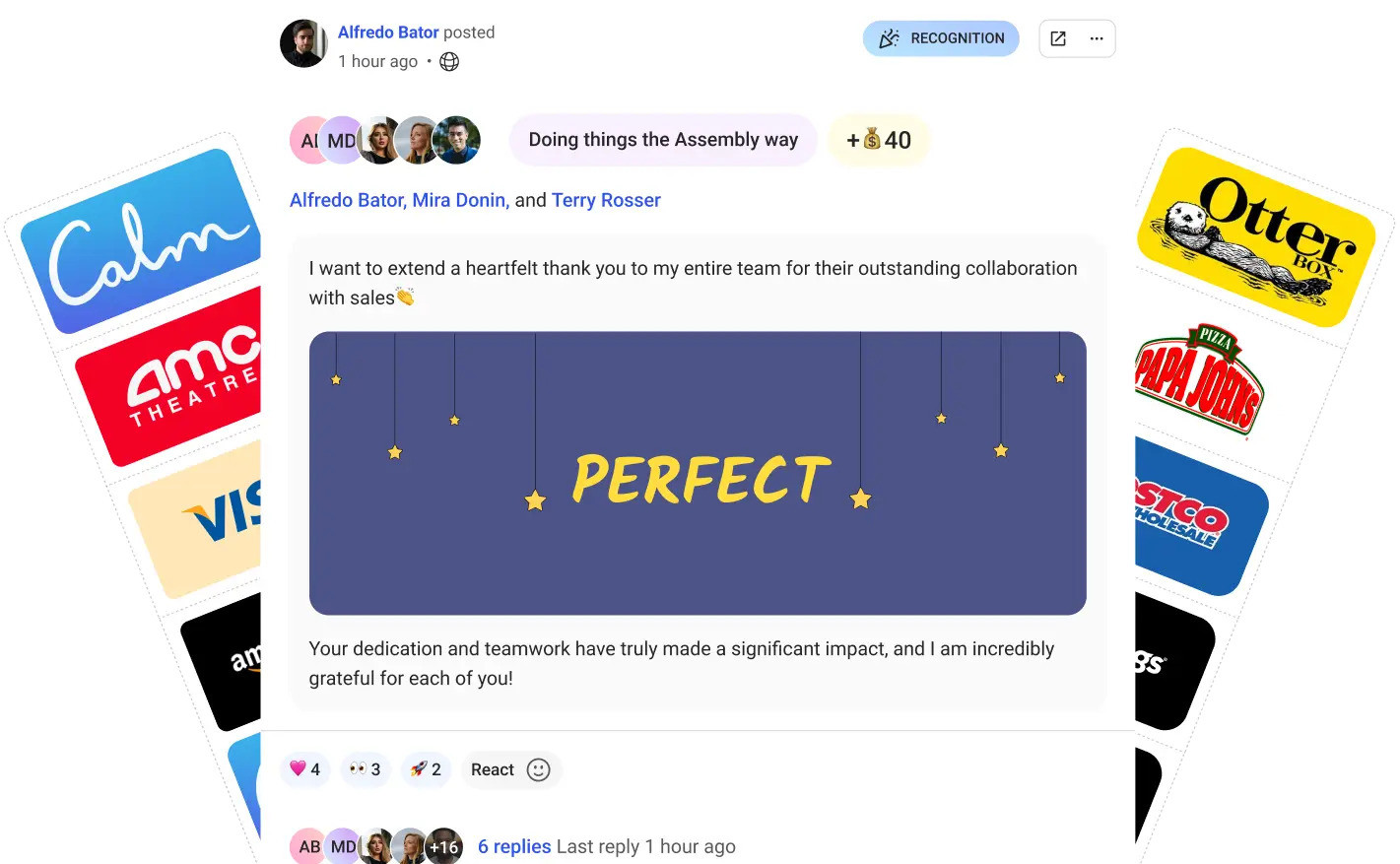
This is where recognition plays a bigger role than most leaders realize. When teammates and managers call out quality thinking or smart prioritization through Assembly's peer-to-peer recognition, it shows up on the company feed for everyone to see. Over time, those patterns shape how your whole team defines what "great work" actually looks like here.
2. Make Wellbeing a Leadership Conversation
Wellness programs are helpful, but real change happens when leaders treat wellbeing as part of how they manage their teams. Build wellbeing into manager expectations and make it part of regular one-on-one conversations.
Managers should be asking their direct reports: “Are you thriving? What do you need from me to feel more supported?”
These conversations are easy to skip when things get busy. Quantum Workplace's 1:1 tool helps by giving managers a shared space with recurring agendas and templates, so wellbeing check-ins happen every time, not just when someone already looks burned out.
For a full guide on how to design and launch one, our guide to employee wellness programs covers types, ideas, and how to build one that actually sticks.
3. Normalize Honest Conversations About Capacity
Most employees won’t speak up when they are overwhelmed unless the culture makes it safe. When leaders share their own boundaries and openly talk about workload, it gives everyone permission to be honest. That honesty is what helps catch burnout early.
Creating a safe channel for that honesty makes a big difference. Quantum Workplace's Pulse Surveys let you run quick, focused check-ins on workload and stress without waiting for a full engagement cycle. When employees see that their honest input leads to real changes, they keep speaking up, and that is how you catch burnout before it spreads.
4. Design Work With Humans in Mind
Before adding another project or priority, ask yourself: What can we take off the list? If the list only grows, burnout is not just possible, it’s inevitable. The best teams are intentional about what they choose not to do.
Assembly's recognition analytics can help you see where the load is actually landing and who might be quietly carrying too much. When the same people keep showing up as top contributors without a break, that is your signal to redistribute before exhaustion sets in.
Pair that with announcements to let the whole team know what is changing and what is coming off the plate, so no one is left quietly absorbing work that was never officially theirs.
10 Proven Strategies To Prevent Employee Burnout
Here are some practical steps you can start using this month to prevent employee burnout.
1. Audit Workloads Quarterly
Review project distribution, meeting loads, and after-hours patterns. Pay attention to teammates who quietly take on more than their share. Balance the load before it becomes a problem.
2. Protect Meeting-Free Focus Time
Block at least two half-days per week where your team can do deep work without interruptions. This one change gives people breathing room and consistently improves both output and energy.
3. Make Recognition a Daily Habit
When people feel appreciated for specific contributions, they handle stress better. Don’t wait for a quarterly review to tell someone their work mattered. A quick, specific callout right when it happens matters more than a formal award months later. If you need ideas, you can use our month-by-month recognition guide to get started right away.
4. Celebrate Milestones That Matter to People
Celebrate birthdays, work anniversaries, project completions and dedicated moments like employee appreciation day are also a great opportunity to go bigger and make the whole team feel seen at once.These moments signal that you see your team as whole humans, not just output. When milestones get forgotten, it sends the opposite message. Build a simple system so nothing slips through, especially during your busiest weeks.
5. Act on Engagement Survey Results
Feedback only works if it leads to action. Share what you learned, explain what you are prioritizing, and be honest about what can’t be fixed immediately. When employees see their input lead to real change, trust grows. When it disappears into a dashboard, trust erodes.
6. Encourage Real Time Off
If your top performers never take a full week off, that is a culture signal worth paying attention to. Encourage managers to model taking breaks and actively prompt their teams to use their time off without guilt.
7. Build Community and Belonging
Isolation speeds up burnout, especially for remote and hybrid teams. Create spaces where people can connect beyond project work, like a wins channel, an interest group, or regular informal check-ins. People who feel they belong are much less likely to burn out.
8. Give People Autonomy
When employees have control over how they do their work, they manage their energy better and produce stronger results. Trust your team, and most will reward that trust with their best effort.
9. Create Visible Growth Paths
Stagnation fuels burnout. Have honest career conversations in your one-on-ones. Give your team new challenges, chances to learn, and opportunities to grow so they know you care about their development, not just the work they get done.
10. Use Data to Spot Who Is Being Overlooked
Some of your hardest-working people are the least visible. Look at recognition patterns, feedback loops, and promotion pipelines. If certain employees or teams are consistently unseen, disengagement can start. Close the visibility gap before it becomes a retention problem.
How Assembly Can Help Reduce Employee Burnout Risk
The strategies we shared work best when they become part of how your team operates every day, not just extra tasks on someone’s to-do list. Assembly helps make these habits a natural part of the tools your team already uses.
1. Recognition made easy
When recognition happens where your team already works, it sticks. Assembly’s peer-to-peer recognition flows through Slack, Microsoft Teams, or your HR system. A teammate calls out a win, everyone sees it, and the person behind the effort knows their work landed. Over time, this builds a running record of contributions you can reference during reviews and promotion conversations.
2. Milestones handled automatically
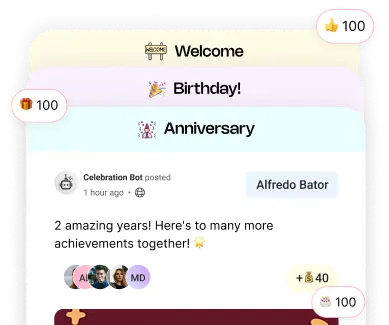
Birthdays, work anniversaries, and team celebrations are tracked and delivered without anyone having to remember dates or chase reminders. Assembly’s Milestones and Cultural Moments make sure nothing slips through, even during your busiest weeks.
3. Belonging gets a home
Remote and hybrid teammates can connect beyond project work through interest groups, ERGs, or a wins channel in Assembly’s Community Spaces. These spaces help people stay visible, connected, and part of the team culture.
4. Manager conversations that actually stick
Assembly’s Manager 1:1 tool keeps check-ins consistent and meaningful. Shared agendas, action item tracking, and searchable meeting history make sure growth commitments don’t get lost between meetings. When check-ins are structured, warning signs show up early and follow-through actually happens.
5. Visibility where it matters
Some of your hardest-working people are also the least visible. Assembly’s recognition analytics show who is being recognized, how often, and by whom. This helps you spot employees or teams that need attention before disengagement sets in.
Teams using Assembly report 89 percent more productive one-on-one conversations and 85 percent better follow-through on commitments. That kind of consistency is what turns good intentions into a culture that truly supports people.
Prevent Burnout By Designing Better Work
Burnout is not inevitable. It happens when good people work in systems that have not kept up with how work actually feels today. The organizations that handle this well are not the ones with the biggest wellness budgets. They are the ones who make recognition, connection, and honest conversations part of everyday team life.
This Stress Awareness Month, take one action. Audit your team’s workload. Start a daily recognition habit. Have an honest conversation in your next one-on-one about how your people are really doing. Small, consistent steps create a culture where people do not just get by. They genuinely thrive.
Ready to build a workplace where your people feel seen, supported, and energized? Book a demo with Assembly and see how it all comes together.
FAQ
How do I prevent burnout on my team?
Start with the basics: balance workloads, hold regular one-on-one check-ins, and make recognition a habit. Pair these with encouraging real time off and clear growth opportunities. When these practices become part of daily team life, people stay engaged and energized over the long term
What are the early signs of employee burnout at work?
Watch for changes over time. These signs of job burnout include declining work quality, pulling back from conversations or meetings, taking more days off, or showing less initiative than usual. If you notice several of these patterns together, schedule a supportive conversation sooner rather than later.
How does employee recognition reduce burnout?
Recognition helps people feel seen and appreciated. When contributions are acknowledged consistently, employees stay motivated even during busy or stressful periods. Making recognition part of everyday team life keeps morale high and helps people feel valued.
What should I do if a high performer seems burned out?
Start with an honest, private conversation. Ask how they are feeling and how their workload is, not just about specific tasks. Listen carefully without jumping to solutions. Then take one visible action, whether it is redistributing work, removing a meeting, or publicly acknowledging their effort
How can I talk to my manager about burnout on my team?
Bring observations and patterns to the conversation. Talk about engagement, workload, or team energy in a factual way. Frame it around team performance and morale. Offer one or two concrete suggestions so the discussion leads to practical action.
What tools help managers prevent burnout?
Look for tools that make recognition easy, support regular one-on-ones, help track engagement, and give teams ways to connect beyond work tasks. The right tools help you build healthy team habits without adding extra work for yourself.
class SampleComponent extends React.Component {
  // using the experimental public class field syntax below. We can also attach
  // the contextType to the current class
  static contextType = ColorContext;
  render() {
    return <Button color={this.color} />
  }
}
Every great team has people who quietly do more than their share. They show up early, stay calm under pressure, and make everyone around them better. As leaders and managers, we know how valuable these people are. We also know how easy it is to take their consistency for granted.
Employee Burnout at work is a state of chronic exhaustion at emotional, physical, and mental level caused by prolonged workplace stress that has not been addressed. It does not usually start with a big breakdown. It begins with small, gradual shifts that are easy to miss when you are focused on building a great workplace.
But the best teams have this figured out.
They do not wait for burnout to show up. They build a culture that prevents it from taking root in the first place.
When you build the right habits around recognition, connection, and support, you create teams where people bring their best energy instead of just getting through the day.
Recent research shows this matters now more than ever. The Aflac 2025-2026 WorkForces Report found that nearly 3 in 4 U.S. employees report at least moderate levels of workplace stress. Another survey showed that 55% of the workforce is currently experiencing burnout.
These are real people on our teams, and they are telling us they need something different.
April is Stress Awareness Month, and the 2026 theme is #BeTheChange. We love that framing because it puts the focus exactly where it belongs: on the everyday actions leaders and teams can take to support each other. This guide is our way of contributing to that conversation.
In this guide we will walk you through why burnout is rising, what causes it, how to spot the early signs, and the practical strategies you can start using this week to protect and energize your team.
Why Employee Burnout Is Rising In Modern Workplaces
The modern workplace has changed a lot, bringing more flexibility, remote options, and greater focus on employee wellbeing, but some of these shifts have quietly created conditions where burnout can take hold.
Always-On Expectations: Remote and hybrid work gave people more freedom, but most teams never set clear expectations about when to be available, how to communicate, or how to share work. The result is that many employees feel like they are always on, even in the evenings, on weekends, or during time off. Without clear boundaries, flexibility can turn into constant availability, and recovery never happens.
Growing Workloads, Same Team Size Hiring freezes, restructures, and expectations to do more with less mean the employees who stay are carrying more than ever. When demands rise but support stays the same, exhaustion builds quickly.
Economic and Organizational Uncertainty Employees are not just tired from work. They are also worried about whether their roles, skills, or industries will look the same a year from now. That kind of stress does not turn off at 5 PM.
Younger Employees Bearing the Brunt Gen Z now leads burnout rates at 74 percent, according to the Aflac Report. These are the teammates we invested time and resources in hiring and onboarding, and supporting them is one of the best investments we can make.
The good news is that we already know what helps. Teams that focus on recognition, connection, strong manager support, and sustainable ways of working see real improvements in engagement, retention, and overall team health.
What Causes Employee Job Burnout
Knowing why burnout happens helps us create better solutions. Here are the most common drivers we see across teams.
1. Workload That Exceeds Capacity
Burnout starts when job demands consistently outweigh the time, tools, and support people have. This is not about employees managing their time poorly. It is about systems that keep asking for more without adjusting what is on the plate.
2. Lack of Recognition
Doing meaningful work without being seen or appreciated is exhausting and it quietly impacts the employee engagement. Recognition is not a perk. It is fuel. According to 2026 Global Culture Report, 73% of employees say recognition personally inspires them to do more great work. When that fuel runs out, even your best people start pulling back. AI is reshaping employee recognition and now helping managers make that recognition more consistent and personal.
3. Disconnected Manager Relationships
When one-on-one meetings get skipped and feedback disappears, employees start feeling like they are navigating alone. The manager relationship is the biggest factor in how engaged or burned out a team feels. Regular, supportive check-ins are one of the strongest tools to prevent burnout.
4. No Psychological Safety
When employees do not feel safe speaking up or saying they are overwhelmed, stress builds up instead of being addressed. Recent research has shown that employees who feel a sense of belonging experience burnout at much lower rates, 55% compared to 78% for those who feel disconnected.
5. Always-On Culture
Flexibility is great, but without clear boundaries it can turn into being available all the time. When employees never truly switch off from work, recovery does not happen and burnout fills the gap.
Signs of Employee Burnout at Work
Burnout rarely shows up overnight. It builds gradually, and the early signs can look a lot like a tough week. Watch for these patterns in your employees over time:
The quality of work declines from someone who is usually strong and consistent
Withdrawal from team conversations, meetings, or social moments
More absences or frequent sick days
Cynicism or negativity that feels out of character
Loss of initiative where there used to be energy and ownership
Emotional flatness or detachment in conversations
Resistance to new projects they would have normally welcomed
Expressing frustration about feeling unsupported or invisible
If you notice several of these showing up together over a few weeks, that is a signal worth paying attention to. Regular one-on-one meetings are one of the best ways to catch these patterns early and open a supportive conversation.
How To Prevent Employee Burnout Before It Starts
Before jumping into tactics, getting the mindset right helps make everything else work better. Whether you are looking to prevent workplace burnout across a large team or prevent staff burnout on a smaller one, the approach is the same. Here is how to shift that mindset and put the right systems behind it.
1. Redefine High Performance Around Sustainability
Burnout starts when we reward whoever works the longest hours or responds the fastest. Instead, celebrate outcomes, quality, and smart work. When employees see that sustainable performance is what gets recognized, they feel confident setting boundaries without guilt.
This is where recognition plays a bigger role than most leaders realize. When teammates and managers call out quality thinking or smart prioritization through Assembly's peer-to-peer recognition, it shows up on the company feed for everyone to see. Over time, those patterns shape how your whole team defines what "great work" actually looks like here.
2. Make Wellbeing a Leadership Conversation
Wellness programs are helpful, but real change happens when leaders treat wellbeing as part of how they manage their teams. Build wellbeing into manager expectations and make it part of regular one-on-one conversations.
Managers should be asking their direct reports: “Are you thriving? What do you need from me to feel more supported?”
These conversations are easy to skip when things get busy. Quantum Workplace's 1:1 tool helps by giving managers a shared space with recurring agendas and templates, so wellbeing check-ins happen every time, not just when someone already looks burned out.
For a full guide on how to design and launch one, our guide to employee wellness programs covers types, ideas, and how to build one that actually sticks.
3. Normalize Honest Conversations About Capacity
Most employees won’t speak up when they are overwhelmed unless the culture makes it safe. When leaders share their own boundaries and openly talk about workload, it gives everyone permission to be honest. That honesty is what helps catch burnout early.
Creating a safe channel for that honesty makes a big difference. Quantum Workplace's Pulse Surveys let you run quick, focused check-ins on workload and stress without waiting for a full engagement cycle. When employees see that their honest input leads to real changes, they keep speaking up, and that is how you catch burnout before it spreads.
4. Design Work With Humans in Mind
Before adding another project or priority, ask yourself: What can we take off the list? If the list only grows, burnout is not just possible, it’s inevitable. The best teams are intentional about what they choose not to do.
Assembly's recognition analytics can help you see where the load is actually landing and who might be quietly carrying too much. When the same people keep showing up as top contributors without a break, that is your signal to redistribute before exhaustion sets in.
Pair that with announcements to let the whole team know what is changing and what is coming off the plate, so no one is left quietly absorbing work that was never officially theirs.
10 Proven Strategies To Prevent Employee Burnout
Here are some practical steps you can start using this month to prevent employee burnout.
1. Audit Workloads Quarterly
Review project distribution, meeting loads, and after-hours patterns. Pay attention to teammates who quietly take on more than their share. Balance the load before it becomes a problem.
2. Protect Meeting-Free Focus Time
Block at least two half-days per week where your team can do deep work without interruptions. This one change gives people breathing room and consistently improves both output and energy.
3. Make Recognition a Daily Habit
When people feel appreciated for specific contributions, they handle stress better. Don’t wait for a quarterly review to tell someone their work mattered. A quick, specific callout right when it happens matters more than a formal award months later. If you need ideas, you can use our month-by-month recognition guide to get started right away.
4. Celebrate Milestones That Matter to People
Celebrate birthdays, work anniversaries, project completions and dedicated moments like employee appreciation day are also a great opportunity to go bigger and make the whole team feel seen at once.These moments signal that you see your team as whole humans, not just output. When milestones get forgotten, it sends the opposite message. Build a simple system so nothing slips through, especially during your busiest weeks.
5. Act on Engagement Survey Results
Feedback only works if it leads to action. Share what you learned, explain what you are prioritizing, and be honest about what can’t be fixed immediately. When employees see their input lead to real change, trust grows. When it disappears into a dashboard, trust erodes.
6. Encourage Real Time Off
If your top performers never take a full week off, that is a culture signal worth paying attention to. Encourage managers to model taking breaks and actively prompt their teams to use their time off without guilt.
7. Build Community and Belonging
Isolation speeds up burnout, especially for remote and hybrid teams. Create spaces where people can connect beyond project work, like a wins channel, an interest group, or regular informal check-ins. People who feel they belong are much less likely to burn out.
8. Give People Autonomy
When employees have control over how they do their work, they manage their energy better and produce stronger results. Trust your team, and most will reward that trust with their best effort.
9. Create Visible Growth Paths
Stagnation fuels burnout. Have honest career conversations in your one-on-ones. Give your team new challenges, chances to learn, and opportunities to grow so they know you care about their development, not just the work they get done.
10. Use Data to Spot Who Is Being Overlooked
Some of your hardest-working people are the least visible. Look at recognition patterns, feedback loops, and promotion pipelines. If certain employees or teams are consistently unseen, disengagement can start. Close the visibility gap before it becomes a retention problem.
How Assembly Can Help Reduce Employee Burnout Risk
The strategies we shared work best when they become part of how your team operates every day, not just extra tasks on someone’s to-do list. Assembly helps make these habits a natural part of the tools your team already uses.
1. Recognition made easy
When recognition happens where your team already works, it sticks. Assembly’s peer-to-peer recognition flows through Slack, Microsoft Teams, or your HR system. A teammate calls out a win, everyone sees it, and the person behind the effort knows their work landed. Over time, this builds a running record of contributions you can reference during reviews and promotion conversations.
2. Milestones handled automatically
Birthdays, work anniversaries, and team celebrations are tracked and delivered without anyone having to remember dates or chase reminders. Assembly’s Milestones and Cultural Moments make sure nothing slips through, even during your busiest weeks.
3. Belonging gets a home
Remote and hybrid teammates can connect beyond project work through interest groups, ERGs, or a wins channel in Assembly’s Community Spaces. These spaces help people stay visible, connected, and part of the team culture.
4. Manager conversations that actually stick
Assembly’s Manager 1:1 tool keeps check-ins consistent and meaningful. Shared agendas, action item tracking, and searchable meeting history make sure growth commitments don’t get lost between meetings. When check-ins are structured, warning signs show up early and follow-through actually happens.
5. Visibility where it matters
Some of your hardest-working people are also the least visible. Assembly’s recognition analytics show who is being recognized, how often, and by whom. This helps you spot employees or teams that need attention before disengagement sets in.
Teams using Assembly report 89 percent more productive one-on-one conversations and 85 percent better follow-through on commitments. That kind of consistency is what turns good intentions into a culture that truly supports people.
Prevent Burnout By Designing Better Work
Burnout is not inevitable. It happens when good people work in systems that have not kept up with how work actually feels today. The organizations that handle this well are not the ones with the biggest wellness budgets. They are the ones who make recognition, connection, and honest conversations part of everyday team life.
This Stress Awareness Month, take one action. Audit your team’s workload. Start a daily recognition habit. Have an honest conversation in your next one-on-one about how your people are really doing. Small, consistent steps create a culture where people do not just get by. They genuinely thrive.
Ready to build a workplace where your people feel seen, supported, and energized? Book a demo with Assembly and see how it all comes together.
FAQ
How do I prevent burnout on my team?
Start with the basics: balance workloads, hold regular one-on-one check-ins, and make recognition a habit. Pair these with encouraging real time off and clear growth opportunities. When these practices become part of daily team life, people stay engaged and energized over the long term
What are the early signs of employee burnout at work?
Watch for changes over time. These signs of job burnout include declining work quality, pulling back from conversations or meetings, taking more days off, or showing less initiative than usual. If you notice several of these patterns together, schedule a supportive conversation sooner rather than later.
How does employee recognition reduce burnout?
Recognition helps people feel seen and appreciated. When contributions are acknowledged consistently, employees stay motivated even during busy or stressful periods. Making recognition part of everyday team life keeps morale high and helps people feel valued.
What should I do if a high performer seems burned out?
Start with an honest, private conversation. Ask how they are feeling and how their workload is, not just about specific tasks. Listen carefully without jumping to solutions. Then take one visible action, whether it is redistributing work, removing a meeting, or publicly acknowledging their effort
How can I talk to my manager about burnout on my team?
Bring observations and patterns to the conversation. Talk about engagement, workload, or team energy in a factual way. Frame it around team performance and morale. Offer one or two concrete suggestions so the discussion leads to practical action.
What tools help managers prevent burnout?
Look for tools that make recognition easy, support regular one-on-ones, help track engagement, and give teams ways to connect beyond work tasks. The right tools help you build healthy team habits without adding extra work for yourself.
Browse our Free Employee Recognition Guide
Get the foundational knowledge on creating an employee recognition program that boosts employee engagement and helps them feel valued.